Przeczytaj
The picture below shows someone’s plate full of food. Is this what a typical dinner plate looks like at your home? In this section, you are going to read a text introducing you to the idea of a healthy food pyramid and the MyPlate nutrition guide. Before you read it, think: what healthy food have you eaten today?
Poniższa fotografia pokazuje talerz pełen jedzenia. Czy tak wygląda typowy talerz obiadowy w twoim domu? W tej sekcji przeczytasz tekst wprowadzający cię w ideę piramidy zdrowego żywienia oraz przewodnik odżywiania MyPlate (Mój Talerz). Zanim przeczytasz, zastanów się, jaką zdrową żywność jadłeś/jadłaś dzisiaj?
How much do you know about the healthy food pyramid? Pick all the information that seems right to you. If you’ve got any of it wrong, don’t worry! You will soon study the text on this subject.
Look at the illustration below and choose the correct answer. There is only one correct answer in each point.
Read the text and do the exercises below.
Pyramid or Plate ?The science of nutrition is a very dynamic field and, over the years, it has witnessed a lot of changes and trends, often contradicting one anothercontradicting one another. In the current times of fad dietsfad diets and conflicting nutrition advice, it would be really helpful to find the answer to the question: what and how often should we eat? Nutritional science doesn’t definitively answer this question, but two existing guidelinesguidelines, the Healthy Eating Pyramid and MyPlate, have been trying to put the pieces of the puzzle together for years. Below is a short overview of their history and dietary recommendationsdietary recommendations.
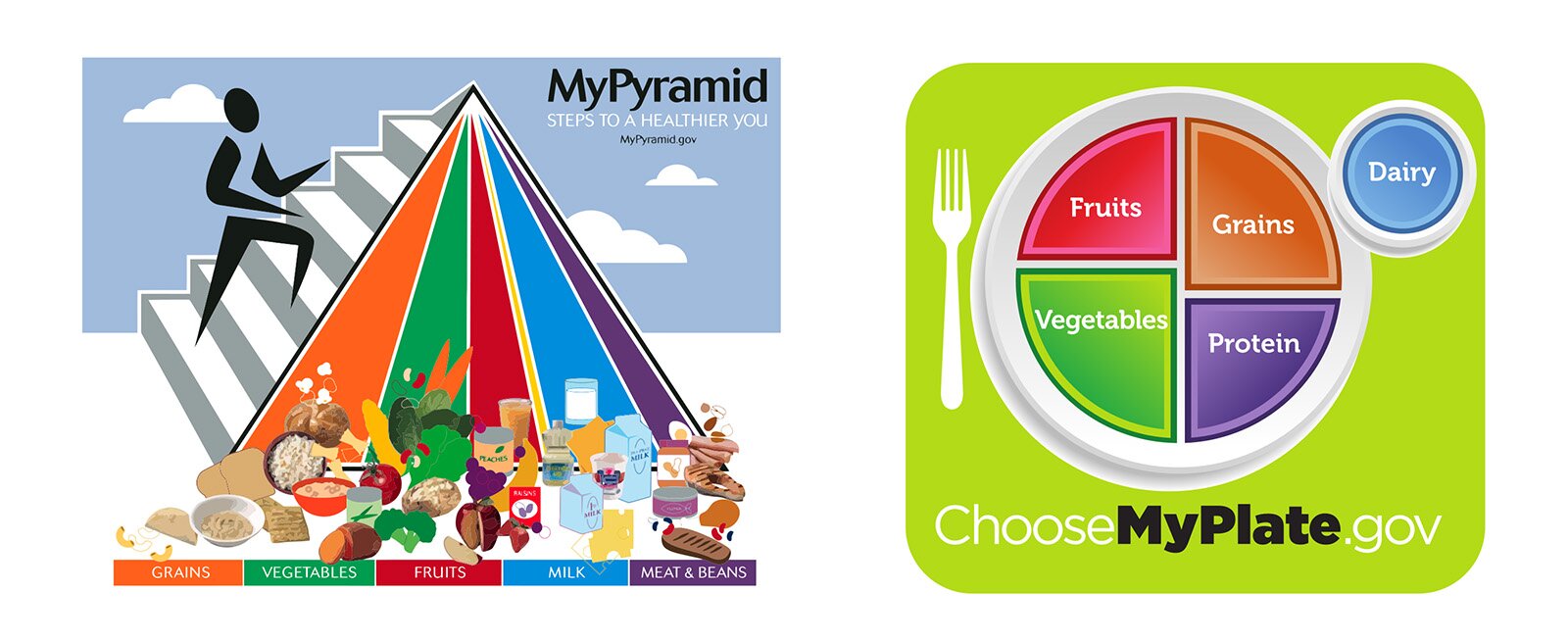
The Healthy Eating Pyramid, also called the Food Guide Pyramid or the Eating Right Pyramid, has a long history. It is a visual representation of optimal servingsoptimal servings of different categories of food in the proportions that each food group should contribute tocontribute to a healthy, balanced dietbalanced diet. This concept was first introduced to the public in Sweden in 1974, as the development of an idea to divide foods into “basic foods,” which are cheap but nutritious, and “supplemental foodssupplemental foods,” which would add nutrition that the basic foods didn’t have. The idea then spreadspread to other Scandinavian countries, also becoming popular in Germany, Sri Lanka and Japan. The United States presented its first food pyramid in 1992. The first pictograms divided food into six groups, usually in horizontal segmentshorizontal segments (although the American one used vertical wedgesvertical wedges instead), with basic foods, such as milk, cheese, margarine, bread, potatoes and cereals at the base, supplemental vegetables and fruit in the middle, and fats, oils and sweets at the top. The base of the pyramid represented foods which were recommended to be eaten most often and in the biggest amounts (up to 11 servings), the middle part plants were to be eaten moderatelymoderately, while the foods at the top should be used sparinglysparingly. Over the years, both the proportions and the food groups have changed.
The food pyramid, developed by the United States Department of Agriculture in 2005, got the updated name of MyPyramid, and six years later was changed into MyPlate, in other countries also known as the Healthy Eating Plate. It is a kind of a guide for composing a healthy, balanced meal. It shows a plate and a glass with food divided into five groups: half of the plate is taken uptaken up by vegetables and fruit (vegetables 40%, fruit 10%), the other half is occupied byoccupied by grains (30%) and protein (20%), and the glass represents dairy productsdairy products, including milk or yogurt. The plan also recommends avoiding sugary beveragessugary beverages, which are a major source of calories and have very little nutritionalnutritional value, at the same time encouraging consumers to stay active. MyPlate simplifiedsimplified the MyPyramid icon, putting special emphasis onputting special emphasis on vegetables and fruit, and increasing understandabilityunderstandability of the idea represented by the plate image. The simplicitysimplicity of the new image has helped to increase awarenessincrease awareness about the proper proportions of particular types of food in a meal and to build nutrition skills necessary while preparing a healthy eating plan for the whole family.
Meanwhile, food pyramids have been updated and remodelled too. The most recent ones, like the Australian example, have the base part filled in by unprocessed plant foodsunprocessed plant foods, like vegetables, legumeslegumes and fruit, as the latest research suggests that they should constituteconstitute about 70% of our diet. The next layer is grains, above which there are two types of food: dairy products and lean meatlean meat together with poultrypoultry, fish, eggs, nuts and seeds. Healthy oils are placed on the top of the pyramid. There are also additional short recommendations added like: “enjoy herbs and spicesherbs and spices,” “choose water,” and “limit salt and added sugars.” Physical activity is strongly emphasised.
Whichever image appeals to you more, the general guidelinesguidelines for healthy eating are as follows:
– Make the majoritymajority of your diet plant‑based, eating big portions of vegetables, fruit and legumes daily.
– Eat dairy, meat, eggs and seafood in moderationin moderation.
– A small serving of healthy fats and oils should also be included in your diet.
– Sugar and salt intakeSugar and salt intake should be limited to a minimum.
– Drink plenty of water instead of fruit juice or other beverages.
So, using all the information about the healthy eating pyramid and the MyPlate guide, what will you put on your plate next?
Źródło: Agnieszka Sękiewicz‑Magoń, licencja: CC BY-SA 3.0.
Read the text above and choose the correct answer. There is only one correct answer in each point.
Answer the questions using 2–3 sentences.
How would you answer the question at the end of the text?
What are the differences between early food pyramids and the most recent ones?
Which idea appeals to you more: the MyPyramid or MyPlate? Why?
Słownik
/ ˌbælənst ˈdaɪət /
dieta zrównoważona
/ ˈbɑːli /
jęczmień
/ biːf /
wołowina
/ ˈberiz /
owoce jagodowe
/ ˈbʌlɡə(r) /
kasza bulgur
/ ˌkɑːbəˈhaɪdreɪts / / ˌkɑːbəˈhaɪdreɪt /
węglowodany [węglowodan]
/ kænd biːnz /
fasolka konserwowa
/ klæmz / / klæm /
małże jadalne [małż jadalny]
/ ˈkɒnstɪtjuːt /
stanowić
/ ˌkɒntrəˈdɪktɪŋ wʌn əˈnʌðə / / ˌkɒntrəˈdɪkt wʌn əˈnʌðə /
przecząc sobie wzajemnie [przeczyć sobie wzajemnie]
/ kənˈtrɪbjuːt tuː /
wnieść wkład do
/ ˈdeəri ˈprɒdʌkts /
nabiał
/ ˈdaɪətəri ˌrekəmenˈdeɪʃn̩z / / ˈdaɪətəri ˌrekəmenˈdeɪʃn̩ /
rekomendacje żywieniowe [rekomendacja żywieniowa]
/ fæd ˈdaɪəts / / fæd ˈdaɪət /
modne diety [modna dieta]
/ ˈɡaɪdlaɪnz / / ˈɡaɪdlaɪn /
wytyczne [wytyczna]
/ hɜːbz ənd ˈspaɪsɪz /
zioła i przyprawy
/ ˌhɒrɪˈzɒntl̩ seɡˈments / / ˌhɒrɪˈzɒntl̩ seɡˈment /
poziome segmenty [poziomy segment]
/ ɪn bʌlk /
w większej ilości, hurtowo
/ ɪnˈkriːs əˈweənəs /
zwiększyć świadomość
/ ɪn ˌmɒdəˈreɪʃn̩ /
z umiarem
/ keɪl /
jarmuż
/ ˈli:n miːt /
chude mięso
/ ˈleftəʊvəz /
resztki (jedzenia)
/ ˈleɡjuːmz / / ˈleɡjuːm /
rośliny strączkowe (bobowate) [roślina strączkowa]
/ ˈlentl̩z /
soczewica
/ ˈlɒbstə /
homar
/ məˈdʒɒrɪti /
większość
/ ˈmɒdərətli /
z umiarem
/ njuːˈtrɪʃn̩əl ˈvæljuː /
wartość odżywcza
/ əʊts /
owies
/ ˈɒkjʊpaɪd baɪ / / ˈɒkjʊpaɪ /
zajęta przez [zajmować (miejsce)]
/ ˈɒptɪml̩ ˈsɜːvɪŋz / / ˈɒptɪml̩ ˈsɜːvɪŋ /
porcje optymalne [porcja optymalna]
/ ˈɔɪstəz / / ˈɔɪstə /
ostrygi [ostryga]
/ ˈperɪʃəbl̩ /
łatwo psujące się
/ pɔːk /
wieprzowina
/ ˈpəʊltri /
drób
/ ˈpʊtɪŋ ˈspeʃl̩ ˈemfəsɪs ɒn / / ˈpʊt ˈspeʃl̩ ˈemfəsɪs ɒn /
kładąc specjalny nacisk na [kłaść nacisk na]
/ rɔː /
surowy/surowa
/ ˈsætʃəreɪtɪd fæt /
tłuszcz nasycony
/ ˈsəʊteɪd / / ˈsəʊteɪ /
przysmażony krótko na średnim lub dużym ogniu z niewielką ilością tłuszczu [smażyć krótko na średnim lub dużym ogniu z niewielką ilością tłuszczu]
/ ˈʃelfɪʃ /
owoce morza, skorupiaki
/ ʃrɪmps / / ʃrɪmp /
krewetki [krewetka]
/ sɪmˈplɪsɪti /
prostota
/ ˈsɪmplɪfaɪd / / ˈsɪmplɪfaɪ /
uprościł/uprościła [uprościć]
/ ˈspeərɪŋli /
oszczędnie
/ spred / / spred /
rozprzestrzenił/rozprzestrzeniała się [rozprzestrzeniać się]
/ stiːmd /
gotowane na parze
/ stəʊn ˈfru:t /
owoc pestkowy
/ ˌsʌplɪˈmentri fuːdz / / ˌsʌplɪˈmentri fuːd /
pokarmy uzupełniające [pokarm uzupełniający]
/ ʃʊgər ənd ˈsɒlt ˈɪnteɪk /
spożycie cukru i soli
/ ˈʃʊɡəri ˈbevərɪdʒɪz / / ˈʃʊɡəri ˈbevərɪdʒ /
napoje słodzone [napój słodzony]
/ ˈteɪkən ʌp / / ˈteɪk ˈʌp /
zajęty/zajęta [zajmować (miejsce)]
/ ʌndəstandəˈbɪlɪti /
zrozumiałość
/ ənˈprɒˌsest plɑ:nt fuːdz /
nieprzetworzone pokarmy roślinne
/ viːl /
cielęcina
/ ˈvenɪsn̩ /
sarnina, mięso jelenia
/ ˈvɜːtɪkl̩ ˈwedʒɪz / / ˈvɜːtɪkl̩ wedʒ /
pionowe kliny [pionowy klin]
/ ˈhəʊlwiːt /
razowy/razowa
/ ˈhəʊlɡreɪn /
pełnoziarnisty/pełnoziarnista
Źródło: GroMar Sp. z o.o., licencja: CC BY‑SA 3.0