bg‑azure

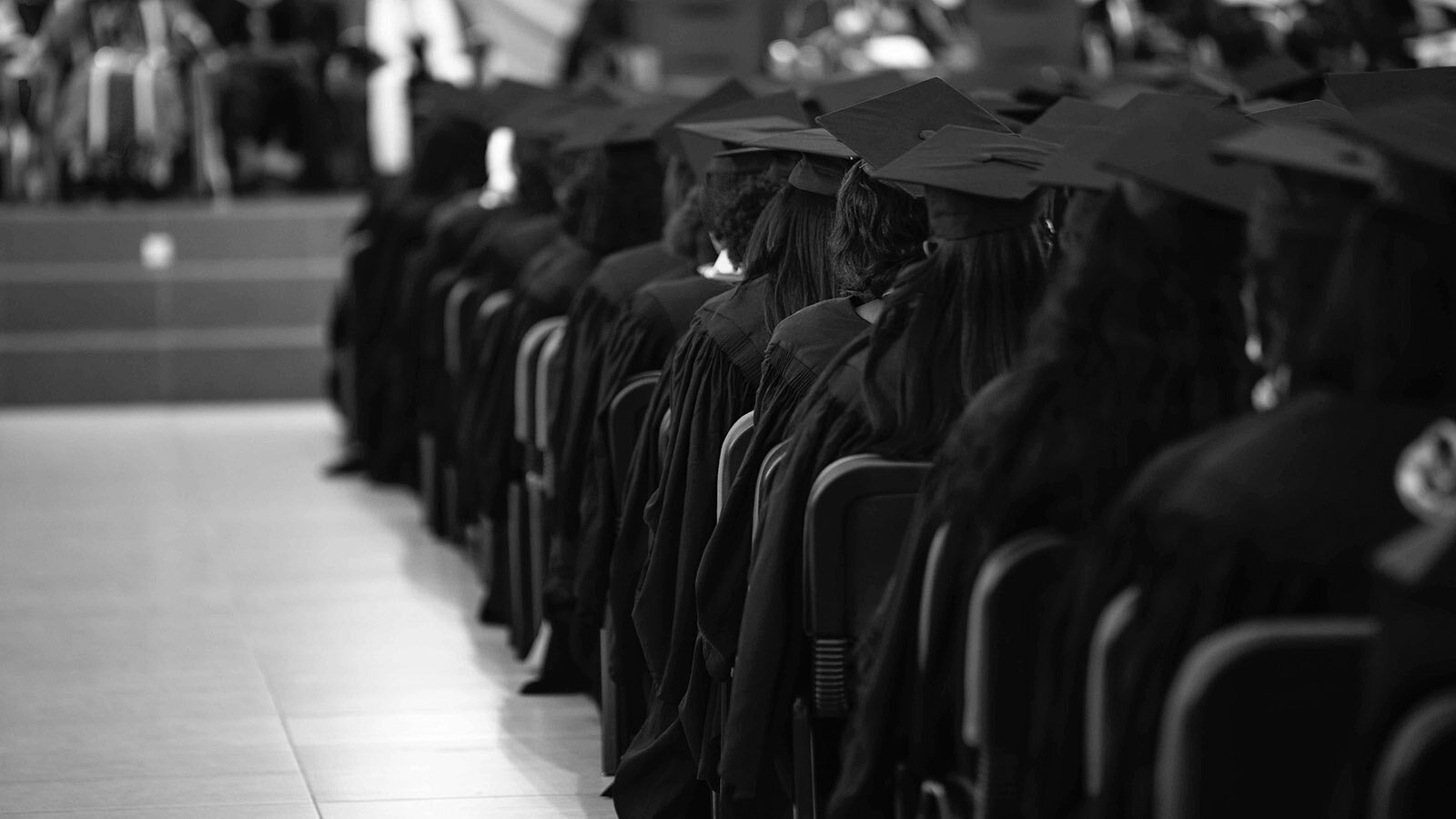
The commencement ceremony undoubtedly is one of the most memorable moments in our lives. Moments shared with the closest ones, friends and family members. How do you imagine this event? Have you already thought about what you will do in the future, after finishing college? In this material, you will study the diary of a graduate and find out what this ceremony looks like.

Ceremonia wręczenia dyplomu ukończenia studiów bez wątpienia jest jedną z najlepiej zapamiętanych chwil w naszym życiu. Chwil, które dzielimy z najbliższymi osobami: przyjaciółmi i członkami rodziny. Jak wyobrażasz sobie ten moment? Czy już myślałeś/myślałaś o tym, co będziesz robić w przyszłości, po ukończeniu studiów? W tym materiale zapoznasz się z notatkami z pamiętnika absolwenta i dowiesz się, jak uroczystość wręczania dyplomów jest organizowana.
RrbtiQ3i2ElWt
Commencement day
Dzień wręczenia dyplomów
Źródło: dostępny w internecie: www.unsplash.com [dostęp 19.08.2022], domena publiczna.
1
Exercise 1
R19fbl7GJlLdH
Match the words related to a graduation day with their translations. diploma Możliwe odpowiedzi: 1. dyplom, 2. biret studencki , 3. toga, 4. frędzle, 5. student, który wygłasza mowę pożegnalną na uroczystości wręczenia dyplomów, 6. uroczystość wręczenia dyplomów tassels Możliwe odpowiedzi: 1. dyplom, 2. biret studencki , 3. toga, 4. frędzle, 5. student, który wygłasza mowę pożegnalną na uroczystości wręczenia dyplomów, 6. uroczystość wręczenia dyplomów cap Możliwe odpowiedzi: 1. dyplom, 2. biret studencki , 3. toga, 4. frędzle, 5. student, który wygłasza mowę pożegnalną na uroczystości wręczenia dyplomów, 6. uroczystość wręczenia dyplomów gown Możliwe odpowiedzi: 1. dyplom, 2. biret studencki , 3. toga, 4. frędzle, 5. student, który wygłasza mowę pożegnalną na uroczystości wręczenia dyplomów, 6. uroczystość wręczenia dyplomów commencement Możliwe odpowiedzi: 1. dyplom, 2. biret studencki , 3. toga, 4. frędzle, 5. student, który wygłasza mowę pożegnalną na uroczystości wręczenia dyplomów, 6. uroczystość wręczenia dyplomów valedictorian Możliwe odpowiedzi: 1. dyplom, 2. biret studencki , 3. toga, 4. frędzle, 5. student, który wygłasza mowę pożegnalną na uroczystości wręczenia dyplomów, 6. uroczystość wręczenia dyplomów
Źródło: GroMar Sp. z o.o., licencja: CC BY-SA 3.0.
1
Exercise 1

Match the audio words related to a graduation day with the correct pictures.

Rm9Qv56t6juAW
Źródło: dostępny w internecie: www.pexels.com [dostęp 19.08.2022], www.unsplash.com [dostęp 19.08.2022], www.pixabay.com [dostęp 19.08.2022], domena publiczna.

Get familiar with the memories of a graduate and do the exercises below.

Hard Work Pays Off
Anna Faszcza Hard Work Pays Off

A neatly folded gowngowngown, an accurately hung cap, and me… who breathe deeply lying in bed and not sleep a winknot sleep a winknot sleep a wink in spite of late hours. I finally completed all the requirements and succeeded in graduationgraduationgraduation and, from a formal point of view, became a  graduategraduate (noun)graduate. The following day was expected to be a big one. I had been waiting for the commencementcommencementcommencement for so long and that night, not surprisingly, I was nervously looking at the ceiling. Now what? A new stage of life was about to start the next day, which caused a mix of feelings; anxiety, excitement, fear…

The ceremonyceremonyceremony, which is typically prepared months in advance, was held at college as the 30th in a row and took place in the assemblyassemblyassembly. It is a tradition of saying farewell to adolescence and the whole academic communityacademic communityacademic community. A. .....  Surprisingly, this idea dates back to early universities in Europe and it’s older than the U.S.A.!

Each ceremony differs slightly. At my academy, we decided to have a lively one. The processionalprocessionalprocessional part, the most formal one, involved the entry of the graduating class and singing of the national anthemsinging of the national anthem [sing the national anthem]singing of the national anthem. When everybody took their seats, the headmasterheadmasterheadmaster welcomed the participants and gave a speechgave a speech [give a speech]gave a speech. B. ..... At our ceremony, it was the class presidentclass presidentclass president who recalled our first multi‑daymulti‑daymulti‑day trip, which was absolutely fantastic. It was fun to laugh at the memories, as well as those moments from the trip known only to us, which we all were part of.

That was the moment to celebrate our hard work and accomplishmentsaccomplishments [accomplishment]accomplishments. I could easily see my parents taking pride intaking pride in [take pride in]taking pride in my having completed all requirements. It wasn’t a piece of cake, though. It required well‑organised time and much self‑determinationself‑determinationself‑determination graduategraduate (verb)graduate. Then, there was the highlighthighlighthighlight when each student stepped outstepped out [step out]stepped out to be handed a diplomabe handed a diploma [hand a diploma]be handed a diploma. C. ..... What path in life would each of us choose?  At some point, Tony, who was sitting next to me, pokedpoked [poke]poked me with his elbow to let me know it was my turn. So I stood up fast and energetically headed to the headmaster. I was awardedwas awarded [be awarded]was awardeddiploma with honoursdiploma with honoursdiploma with honours for very good results. I was so nervous that I don’t remember the moment I reached the headmaster and received the diploma. Due to a great shock, I forgot to shift the tasselstassels [tassel]tassels to the left (they are usually worn on the right side of the cap and shifted to the left when graduates receive their diplomas). D. ..... My hands were shaking with great excitement. I was holding the results of all those years of hard work and sleepless nights in my hands. Daily effort for all those years was worth it.

Once all the students got their diplomas, we were allowed to stand up, mix with other students, and toss the capstoss the caps [toss a cap]toss the caps high into the air. We happily applaudedapplauded [applaud]applauded ourselves! It took nearly an hour to snap pictures with my family and dearest friends. Taking pictures is simply a must. Everybody congratulated me on my diploma. I still like to have a look at the picture of my class posing and making faces on commencement day. It makes me smile.

That was the moment of freedom and complete happiness and, at that point, I already knew it was one of the most beautiful and moving days of my life.

1 Źródło: Anna Faszcza, licencja: CC BY-SA 3.0.
Exercise 2
R11kEXkhiSqrY
Based on the information from the text, put the events of the commencement ceremony in correct order. Elementy do uszeregowania: 1. Finalities, 2. Presentation, 3. Procession, 4. Speakers, 5. Greetings
Źródło: GroMar Sp. z o.o., licencja: CC BY-SA 3.0.
Exercise 3
R133V2YaSN5zj
Complete the gaps (A–D) with sentences so that they create a logical text about the commencement ceremony. There are two extra sentences you do not need to use. A. 1. The academic community is all the people who learn and work at a place., 2. This part is hardly ever entertaining in comparison with inspirational speeches from the valedictorian., 3. As soon as I got back to my seat, Tom did it for me., 4. The assembly is a perfect choice as it can hold many people at a time., 5. I had always been just an observer of the whole event, but the time came that year that I was the one who would cheerfully toss a cap and be handed a diploma., 6. While sitting, I looked around and realised all my mates were extremely focused and waiting for their names to be called out.
B. 1. The academic community is all the people who learn and work at a place., 2. This part is hardly ever entertaining in comparison with inspirational speeches from the valedictorian., 3. As soon as I got back to my seat, Tom did it for me., 4. The assembly is a perfect choice as it can hold many people at a time., 5. I had always been just an observer of the whole event, but the time came that year that I was the one who would cheerfully toss a cap and be handed a diploma., 6. While sitting, I looked around and realised all my mates were extremely focused and waiting for their names to be called out.
C. 1. The academic community is all the people who learn and work at a place., 2. This part is hardly ever entertaining in comparison with inspirational speeches from the valedictorian., 3. As soon as I got back to my seat, Tom did it for me., 4. The assembly is a perfect choice as it can hold many people at a time., 5. I had always been just an observer of the whole event, but the time came that year that I was the one who would cheerfully toss a cap and be handed a diploma., 6. While sitting, I looked around and realised all my mates were extremely focused and waiting for their names to be called out.
D. 1. The academic community is all the people who learn and work at a place., 2. This part is hardly ever entertaining in comparison with inspirational speeches from the valedictorian., 3. As soon as I got back to my seat, Tom did it for me., 4. The assembly is a perfect choice as it can hold many people at a time., 5. I had always been just an observer of the whole event, but the time came that year that I was the one who would cheerfully toss a cap and be handed a diploma., 6. While sitting, I looked around and realised all my mates were extremely focused and waiting for their names to be called out.
Źródło: GroMar Sp. z o.o., licencja: CC BY-SA 3.0.
Exercise 4

Explain the difference between “graduation” and “commencement.” Write 2‑3 sentences.

RQCWriadF90Gm
(Uzupełnij).
Źródło: GroMar Sp. z o.o., licencja: CC BY-SA 3.0.
GRAMATYKA

Adverbsprzysłówki

Przysłówki są częściami mowy. Wyróżniamy następujące rodzaje przysłówków:

●     przysłówki czasu
Przykłady: now („teraz”), yesterday („wczoraj”)

●     przysłówki częstotliwości
Przykłady: never („nigdy”), sometimes („czasami”)

●     przysłówki miejsca
Przykłady: here („tutaj”), there („tam”)

●     przysłówki sposobu
Przykłady: quickly („szybko”), fluently („płynnie”)

Tworzenie przysłówków

a)    Przysłówki zazwyczaj tworzymy poprzez dodanie końcówki -ly do przymiotnika.
Przykłady: neatneatly, proudproudly**, nervousnervously

b)    Kiedy przymiotnik kończy się -y, wówczas po dodaniu końcówki -ly zamieniamy -y na -i.
Przykłady: easyeasily, happyhappily

c)    Niektóre przysłówki tworzymy od rzeczowników, również dodając końcówkę -ly .
Przykłady: monthmonthly, yearyearly

d)    Przymiotniki zakończone na -ic zamieniamy na przysłówki poprzez dodanie końcówki -ally.
Przykład: energeticenergetically

e)    Przymiotniki zakończone na -le lub -ue zamieniamy na przysłówki, usuwając -e na końcu wyrazu i dodając -ly.
Przykłady: simple – simply, true – truly

f)     Czasami wyrazy mają taką samą formę, chociaż są różnymi częściami mowy, np.:

hard
This is hard work. – To jest ciężka praca. (przymiotnik)
It is hard to work in these conditions.Ciężko jest pracować w tych warunkach. (przysłówek)

near
The rain was a near disaster for the garden party. – Deszcz był bliską katastrofą dla przyjęcia w ogrodzie.  (przymiotnik)
There is a park near my school.Blisko mojej szkoły jest park. (przysłówek)

long
My dog has a long tail. – Mój pies ma długi ogon. (przymiotnik)
I had to wait long for the letter to arrive. - Musiałem/Musiałam czekać długo na pociąg. (przysłówek)

low
My flat has a low ceiling. – Moje mieszkanie ma niski sufit. (przymiotnik)
A fly seemed to fly quite low.Mucha wydawała się lecieć nisko. (przysłówek)

cold
My hands were cold.Miałem/Miałam zimne ręce. (przymiotnik)
It’s very cold outside.Jest zimno na zewnątrz. (przysłówek)

light
My bag is light.Moja torba jest lekka. (przymiotnik)
Tony is used to travelling light.Tony ma w zwyczaju podróżować lekko (bez zbędnego bagażu). (przysłówek)

fast
Maya is a fast runner.Maya jest szybką biegaczką. (przymiotnik)
Maya can run fast.Maya potrafi szybko biegać. (przysłówek)

g)    Istnieje grupa przysłówków, które odmieniają się w sposób niestandardowy, dlatego nazywamy je nieregularnymi.

Przysłówek w stopniu równym
(adverb)

Stopień
 wyższy

(comparative)

Stopień
najwyższy

(superlative)

Polskie
znaczenie

well

better

the best

„dobrze”–„lepiej”–„najlepiej”

badly

worse

the worst

„źle”–„gorzej”–„najgorzej”

little

less

the least

„mało”–„mniej”–„najmniej”

many

more

the most

„wiele”–„więcej”–„najwięcej”

much

more

the most

„dużo”–„więcej”–„najwięcej”

far

farther

the farthest

„daleko”–„dalej”–„najdalej”
(w znaczeniu dystansu)

far

further

the furthest

„daleko”–„dalej”–„najdalej”
(w znaczeniu metaforycznym, np. kiedy mowa o informacjach, wnioskach, pytaniach)

Wyjątki

Niektóre wyrazy mają końcówkę -ly, ale znaczą coś innego niż wyraz, od którego powstały, np.:

hard/hardly
It’s been a hard day.To był ciężki dzień.
Greg hardly works. (w znaczeniu: scarcely, barely) – Greg prawie wcale nie pracuje.

near/nearly
The school is near my house. – Szkoła jest blisko mojego domu.
It’s nearly ten o’clock. (w znaczeniu: almost) – Już prawie dziesiąta.

late/lately
I always choose late shows. – Zawsze wybieram późne przedstawienia.
I haven’t seen any shows lately. (w znaczeniu: recently) – Nie widziałem/widziałam ostatnio żadnych przedstawień.

short/shortly
My mum is a pretty short woman.Moja mama jest dosyć niską kobietą.
I woke up shortly after you came back. (w znaczeniu: soon) – Obudziłam się zaraz po tym, jak wróciłeś/wróciłaś.

Exercise 5
R3BJd2AzZ9zxG
Create adverbs from the given adjectives to complete the sentences. 1. Can you speak     Tu uzupełnij,     please? I don’t understand what you are saying.
CLEAR

2. Good job! You answered all the questions     Tu uzupełnij..     You need to do it again.
CORRECT

3. Little John was very good and waited     Tu uzupełnij     till his mum finished cooking.
PATIENT

4. Jack won the race last week. He ran very     Tu uzupełnij.
FAST

5. Students wrote their essays     Tu uzupełnij,     which took the teacher aback.
QUICK

6. In fairy tales, the main characters live     Tu uzupełnij     ever after.
HAPPY

7. You will succeed in passing the exam if you work     Tu uzupełnij.
HARD

8. Tom can play the piano really     Tu uzupełnij.
GOOD

9. Greg is always     Tu uzupełnij     for work. I need to talk to him about it.
LATE

10. Mike     Tu uzupełnij     studies. That’s why he’s got such bad grades.
HARD

Źródło: GroMar Sp. z o.o., licencja: CC BY-SA 3.0.
Exercise 6
R1ZPg8c5ZjXqc
Replace the underlined parts of the sentences with the correct adverbs. 1. You won’t find it difficult to get to the place. You will     Tu uzupełnij     get to the place. 2. I know him very little. We only met twice. I     Tu uzupełnij     know him. We only met twice. 3. I haven’t seen my neighbour in recent times. I haven’t seen my neighbour     Tu uzupełnij. 4. Tom fell asleep soon after he had put his head on the pillow. Tom fell asleep     Tu uzupełnij     after he had put his head on the pillow. 5. Kate was almost late for school, but her friend gave her a lift and she managed to get there on time. Kate was     Tu uzupełnij     late for school, but her friend gave her a lift and she managed to get there on time. 6. Your knee doesn’t look good. I think you should go to the doctor. Your knee looks     Tu uzupełnij. I think you should go to the doctor. 7. I’m not a fast runner. I don’t run     Tu uzupełnij. 8. My mum has always been hardworking. My mum has always worked     Tu uzupełnij. 9. Sam explained adverbs to me with a lot of patience. Sam     Tu uzupełnij     explained adverbs to me. 10. The top of the christmas tree doesn't seem very high. The top of the christmas tree seems quite     Tu uzupełnij.
Źródło: GroMar Sp. z o.o., licencja: CC BY-SA 3.0.

Słownik

academic community
academic community

/ ˌækəˌdemɪk kəˈmjuːnɪti /

R1Iqkdlmp6WmF1
Nagranie dźwiękowe

społeczność uniwersytecka (all people attending the same university)

R1O5mrUcTTh6r1
Nagranie dźwiękowe
accomplishments [accomplishment]

/ əˈkʌmplɪʃmənts / / əˈkʌmplɪʃmənt /

RZcTOr6vhoEMt1
Nagranie dźwiękowe

osiągnięcia [osiągnięcie] (achievements)

R1V9jsbVIYuQD1
Nagranie dźwiękowe
applauded [applaud]
applauded [applaud]

/ əˈplɔːdɪd / / əˈplɔːd /

R6lyQMSYxhX5S1
Nagranie dźwiękowe

oklaskaliśmy/oklaskałyśmy [oklaskać]

R1Z9CohMQOcmz1
Nagranie dźwiękowe
assembly
assembly

/ əˈsembli /

R1G71Foy4UjDD1
Nagranie dźwiękowe

aula

RGFWb1mhtU4S41
Nagranie dźwiękowe
be handed a diploma [hand a diploma]

/ bi ˈhændɪd əˈsembli // hænd ə dɪˈpləʊmə /

RXWFhH3vjX8CX1
Nagranie dźwiękowe

wręczono dyplom [wręczyć dyplom]

RKNYqAYrR6OV11
Nagranie dźwiękowe
cap
cap

/ kæp /

RKBdyxVADyBX71
Nagranie dźwiękowe

czapka, biret studencki (square head covering)

RvcBVwvXB00em1
Nagranie dźwiękowe
ceremony
ceremony

/ ˈserɪməni /

R1ILDlSQGygEA1
Nagranie dźwiękowe

ceremonia (a special occasion to celebrate something important)

R1LtCxB0YYofJ1
Nagranie dźwiękowe
class president
class president

/ klɑ:s ˈprezɪdənt /

RYbdhuGX5ZubR1
Nagranie dźwiękowe

gospodarz klasy

RROK6munpTcdl1
Nagranie dźwiękowe
commencement
commencement

/ kəˈmensmənt /

R1Vh2e1NeoFk51
Nagranie dźwiękowe

uroczystość wręczenia dyplomów

RJWxEZJUa9lQt1
Nagranie dźwiękowe
diploma
diploma

/ dɪˈpləʊmə /

RsoDDUd1duyju1
Nagranie dźwiękowe

dyplom (a formal document that a student gets after completing their studies)

RYt6CujZ3blKY1
Nagranie dźwiękowe
diploma with honours

/ dɪˈpləʊmə wɪð ˈɒnəz /

RlPhCO7qGBJqq1
Nagranie dźwiękowe

dyplom z wyróżnieniem

R1VOfW8oJvm8h1
Nagranie dźwiękowe
finalities [finality]

/ faɪˈnælɪtiz / / faɪˈnælɪti /

RHZCVtYXr05yx1
Nagranie dźwiękowe

działania kończące wydarzenie [działanie kończące wydarzenie]

Rw8SfpwGfieXM1
Nagranie dźwiękowe
gave a speech [give a speech]

/ ɡeɪv ə spiːtʃ / / ɡɪv ə spiːtʃ /

R1WsmjN4wEm7J1
Nagranie dźwiękowe

wygłosił/wygłosiła przemowę [wygłosić przemowę]

R5zxPBBNY0Peg1
Nagranie dźwiękowe
gown
gown

/ ɡaʊn /

Rd8CBH4ogF8O41
Nagranie dźwiękowe

toga (long clothing worn at a commencement ceremony)

RXcPcZz8HwPy81
Nagranie dźwiękowe
graduate (noun)
graduate (noun)

/ ˈɡrædʒʊɪt /

RGpFNFBzhvRea1
Nagranie dźwiękowe

absolwent/absolwentka

RNl1hG2mdjrDZ1
Nagranie dźwiękowe
graduate (verb)
graduate (verb)

/ ˈɡrædʒʊeɪt /

RDEgH3XlX56jc1
Nagranie dźwiękowe

ukończyć szkołę

RCr00KSCvK67C1
Nagranie dźwiękowe
graduation
graduation

/ ˌɡrædʒʊˈeɪʃn̩ /

RWVHd12P7Bf0n1
Nagranie dźwiękowe

ukończenie studiów

R1XSw2pKBOf1p1
Nagranie dźwiękowe
headmaster
headmaster

principal AmE, head teacher/headmaster BrE

/ hedˈmɑːstə /

RBOi0qtprtau51
Nagranie dźwiękowe

dyrektor

RFYS3MXtudbcX1
Nagranie dźwiękowe
highlight
highlight

/ ˈhaɪlaɪt /

RUQRgTmL0EA3U1
Nagranie dźwiękowe

ważny moment

R1RExHniTRcJV1
Nagranie dźwiękowe
inspirational speeches [inspirational speech]

/ ˌɪnspəˈreɪʃn̩əl ˈspiːtʃɪz / / ˌɪnspəˈreɪʃn̩əl spiːtʃ /

R7B9XjJtQ5ufW1
Nagranie dźwiękowe

inspirujące mowy [inspirująca mowa]

RiqLdM8b26nhv1
Nagranie dźwiękowe
multi‑day
multi‑day

/ ˈmʌlti deɪ /

RECc7CeESNDWY1
Nagranie dźwiękowe

kilkudniowy/kilkudniowa

RMeGC7MyIO0s71
Nagranie dźwiękowe
poked [poke]
poked [poke]

/ pəʊkt / / pəʊk /

RUfafzKKGtxwL1
Nagranie dźwiękowe

szturchnął/szturchnęła [szturchnąć]

R13B8EtxT4bYz1
Nagranie dźwiękowe
processional
processional

/ prəˈseʃənəl /

R1GbQtTuaL9p21
Nagranie dźwiękowe

procesyjny/procesyjna (the beginning part of a ceremony when graduates slowly enter the place )

RDQFPdrVAw2cu1
Nagranie dźwiękowe
self‑determination
self‑determination

/ self dɪˌtɜ:mɪˈneɪʃn /

R1FjCvK4cfvJc1
Nagranie dźwiękowe

samozaparcia [samozaparcie]

RUGd4gUbtreo61
Nagranie dźwiękowe
singing of the national anthem [sing the national anthem]

/ ˈsɪŋɪŋ əv ðə ˈnæʃnəl ˈænthetaəm / / sɪŋ ðə ˈnæʃnəl ˈænthetaəm /

R4FGQEVoqkZCy1
Nagranie dźwiękowe

odśpiewanie hymnu narodowego [odśpiewać hymn narodowy]

R15bUDHeXXbvQ1
Nagranie dźwiękowe
not sleep a wink
not sleep a wink

/ nɒt sliːp ə wɪŋk /

Rw78cbsez4dIg1
Nagranie dźwiękowe

nie zmrużyć oka

RxqrworecZDod1
Nagranie dźwiękowe
stepped out [step out]

/ stept ˈaʊt / / step ˈaʊt /

R1LEVOoN396701
Nagranie dźwiękowe

wystąpił/wystąpiła [wystąpić], wyszedł/wyszła [wyjść]

R1YgANiBWjb2A1
Nagranie dźwiękowe
taking pride in [take pride in]

/ ˈteɪkɪŋ praɪd ɪn / / ˈteɪk praɪd ɪn /

RqsdZZNPzGg0N1
Nagranie dźwiękowe

byli dumni/były dumne z [być dumnym z]

R17s41ULLiIJe1
Nagranie dźwiękowe
tassels [tassel]
tassels [tassel]

/ ˈtæsl̩z / / ˈtæsl̩ /

R1RBO8UkwALAL1
Nagranie dźwiękowe

frędzle [frędzel] (threads hanging from the graduate’s cap)

R1XvBKwuZYUto1
Nagranie dźwiękowe
toss the caps [toss a cap]

/ ˈtɒs ðə kæps / / ˈtɒs ə kæp /

Rt0YEWYJGPyYE1
Nagranie dźwiękowe

podrzucić czapki [podrzucić czapkę]

R6WbfDczf30fq1
Nagranie dźwiękowe
valedictorian
valedictorian

/ ˌvæləˌdɪkˈtɔːiən /

RGv8P2GuAbxyO1
Nagranie dźwiękowe

student, który wygłasza mowę pożegnalną na uroczystości wręczenia dyplomów (a student who gives a speech at the commencement)

R1Or1vgEkesXF1
Nagranie dźwiękowe
was awarded [be awarded]

/ wəz əˈwɔːdɪd / / bi əˈwɔːdɪd /

RUJxhITP0xTFo1
Nagranie dźwiękowe

byłem wyróżniony/byłam wyróżniona [być wyróżnionym/wyróżnioną]

RH8DnpcfuVmy61
Nagranie dźwiękowe

Źródło: GroMar Sp. z o.o., licencja: CC BY‑SA 3.0

RUWBDUq1bJqa6
Źródło: GroMar Sp. z o.o., licencja: CC BY-SA 3.0.