Przeczytaj
Poisonous plants can cause many health problems: from allergies and dermatitis to serious digestive disorders or even death. Perhaps surprisingly to some people, we encounter many poisonous plants in our gardens, parks, and even at homes. So, to keep everybody safe, it’s essential to know how to recognise these plants and also how to give first aid to people and animals that might accidentally ingest some parts of them. Do you know which plants that you come across on a daily basis are poisonous? Would you know how to give first aid to somebody that got poisoned?
Rośliny trujące mogą spowodować wiele problemów zdrowotnych – od alergii przez problemy skórne aż po poważne w skutkach zatrucia, czy nawet śmierć. Bardzo ważna dla zapewnienia bezpieczeństwa jest umiejętność rozpoznania tych gatunków flory i wiedza, jak udzielić pierwszej pomocy w przypadku ich spożycia przez osobę lub zwierzę. Czy wiesz, które spotykane przez ciebie na co dzień rośliny są trujące? Czy wiedziałbyś/wiedziałabyś, co zrobić, gdyby ktoś w twojej obecności uległ zatruciu?
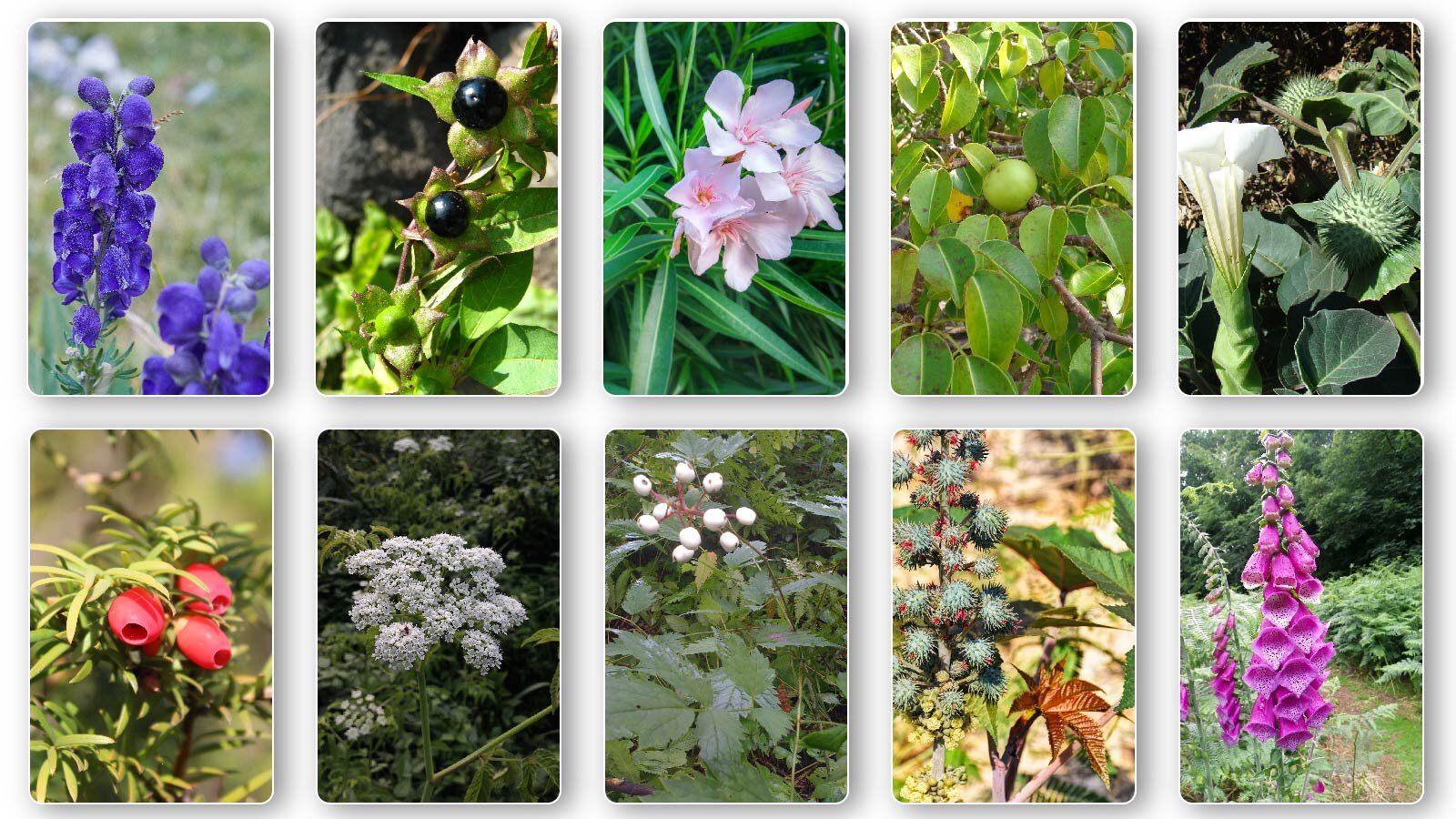
Match the names of plants with their translations.
Read the text and do the exercises below.
Not All Is Safe That Scents NicelyLittle do we realise how many plants which decorate our houses, gardens, and parks may cause less and more serious health issues under certain conditions. We don’t usually bother finding out what qualities different plants have until contact with them results in irritated skin, upset stomach, or, in more severe cases, vomiting or diarrhoeadiarrhoea. It’s essential to implement some common sense prevention measurescommon sense prevention measures in order to stop children in particular from picking and eating, for example, the tasty looking berries of European yewEuropean yew.
Some plants are only toxic in certain situations and there is no need to remove them from our living space altogether. What’s more, we must remember that although our contact with those plants may not be pleasant, they still are essential parts of the ecosystems in which they grow and eradicatingeradicating them would most likely disturb the equilibriumdisturb the equilibrium in the environment. In the case of some plants, only certain parts of them are dangerous, such as leaves, seeds, stemsstems, or the sapsap, and they can be safely grown provided they are out of reach of children and animals. Just some examples of poisonous plants everybody knows are the flowers we all love, as they herald springherald spring. The bulbsbulbs of hyacinthshyacinths and daffodilsdaffodils if ingestedingested, cause serious digestive problemsdigestive problems in humans and animals. A case of livestocklivestock poisoning was noted in the Netherlands during the Second World War when the animals, due to shortages in other feed, were given the bulbs of these flowers. Lily of the valleyLily of the valley, another sweet‑scented spring flowersweet‑scented spring flower, is highly toxic. As little as two leaves can turn out to be fatal if eaten by a small child. In the case of oleanderoleander, a common shrubshrub found in parks and gardens, even one leaf can be deadly.
One could ask how people become poisoned by plants. After all, we don’t tend to pick random leaves and flowers and chew on them on our outdoor trips. It happens in the most unexpected ways. For example, people have died after eating meat which was skeweredskewered on oleander branches and then grilled. An unaware chef used oleander leaves to decorate some dishes that were served to the guests in his restaurant. The unfortunate ones who decided to consume them suffered from blurred visionsuffered from blurred vision, vomiting, low blood pressure, and confusionconfusion. Some fainted. All had to be taken to hospital. Cases are known of people who landed in hospitals having drunk water from glasses in which lilies of the valley had been kept. These flowers contain cardiac glycosidescardiac glycosides which can cause serious cardiac arrhythmiacardiac arrhythmia. FoxglovesFoxgloves, which look lovely and are so tempting to pick, have the same effect.
Prevention is paramountPrevention is paramount and it all boils down toboils down to acquiring knowledge of your surroundings as well as teaching children certain behaviours which will keep them safe from an early age. As detrimental side‑effectsdetrimental side‑effects may occur not only after ingesting but also as a result of brushing againstbrushing against some plants, make sure you wear long sleeves and long pants when going for walks in the countryside. Steer clear ofSteer clear of certain plants, such as giant hogweedgiant hogweed which, especially on hot days, secrets sapsecrets sap which can cause lesionslesions and blistersblisters even if you are at a distance from the plant. Teach kids not to eat or even put in their mouth any plant or parts of them that have not been approved by you. Make sure it’s the commandmentcommandment they comply withcomply with at all times and not only in your presence.
If ingestion of a suspicious plant occurs, try to identify what species it was before rushing to the hospital. Getting information on how much and which parts of it were swallowed may help medical personnel make quick decisions about treatment. Under no circumstances should vomiting be induced as it may cause further damage to the oesophagusoesophagus and mouth. If contact with a poisonous plant causes skin irritation, rinserinse it generously with soapy water. Wash any clothes that the plant was in contact with.
Źródło: Anna Dutka, licencja: CC BY-SA 3.0.
a) when they want to decorate their houses or gardens.
b) when plants negatively affect them.
c) when they come across plants which look delicious.
d) when they look for remedies for their health issues.
2. Which sentence is NOT true about toxic plants?
a) They shouldn’t be annihilated because they have their functions.
b) They distort the equilibrium in ecosystems.
c) Some of them are only dangerous in certain circumstances.
d) They should be kept away from kids and pets.
3. What happened in the Netherlands during the Second World War?
a) Lots of hyacinths and daffodils were planted.
b) People ate hyacinth and daffodil bulbs because there was nothing else to eat.
c) Animals became sick after having been fed the bulbs of hyacinths and daffodils.
d) Hyacinth and daffodil bulbs were used to poison the enemy’s animals.
4. Which case of poisoning with plants is not described in the text?
a) Chewing on flowers of a certain ornamental plant.
b) Drinking a liquid in which certain flowers were kept.
c) Ingestion of food barbecued using sticks from a poisonous plant.
d) Consumption of foliage which was meant as decoration.
5. Which is NOT necessary to ensure maximum safety while coming into contact with nature?
a) We should cover our limbs.
b) We shouldn’t come close to certain plants.
c) We should teach kids not to consume any plants without consulting it first with an adult.
d) We should remove all suspicious plants from our surroundings.
Type your answers to the questions in 5–6 sentences in each case.
Is the ability to recognise poisonous plants useful knowledge for a contemporary city‑dweller? Why? Why not?
What advice would you give to someone who has accidentally ingested a poisonous plant or part of it?
What safety measures should be taken when using herbal remedies?
Słownik
/ ˈblɪstəz / / ˈblɪstə /
pęcherze [pęcherz]
/ blɜːd ˈvɪʒn̩ /
nieostre widzenie, niewyraźne widzenie
/ bɔɪlz daʊnː tuː / / bɔɪl daʊnː tuː /
sprowadza się do [sprowadzać się do]
/ ˈbrʌʃɪŋ əˈɡenst / / ˈbrʌʃ əˈɡenst /
otarcie się o [ocierać się o]
/ bʌlbz / / bʌlb /
cebulki [cebulka]
/ ˈkɑːdɪæk əˈrɪðmiə /
zaburzenia rytmu serca
/ ˈkɑːdɪæk ˈɡlaɪkəˌsaɪds / / ˈkɑːdɪæk ˈɡlaɪkəˌsaɪd /
glikozydy nasercowe [glikozyd nasercowy]
/ kəˈmɑːndmənt /
przykazanie, nakaz, zalecenie
/ ˈkɒmən sens prɪˈvenʃn̩ ˈmeʒəz / / ˈkɒmən sens prɪˈvenʃn̩ ˈmeʒə /
zdroworozsądkowe środki zapobiegawcze [zdroworozsądkowy środek zapobiegawczy]
/ kəmˈplaɪ wɪð /
postępować zgodnie z
/ kənˈfjuːʒn̩ /
splątanie, dezorientacja
/ ˈdæfədɪlz / / ˈdæfədɪl /
żonkile [żonkil]
/ ˌdetrɪˈmentl̩ saɪd ɪˈfekts / / ˌdetrɪˈmentl̩ saɪd ɪˈfekt /
szkodliwe efekty uboczne [szkodliwy efekt uboczny]
/ ˌdaɪəˈrɪə /
biegunka
/ dɪˈdʒestɪv ˈprɒbləmz / / dɪˈdʒestɪv ˈprɒbləm /
problemy trawienne [problem trawienny]
/ dɪˈstɜːb ði ˌiːkwɪˈlɪbrɪəm /
zakłócić równowagę
/ ɪˈrædɪkeɪtɪŋ / / ɪˈrædɪkeɪt /
wyplenienie, pozbycie się [wyplenić, pozbyć się]
/ ˌjʊərəˈpɪən juː /
cis pospolity
/ ˈfɒksɡlʌvz / / ˈfɒksɡlʌv /
naparstnice purpurowe [naparstnica purpurowa]
/ ˈdʒaɪənt ˈhɒɡwiːd /
barszcz Sosnowskiego
/ ˈherəld sprɪŋ /
zwiastować wiosnę
/ ˈhaɪəsɪnthetas / / ˈhaɪəsɪntheta /
hiacynty [hiacynt]
/ ɪnˈdʒestɪd / / ɪnˈdʒest /
połknięty/połknięta [połknąć]
/ ˈliːʒn̩z / / ˈliːʒn̩ /
rany [rana]
/ lɪli əv ðə ˈvæli /
konwalia
/ ˈlaɪvstɒk /
inwentarz żywy
/ iːˈsɒfəɡəs /
przełyk
/ ˌəʊlɪˈændə /
oleander (a bush or small tree native to the Mediterranean region, with narrow leaves and fragrant flowers in various colors)
/ prɪˈvenʃn̩ ɪz ˈpærəmaʊnt /
zapobieganie jest najważniejsze
/ rɪns /
przepłukać, opłukać
/ sæp /
sok (wewnątrz rośliny)
/ sɪˈkriːts sæp / / sɪˈkriːt sæp /
wydziela soki [wydzielać soki]
/ ʃrʌb /
krzew (a plant, shorter and more compact than a tree, with multiple stems)
/ ˈskjʊəd / / ˈskjʊə /
nadziany/nadziana na ruszt [nadziać na ruszt]
/ stɪə ˈklɪər ɒv /
trzymać się z daleka od
/ ˈsʌfəd frəm blɜːd ˈvɪʒn̩ / / ˈsʌfə frəm blɜːd ˈvɪʒn̩ /
cierpieli na zaburzenia wzroku [cierpieć na zaburzenia wzroku]
/ stemz / / stem /
łodygi [łodyga]
/ swiːt ˈsentɪd sprɪŋ ˈflaʊə /
słodko pachnący wiosenny kwiat
Źródło: GroMar Sp. z o.o., licencja: CC BY‑SA 3.0