Przeczytaj
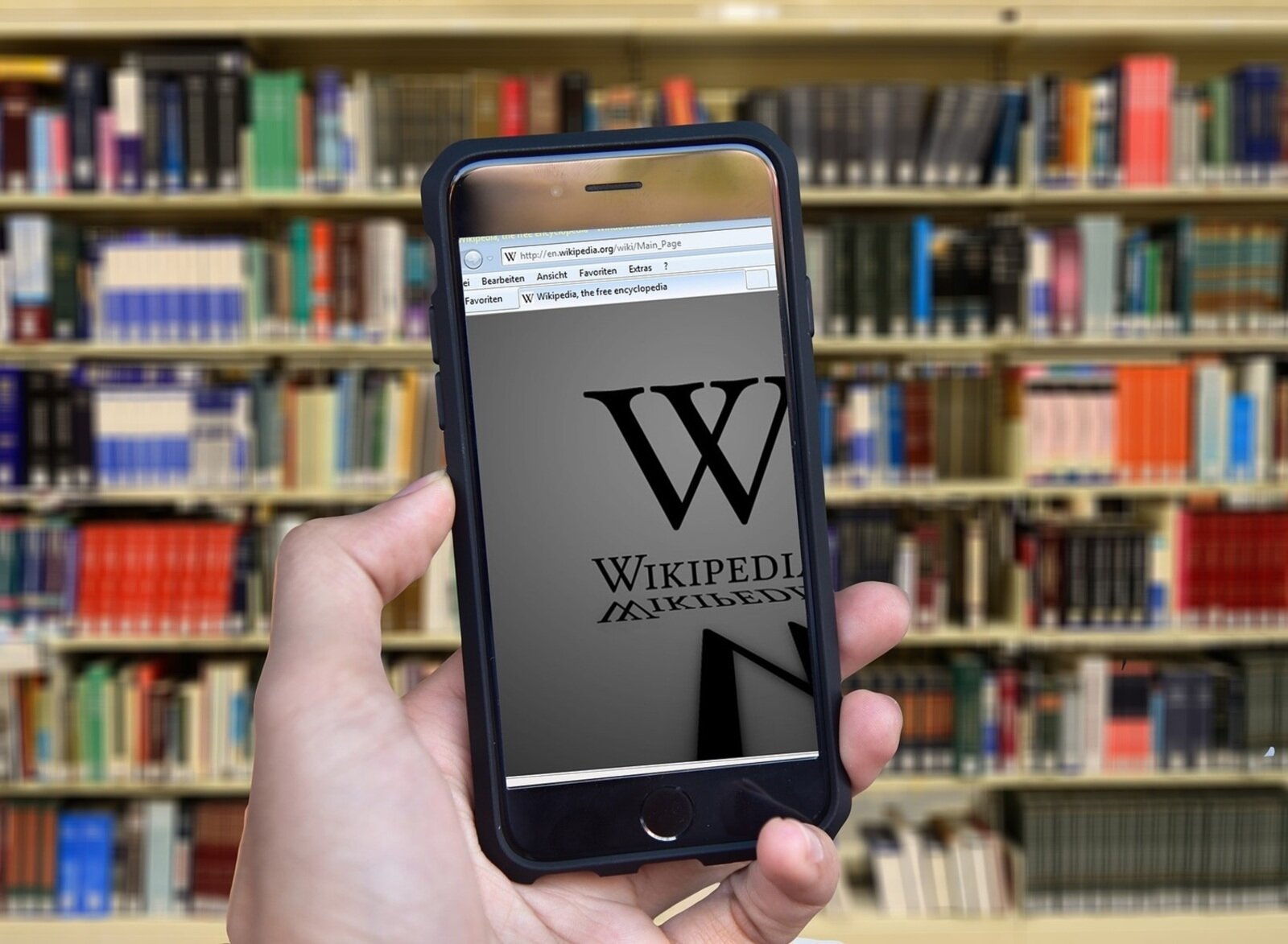
The picture below illustrates how most of us check information nowadays. We go online using our mobiles, even though there are traditional sources of information nearby. Do you know that there are certain fake entries in online encyclopaedias put there as a trap for plagiarists? They have a special name: mountweazels. In this section, you are going to read a text discussing two most often used encyclopaedias, so be ready for loads of interesting facts!
Poniższa ilustracja przedstawia najpowszechniejszy dziś sposób sprawdzania informacji. Robimy to online, przy użyciu telefonów, nawet jeśli tradycyjne źródła informacji są w pobliżu. Czy wiesz, że w encyklopediach znajdują się fałszywe wpisy, pozostawione tam jako pułapki na plagiatorów? Po angielsku mają specjalną nazwę – mountweazels. W tej sekcji przeczytasz tekst o dwóch najczęściej używanych encyklopediach, więc przygotuj się na mnóstwo zaskakujących faktów!
Now read the text and find out some facts about Wikipedia and Encyclopaedia Britannica.
The Whole World at Your FingerIt is safe to say that there is hardly any student who at some point in their studies wouldn’t use Wikipedia or another encyclopaediaencyclopaedia. Even though teachers have frowned uponfrowned upon this source of information for years, it is still loved and frequently used by students (and many others) all over the world. Are you curious about how its story began?
Wikipedia officially started in 2001 as a feature of Nupedia.com, a free online encyclopaedia which operated like other existing publications of this kind. It had highly qualified contributorshighly qualified contributors and a very long verification process, aimed at achieving a level of quality comparable to professional encyclopaedias. Unlike its predecessorpredecessor, Wikipedia is an ongoing project based on cooperation and openness, which means that anyone can join it at any given moment. It doesn’t use an editorial processeditorial process, so anyone can editanyone can edit the existing sites and articles. This volunteer projectvolunteer project uses the so‑called wiki platformwiki platform, a software which enables contributors to add or modify entriesentries simultaneouslysimultaneously. Its main strength is that it gives people the ability to work collaboratively on the same document, and if there is any mistake or unwanted modification, it’s easy to revert to an earlier versionrevert to an earlier version. Wikipedia articles are sometimes too detailed, but it’s because they reflect the enthusiasm their anonymous authors show for the subject. It might be said that due to the digital shift and the rise of mass media culture, Wikipedia has emergedemerged as a crowdsourced alternativecrowdsourced alternative to traditional encyclopaedias like the Encyclopaedia Britannica.
The Encyclopaedia Britannica is a highly respected reference workreference work, as it contains carefully edited articles on a multitude of topics. Written by experts, it also provides extensive informationextensive information on the history of countries. Many articles give referencesgive references to books and other sources about the topic covered, and are edited for length so as not to overwhelmoverwhelm a researcher with too much information. This is the oldest English reference bookreference book, whose content has been regularly revised and updated in order to meet Britannica’s long‑held standardslong‑held standards of reliabilityreliability and accuracy of the factsaccuracy of the facts. However, since its first 1768 publication in Scotland, its format has changed significantlysignificantly, as nowadays we can enjoy its free online version, Britannica.com. In fact, when it was first launched, it was so popular that the site crashed several times because online traffic was too big. The free website caused the discontinuation of print publishing, making a 2010 version the last printed set. Over the years, Britannica has not only become a credible source of knowledgecredible source of knowledge provided and fact‑checkedfact‑checked by distinguished scholarsdistinguished scholars, but its content has also inspired a lot of products which are well‑known now, such as the bottle of a very popular company. When in 1915 the famous company announced a challenge for glass firms to design a distinctdistinct bottle, one employee brought Britannica’s illustration of the ribbedribbed, middle‑bulgingmiddle‑bulging cocoa bean and that’s how the iconic bottle got its characteristic shape.
When compared to Britannica, Wikipedia is often criticised for its open‑source production model, which reportedly influences its credibilitycredibility. Sceptics say that its self‑emerging expertiseself‑emerging expertise cannot be compared with peer‑reviewedpeer‑reviewed, expert‑produced content of traditional encyclopaedias. Even though numerousnumerous studies have shown little difference in quality, breadthbreadth, and validity of the contentvalidity of the content between Britannica and Wikipedia, it is generally recommended to treat it as the first step of a research trip, which should help you move on to edited, encyclopaedias and other reference materials.
Źródło: Agnieszka Sękiewicz‑Magoń , [na podstawie:] https://www.britannica.com/topic/Wikipedia [dostęp 13.03.2022], https://www.britannica.com/topic/Encyclopaedia-Britannica-English-language-reference-work [dostęp 13.03.2022], https://www.similarweb.com/top-websites/category/reference-materials/dictionaries-and-encyclopedias/ [dostęp 13.03.2022], https://mashable.com/article/surprising-wikipedia-facts [dostęp 13.03.2022], https://www.laphamsquarterly.org/roundtable/encyclopedia-hounds [dostęp 13.03.2022], licencja: CC BY-SA 3.0.
TRUEFALSE
2. Wikipedia was created on the basis of another encyclopaedia.
TRUEFALSE
3. You have to be an expert to add an entry to Wikipedia.
TRUEFALSE
4. All Wikipedia articles are kept short.
TRUEFALSE
5. Encyclopaedia Britannica publishes only edited content.
TRUEFALSE
6. You can buy a new paper version of Britannica.
TRUEFALSE
7. A company’s bottle was inspired by one of the illustrations in Britannica.
TRUEFALSE
8. The reliability of the content in Wikipedia and Britannica is similar.
TRUEFALSE
2. The 1. contributors, 2. editorial process, 3. distinguished scholars, 4. peer-reviewed, 5. give reference, 6. extensive information, 7. credibility takes a long time because every fact needs to be carefully checked.
3. The project creators called for new 1. contributors, 2. editorial process, 3. distinguished scholars, 4. peer-reviewed, 5. give reference, 6. extensive information, 7. credibility to send in their articles on the subject.
4. All the content was created by 1. contributors, 2. editorial process, 3. distinguished scholars, 4. peer-reviewed, 5. give reference, 6. extensive information, 7. credibility, who wanted to share their scientific knowledge with common people.
5. The materials should 1. contributors, 2. editorial process, 3. distinguished scholars, 4. peer-reviewed, 5. give reference, 6. extensive information, 7. credibility to other books and articles on the same subject.
6. Every entry has been 1. contributors, 2. editorial process, 3. distinguished scholars, 4. peer-reviewed, 5. give reference, 6. extensive information, 7. credibility in order to keep the highest standards of accuracy.
7. Thanks to encyclopaedias, you have access to 1. contributors, 2. editorial process, 3. distinguished scholars, 4. peer-reviewed, 5. give reference, 6. extensive information, 7. credibility on a multitude of topics for free.
Answer the questions using 2–3 sentences.
In what situations do you use Wikipedia or Britannica?
What would you do if you couldn’t use online reference sites like Wikipedia?
What kind of entry could you add to Wikipedia?
Słownik
/ ˈækjərəsi əv ðə fækts /
dokładność, ścisłość faktów
/ ˈeniwʌn kən ˈedɪt /
każdy może edytować
/ bredtheta /
rozległość (np. wiedzy), rozpiętość (np. tematyki)
/ ˌkredɪˈbɪlɪti /
wiarygodność
/ ˈkredəbl̩ sɔːs əv ˈnɒlɪdʒ /
wiarygodne źródło wiedzy
/ ˈkraʊdsɔːst ɔːlˈtɜːnətɪv /
alternatywa pozyskana społecznościowo
/ dɪˈstɪŋkt /
wyróżniający/wyróżniająca się
/ dɪˈstɪŋɡwɪʃt ˈskɒləz / / dɪˈstɪŋɡwɪʃt ˈskɒlə /
wybitni uczeni [wybitny uczony/ wybitna uczona]
/ ˌedɪˈtɔːrɪəl ˈprəʊses /
proces redakcyjny
/ ɪˈmɜːdʒd / / ɪˈmɜːdʒ /
pojawiła się [pojawić się]
/ ɪnˌsaɪkləˈpiːdɪə /
encyklopedia
/ ˈentrɪz / / ˈentri /
tu: hasła encyklopedyczne [hasło encyklopedyczne]
/ ɪkˈstensɪv ˌɪnfəˈmeɪʃn̩ /
obszerna, szczegółowa informacja
/ ˈfækt tʃekt / / ˈfækt tʃek /
weryfikowany/weryfikowana [weryfikować]
/ fraʊnd əˈpɒn / / fraʊn əˈpɒn /
patrzyli krzywym okiem na [patrzeć krzywym okiem na]
/ ɡɪv ˈrefrəns /
podawać odniesienie
/ ˈhaɪli ˈkwɒlɪfaɪd kənˈtrɪbjuːtəz / / ˈhaɪli ˈkwɒlɪfaɪd kənˈtrɪbjuːtə /
wysoce wykwalifikowani współautorzy [wysoce wykwalifikowany współautor/ wysoce wykwalifikowana współautorka]
/ lɒŋ held ˈstændədz / / lɒŋ held ˈstændəd /
od dawna utrzymywane standardy [od dawna utrzymywany standard]
/ ˌmɪdl ˈbʌldʒɪŋ /
wybrzuszony/wybrzuszona na środku
/ ˈnjuːmərəs /
liczne
/ ˌɒn ˈɡəʊiŋ ˈprəʊses /
projekt będący w toku
/ ˌəʊvəˈwelm /
przytłoczyć
/ pɪə rɪˈvjuːd /
recenzowany/recenzowana, poddany/poddana weryfikacji
/ ˈpriːdɪsesə /
poprzednik/poprzedniczka
/ ˈrefrəns bʊk /
encyklopedia, materiał źródłowy
/ ˈrefrəns ˈwɜːk /
dzieło encyklopedyczne
/ rɪˌlaɪəˈbɪlɪti /
rzetelność
/ rɪˈvɜːt tu ən ˈɜːliə ˈvɜːʃn̩ /
wrócić do wcześniejszej wersji
/ rɪbd /
żebrowany/żebrowana
/ ˈskɒləli ɪnˌsaɪkləˈpiːdɪəz / / ˈskɒləli ɪnˌsaɪkləˈpiːdɪə /
encyklopedie naukowe [encyklopedia naukowa]
/ self ɪˈmɜːdʒɪŋ ˌekspɜːˈtiːz /
oddolnie powstająca wiedza specjalistyczna
/ sɪɡˈnɪfɪkəntli /
> znacząco
/ ˌsɪmlˈteɪnɪəsli /
jednocześnie
/ vəˈlɪdɪti əv ðə kənˈtent /
zasadność merytoryczna
/ wɪki ˈplætfɔːm /
platforma wiki (typ strony internetowej, którą można edytować bezpośrednio z przeglądarki internetowej)
/ ˌvɒlənˈtɪə prəˈdʒekt /
projekt społeczny, projekt wolontariacki
Źródło: GroMar Sp. z o.o., licencja: CC BY‑SA 3.0