Przeczytaj
Books and the Internet are the two most frequently used sources of information. Encyclopaedias are a type of publication that exist both on paper and in virtual reality of the Internet. But how to choose sources that are objective and provide factual information? How to use them and how much does it cost? You are going to read a text comparing the two best‑known online encyclopaedias and explore their advantages and disadvantages.
Dwa najczęściej wykorzystywane źródła informacji to książki i internet. Encyklopedie mogą przybierać obie formy – istnieją na papierze oraz cyfrowo, w sieci. Jak wybrać te publikacje, które są obiektywne i dostarczają informacji opartych na faktach? Jak z nich korzystać i ile to kosztuje? Przeczytasz tekst porównujący dwie najbardziej znane encyklopedie internetowe oraz poznasz ich cechy, zalety i wady.
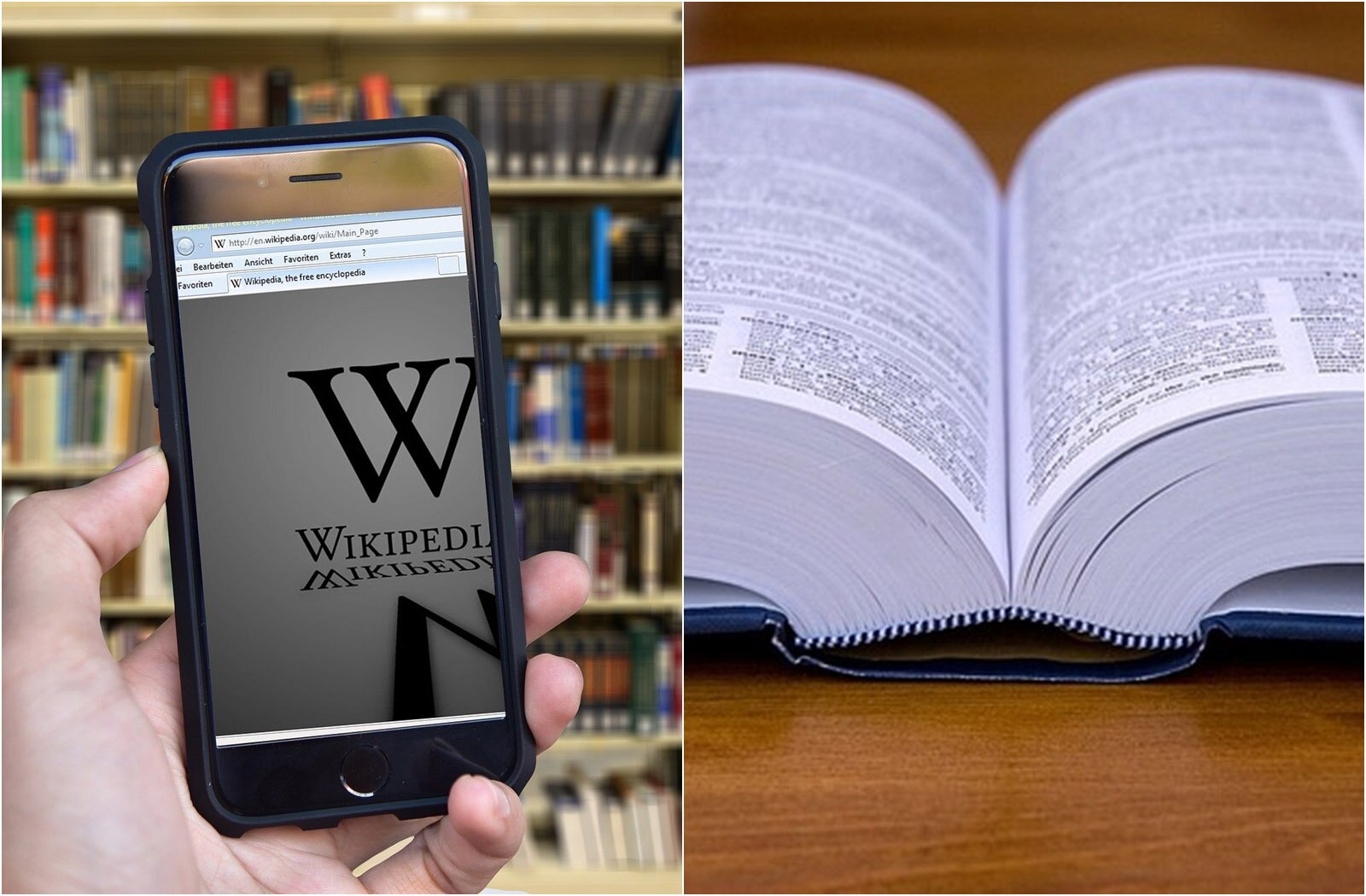
Drag the following words into the correct places.
Przeciągnij poniższe wyrazy w odpowiednie miejsca.
Match the sentences and the pictures.
Połącz zdania z ilustracjami.
Read the text about the two most popular information sources and do the exercises below.
Przeczytaj tekst o dwóch najpopularniejszych źródłach informacji i wykonaj poniższe ćwiczenia.
The Two Options in the World of InformationIn the era of numerous fake news and unchecked sourcesunchecked sources, objective informationobjective information is something that more and more people need. Among many available encyclopaedic publicationsencyclopaedic publications, two are particularly popular and used by thousands of researchers, students and other people all over the world.
Wikipedia
Wikipedia, the most successful online encyclopaediaencyclopaedia was started in 2001. It is created by volunteerscreated by volunteers. Anyone may register as an editor at this voluntary projectvoluntary project and start contributingcontributing to it. You can create and access information for free, however, sometimes it means that the articles are not objectiveobjective. Not all the contributors are knowledge expertsknowledge experts and some entriesentries are considered unreliableconsidered unreliable. Also, although Wikipedia’s articlesarticles are usually longer and more detailed than in other encyclopaedias, their sources are not always given, which may be a disadvantage. For this reason, some universities don't let their students use Wikipedia as a referencereference. Another disadvantage of Wikipedia is that its entries sometimes show too much enthusiasm of their anonymous authorsanonymous authors on controversial topics. Although the project editors must demonstrate a neutral point of viewneutral point of view, some people think there is biasbias in Wikipedia’s content.
Encyclopaedia Britannica
Encyclopaedia Britannica, on the other hand, is more traditional in gathering and publishing information. The publication, paper‑basedpaper‑based at the beginning, moved to the Internet and currently no new paper editions are published. It can be used at no cost in its basic version. Users keen on a paid subscriptionpaid subscription will have access to full versions of all articles and an additional smartphone app, quizzes to check their knowledge and other extras. Britannica’s articles are carefully editedcarefully edited by well‑known authors. They are written in an objective tone and are quite short. Also, all sources are always given and they have full referencesfull references. Therefore, some schools and universities allow their students to use Britannica to find general information. Controversial topicsControversial topics are described with caution and editors employ famous experts.
Źródło: Marcin Legeżyński, licencja: CC BY-SA 3.0.
Read the text again and decide if the following sentences are true or false.
Po przeczytaniu tekstu zdecyduj, czy poniższe zdania są prawdziwe, czy fałszywe.
- Experts say that all Wikipedia entries are objective.
TRUEFALSE
- In general, articles presented by Wikipedia are shorter than those provided by other sources.
TRUEFALSE
- The authors of Wikipedia’s articles are sometimes anonymous.
TRUEFALSE
- A smartphone app is offered by Encyclopaedia Britannica at no cost.
TRUEFALSE
- Articles published by Encyclopaedia Britannica are shorter than those on Wikipedia.
TRUEFALSE
Type the missing expressions to fill in the gaps. All the expressions are related to Wikipedia’s disadvantages.
Wpisz w luki brakujące wyrazy. Wszystkie dotyczą wad Wikipedii.
You’ve created a school project in English that required a large amount of information which you needed to research on the Internet. Using the words and phrases from the text above, write a blog entry encouraging other students to use the same encyclopaedia that you referred to while preparing for your project. In your blog entry (100–120 words):
discuss how objective the encyclopaedia you used is;
tell how convenient access to information is;
explain the cost of getting information in this way.
Stworzyłeś/stworzyłaś szkolny projekt w języku angielskim wymagający znalezienia w internecie dużej liczby informacji. Używając wyrażeń z powyższego tekstu, stwórz wpis na blog zachęcający innych uczniów do korzystania z tej samej encyklopedii, z której czerpałeś/czerpałaś informacje, przygotowując projekt. We wpisie wyjaśnij:
czy źródło, z którego korzystałeś/korzystałaś, jest obiektywne;
dlaczego dostęp do zawartych tam informacji jest wygodny;
jaki jest koszt uzyskania informacji z tego źródła.
Twój wpis powinien składać się ze 100–120 wyrazów.
Napisz swoją wypowiedź w języku angielskim. Podpisz się jako XYZ.
Rozwiń swoją wypowiedź w każdym z trzech podpunktów, tak aby osoba nieznająca polecenia w języku polskim uzyskała wszystkie wskazane w nim informacje. Napisz każdy z realizowanych podpunktów w oddzielnym akapicie. W ten sposób będziesz wiedzieć, czy na pewno dany podpunkt został przez ciebie wystarczająco rozwinięty.
Słownik
/ əˈnɒnɪməs ˈɔːthetaəz / / əˈnɒnɪməs ˈɔːthetaə /
anonimowi autorzy [anonimowy autor/ anonimowa autorka]
/ ˈɑːtɪkl̩z / / ˈɑːtɪkl̩ /
artykuły [artykuł]
/ ˈbaɪəs /
uprzedzenie
/ ˈkeəfəli ˈedɪtɪd / / ˈkeəfəli ˈedɪt /
starannie redagowany/redagowana [starannie redagować]
/ kənˈsɪdəd ˌʌnrɪˈlaɪəbl̩ / / kənˈsɪdər ˌʌnrɪˈlaɪəbl̩ /
uznane za niewiarygodne [uznać za niewiarygodne]
/ kənˈtrɪbjuːtɪŋ / / kənˈtrɪbjuːt /
przyczynianie się do rozwoju [przyczyniać się do rozwoju]
/ ˌkɒntrəˈvɜːʃl̩ ˈtɒpɪks / / ˌkɒntrəˈvɜːʃl̩ ˈtɒpɪk /
kontrowersyjne tematy [kontrowersyjny temat]
/ kriːˈeɪtɪd ˈbaɪ ˌvɒlənˈtɪəz /
tworzone przez ochotników
/ ɪnˌsaɪkləˈpiːdɪə /
encyklopedia
/ ɪnˌsaɪkləˈpiːdɪk ˌpʌblɪˈkeɪʃn̩z / / ɪnˌsaɪkləˈpiːdɪk ˌpʌblɪˈkeɪʃn̩ /
publikacje encyklopedyczne [publikacja encyklopedyczna]
/ ˈentrɪz / / ˈentri /
hasła [hasło] (w encyklopedii, słowniku)
/ ˈfʊl ˈrefrənsɪz / / ˈfʊl ˈrefrəns /
pełne przypisy [pełny przypis]
/ ˈnɒlɪdʒ ˈekspɜːts / / ˈnɒlɪdʒ ˈekspɜːt /
eksperci [ekspert/ekspertka]
/ ˈnjuːtrəl poɪnt əv vjuː /
neutralny punkt widzenia
/ əbˈdʒektɪv /
obiektywny/obiektywna
/ əbˈdʒektɪv ˌɪnfəˈmeɪʃn̩ /
obiektywne informacje [obiektywna informacja]
/ peɪd səbˈskrɪpʃn̩ /
płatna subskrypcja
/ 'peɪpə beɪst /
wydawany/wydawana w wersji papierowej, wydrukowany/wydrukowana
/ ˈrefrəns /
źródło (informacji)
/ ˌʌnˈtʃekt ˈsɔːsɪz / / ˌʌnˈtʃekt sɔːs /
niesprawdzone źródła [niesprawdzone źródło]
/ ˈvɒləntri prəˈdʒekt /
projekt dla ochotników
Źródło: GroMar Sp. z o.o., licencja: CC BY‑SA 3.0