Przeczytaj
Some people are not satisfied with a simple run or swim. Instead, they want to try their hand at an intense race that consists of three or even four different disciplines. While challenging, triathlons and quadrathlons are extremely popular with approximately 3.5 million participants worldwide. What are the disciplines involved? Are there any specific rules one must follow? Read the text in this section to learn more about triathlons and quadrathlons.
Niektórzy ludzie nie są usatysfakcjonowani zwyczajnym bieganiem lub pływaniem. Zamiast tego chcą spróbować swoich sił w intensywnym wyścigu, który składa się z trzech, a nawet czterech różnych dyscyplin. Triathlony i quadrathlony stanowią nie lada wyzwanie, a mimo to są niezwykle popularne wśród około 3,5 miliona uczestników na całym świecie. Z jakich dyscyplin się składają? Czy dotyczą ich jakieś konkretne zasady, których należy przestrzegać? Przeczytaj tekst w tej sekcji, aby dowiedzieć się więcej o triathlonach i quadrathlonach.
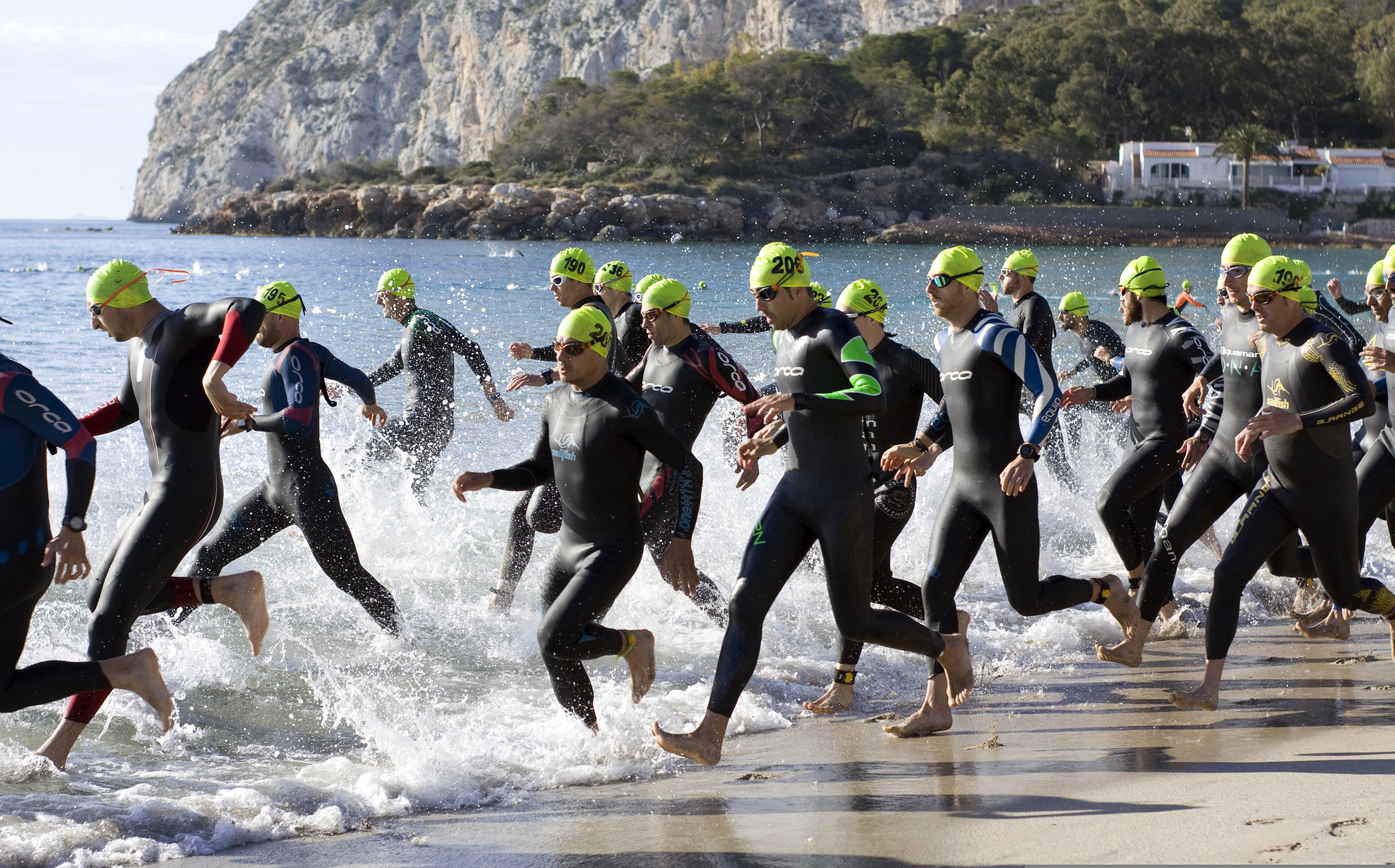
Choose all the answers that seem true to you.
Triathlon and quadrathlon are Olympic disciplines.
Triathlons are easier than quadrathlons, especially for beginners.
Those who take part in the quadrathlon World Cup can run as many races as they want.
You must showcase a certain expertise level if you want to take part in a quadrathlon.
Triathlons and quadrathlons are popular because professional athletes take part in them.
Taking part in a triathlon can help you overcome fears and grow as a person.
Read the text below and do the exercises.
Triathlons and QuadrathlonsThose who don’t fear challenges, usually opt foropt for triathlonstriathlons or quadrathlonsquadrathlons. Why?
A triathlon is a relatively new racerelatively new race (originating in 1974) consisting ofconsisting of three disciplines: swimming, cycling, and running. A participant must first swim through open wateropen water after which he or she moves to the designated transition areadesignated transition area to engage inengage in the cycling part of the race. Then, the participant gets to the second transition area and starts running. The length of each category depends on the event and may range from 100 meters to 4 kilometers for a swim, 5 to 120 kilometers for cycling, and 1 to 30 kilometers for running. At the Olympics, the distances are respectivelyrespectively 1.5km, 40km, and 10km.
A quadrathlon involves one more discipline: kayaking. Usually, the order of the disciplinesorder of the disciplines is swimming, cycling, kayaking, and running though it’s not a hard and fasthard and fast rulerule. Quadrathlons may differ from sprint to long distances, depending on the organization. While it’s not an Olympic discipline, there exists a quadrathlon World Cup, with each participant being allowed to enter as many races as they choose.
As one can imagine, both of the events are extremely physically taxingphysically taxing with the quadrathlon being the more demandingdemanding one. Those willing to take part in it, go through extensive trainingextensive training and, usually, take part in marathonsmarathons, biathlonsbiathlons, and triathlons as well. Still, the strainstrain a quadrathlon puts on a body is unprecedentedunprecedented and many participants, even those who are otherwise very athletic, are often surprised by how intense it is. Triathlons are easier and, according to experts, can be completed just after six weeks of training. It doesn’t mean they’re a walk in a park, but out of the two, they’re the better choice for beginners.
With the overall difficulty of both races, one may ask why people bother with them. The answer is simple: many people love a challenge. Finishing a triathlon or a quadrathlon is likely to leave you extremely satisfied and may open you up to more challenges in the future. Furthermore, both of the races are social events with people of different ages and expertise levelsexpertise levels competing against one anothercompeting against one another. In fact, while participating in any of the events, you might be faced withbe faced with professional athletes as well. While it might seem intimidatingintimidating, in practice, it proves that no matter your background and training, you can still enjoy a famous race. Finally, triathlons and quadrathlons can help facilitate personal growthfacilitate personal growth. Many of the challenges throughout the race aren’t physical at all. A lot of people aren’t fans of open water or have never cycled on a road. A triathlon or a quadrathlon can help them overcome their fearsovercome their fears and come out better for it.
So, are you interested in any of the races now?
Źródło: Zuzanna Kościuk , [na podstawie:] https://www.quadrathlon4you.com/quadrathlon/beginners-guide/ [dostęp 20.09.2022], https://wqf.quadrathlon.com/quadrathlon/ [dostęp 20.09.2022], https://www.trichicks.com/blog/10-reasons-why-is-triathlon-is-so-popular [dostęp 20.09.2022], https://www.nytimes.com/guides/well/triathlon-training [dostęp 20.09.2022], licencja: CC BY-SA 3.0.
a) Triathlon and quadrathlon
b) are Olympic disciplines.
c) consist of identical disciplines.
d) always have the same length.
e) help participants grow as people.
2. Triathlon
a) has a rather long history.
b) isn’t an Olympic discipline.
c) is a brand new sporting event.
d) is only half a century old.
3. A transition area
a) covers only the switch from swimming to cycling.
b) is a location in which participants switch from one discipline to another.
c) is a location in which triathlons and quadrathlons begin.
d) can be used only when switching from cycling to running.
4. Quadrathlon
a) is not an Olympic discipline but has a global cup.
b) requires more effort than triathlon and thus is more prestigious.
c) is similar to triathlon in that it involves kayaking.
d) is the best choice for those who have never combined disciplines before.
5. Those who take part in quadrathlon
a) most often are beginners with no previous experience.
b) have to showcase expertise in all the disciplines.
c) usually have previous experience with similar races.
d) have to know how to swim but not how to kayak.
6. Competing against professional athletes
a) can make you feel horrible since they’re better than you.
b) is a part of quadrathlons but not triathlons.
c) means facing but not overcoming your fears.
d) emphasizes the fact that anyone can take part in the race.
Słownik
/ bi feɪst wɪð ˈsʌmthetaɪŋ /
być postawionym/postawioną w obliczu czegoś (forced to handle, deal with, or confront something)
/ baɪˈæthetaləns / / baɪˈæthetalən /
dwuboje zimowe, zawody biatlonowe [dwubój zimowy, biatlon] (a winter sport that combines cross‑country skiing and rifle shooting)
/ kəmˈpiːtɪŋ əˈɡenst wʌn əˈnʌðə / / kəmˈpiːt əˈɡenst wʌn əˈnʌðə /
konkurowanie z innymi [konkurować z innymi] (trying to win in a sports activity against other athletes)
/ kənˈsɪstɪŋ ɒv / / kənˈsɪst ɒv /
składający/składająca się z [składać się z] (to be formed or made up of specified things or people)
/ dɪˈmɑːndɪŋ /
wymagający/wymagająca (requiring many skill or effort)
/ ˈdezɪɡneɪtɪd trænˈzɪʃn̩ ˈeəriə /
wyznaczony obszar przejściowy (an area in which participants of a triathlon or quadrathlon transition from one discipline to another)
/ ɪnˈɡeɪdʒ ɪn ˈsʌmthetaɪŋ /
angażować się w coś (to be involved in sth actively)
/ ˌekspɜːˈtiːz ˈlevl̩z / / ˌekspɜːˈtiːz ˈlevl̩ /
poziomy fachowości [poziom fachowości] (an indicator of the necessary familiarity you should have with the subject matter)
/ ɪkˈstensɪv ˈtreɪnɪŋ /
wszechstronny, intensywny trening (a training consisting of many different sessions)
/ fəˈsɪlɪteɪt ˈpɜːsənl̩ ɡrəʊtheta /
umożliwiać rozwój osobisty (to make it easier to grow as a person)
/ hɑ:d ənd fɑːst ruːl /
żelazna zasada (a rule that needs to be obeyed at all times)
/ ɪnˈtɪmɪdeɪtɪŋ /
onieśmielający/onieśmielająca (making you feel frightened or nervous)
/ ˈmærəthetaənz / / ˈmærəthetaən /
maratony [maraton] (a running race of 42.195 kilometres)
/ ˈəʊpən ˈwɔːtə /
otwarte wody (an expanse of an ocean, sea, or large lake which is distant from shore and devoid of nearby islands or other obstructions)
/ ɒpt fɔː /
decydować się na coś (make a choice from a range of possibilities)
/ ɔ:dər əv ðə ˈdɪsɪplɪnz /
kolejność dyscypli (the arrangement of disciplines in relation to each other according to a particular sequence, pattern, or method)
/ ˌəʊvəˈkʌm ðeə fɪəz / / ˌəʊvəˈkʌm wʌnz fɪə /
pokonać ich obawy [pokonać własny strach] (to stop being afraid of something)
/ ˈfɪzɪkl̩i ˈtæksɪŋ /
fizycznie wyczerpujące (physically demanding)
/ ˌkwɒdrəthetaləns / / ˌkwɒdrəthetalən /
quadrathlony, quadratlony, czwórboje [quadrathlon, quadratlon, czwórbój] (a race consisting of four disciplines)
/ ˈrelətɪvli ˈnju: reɪs /
stosunkowo nowy wyścig (a race that is quite new)
/ rɪˈspektɪvli /
odpowiednio, w wymienionej kolejności (separately or individually and in the order already mentioned)
/ streɪn /
obciążenie, wysiłek (a force tending to pull or stretch something to an extreme or damaging degree)
/ traɪˈæthetaləns / / traɪˈæthetalən /
triathlony, triatlony, trójboje [triathlon, triatlon, trójbój] (a race consisting of three disciplines)
/ ʌnˈpresɪdentɪd /
niespotykany/niespotykana (never done or known before)
/ wɔːk ɪn ðə pɑːk /
bułka z masłem (idiom) (very easy)