bg‑azure

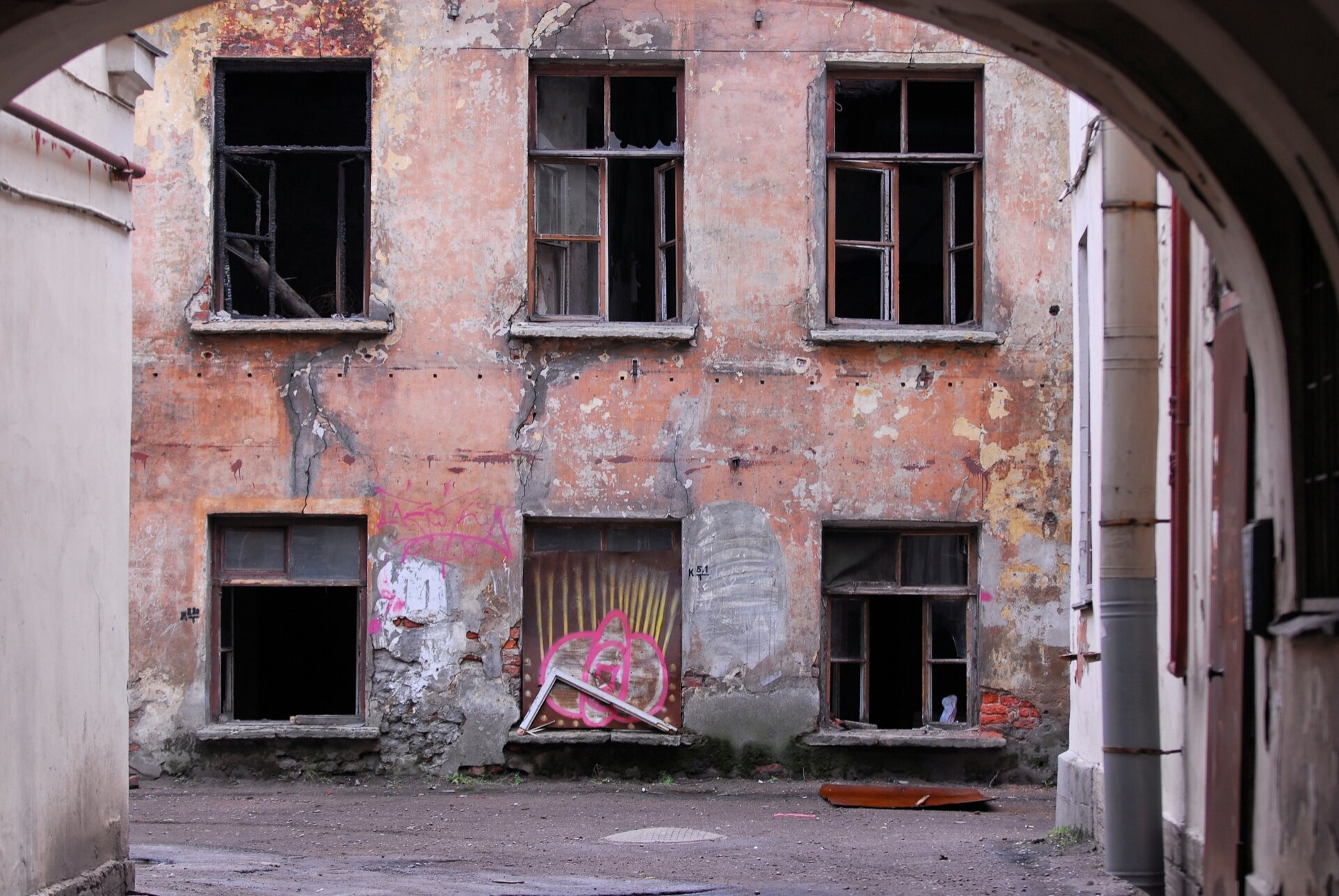
The buildings in the photo look abandoned, but there are people who are happy to live in such places. They are called squatters. Read the article to find out more about the phenomenon of squatting.

Budynki na poniższym zdjęciu wyglądają na opuszczone. Są jednak ludzie zadowoleni z mieszkania w takich miejscach. Nazywa się ich squattersami. Przeczytaj artykuł, aby dowiedzieć się więcej o zjawisku squattingu.
R1awhz3bvqsmV
Anyone home?
Czy jest ktoś w domu?
Źródło: dostępny w internecie: www.freepik.com [dostęp 19.10.2021], domena publiczna.
Exercise 1

Drag the following words to match them with their definitions.

Przeciągnij wyrazy, aby połączyć je z definicjami.

R1OHHdERJFJTB
freedom Możliwe odpowiedzi: 1. a rule made by the government, 2. a person who strongly believes in social change and fights for it, 3. the right to say, do, and think whatever you want, 4. the area in which someone lives, 5. not allowed activist Możliwe odpowiedzi: 1. a rule made by the government, 2. a person who strongly believes in social change and fights for it, 3. the right to say, do, and think whatever you want, 4. the area in which someone lives, 5. not allowed neighbourhood Możliwe odpowiedzi: 1. a rule made by the government, 2. a person who strongly believes in social change and fights for it, 3. the right to say, do, and think whatever you want, 4. the area in which someone lives, 5. not allowed law Możliwe odpowiedzi: 1. a rule made by the government, 2. a person who strongly believes in social change and fights for it, 3. the right to say, do, and think whatever you want, 4. the area in which someone lives, 5. not allowed forbidden Możliwe odpowiedzi: 1. a rule made by the government, 2. a person who strongly believes in social change and fights for it, 3. the right to say, do, and think whatever you want, 4. the area in which someone lives, 5. not allowed
Źródło: GroMar Sp. z o.o., licencja: CC BY-SA 3.0.

Read the text below and do the exercises.

Przeczytaj tekst i wykonaj poniższe ćwiczenia.

House Hunting
Anna Lech, Basia Bednarczyk House Hunting

Have you heard about squattingsquattingsquatting? It is living in someone’s empty propertypropertyproperty without their permissionpermissionpermission. Squatterssquatters [squatter]Squatters are not always homelesshomelesshomeless people. For many, squatting is a matter of choice rather than a necessitynecessitynecessity.

Squatting has its own culture and charmcharmcharm. It attracts people who valuevalue (verb)value freedomfreedomfreedom the most. Costs of living, especially in big cities, can be very high. Some people don’t feel like having a boring nine‑to‑five jobnine‑to‑five jobnine‑to‑five job and don't want to spend their lives working to pay the bills. Squatting lets them run away from routines and worries. Some squatters are artists, painters, poets, musicians, or activists who strongly believe people should be free and allowed to live as they want. They usually live in abandonedabandonedabandoned buildings in larger groups or communescommunes [commune]communes. Sometimes these houses are located in expensive neighborhoods. Squatters look after their squat building together and help each other. For them relations and freedom are more important than money.

Finding the right place for squatting is not easy and it’s important to know the law. In many countries squatting itself is not illegalillegalillegal as long as squatters do not damagedamagedamage the building. Squatters observe the chosen building for a long time before they are sure it’s really empty and no one visits it. Then they enter the house, try to clean it up, repair broken doors or windows, install a new lock on the door, fixfix fix some things up so that there is no evidenceevidenceevidence they do harm to the building. Doing any damage is forbidden. Squatters have to prove they look after the building. They also try to stay invisible and avoid troubleavoid troubleavoid trouble with the police.

Squatting often means living in harshharshharsh conditionsconditions [condition]conditions without heatingheatingheating, electricity or running waterrunning waterrunning water. Knowing that, squatters however focus more on meeting people, gaining skillsgaining skills [to gain skills]gaining skills, and building a communitybuilding a community [build a community]building a community. And that keeps them alive.

1 Źródło: Basia Bednarczyk, Anna Lech, licencja: CC BY-SA 3.0.
Exercise 2

Read the text and choose the correct answer.

Przeczytaj tekst, a następnie wybierz prawidłową odpowiedź.

R1NkQbo4RuY2u
  1. The text is about
    a) high costs of living.
    b) renovating old houses.
    c) an unusual lifestyle.

  2. Squatters value … the most.
    a) good jobs
    b) freedom
    c) money

  3. Squatters freshen up their houses to
    a) help the owners.
    b) make money.
    c) avoid being evicted.
Źródło: GroMar Sp. z o.o., licencja: CC BY-SA 3.0.
Exercise 3

Read the text again and decide if the following sentences are true or false.

Przeczytaj tekst ponownie, a następnie zdecyduj czy podane zdanie są prawdziwe, czy fałszywe.

R1CLBknBrX59W
  1. Squatters have nine-to-five jobs.
    TRUE FALSE

  2. It’s not always legal to squat.
    TRUE FALSE

  3. Squatters worry about money a lot.
    TRUE FALSE

  4. There are special organisations that help squatters.
    TRUE FALSE

  5. The Bitter End was a commune centre.
    TRUE FALSE
Źródło: GroMar Sp. z o.o., licencja: CC BY-SA 3.0.
Exercise 4

Search in text and drag the words below to the correct places. There is one extra word which you do not need.

Odszukaj w tekście podane wyrazy, a następnie przeciągnij je w odpowiednie luki. Jeden wyraz nie pasuje do żadnej luki.

R7fyNKjSc5Sdi
Squatters usually live in     1. 1. harsh, 2. necessity, 3. communes, 4. derelict, 5. heating, 6. permission     buildings. They form larger groups or     2. 1. harsh, 2. necessity, 3. communes, 4. derelict, 5. heating, 6. permission.     Property owners often don’t give them     3. 1. harsh, 2. necessity, 3. communes, 4. derelict, 5. heating, 6. permission     to move into these houses. Squatters have to live in     4. 1. harsh, 2. necessity, 3. communes, 4. derelict, 5. heating, 6. permission     conditions but for many of them, it's a matter of choice, not a     5. 1. harsh, 2. necessity, 3. communes, 4. derelict, 5. heating, 6. permission.
Źródło: GroMar Sp. z o.o., licencja: CC BY-SA 3.0.

Słownik

abandoned
abandoned

/ əˈbændənd /

R10XHmCG7P8kP1
Nagranie dźwiękowe

opuszczony/opuszczona

R11YwXgOtMhzq1
Nagranie dźwiękowe
charm
charm

/ tʃɑːm /

RoL2a9R1wlpNt1
Nagranie dźwiękowe

urok

RKBhqS4WhOfNK1
Nagranie dźwiękowe
communes [commune]
communes [commune]

/ kəˈmjuːnz / / kəˈmjuːn /

R1NIrEbdyBGgm1
Nagranie dźwiękowe

społeczności [społeczność]

R1yS0fcQeynMX1
Nagranie dźwiękowe
conditions [condition]

/ kənˈdɪʃn̩z / / kənˈdɪʃn̩ /

RGWJc3dOS9SsI1
Nagranie dźwiękowe

warunki [warunek]

R1dvqKuyThiNq1
Nagranie dźwiękowe
damage
damage

/ ˈdæmɪdʒ /

RPu1qFhINiaLS1
Nagranie dźwiękowe

niszczyć

RZAc6eeZyP6UP1
Nagranie dźwiękowe
freedom
freedom

/ ˈfriːdəm /

R1bzHEl6IQAlL1
Nagranie dźwiękowe

wolność

RKXQA7LPSDSut1
Nagranie dźwiękowe
evidence
evidence

/ ˈevɪdəns /

R1W2Yk36g8VRy1
Nagranie dźwiękowe

dowód

R1UO7xr6UJCT51
Nagranie dźwiękowe
fix
fix

/ fɪks /

RlyEzPdNjeKoB1
Nagranie dźwiękowe

naprawić

Rad5wmYWXw10G1
Nagranie dźwiękowe
harsh
harsh

/ hɑːʃ /

Rq6DmXBI5bdEp1
Nagranie dźwiękowe

surowy/surowa

R14veANvtOPaj1
Nagranie dźwiękowe
heating
heating

/ ˈhiːtɪŋ /

Rurh0slIdfeHQ1
Nagranie dźwiękowe

ogrzewanie

RXVQEzOxhd23k1
Nagranie dźwiękowe
homeless
homeless

/ ˈhəʊmləs /

RLNwptkchK8PV1
Nagranie dźwiękowe

bezdomni [bezdomny/bezdomna]

RXyDOuonjBuYb1
Nagranie dźwiękowe
illegal
illegal

/ ɪˈliːɡl̩ /

R1KOycRzWmU471
Nagranie dźwiękowe

nielegalny/nielegalna

R10V4PuSl5REp1
Nagranie dźwiękowe
necessity
necessity

/ nɪˈsesɪti /

RlkndlHOUN3tk1
Nagranie dźwiękowe

konieczność

RXJtksXgT1O171
Nagranie dźwiękowe
nine‑to‑five job
nine‑to‑five job

/ ˈnaɪntəˈfaɪv dʒɒb /

R16W5QxZNhgG71
Nagranie dźwiękowe

praca biurowa

R1ATTo32ps57O1
Nagranie dźwiękowe
owner
owner

/ ˈəʊnə /

RIxPIg6YrNCQ21
Nagranie dźwiękowe

właściciel/właścicielka

R1Cghbjw6S2Z81
Nagranie dźwiękowe
permission
permission

/ pəˈmɪʃn̩ /

R1Nlm3URKRmwQ1
Nagranie dźwiękowe

pozwolenie

RrqUhkxXbEJgH1
Nagranie dźwiękowe
property
property

/ ˈprɒpəti /

RM9TEJNv5PG711
Nagranie dźwiękowe

własność

RiFjcTa4hZEvv1
Nagranie dźwiękowe
relations [relation]

/ rɪˈleɪʃn̩z/ / rɪˈleɪʃn/

R1AWIB1n6euQ11
Nagranie dźwiękowe

relacje [relacja]

RuekUK4cljbjk1
Nagranie dźwiękowe
running water
running water

/ ˈrʌnɪŋ ˈwɔːtə /

Re1YqVSOy1FvQ1
Nagranie dźwiękowe

bieżąca woda

RkSRKZd5Nosp81
Nagranie dźwiękowe
squatters [squatter]

/ ˈskwɒtəz / / ˈskwɒtə /

R1U9L3DUbkOwU1
Nagranie dźwiękowe

osoby zamieszkujące opuszczone budynki

RXCXc0nyVTCvv1
Nagranie dźwiękowe
squatting
squatting

/ ˈskwɒtɪŋ /

RUX5VNbkNwnbF1
Nagranie dźwiękowe

zamieszkiwanie w opuszczonych budynkach

RqsjZ89tKO6ZH1
Nagranie dźwiękowe
value (verb)
value (verb)

/ ˈvæljuː /

RDT0FtY6F8m661
Nagranie dźwiękowe

cenić

R1UlbEcLd9g9h1
Nagranie dźwiękowe

Źródło: GroMar Sp. z o.o., licencja: CC BY‑SA 3.0

RA2rydfYDz7SI
(Uzupełnij).
Źródło: GroMar Sp. z o.o., licencja: CC BY-SA 3.0.
avoid trouble
avoid trouble

/ əˈvɔɪd ˈtrʌbl̩ /

R11wiy6JXTdAY1
Nagranie dźwiękowe

unikać kłopotów

RCcvqmpOWL0zf1
Nagranie dźwiękowe
gaining skills [to gain skills]

/ ˈɡeɪnɪŋ skɪlz / / tu 'ɡeɪn skɪlz /

Rp8G5cnY0jSOv1
Nagranie dźwiękowe

nabywanie umiejętności [nabywać umiejętności]

R1Oa5FJ0T0v6d1
Nagranie dźwiękowe
building a community [build a community]

/ ˌbɪldɪŋ ə kəˈmjuːnɪti / / ˈbɪld ə kəˈmjuːnɪti /

R1KA2UKDNLTqo1
Nagranie dźwiękowe

budowanie społeczności [budować społecność]

R11yhx7mgKZq01
Nagranie dźwiękowe