Przeczytaj
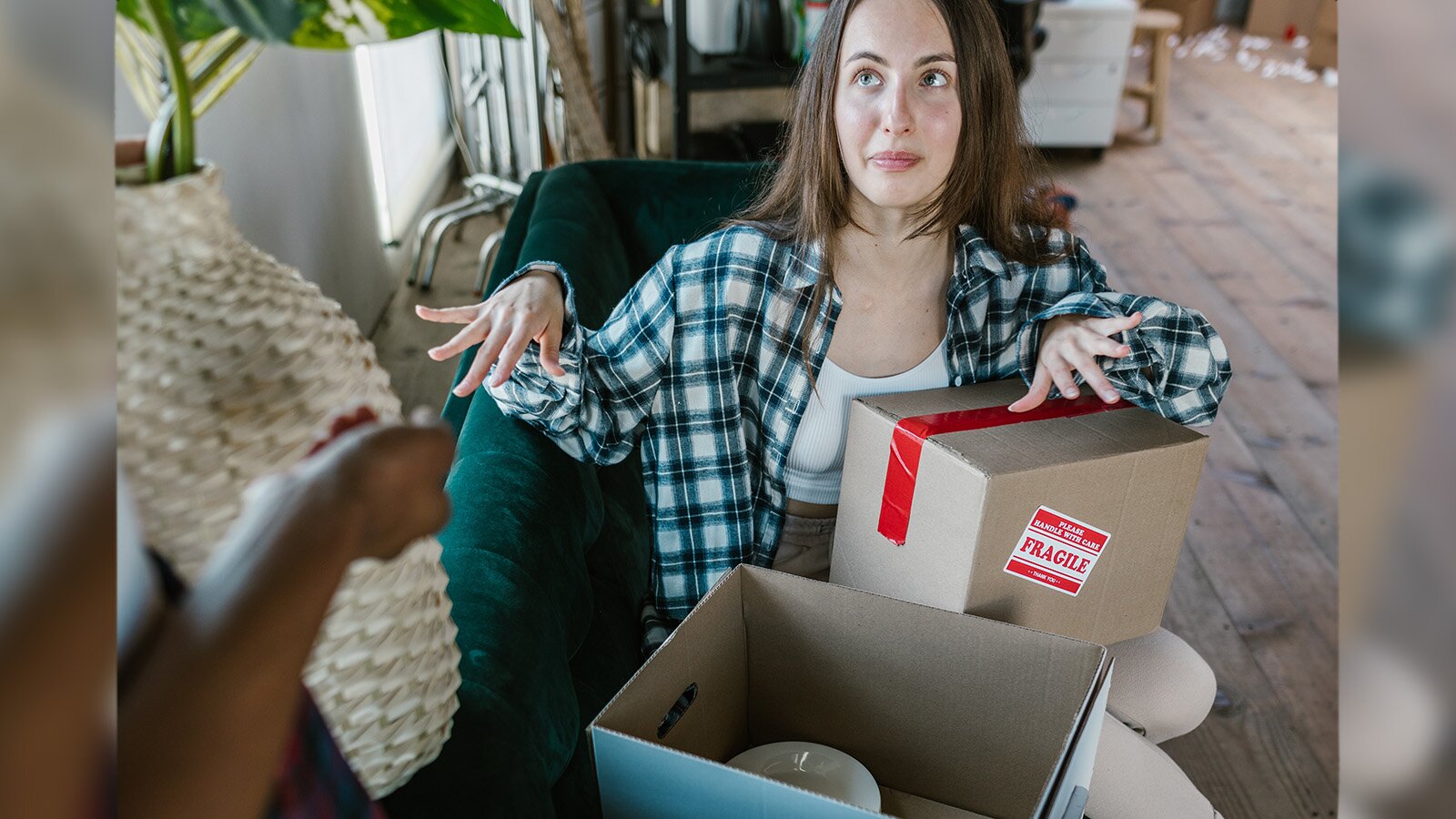
The picture below shows a woman who seems to be packing or unpacking boxes. We can assume that she is moving house. How do you think this woman feels? Think about what kind of unexpected problems you may come across while changing places. In what situations do you think people need to move out? In this material, you will learn about reasons why people have to get a new place to live permanently or temporarily and what can unexpectedly go wrong during a move.
Popatrz na zdjęcie kobiety, która zdaje się pakować lub wypakowywać rzeczy z kartonów. Można przypuszczać, że jest w trakcie przeprowadzki. Jak twoim zdaniem ona się czuje? Zastanów się, jakie niespodziewane rzeczy mogą się przytrafić w trakcie przeprowadzki. W jakich sytuacjach życiowych ludzie muszą zmienić miejsce zamieszkania? W tym materiale dowiesz się, jakie bywają powody przeprowadzek oraz co może w takich okolicznościach pójść nie do końca zgodnie z naszym planem.
Match the words to create the correct expressions related to the names of problems that might occur while moving out. Use all the words once only.
Study the text and do the exercises below.
Moving House Doesn’t Have To Move You To Tears!A.
Are you the one who can’t wait to move out and start an independent life on your own? Some young people feel ready for such a change but wonder what to do to be successful in this undertakingsuccessful in this undertaking. With a great dose of determination and financial background, you are more than likely to achieve the goalachieve the goal. But you need to be aware of the things that might go wrong as well.
B.
Whether or not moving out goes smoothly depends on the reasons for this decision. Some young people want to gain independencegain independence, which is an absolutely positive and mature thing to do! (1) [ ] No matter the reason, you must always make sure the place you have found is a safe one or that you can afford to cover the essentialscover the essentials such as rent, bills, or everyday groceries. You need to know how to draw up a realistic budgetdraw up a realistic budget. If you need help with that, you might ask your parents, as they are highly experienced in managing moneyhighly experienced in managing money.
C.
There are some things that might not go as planned, though. According to Murphy’s Law “Anything that can go wrong, will go wrong.” (2) [ ] So what may go wrong then? Let’s have a deeper look at the worst possible scenario ever.
Even if you are an expert at planningexpert at planning, you can always be surprised by Mother Nature. (3) [ ] You cannot be prepared for dense fog, can you? You can try to avoid such situations by checking the weather forecast or downloading a weather app, which can give you hour‑by‑hour forecasts. Another thing which may thwart your plansthwart your plans is connected with property damageproperty damage. While wrapping or in transport, your most valuable item, e.g a Ming dynasty vase, might get irreversibly brokenirreversibly broken or not hold up under pressurehold up under pressure. That’s terrifying. To prevent such nightmares, get a ton of foam paddingsfoam paddings to wrapwrap such treasure carefully. (4) [ ] Some people twist their ankles, strain backs, break limbs, or pull muscles when not careful enough. Usually, that happens when we quickly and inattentivelyinattentively grab boxes and furniture, which puts us at risk of health lossputs us at risk of health loss. So the only way to avoid injuries is to take some extra precautiontake some extra precaution.
What else might turn out to be a problem while moving out? Well… the dimensions of the furniture. (5) [ ] Measure it carefully far in advancein advance before moving day. You don’t want to waste the time disassemblingdisassembling it just to pack it on the truck.D.
Endless and countless things might go wrong during the move. It is simply impossible to avoid all of them. But there are some things that we can do to protect our property and health. With a little extra attention and research, we have a chance to prepare for the worst situations with a little more self‑confidence.
Źródło: Anna Faszcza, licencja: CC BY-SA 3.0.
2. Listing the motives for moving out. 1. C, 2. A, 3. B, 4. D
3. Stating the main idea of the text. 1. C, 2. A, 3. B, 4. D
4. Enumerating things that might occur to be unintended. 1. C, 2. A, 3. B, 4. D
2. 1. Not only your property can be damaged., 2. Some others get into university and need to find a closer accommodation to the place of study or wish to live with their partners., 3. Unfortunately, a series of unhappy events may take place and ruin your plans., 4. Getting older influences a change in our sense of independence., 5. Your comfy sofa is surely soft, but are you sure it will fit through the doors, entryways, or staircase?, 6. Boiling hot weather, heavy rains, thunderstorms, or blizzards can definitely destroy your plans.
3. 1. Not only your property can be damaged., 2. Some others get into university and need to find a closer accommodation to the place of study or wish to live with their partners., 3. Unfortunately, a series of unhappy events may take place and ruin your plans., 4. Getting older influences a change in our sense of independence., 5. Your comfy sofa is surely soft, but are you sure it will fit through the doors, entryways, or staircase?, 6. Boiling hot weather, heavy rains, thunderstorms, or blizzards can definitely destroy your plans.
4. 1. Not only your property can be damaged., 2. Some others get into university and need to find a closer accommodation to the place of study or wish to live with their partners., 3. Unfortunately, a series of unhappy events may take place and ruin your plans., 4. Getting older influences a change in our sense of independence., 5. Your comfy sofa is surely soft, but are you sure it will fit through the doors, entryways, or staircase?, 6. Boiling hot weather, heavy rains, thunderstorms, or blizzards can definitely destroy your plans.
5. 1. Not only your property can be damaged., 2. Some others get into university and need to find a closer accommodation to the place of study or wish to live with their partners., 3. Unfortunately, a series of unhappy events may take place and ruin your plans., 4. Getting older influences a change in our sense of independence., 5. Your comfy sofa is surely soft, but are you sure it will fit through the doors, entryways, or staircase?, 6. Boiling hot weather, heavy rains, thunderstorms, or blizzards can definitely destroy your plans.
Based on the information from the text:
Analyse three reasons for moving houses.
Explain what are the three things that might go wrong during a move.
Słownik
/ əˈtʃiːv ðə ɡəʊl /
osiągnąć cel (fulfil your plan)
/ ˈkʌvə ði ɪˈsenʃl̩z /
opłacić niezbędne rzeczy (pay for things e.g bills, which are necessary such as electricity)
/ ˌdɪsəˈsembl̩ɪŋ / / ˌdɪsəˈsembl̩ /
demontaż [demontować] (take something to pieces)
/ drɔːr ˈʌp ə ˌrɪəˈlɪstɪk ˈbʌdʒət /
sporządzić realny budżet (plan how to spend money)
/ ˈekspɜːt ət ˈplænɪŋ /
ekspert/ekspertka w planowaniu (a person who is very good at planning)
/ fəʊm ˈpædɪŋz / / fəʊm ˈpædɪŋ /
pianki wyściółkowe [pianka wyściółkowa] (foam that consists of small bubbles filled with air)
/ ɡeɪn ˌɪndɪˈpendəns /
zyskać niezależność (get freedom from being ruled by any person)
/ ˈhaɪli ɪkˈspɪərɪənst ɪn ˈmænɪdʒɪŋ ˈmʌni /
doświadczony/doświadczona w zarządzaniu pieniędzmi (to have a lot of knowledge and skills at financial issues)
/ ˈhəʊld ˈʌp ˈʌndə ˈpreʃə /
wytrzymać pod ciśnieniem (hold while being pressed)
/ ɪn ədˈvɑːns /
z wyprzedzeniem (ahead of time)
/ ˌɪnəˈtɛntɪvli /
nieuważnie (without paying attention)
/ ˌɪrɪˈvɜːsəbli ˈbrəʊkən /
nieodwracalnie zepsuty/zepsuta (broken in a way that cannot be repaired)
/ ˈprɒpəti ˈdæmɪdʒ /
uszkodzenie mienia (damage of possessions)
/ ˈpʊts əz ət rɪsk əv heltheta lɒs / / ˈpʊt ˈsʌmbədi ət rɪsk əv heltheta lɒs /
naraża nas na utratę zdrowia [narażać kogoś na utratę zdrowia] (to be put in a situation that can be dangerous for health)
/ səkˈsesfəl ɪn ðɪs ˌʌndəˈteɪkɪŋ /
odnoszący/odnosząca sukces w tym przedsięwzięciu (achieve success in a planned project)
/ ˈteɪk səm ˈekstrə prɪˈkɔːʃn̩ /
podjąć dodatkowe środki ostrożności (to act in order to avoid risk or danger)
/ thetawɔːt jə ˈplænɪŋ / / thetawɔːt ə plæn /
pokrzyżować planowanie [pokrzyżować plany] (spoil or ruin the plan)
/ ʌnˈleɪbl̩d /
bez etykiety (of an object, not having a piece of paper, etc., attached to give you information about it)
/ ræp /
owijać (cover in paper or any other material)
Źródło: GroMar Sp. z o.o., licencja: CC BY‑SA 3.0