Przeczytaj
The weather around the world often changes. Sometimes it can be dangerous. Can you think of an example of such weather? You’re going to read a text about different types of extreme weather.
Pogoda na świecie często się zmienia. Czasami warunki pogodowe mogą być niebezpieczne. Przychodzi ci na myśl przykład tego typu pogody? Przeczytasz tekst o różnych typach ekstremalnych warunków pogodowych.
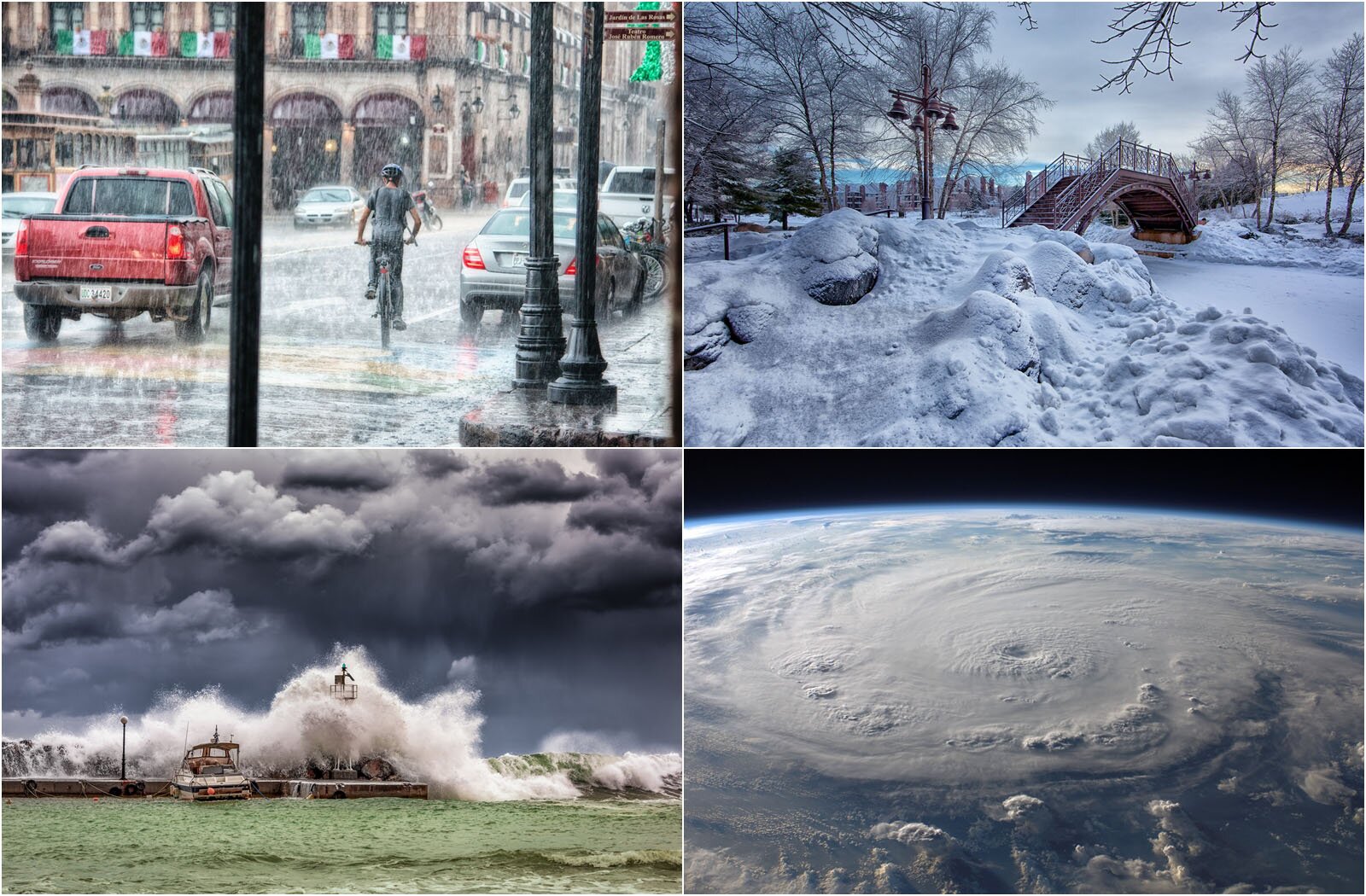
Drag the words to match them with the correct translations.
Przeciągnij wyrazy, aby połączyć je z właściwymi tłumaczeniami.
Drag the words to match them with pictures.
Przeciągnij wyrazy, aby połączyć je z właściwymi zdjęciami.
Read the text below and do the exercises.
Przeczytaj poniższy tekst i wykonaj ćwiczenia.
What’s the Weather like Today?We can fly to the moon and make computers but we still can’t control the weatherweather. When it is extremeextreme, it can be dangerousdangerous and cause serious problems.
Paragraph 1
The weather can have a very serious effect on people when it is too hot or too cold. Extremely hot weather can sometimes lastlast for many days. This is dangerous especially for children or elderly people. Very cold weather is not safe, either. Every year, many people die when they spend too much time outdoorsoutdoors in winter, so it is important to wearwear warm clothes.
Paragraph 2
Many young people don’t like rain because they can’t spend time outside. But rainy weather can causecause much bigger problems. Too much rain causes floodsfloods. Water covers streets or whole cities and people lose their cars or even houses. When there is no rain for more than a few weeks we have droughtsdroughts. It is dangerous to animals and plants because they can die without enough water.
Paragraph 3
The airair can cause extreme weather, too. For example, when hot and cold air get closer, there is a storm. There is thunderthunder and lightninglightning, which can start a fire. When there is a stormstorm over seas or oceans, it can change into a hurricanehurricane or a tornadotornado. Tornadoes move very fast and they can destroy houses or even towns.
Paragraph 4
Who doesn’t like winter, ice‑skatingice‑skating, throwingthrowing snowballssnowballs, and riding a sledgeriding a sledge! But snow can be dangerous, too. When it snows on a windy day you can’t see much because of a snowstormsnowstorm. SnowySnowy roads are dangerous for cars and people.
Źródło: Marcin Legeżyński, licencja: CC BY-SA 3.0.
Read the text again and choose the correct title for each of the four paragraphs. There is one extra title that you do not need.
Przeczytaj tekst ponownie i dobierz właściwy tytuł do każdego z czterech paragrafów. Jeden tytuł został podany dodatkowo i nigdzie nie pasuje.
Read the text again and decide if the following sentences are true or false.
Ponownie przeczytaj tekst i zdecyduj, czy podane zdania są prawdziwe, czy fałszywe.
TRUE FALSE
2. Droughts happen when there is too much snow.
TRUE FALSE
3. Hurricanes often form over water.
TRUE FALSE
4. There may be tornadoes in the USA.
TRUE FALSE
5. Snow is light.
TRUE FALSE
Read the text again and drag the words to fill in the gaps.
Przeczytaj tekst ponownie, a następnie przeciągnij wyrazy w odpowiednie luki.
2. Too much rain causes 1. drought, 2. floods, 3. flakes, 4. thunder, 5. weather.
3. When there is a storm, you can hear a 1. drought, 2. floods, 3. flakes, 4. thunder, 5. weather.
4. A lot od white 1. drought, 2. floods, 3. flakes, 4. thunder, 5. weather make snow.
5. Extreme 1. drought, 2. floods, 3. flakes, 4. thunder, 5. weather is dangerous for people.
Read the text again and put the words in the correct order.
Przeczytaj tekst ponownie i ułóż poprawne zdania z podanych wyrazów.
Read the text above again and type the missing parts of the words to complete the text below.
Po przeczytaniu tekstu uzupełnij luki w zdaniach.
Słownik
/ eə /
powietrze
/ kɔːz /
powodować
/ ˈdæmɪdʒɪz / / ˈdæmɪdʒ /
uszkadza [uszkadzać]
/ ˈdeɪndʒərəs /
niebezpieczny/niebezpieczna
/ ˈdraʊts / / ˈdraʊt /
susze [susza]
/ ɪkˈstriːm /
ekstremalne
/ fɔːlz / / fɔːl /
pada [padać]
/ fleɪks / / fleɪk /
płatki [płatek]
/ flʌdz / / flʌd /
powodzie [powódź]
/ ˈfrɒstbaɪt /
odmrożenia
/ ˈget ˈkləʊsə /
zbliżają się do siebie [zbliżać się]
/ ɡlʌvz / / ɡlʌv /
rękawiczki [rękawiczka]
/ hæt /
czapka
/ ˈhevi /
ciężki/ciężka
/ ˈhɜːrəkeɪnz / / ˈhɜːrəkeɪn /
huragany [huragan]
/ ˈaɪs skeɪtɪŋ /
łyżwiarstwo
/ ɪnˈsaɪd /
wewnątrz
/ ˈdʒækɪt /
kurtka
/ lɑːst /
trwać
/ ˈlaɪtn̩ɪŋ /
błyskawica
/ ˈɒpəzɪt /
przeciwne
/ ˌaʊtˈdɔːz /
na dworze
/ ˌaʊtˈsaɪd /
na zewnątrz
/ ˈreɪn /
deszcz
/ ˈraɪdɪŋ ə sledʒ /
jazda na sankach
/ rəʊdz / / rəʊd /
drogi [droga]
/ skaɪ /
niebo
/ ˈsnəʊbɑːlz / / ˈsnəʊbɑːl /
śnieżki [śnieżka]
/ ˈsnəʊstɔːm /
burza śnieżna
/ ˈsnəʊɪ /
zaśnieżony/zaśnieżona
/ stɔːm /
burza
/ ˈthetarəʊɪŋ /
rzucanie
/ ˈthetaʌndə /
grzmot
/ tɔːˈneɪdəʊ /
tornado
/ weə /
nosić, wkładać
/ ˈweðə /
pogoda
/ ˈwɪntə /
zima
Źródło: GroMar Sp. z o.o., licencja: CC BY‑SA 3.0