bg‑azure

Some dishes seem appetising, while others not so much. What's the most out‑there thing you've ever tried? Would you be willing to taste a worm or a fermented egg? In this section, you are going to read a text about curious food from around the world.

Niektóre dania wydają się apetyczne, a inne niekoniecznie. Jaka jest najdziwniejsza rzecz, której próbowałeś/próbowałaś? Czy zjadłbyś/zjadłabyś robaka lub sfermentowane jajka? W tej sekcji przeczytasz tekst, który przybliży ci ciekawe potrawy z różnych zakątków świata.
R1DZc8nWQMC62
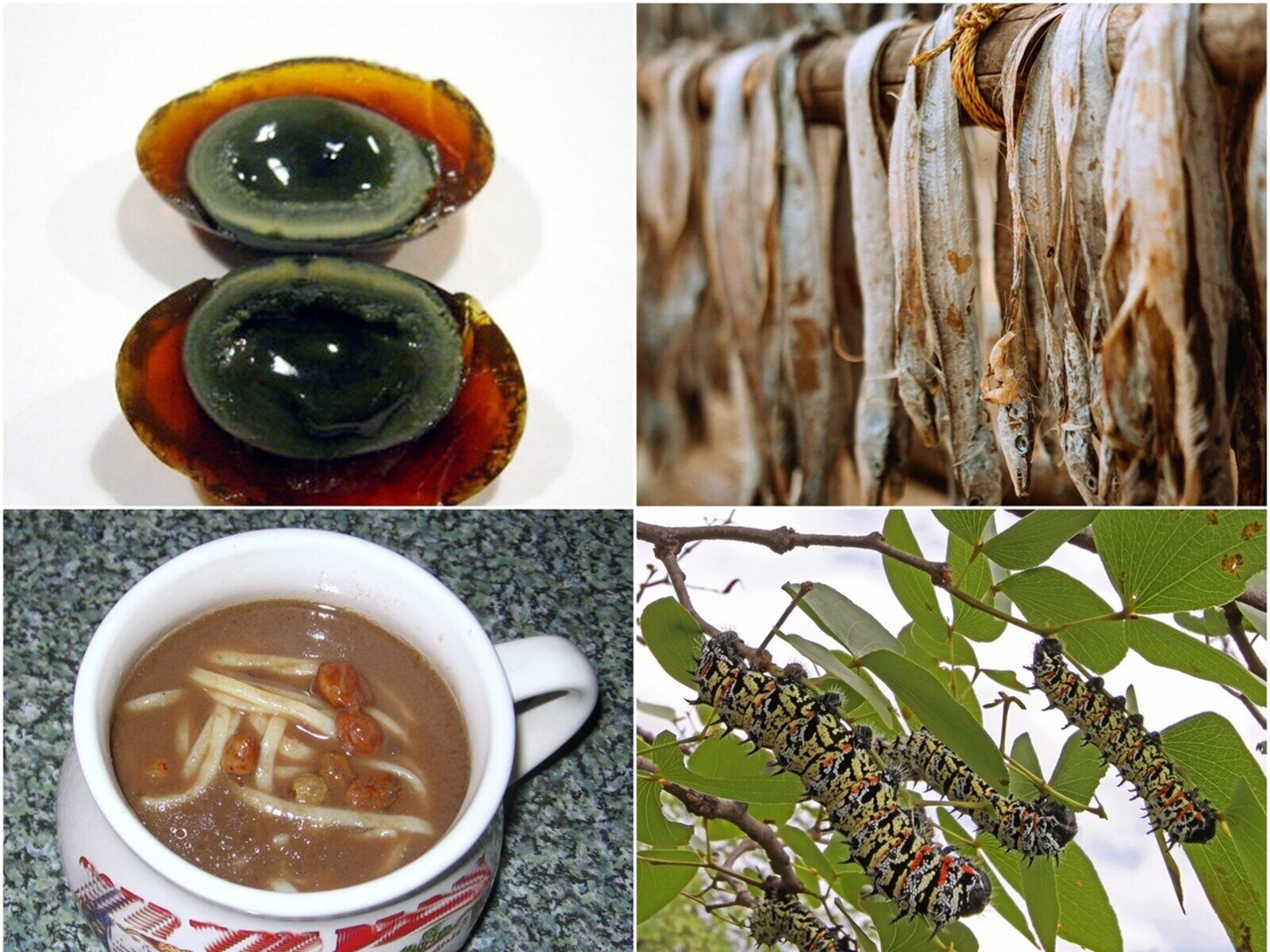
Poland is not the only country with curious dishes!
Polska to nie jedyny kraj posiadający ciekawe dania!
Źródło: dostępny w internecie: commons.wikimedia.org [dostęp 20.01.2022], https://unsplash.com/ [dostęp 26.05.2022], domena publiczna.
R1bK203oeDIa2
Exercise 1
Match the words with their definitions. inedible Możliwe odpowiedzi: 1. the yellow part of an egg, 2. not suitable for eating, 3. something new and unusual, 4. food which is very rare and expensive, 5. not cooked, 6. almost see-through delicacy Możliwe odpowiedzi: 1. the yellow part of an egg, 2. not suitable for eating, 3. something new and unusual, 4. food which is very rare and expensive, 5. not cooked, 6. almost see-through raw Możliwe odpowiedzi: 1. the yellow part of an egg, 2. not suitable for eating, 3. something new and unusual, 4. food which is very rare and expensive, 5. not cooked, 6. almost see-through yolk Możliwe odpowiedzi: 1. the yellow part of an egg, 2. not suitable for eating, 3. something new and unusual, 4. food which is very rare and expensive, 5. not cooked, 6. almost see-through novelty Możliwe odpowiedzi: 1. the yellow part of an egg, 2. not suitable for eating, 3. something new and unusual, 4. food which is very rare and expensive, 5. not cooked, 6. almost see-through translucent Możliwe odpowiedzi: 1. the yellow part of an egg, 2. not suitable for eating, 3. something new and unusual, 4. food which is very rare and expensive, 5. not cooked, 6. almost see-through
Źródło: GroMar Sp. z o.o., licencja: CC BY-SA 3.0.

Read the text about curious dishes from around the world and then do the exercises below.

Would You Try It?
Zuzanna Ładyga‑Michalska Would You Try It?

Did you know that there’s a museum in Malmo, Sweden, that houseshouses [house] (v.)houses „world's most disgusting food?” The idea behind it is to challenge what we find edibleedibleedible. After all, „disgusting” is a subjective termsubjective termsubjective term and the things you find revoltingrevoltingrevolting, others may find delicious. As such, the museum  featuresfeatures [feature] (verb)features such  delicaciesdelicacies [delicacy]delicacies as Swedish fermented herringfermented herringfermented herring, Peruvian roastedroastedroasted guinea pig, Sardinian cheese with maggotsmaggotmaggots or a decomposeddecomposeddecomposed shark from Iceland.

Below you will read about a few of the most challenging dishes on displayon displayon display.

Century Eggs

Do you like Chinese cuisine? If so, have you ever tried fermented duck's eggs? They are preservedpreservedpreserved in a mixturemixturemixture of clayclayclay, ashashash, salt and quicklimequicklimequicklime for from a few weeks to several months. Thanks to this process, the yolkyolkyolk becomes dark green with a creamy consistencycreamy consistencycreamy consistency while the white turns into a dark brown translucenttranslucenttranslucent jelly. Understandably, the dish has a very intense flavourintense flavourintense flavour. In 2013 alone, 3 million tons of such eggs were consumedconsumed [consume]consumed in China.

Mopane Wormsmopane worms [mopane worm]Mopane Worms

One of the delicacies from southern Africa are  edible  caterpillarscaterpillars [caterpillar]caterpillarsDrieddriedDried mopane worms can be eaten rawrawraw as a crispcrispcrisp snack, fried on a pan until they are crunchycrunchycrunchy or cooked with onions and tomatoes and sprinkledsprinkled sprinkled with spices. Their fleshfleshflesh is yellow, but the inside can contain parts of the leaves which the worms had eaten. They are considered to be a great source of proteins.

Chapulines

These are a type of grasshoppergrasshoppergrasshopper most popular in Mexico's Oaxaca region. They are collected from early May until early autumn and most often eaten as a snack toastedtoastedtoasted on a special frying pan seasonedseasonedseasoned with garlic, lime juice, chilli and salt. They are also sold at local sporting events or used as a filling for tacos or burritos. In 2017, these grasshoppers were introduced as a noveltynoveltynovelty snack for foodiesfoodies [foodie]foodies in the USA.

Blood soup

Many countries have such soup on offer, including Poland, Belarus and Lithuania. It is made of duck’s blood (although rabbit’s or pig’s can also be used) and poultry brothpoultry brothpoultry broth. It has a sweet and sour flavour thanks to the use of salt and vinegarvinegarvinegar. Among other ingredients added to the dish are plum or pear syrup, dried plums, pears, or cherries and honey. It is mainly served with noodles, boiled potatoes or dumplings.

Hakarl

A specialty from Iceland is a fermented shark, known for its characteristiccharacteristiccharacteristic strong smell. Typically it is served diceddiceddiced on toothpickstoothpicks [toothpick]toothpicks. Newbiesnewbies [newbie]Newbies are advised to pinch their nosepinch their nose [pinch one’s nose]pinch their nose while taking the first bite because the smell is much stronger than the taste. It is served in two ways: chewychewychewy and red from the belly and white and soft from the body. The shark is put in the sand and pressed with heavy stones for about 6 to 12 weeks, depending on the season. Then it is cut and left to dry for several months.

As you can see, there are a lot of curious foods served around the world. While they may not sound appetisingappetisingappetising they're important elements of other cultures, so it's important to approach them with respect rather than disgust. Who knows, maybe you'll actually like them if you give them a try!

1 Źródło: Zuzanna Ładyga‑Michalska, licencja: CC BY-SA 3.0.
RvrKJpJtcs3jN
Exercise 2
Search for the information in the text and choose the correct answer. 1. According to the article, the museum in Malmo
a) attempts to shame curious dishes.
b) has decomposed shark on display.
c) displays traditional Swedish cuisine.
d) claims that all the exhibits are delicious.
2. Century eggs
a) are marinated for at least a year.
b) have green whites and translucent yolks.
c) are extremely popular in China.
d) need to be fried before eating.
3. Mopane worms
a) sometimes have leafs inside them.
b) are popular all around Africa.
c) must be consumed uncooked.
d) lack crucial nutrients.
4. Chapulines
a) are used solely as stuffing.
b) have become popular around the world.
c) are available in Mexican stadiums.
d) should be served with herbs.
5. Blood soup
a) contains only blood from poultry.
b) can be cooked with fruit.
c) is sour and salty due to vinegar.
d) has vegetable broth in it.
6. Hakarl
a) can come in two different forms.
b) is fried before being sold.
c) has the consistency of gum.
d) smells sweet and sour.
Źródło: GroMar Sp. z o.o., licencja: CC BY-SA 3.0.
Exercise 3
R1aqV0LGIrFiE
Read the sentences and translate the words in brackets. 1. Some curious foods can be eaten      rTu uzupełnij     while others need to be     bTu uzupełnij     or     fTu uzupełnij     first. 2. While decomposed shark meat has a strong scent, its     fTu uzupełnij     isn’t as     iTu uzupełnij. 3. Certain dishes are a     nTu uzupełnij     in our country while being extremely popular elsewhere. 4. People may find specific food     iTu uzupełnij     because of its colour, scent or texture. 5. The menu of this restaurant     fTu uzupełnij     such     dTu uzupełnij     like century eggs and chapulines. 6. This     dTu uzupełnij     meat is too     cTu uzupełnij     for my tastes. It makes it hard to swallow!
Źródło: GroMar Sp. z o.o., licencja: CC BY-SA 3.0.
Exercise 4

Answer the question in 3‑4 sentences.

Which delicacy would you like to try? Why/why not?

R1XHyir6ObTly
(Uzupełnij).
Źródło: GroMar Sp. z o.o., licencja: CC BY-SA 3.0.
Culture Note

Imperial system to system miar i wag stosowany przede wszystkim w krajach anglosaskich, a zwłaszcza w Wielkiej Brytanii i USA. Jednostki tego systemu, tak samo jak tego używanego w Polsce (układ SI), odnoszą się do długości/odległości, wagi, pojemności i temperatury.

Długość/odległość wyraża się najczęściej w:

  • calach (inch, l.mn. inches, skrót in) – 1 in = 25,4 mm

  • stopach (foot, l.mn. feet, skrót ft) – 1 ft = 0,3048 m

  • jardach (yard, l.mn. yards, skrót yd) – 1 yd = 0,9144 m

  • milach (mile, l.mn. miles, skrót mi) 1 mi = 1609 m

Wagi wyrażone są najczęściej w:

  • uncjach (ounce, l.mn. ounces, skrót oz) – 1 oz = 28 g

  • funtach (pound, l.mn. pounds, skrót lb) – 1 lb = 453 g

Objętość anglosasi wyrażają w:

  • filiżankach (cup, l.mn. cups, skrót c) – 1 c = 142 ml (UK) / 250 ml (USA)

  • pintach (pint, l.mn. pints, skrót pt) – 1 pt = 0,56 l (UK) / 0,47 l (USA)

  • galonach (gallon, l.mn. gallons, skrót gal) – 1 gal = 4, 54 l (UK) / 3,7 l (USA)

TIP: Jeśli chcesz przygotować jakieś danie z książki kucharskiej, musisz dokładnie sprawdzić, czy jest to wydanie brytyjskie, czy amerykańskie, żeby właściwie przeliczyć proporcje. Blogi internetowe poświęcone przepisom kulinarnym mają zwykle listę składników z już przeliczonymi miarami, co jest ukłonem w stronę użytkowników z różnych stron świata. Jedna z ulubienic publiczności (nie tylko na Wyspach), Nigella Lawson, w swoich programach kulinarnych stosuje oba systemy miar, a jeśli jakiś produkt ma dwie nazwy, zawsze wymienia obie, z myślą o odbiorcach z Europy i zza oceanu; np. bakłażan to aubergine (UK) lub eggplant (USA).

Temperatura ciała czy powietrza najczęściej jest wyrażana w stopniach Fahrenheita (degrees F), choć w prognozie pogody na kanale BBC prezenterzy zaczynają także stosować stopnie Celsjusza. 32 stopnie Fahrenheita to odpowiednik 0 stopni Celsjusza. Jeśli twój termometr przy mierzeniu temperatury ciała wskazywałby 99° F, oznaczałoby to, że masz stan podgorączkowy (37° C).

RlLnC9mI0VHcJ
Exercise 5
Match the SI units with the Imperial ones. Use approximations. 0,5 l  Możliwe odpowiedzi: 1. 2 miles, 2. 1 pint, 3. UK gallon, 4. 4 inches, 5. 100 degrees F, 6. 4 US cups 3 km Możliwe odpowiedzi: 1. 2 miles, 2. 1 pint, 3. UK gallon, 4. 4 inches, 5. 100 degrees F, 6. 4 US cups 38 degrees C  Możliwe odpowiedzi: 1. 2 miles, 2. 1 pint, 3. UK gallon, 4. 4 inches, 5. 100 degrees F, 6. 4 US cups 4,5 l  Możliwe odpowiedzi: 1. 2 miles, 2. 1 pint, 3. UK gallon, 4. 4 inches, 5. 100 degrees F, 6. 4 US cups 10 cm Możliwe odpowiedzi: 1. 2 miles, 2. 1 pint, 3. UK gallon, 4. 4 inches, 5. 100 degrees F, 6. 4 US cups 1 l  Możliwe odpowiedzi: 1. 2 miles, 2. 1 pint, 3. UK gallon, 4. 4 inches, 5. 100 degrees F, 6. 4 US cups
Źródło: GroMar Sp. z o.o., licencja: CC BY-SA 3.0.
R7giIofvwEIoM
Exercise 6
Fill in the gaps in the recipe using the imperial system. There are two extra elements which you do not need. Recipe for the easiest muffins (12 large muffins):

Preheat the oven to 180 degrees C     1. 1. 8 oz, 2. 4 oz, 3. 2 cups, 4. ½ cup, 5. 1 pint, 6. 375 degrees F, 7. 1 pound.     Use some butter to grease the muffin tray or use muffin cases. Take two large bowls, one for dry ingredients and one for liquid.
In one bowl, mix 2 eggs lightly whisked, 125 ml     2. 1. 8 oz, 2. 4 oz, 3. 2 cups, 4. ½ cup, 5. 1 pint, 6. 375 degrees F, 7. 1 pound     canola oil, 250 ml     3. 1. 8 oz, 2. 4 oz, 3. 2 cups, 4. ½ cup, 5. 1 pint, 6. 375 degrees F, 7. 1 pound     milk and mix everything together. In another bowl, mix 500 grams     4. 1. 8 oz, 2. 4 oz, 3. 2 cups, 4. ½ cup, 5. 1 pint, 6. 375 degrees F, 7. 1 pound     of flour, 125 grams     5. 1. 8 oz, 2. 4 oz, 3. 2 cups, 4. ½ cup, 5. 1 pint, 6. 375 degrees F, 7. 1 pound     of sugar and 1 teaspoon baking powder.
Add the liquid to the dry ingredients and mix everything, but don’t do it too thoroughly. Pour the mixture into the muffin tray and put in the oven. Bake for about 20 minutes. To make sure they are fully baked, use a wooden stick or toothpick and put it in one of the muffins. If it comes out dry, they are ready.
Bon appetit!
Źródło: GroMar Sp. z o.o., licencja: CC BY-SA 3.0.

Słownik

appetising
appetising

/ ˈæpɪtaɪzɪŋ /

RKfEqwILe5mHV1
Nagranie dźwiękowe

apetyczny/apetyczna

R17rWoTRNDXq31
Nagranie dźwiękowe
ash
ash

/ æʃ /

RojVG1mPDFo711
Nagranie dźwiękowe

popiół

R1LW56OmLcZjq1
Nagranie dźwiękowe
caterpillars [caterpillar]

/ ˈkætəpɪləz / / ˈkætəpɪlə /

RELYULgNvYUgk1
Nagranie dźwiękowe

gąsienice [gąsienica]

RwZdYrHWJF54i1
Nagranie dźwiękowe
characteristic
characteristic

/ ˌkærəktəˈrɪstɪk /

ROsNC9SZh5Kk91
Nagranie dźwiękowe

tu: specyficzny/specyficzna

R1LHxrjqylY5V1
Nagranie dźwiękowe
chewy
chewy

/ ˈtʃuːi /

R1vG0JFgta0Pw1
Nagranie dźwiękowe

żylasty/żylasta, trudny/trudna do pogryzienia

R19SlrarAEvld1
Nagranie dźwiękowe
clay
clay

/ kleɪ /

RGc9G0RXV0XoR1
Nagranie dźwiękowe

glina

R1cmFNmAGlem81
Nagranie dźwiękowe
consumed [consume]
consumed [consume]

/ kənˈsjuːmd / / kənˈsjuːm /

RPJT3SbDGfCa11
Nagranie dźwiękowe

zjedzony/zjedzona, spożyty/spożyta [jeść, spożywać]

REhWVYU0BGLvd1
Nagranie dźwiękowe
creamy consistency
creamy consistency

/ ˈkriːmi kənˈsɪstənsi /

RW8K8ezvck7VD1
Nagranie dźwiękowe

kremowa konsystencja

R1IVYI4ZjiTC21
Nagranie dźwiękowe
crisp
crisp

/ krɪsp /

RQ670IZFK6fOQ1
Nagranie dźwiękowe

kruchy/krucha, chrupiący/chrupiąca

R1FQAXhl3Thwv1
Nagranie dźwiękowe
crunchy
crunchy

/ ˈkrʌntʃi /

R9Wg44hHQL9yE1
Nagranie dźwiękowe

chrupki/chrupka

RZMzdBW1hfS491
Nagranie dźwiękowe
cuisine
cuisine

/ kwɪˈziːn /

RMNxbHstqYJdF1
Nagranie dźwiękowe

kuchnia (w znaczeniu: styl gotowania, np. kuchnia narodowa)

R16F0CyvO928d1
Nagranie dźwiękowe
decomposed
decomposed

/ ˌdiːkəmˈpəʊzd /

RwUfPjAGulHyC1
Nagranie dźwiękowe

sfermentowany/sfermentowana, zgniły/zgniła

R1VK6iZaCMLno1
Nagranie dźwiękowe
delicacies [delicacy]

/ ˈdelɪkəsɪz / / ˈdelɪkəsi /

R1RNum3F2sds11
Nagranie dźwiękowe

rarytasy, lokalne przysmaki [rarytas, lokalny przysmak]

REVDIfbCnsqRG1
Nagranie dźwiękowe
diced
diced

/ daɪst /

RMD0tZN1JbOA21
Nagranie dźwiękowe

pokrojony/pokrojona w kostkę

RDdWvNYPeSNsS1
Nagranie dźwiękowe
dried
dried

/ draɪd /

RGpA1B6A1rtU31
Nagranie dźwiękowe

suszony/suszona

RRDjCPUKMrINJ1
Nagranie dźwiękowe
edible
edible

/ ˈedɪbl̩ /

R1eze7HRC0sVa1
Nagranie dźwiękowe

jadalny/jadalna

RVYkzePYxg4Ab1
Nagranie dźwiękowe
features [feature] (verb)

/ ˈfiːtʃəz / / ˈfiːtʃə /

RPp17MV33EX5h1
Nagranie dźwiękowe

prezentuje [prezentować]

R1TYZVlpgeLij1
Nagranie dźwiękowe
fermented herring
fermented herring

/ fəˈmentɪd ˈherɪŋ /

Rjkmd4D6mXDJ51
Nagranie dźwiękowe

sfermentowany (kiszony) śledź

R1WprLDIIGJu11
Nagranie dźwiękowe
flesh
flesh

/ fleʃ /

RLj1kUvOnsUia1
Nagranie dźwiękowe

mięso bez skóry

R1RnX2THmD9u41
Nagranie dźwiękowe
foodies [foodie]
foodies [foodie]

/ ˈfuːdiz / / ˈfuːdi /

R12RjP9PL09Xx1
Nagranie dźwiękowe

smakosze [smakosz/smakoszka]

R26EQPWL8xgXn1
Nagranie dźwiękowe
grasshopper
grasshopper

/ ˈɡrɑːshɒpə /

RCoCznZBq1nNO1
Nagranie dźwiękowe

konik polny

R16occR3Efyzk1
Nagranie dźwiękowe
houses [house] (v.)
houses [house] (v.)

/ ˈhaʊzɪz / / ˈhaʊs /

R1XvBAUytI6M31
Nagranie dźwiękowe

mieści [mieścić]

R1Ew98XJiUCNb1
Nagranie dźwiękowe
intense flavour
intense flavour

/ ɪnˈtens ˈfleɪvə /

R1PSOsznC4m791
Nagranie dźwiękowe

wyrazisty smak

R10Vx7YgCRp3j1
Nagranie dźwiękowe
maggot
maggot

/ ˈmæɡət /

RrTF0DCNNcX4K1
Nagranie dźwiękowe

larwa

R18YGCHeft8U21
Nagranie dźwiękowe
marinate
marinate

/ ˈmærɪneɪt /

R1UxJvpJCm2U21
Nagranie dźwiękowe

marynować

R1OkjpK0WSkt21
Nagranie dźwiękowe
mixture
mixture

/ ˈmɪkstʃə /

R1axCAQnB2nlw1
Nagranie dźwiękowe

mieszanka, mikstura

RrYJIEsgdF8vG1
Nagranie dźwiękowe
mopane worms [mopane worm]

/ məˈpɑːni wɜːmz / / məˈpɑːni wɜːm /

R2RHLnF5cq2xy1
Nagranie dźwiękowe

robaki mopane [robak mopane] (gatunek ćmy cesarskiej z południowej Afryki, której gąsienica jest jadalna)

RQ0RqYXIGLEV11
Nagranie dźwiękowe
newbies [newbie]
newbies [newbie]

/ ˈnjuːbiz / / ˈnjuːbi /

R8h98ngTnwppd1
Nagranie dźwiękowe

nowicjusze [nowicjusz/nowicjuszka] (osoba, która robi coś po raz pierwszy)

RvNEdwgEtYP3o1
Nagranie dźwiękowe
novelty
novelty

/ ˈnɒvlti /

R1evWWlNIdD1n1
Nagranie dźwiękowe

nowość, nowinka

RkCSAIxgf7kx41
Nagranie dźwiękowe
on display
on display

/ ˈɒn dɪˈspleɪ /

R6gXYrxTSPNdf1
Nagranie dźwiękowe

na wystawie

RUEnCEEIqVMXS1
Nagranie dźwiękowe
pinch their nose [pinch one’s nose]

/ pɪntʃ ðeə nəʊz / / pɪntʃ wʌnz nəʊz /

RO1sK6J598X4T1
Nagranie dźwiękowe

zatkać jej/jego nos [zatykać nos]

RwLJk0EHocSWd1
Nagranie dźwiękowe
poultry broth
poultry broth

/ ˈpəʊltri brɒtheta /

RVPFeVt16WVQL1
Nagranie dźwiękowe

bulion drobiowy

R1IN2Znwbh7OL1
Nagranie dźwiękowe
preserved
preserved

/ prɪˈzɜːvd /

RuXUrpPWS18He1
Nagranie dźwiękowe

tu: konserwowany/konserwowana

RHBf0TB9V0qbf1
Nagranie dźwiękowe
quicklime
quicklime

/ ˈkwɪklaɪm /

RAQc6WgF9grga1
Nagranie dźwiękowe

wapno palone

ROtndh3NhVlUq1
Nagranie dźwiękowe
raw
raw

/ rɔː /

RCmwJgBBVJpwf1
Nagranie dźwiękowe

surowy/surowa

R17ZVNSUOs4UZ1
Nagranie dźwiękowe
revolting
revolting

/ rɪˈvəʊltɪŋ /

R11sCfGXmX7Gm1
Nagranie dźwiękowe

odrażający/odrażająca, odpychający/odpychająca

RIYJ7dw9RHAfb1
Nagranie dźwiękowe
roasted
roasted

/ ˈrəʊstɪd /

RsSTe1smy8W1s1
Nagranie dźwiękowe

pieczony/pieczona (o mięsie)

RAljXJjV54muQ1
Nagranie dźwiękowe
seasoned
seasoned

/ ˈsiːzn̩d /

R1MtFqVbeYoOw1
Nagranie dźwiękowe

przyprawiony/przyprawiona

RbHA8p5XeAGGG1
Nagranie dźwiękowe
sprinkled
sprinkled

/ ˈsprɪŋkl̩d /

RESkK49JW1R8k1
Nagranie dźwiękowe

posypany/posypana

R1dgaM7c68YAH1
Nagranie dźwiękowe
subjective term
subjective term

/ səbˈdʒektɪv tɜːm /

R17LMTDYjNrjo1
Nagranie dźwiękowe

subiektywne określenie

Rf1EdhxOnAnuX1
Nagranie dźwiękowe
toasted
toasted

/ ˈtəʊstɪd /

R1Q2PK5l4CKyE1
Nagranie dźwiękowe

prażony/prażona na patelni

RzLIsmU1eZtm01
Nagranie dźwiękowe
toothpicks [toothpick]

/ ˈtuːthetapɪks / / ˈtuːthetapɪk /

RDLyUUz1d1loP1
Nagranie dźwiękowe

wykałaczki [wykałaczka]

R1QMK01oJC68J1
Nagranie dźwiękowe
translucent
translucent

/ trænzˈluːsnt /

RUDkDX2rJfhgp1
Nagranie dźwiękowe

przezroczysty/przezroczysta

R1Y0yfr5NYE7k1
Nagranie dźwiękowe
vinegar
vinegar

/ ˈvɪnɪɡə /

R1TPczKYEYLWw1
Nagranie dźwiękowe

ocet

RkhUJTFQvMtuG1
Nagranie dźwiękowe
yolk
yolk

/ jəʊk /

R1U7doyyKgWg71
Nagranie dźwiękowe

żółtko

RvzqCeIf9WJwW1
Nagranie dźwiękowe

Źródło: GroMar Sp. z o.o., licencja: CC BY‑SA 3.0

R1HzGpI4brDcp
(Uzupełnij).
Źródło: GroMar Sp. z o.o., licencja: CC BY-SA 3.0.