Przeczytaj
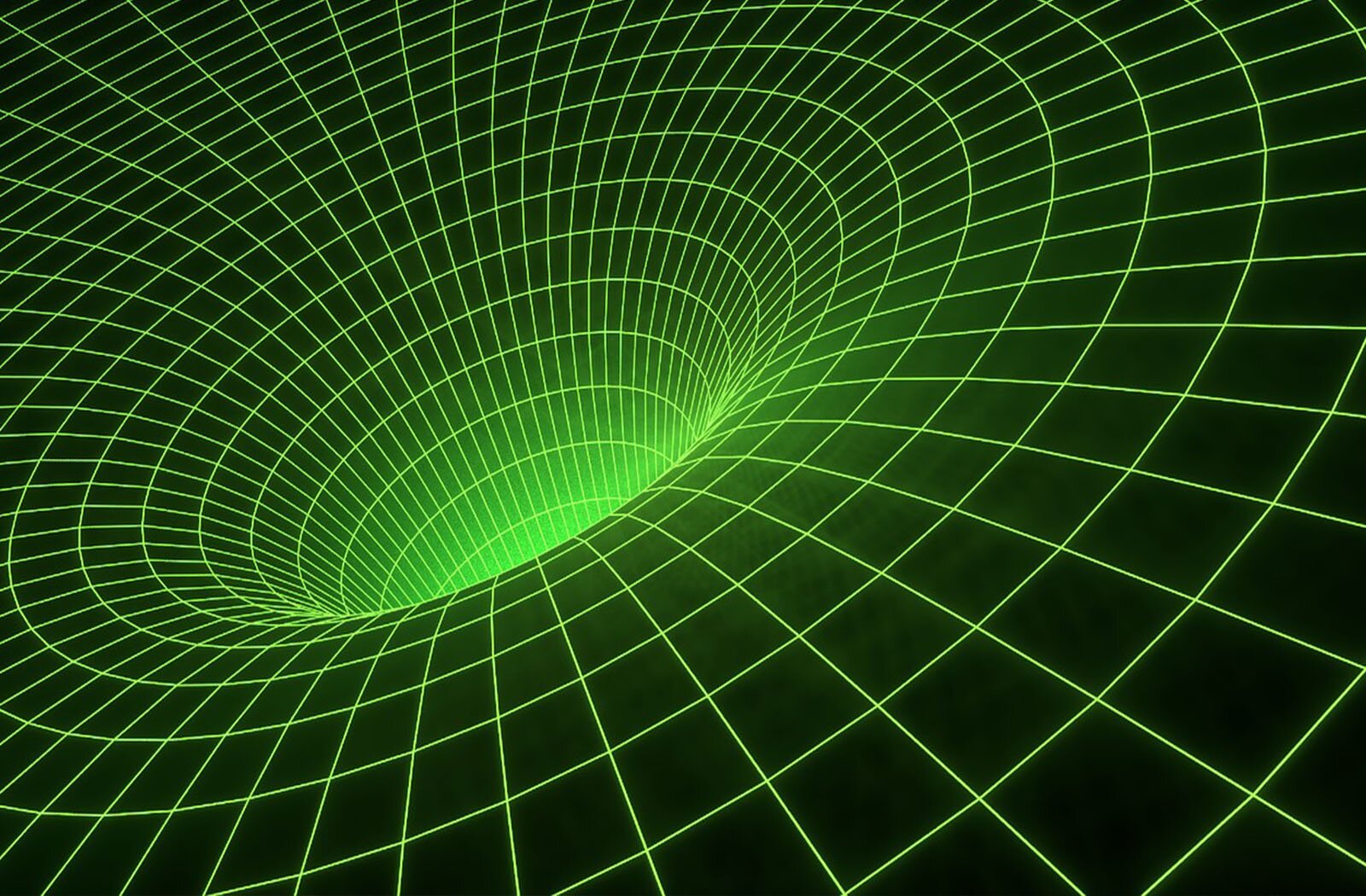
Black holes are absolutely fascinating objects. They escape the laws of physics. Scientists don’t entirely understand what they are and how they work, which is the result of the fact that no information that enters a black hole can ever come back from it. Astrophysicists can, however, observe the matter which approaches black holes and draw conclusions on this basis. How much do we currently know about black holes? Is this knowledge of any use to an ordinary inhabitant of the earth?
Czarne dziury są niezwykle fascynującymi obiektami. Wymykają się prawom fizyki. Naukowcy wciąż nie do końca rozumieją, czym są i jak funkcjonują, co wynika z faktu, że żadna informacja, która dostaje się do czarnej dziury, nie może z niej powrócić. Astrofizycy mogą jednak obserwować materię, która zbliża się do czarnej dziury, i na tej podstawie wyciągać wnioski. Ile obecnie wiemy na temat czarnych dziur? Czy ta wiedza jest w jakiś sposób użyteczna dla przeciętnego mieszkańca ziemi?
Study the text and do the exercises below.
How do we know that something exists if we can’t see it?A)
Black holesBlack holes are fascinating objects. They have an extremely strong gravitational forcegravitational force and if something comes too close to them, there’s no escape. It is sucked intosucked into a black hole forever. No information has even come back from them. The existence of black holes was first predictedpredicted by Einstein in 1916, but it wasn’t until the 1960s when observational evidenceobservational evidence confirmed that they are more than just theoretical objects.
B)
Black holes are born when stars die. If a star is large enough, that is 10 to 20 times as massive as our sun, when it reaches the end of its life, it explodes, throwing its mattermatter out into space. What is left behind is the stellar corestellar core. Because there is no mass left to balancebalance the gravitational pullgravitational pull of the stellar core, it begins to collapse on itselfcollapse on itself until it becomes tiny. That’s when a black hole is born. Some people worry that Earth could end upend up in a black hole. That’s not going to happen because our sun is too small to turn into one, and secondly, even if it did, such a black hole would have the same gravitygravity as our sun. Earth and other planets would simply orbitorbit it, just like they orbit the sun now.
C)
Black holes absorbabsorb all mass and light and never let any of it out. Do scientists just randomlyrandomly point at the sky and guess the locations of them? Not quite. Because of the black hole’s superstrong gravity, it pulls all objects around it. This causes unnatural movementsmovements of the mass which is close to a black hole. Also, some objects will orbit a black hole, which for an external observerexternal observer will look like a celestial bodycelestial body moving around an empty space in the universe. On the basis of both kinds of movements scientists can identify potential black holes.
D)
Black holes can vary in terms of sizevary in terms of size. The masses of the supermassive black holes can be as much as billions of suns. The Milky WayMilky Way, our galaxygalaxy, has such a black hole in its centre. It’s called Sagittarius A* and it lies about 26,000 light‑yearslight‑years away from Earth. An interesting fact is that when it comes to the miniature black holes, scientists speculatespeculate that they could create them in a lablab. Scientists have been experimenting with creating microscopic black holes in the LHCLHC, the Large Hadron Collider. CERNCERN, the research centre where the LHC is located, was taken to courttaken to court by concernedconcerned people who were afraid that creating miniature black holes on Earth would put our planet at risk. Scientists claim that it would be completely safe.
E)
Why invest in studying black holes? How will the lives of ordinary people be better with the knowledge of black holes? Such knowledge may have numerousnumerous applicationsapplications, many of which we can’t even name yet. ResearchersResearchers think that the creation of a black hole in laboratory conditions would confirm theoriesconfirm theories that our world has more than 4 dimensionsdimensions. That would be quite a spectacular breakthroughbreakthrough in our perceptionperception of reality, and who knows how we could use this knowledge? Perhaps for time travel? Or to produce clean energy?
Źródło: Anna Posyniak‑Dutka, licencja: CC BY-SA 3.0.
B) 1. How are they formed?, 2. What are they really?, 3. Will they destroy us?, 4. What’s the point?, 5. How do we know they are there?, 6. Can we make money from them?, 7. One of a kind?
C) 1. How are they formed?, 2. What are they really?, 3. Will they destroy us?, 4. What’s the point?, 5. How do we know they are there?, 6. Can we make money from them?, 7. One of a kind?
D) 1. How are they formed?, 2. What are they really?, 3. Will they destroy us?, 4. What’s the point?, 5. How do we know they are there?, 6. Can we make money from them?, 7. One of a kind?
E) 1. How are they formed?, 2. What are they really?, 3. Will they destroy us?, 4. What’s the point?, 5. How do we know they are there?, 6. Can we make money from them?, 7. One of a kind?
a) force of attraction
b) energy of motion
2. The existence of black holes was predicted by Einstein.
a) rejected
b) forecast
3. In the 1960s scientists had enough observational evidence to confirm that black holes are more than just a theory.
a) data obtained from mathematical models
b) empirical proofs gathered through watching sth
4. Black holes absorb all mass and light that come close to them.
a) take in
b) push away
5. When an old star explodes, there is no mass to balance the pull of the stellar core.
a) create
b) stabilise
6. Earth is unlikely to end up in a black hole any time soon.
a) reach
b) damage
7. Black holes vary in terms of size.
a) change
b) differ
Answer the questions in 3‑4 sentences each.
How do black holes form?
How do scientists know where black holes are located in the universe?
Słownik
/ əbˈzɔːb /
wchłonąć (to take in or soak up a substance or energy until it is completely integrated into sth)
/ ˌæplɪˈkeɪʃn̩z / / ˌæplɪˈkeɪʃn̩ /
zastosowania [zastosowanie] (the purpose for which something can be used)
/ ˈbæləns /
zrównoważyć (to keep something in a stable state by adjusting weight or influence)
/ blæk həʊlz / / blæk həʊl /
czarne dziury [czarna dziura] (a region in space with such a strong gravitational pull that nothing can escape it)
/ ˈbreɪkthetaruː /
przełom (an event which changes people’s perception or understanding of something)
/ sɪˈlestɪəl ˈbɒdi /
ciało niebieskie (a naturally occurring astronomical object, e.g. a star, moon, or planet)
/ ˈsɜːn / / ðə ˌjʊərəˈpɪən ˌɔːɡənəˈzeɪʃən fə ˈnjuːklɪə rɪˈsɜːtʃ /
CERN Europejska Organizacja Badań Jądrowych (a European research organisation based near Geneva, which operates the biggest particle laboratory in the world)
/ kəˈlæps ˈɒn ɪtˈself /
zapadać się w sobie (a process in which the star’s immense gravity sucks all the surface material in)
/ kənˈsɜːnd /
zaniepokojony/zaniepokojona (worried, troubled, or anxious)
/ kənˈfɜːm ˈthetaɪərɪz / / kənˈfɜːm ə ˈthetaɪərɪ /
potwierdzać teorie [potwierdzać teorię] (to show that a certain theory is true)
/ daɪˈmenʃənz / / daɪˈmenʃən /
wymiary [wymiar] (one of the parameters, such as length, width, height, depth, space, or time used to describe an object or space)
/ end ʌp /
skończyć (to eventually reach a particular place or state after a series of actions or events)
/ ɪkˈstɜːnl̩ əbˈzɜːvə /
zewnętrzny obserwator (a person who is not involved in the situation but is able to watch it and analyse it from an outside perspective)
/ ˈɡæləksi /
galaktyka (a system of stars, planets, gas, etc. bound together by gravity)
/ ˌɡrævɪˈteɪʃn̩əl fɔːs /
siła grawitacyjna (the power with which two objects attract each other in the universe)
/ ˌɡrævɪˈteɪʃn̩əl pʊl /
przyciąganie grawitacyjne (the force of attraction between celestial objects such as planets or stars)
/ ˈɡrævɪti /
grawitacja (the force of attraction between two objects)
/ læb /
laboratorium (short for laboratory, a facility in which research or experiments are conducted)
/ ɛl eɪʧ siː / / ðə ˈlɑ:dʒ ˈhædrɒn kəˈlaɪdə /
Wielki Zderzacz Hadronów (the largest and most powerful particle accelerator in the world used for research of elementary particles and other areas of physics)
/ laɪt ˈjiəz / / laɪt ˈjiə /
lata świetlne [rok świetlny] (the distance light travels in one year)
/ mæs /
masa (a physical property that tells us how much matter there is in an object)
/ ˈmætə /
materia (physical substance)
/ ˈmɪlki ˈweɪ /
Droga Mleczna (the galaxy in which our Solar System is located)
/ ˈmuːvmənts / / ˈmuːvmənt /
ruchy [ruch] (the act of changing the physical location of sb/sth)
/ ˈnjuːmərəs /
liczny/liczna (many, in a large number)
/ ˌɒbzɜːˈveɪʃənl ˈevɪdəns /
dowody obserwacyjne (proofs obtained from watching something)
/ ˈɔːbɪt /
poruszać się wokół (to move around something)
/ pəˈsepʃn̩ /
postrzeganie (the way one interprets and makes sense of information from the environment)
/ prɪˈdɪktɪd / / prɪˈdɪkt /
przewidziany/przewidziana [przewidzieć] (to estimate or forecast a future event based on past experience, data, or knowledge)
/ ˈrændəmli /
losowo (in a way that lacks pattern, plan, or purpose)
/ rɪˈsɜːtʃəz / / rɪˈsɜːtʃə /
badacze/badaczki [badacz/badaczka] (a person who conducts systematic scientific experiments in a given area)
/ ˈspekjʊleɪt /
spekulować (to form opinions or make guesses about sth, often without having complete information)
/ ˈstelə kɔː /
jądro gwiazdy (the innermost part of a star)
/ sʌkt ˈɪntə / / sʌk ˈɪntə /
wessany/wessana do [wessać coś/kogoś do] (to draw sth/sb into a place or a situation)
/ ˈteɪkən tu kɔːt / / ˈteɪk ˈsʌmbədi tu kɔːt /
pozwany/pozwana [pozwać kogoś] (to start a legal case against somebody by officially accusing them of a crime)
/ ˈveəri ɪn tɜːmz əv saɪz /
różnić się pod względem wielkości (to have different dimensions and measurements)
Źródło: GroMar Sp. z o.o., licencja: CC BY‑SA 3.0