Rome - from the foundation of the city to the establishment of the republic.
Lucius Quinctius Cincinnatus – Roman patrician and consul, proclaimed by the Senate a dictator during the war with the Aequi. Legendary figure of Roman civic virtues.
Source: Cincinnatus abandons the Plough to dictate Laws to Rome, 1806, oil on canvas, Museo del Prado, licencja: CC 0.
The history of ancient Rome is inextricably linked with the legend of two brothers miraculously saved by a she‑wolf - Remus and Romulus. Initially, Rome was one of the many centers of the Italic tribe - Latins - that settled in this area after arriving on the Apennine Peninsula. The reign of Romulus - „the first Roman” - opens a royal era in the history of Rome. Supposedly, he founded and populated the city, became its first leader and laid the foundations for the future greatness of the Roman Republic, creating the state's most important institution, the council of elders called the SenateSenateSenate. Already ancient historians tried to pinpoint the date of founding the city, usually assuming the year 753 BC. These assumptions were confirmed by archaeological excavations, thanks to which the remains of defensive walls from the 8th century BC were discovered. Initially, Rome was a small settlement, which thanks to its strategic location, copious natural resources (salt, grain, metal ores) and numerous conquests quickly became the most powerful political center on the Apennine Peninsula.
RTw5ih6TuV1IH
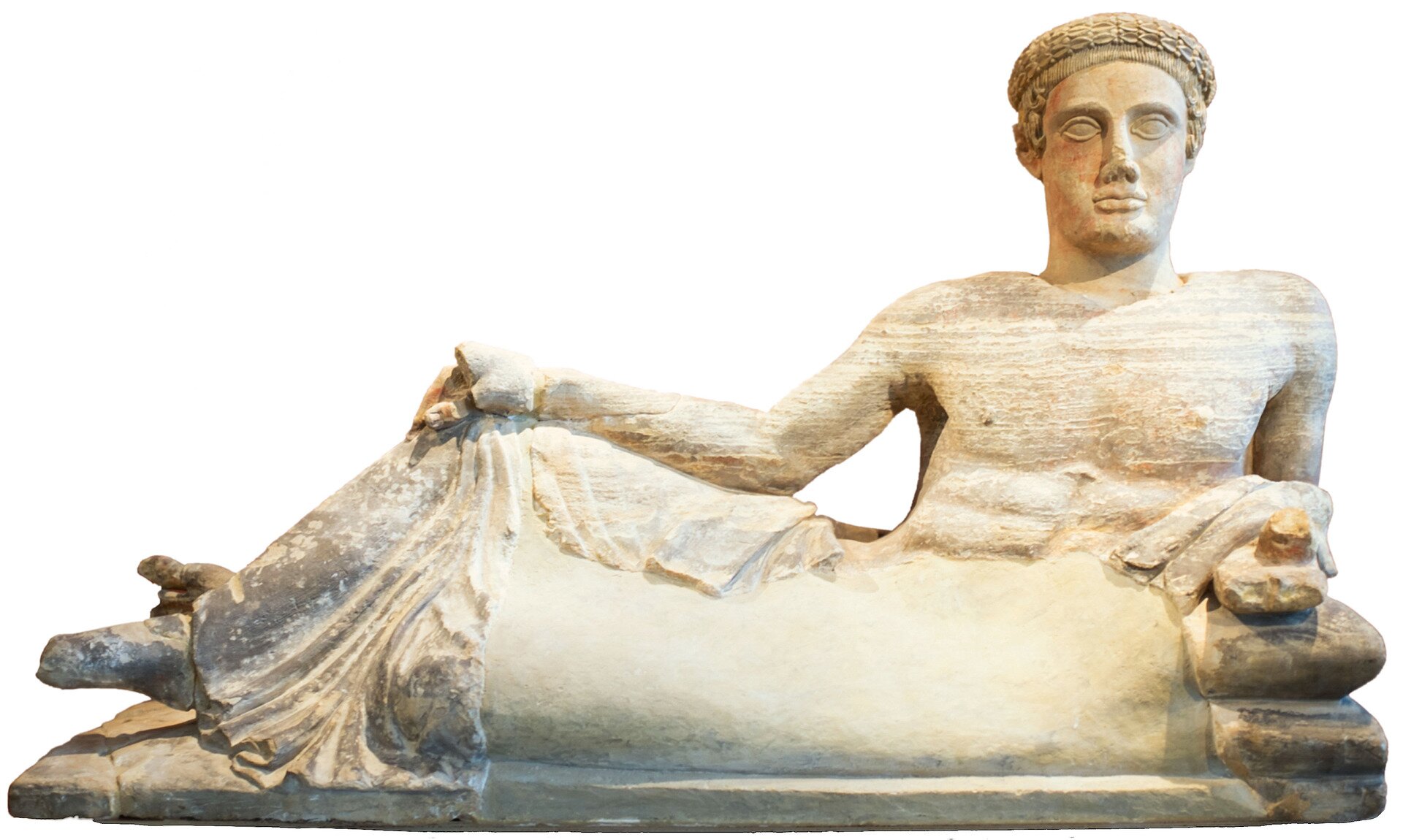
Fotografia barwna przedstawiająca rzeźbę Etruska. Leżący mężczyzna wykonany z jasnego kamienia.
Etruscan sculpture
Source: licencja: CC BY-SA 3.0.
The reign of the Etruscan rulers in Rome, and thus the royal era, ended in the 6th century BC. After the expulsion of the last king, the Romans did not elect a new ruler, but as in ancient Greece they decided to rule together, creating a republic (res publica - a thing that is public, belongs to the public). The powers that earlier had been concentrated in the hand of the rulers were divided among numerous officials. The most important were the two consulsconsulconsuls, elected annually, responsible for the conduct of politics and command of the army. They consulted with the Senate, in which eminent citizens sat. The Senate supervised and advised the people of Rome and the state officials. When Rome was in danger, the consuls were replaced by a dictatordictatordictator, who was appointed for 6 months. He had full power and his decisions could not be appealed. Adult men, because only such men had the right to vote, took part in assemblies, called comitia. The first one, the Centuriate Assembly, elected consuls and praetorspraetorpraetors The second one, the Tribal Assembly, passed laws and made the most important decisions concerning the state. In the ancient Rome there were also other offices: quaestorsquaestorquaestors - they assisted the consuls in financial matters, censors - they were responsible for carrying out population and asset censuses and supervised the implementation of municipal projects, praetors - they dealt with judiciary matters, and finally tribunes of the plebstribune of the plebstribunes of the plebs - they were responsible for protecting the people against those in power who would wish to abuse it.
Exercise 1
Wysłuchaj nagrania abstraktu, ułóż do niego pytania i zadaj je koledze.
Wysłuchaj nagrania abstraktu, ułóż do niego pytania i zadaj je koledze.
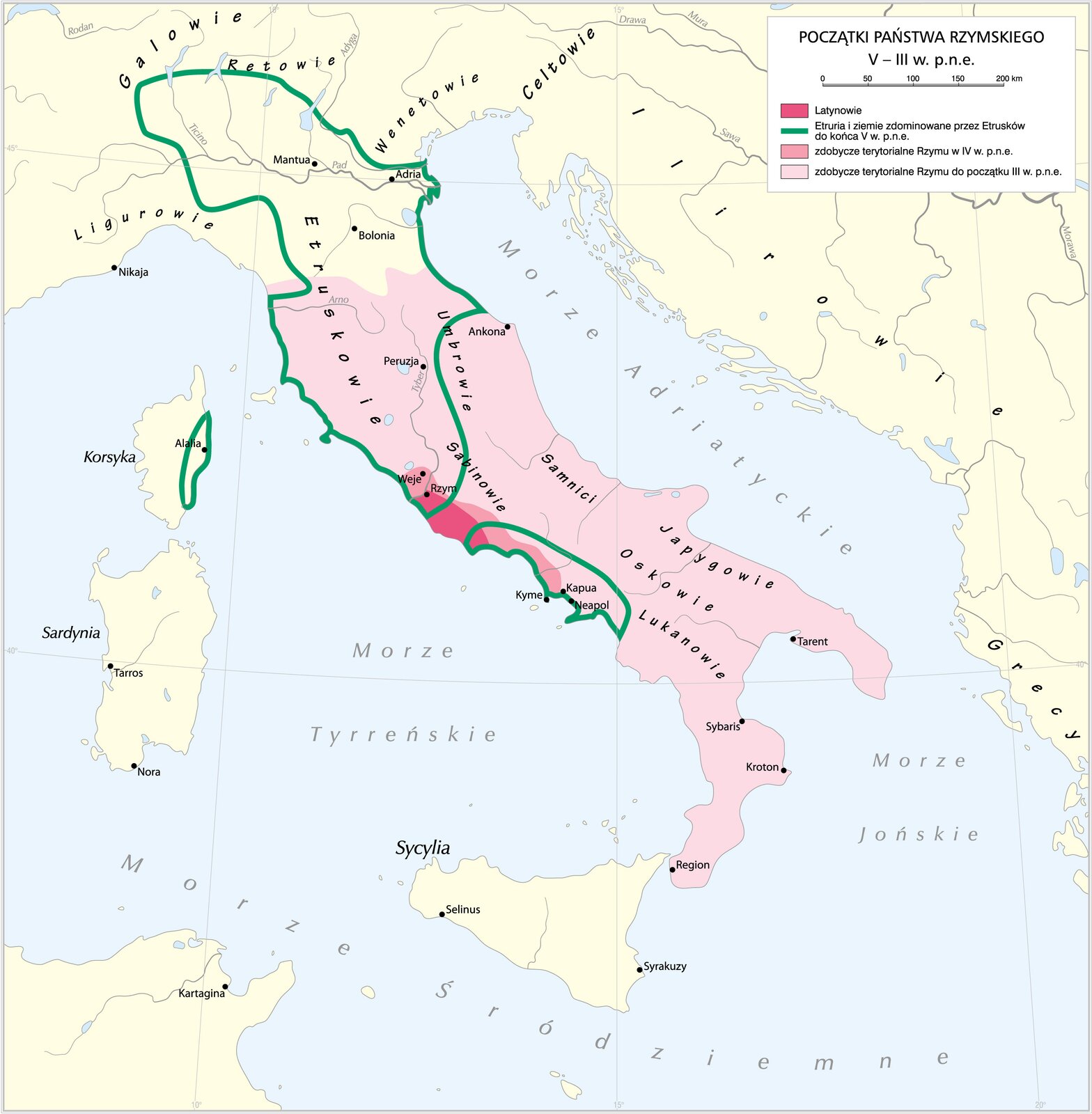
Study the map and do the exercise.
RjdTQXrd8QfAN
Grafika mapy przedstawiającej początki państwa rzymskiego. V- III w. p.n.e. Na mapie wyróżniono zieloną linią Etrurię i Ziemie zdominowane przez Etrusków do końca V w. p.n.e. Kolorem różowym oznaczono tereny Latynów. Słabszym odcieniem różowego koloru oznaczono zdobycze terytorialne Rzymu w IV w. p. n. e. natomiast bladoróżowym kolorem oznaczono zdobycze terytorialne Rzymu do początku III w. p.n.e.
Beginnings of the Roman state
Source: Krystian Chariza i zespół.
R1Aj1ZqjqJsY3
Wykonaj polecenie.
Wykonaj polecenie.
Choose the sentences that are true.
Greeks and Italic peoples founded their colonies on the Apennine Peninsula.
Latins shared a border with the Etruscans in the north.
The territory inhabited by the Latins was surrounded by the Tyrrhenian Sea in the south.
River Po flows through Rome.
The border between the Latin and the Etruscan territory was river Tiber.
Sicily was inhabited by the Bruttians.
1
Task 1
The Capitoline Wolf was a symbol of Rome already in antiquity. Its most famous image is an Etruscan sculpture from around 480‑470 BC. Although the figures of Remus and Romulus were added to it only nearly 2000 years later, it is assumed that they replaced the lost originals figures.
R3o71W3MJIt5X
Fotografia przedstawia posąg. Wilczyca kapitolińska – rzeźba wilczycy, stanowiąca symbol stolicy starożytnego imperium rzymskiego. Wilczyca karmi małego Romulusa i Remusa.
Na ilustracji widnieją dopiski. 1. The legend has it that the twins Remus and Romulus were saved by a wolf near the Palatine Hill. She found and fed the children who were then brought up by a local shepherd.
2. According to the prophecy, Romulus was to become the king of the new city, founded at the place where the river Tiber threw the brothers ashore. The city was also supposed to be named after him. Hence the name Roma in Latin, and Rome in English.
3. Remus was killed by his twin brother as a result of a dispute between them. Legend has it that Romulus delineated the city boundaries which could not be crossed. Remus did so, however, and so was slain by Romulus.
4. Already the ancient Romans tried to pinpoint the date when the city was founded. According to tradition, it happened on 21 April 753 BC. These assumptions were partially confirmed by archaeological research conducted in the 20th century when the remains of defensive walls from the middle of the 8th century B.C. were discovered on the Palatine Hill.
5. There is one more legend that is associated with Rome, and it is slightly younger in time than the history of Remus and Romulus. According to it, the beginnings of Rome are tied to the Trojan War. After Troy fell, one of its defenders who survived, Aeneas, came to this place on the Apennine Peninsula after a long search for a convenient place. He initiated the family line from which the future rulers of Rome were to come.
Fotografia przedstawia posąg. Wilczyca kapitolińska – rzeźba wilczycy, stanowiąca symbol stolicy starożytnego imperium rzymskiego. Wilczyca karmi małego Romulusa i Remusa.
Na ilustracji widnieją dopiski. 1. The legend has it that the twins Remus and Romulus were saved by a wolf near the Palatine Hill. She found and fed the children who were then brought up by a local shepherd.
2. According to the prophecy, Romulus was to become the king of the new city, founded at the place where the river Tiber threw the brothers ashore. The city was also supposed to be named after him. Hence the name Roma in Latin, and Rome in English.
3. Remus was killed by his twin brother as a result of a dispute between them. Legend has it that Romulus delineated the city boundaries which could not be crossed. Remus did so, however, and so was slain by Romulus.
4. Already the ancient Romans tried to pinpoint the date when the city was founded. According to tradition, it happened on 21 April 753 BC. These assumptions were partially confirmed by archaeological research conducted in the 20th century when the remains of defensive walls from the middle of the 8th century B.C. were discovered on the Palatine Hill.
5. There is one more legend that is associated with Rome, and it is slightly younger in time than the history of Remus and Romulus. According to it, the beginnings of Rome are tied to the Trojan War. After Troy fell, one of its defenders who survived, Aeneas, came to this place on the Apennine Peninsula after a long search for a convenient place. He initiated the family line from which the future rulers of Rome were to come.
Task 2
Read the source text carefully and do the following exercise.
EutropiuszZarys dziejów od założenia miasta
„Państwo rzymskie wywodzi początki swoje od Romulusa, który wraz z bliźnim bratem swoim Remusem urodził się z westalki (kapłanki) Rei Sylwii i rzekomo boga Marsa. Chował się między pastuchami i trudnił się rozbojem, a mając lat 18, założył maleńkie miasto na wzgórzu palatyńskim 21 kwietnia w 3 roku 6 olimpiady. Po założeniu miasta, które od swego imienia nazwał “Roma”, takich mniej więcej czynów dokonał. Wielką liczbę sąsiadów przyjął do miasta swego, a spośród starszych wybrał stu mężów, nazwanych senatorami ze względu na wiek poważny, za których radą wszystkim zarządzał. Następnie, ponieważ i on sam, i poddani jego nie mieli żon, zaprosił na oglądanie igrzysk sąsiadujące z Rzymem ludy i porwał im córki. Z powodu tej krzywdy porwania wybuchły wojny, w których pokonał […] miasta leżące wokół Rzymu. Ponieważ zniknął nagle w czasie burzy w 37 roku panowania, rozpowszechniło się przekonanie, że poszedł do rzędu bogów i boską cześć mu przyznano.
RvlMtl8gjky9W1
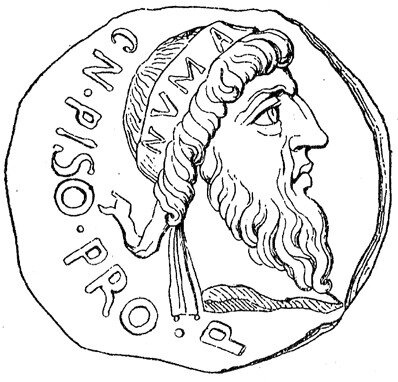
Ilustracja przedstawiająca wizerunek Numy Pompiliusza na rzymskiej monecie z czasów Oktawiana Augusta.
Image of Pompilia's Numbers on a Roman coin from the time of Octavian Augustus
Source: licencja: CC 0.
Potem rządzili Rzymem senatorowie, zmieniając się co 5 dni, a panowanie ich trwało rok. wybrano królem Numę Pompiliusza, który żadnej wojny nie prowadził, ale niemniej zasłużył się dla państwa, jak Romulus. Bo i prawa nadał Rzymianom i obyczaje złagodził, które skutkiem przyzwyczajenia do walk już za zbójeckie i na wpół dzikie uchodziły, i kalendarz uporządkował, i ustanowił w Rzymie nieskończoną liczbę świąt i świątyń. Umarł na skutek choroby w 43 roku panowania.
Następcą jego był Tullus Hostyliusz. Ten znów podjął wojny, zwyciężył Albanów [...] i rozszerzył miasto przez włączenie do niego Wzgórza Celijskiego. Po 32 latach panowania piorunem rażony spłonął wraz z domem swoim. Po nim objął panowanie Ankus Marcjusz, wnuk Numy po córce. Walczył on z Latynami, włączył do państwa wzgórza: Awentyn i Janikulum [...]. W 24 roku panowania umarł skutkiem choroby”.
eutropiusz Source: Eutropiusz, Zarys dziejów od założenia miasta, [w:] Teksty źródłowe do nauki historii w szkole średniej, oprac. L. Piotrowicz, Kraków 1924.
R1Hoh7wrA2cRR
Exercise 2
Match the achievements with the respective ruler. Rulers: Romulus, Numa Pompilius, Tullus Hostilius, Ancus Marcius.
Achievements: Founded Rome, Populated Rome, Created the Senate, Defeated the neighbouring tribes, Established Roman laws, Arranged the calendar, Introduced numerous festivals, Built many temples, Defeated the Albans, Expanded the city by settling the Caelian Hill, Fought against the Latins, He incorporated the Aventine Hill and the Palatine Hill into the city.
Match the achievements with the respective ruler. Rulers: Romulus, Numa Pompilius, Tullus Hostilius, Ancus Marcius.
Achievements: Founded Rome, Populated Rome, Created the Senate, Defeated the neighbouring tribes, Established Roman laws, Arranged the calendar, Introduced numerous festivals, Built many temples, Defeated the Albans, Expanded the city by settling the Caelian Hill, Fought against the Latins, He incorporated the Aventine Hill and the Palatine Hill into the city.
Match the achievements with the respective ruler.
Arranged the calendar, Built many temples, Fought against the Latins, Populated Rome, Defeated the neighbouring tribes, Introduced numerous festivals, Established Roman laws, Expanded the city by settling the Caelian Hill, He incorporated the Aventine Hill and the Palatine Hill into the city, Defeated the Albans, Created the Senate, Founded Rome
Romulus
Numa Pompilius
Tullus Hostilius
Ancus Marcius
RnZFyRpA7qp2k
Exercise 3
The names of the Roman institutions and titles should be paired with their powers. Censor Możliwe odpowiedzi: 1. Dealt with judiciary matters., 2. Carried out a census of citizens., 3. Protected the people against those in power who would wish to abuse it., 4. Supervised the financial matters of the state as well as advised the people and the state officials., 5. Commanded the army. Senate Możliwe odpowiedzi: 1. Dealt with judiciary matters., 2. Carried out a census of citizens., 3. Protected the people against those in power who would wish to abuse it., 4. Supervised the financial matters of the state as well as advised the people and the state officials., 5. Commanded the army. Consul Możliwe odpowiedzi: 1. Dealt with judiciary matters., 2. Carried out a census of citizens., 3. Protected the people against those in power who would wish to abuse it., 4. Supervised the financial matters of the state as well as advised the people and the state officials., 5. Commanded the army. Praetor Możliwe odpowiedzi: 1. Dealt with judiciary matters., 2. Carried out a census of citizens., 3. Protected the people against those in power who would wish to abuse it., 4. Supervised the financial matters of the state as well as advised the people and the state officials., 5. Commanded the army. Tribune of the Plebs Możliwe odpowiedzi: 1. Dealt with judiciary matters., 2. Carried out a census of citizens., 3. Protected the people against those in power who would wish to abuse it., 4. Supervised the financial matters of the state as well as advised the people and the state officials., 5. Commanded the army.
The names of the Roman institutions and titles should be paired with their powers. Censor Możliwe odpowiedzi: 1. Dealt with judiciary matters., 2. Carried out a census of citizens., 3. Protected the people against those in power who would wish to abuse it., 4. Supervised the financial matters of the state as well as advised the people and the state officials., 5. Commanded the army. Senate Możliwe odpowiedzi: 1. Dealt with judiciary matters., 2. Carried out a census of citizens., 3. Protected the people against those in power who would wish to abuse it., 4. Supervised the financial matters of the state as well as advised the people and the state officials., 5. Commanded the army. Consul Możliwe odpowiedzi: 1. Dealt with judiciary matters., 2. Carried out a census of citizens., 3. Protected the people against those in power who would wish to abuse it., 4. Supervised the financial matters of the state as well as advised the people and the state officials., 5. Commanded the army. Praetor Możliwe odpowiedzi: 1. Dealt with judiciary matters., 2. Carried out a census of citizens., 3. Protected the people against those in power who would wish to abuse it., 4. Supervised the financial matters of the state as well as advised the people and the state officials., 5. Commanded the army. Tribune of the Plebs Możliwe odpowiedzi: 1. Dealt with judiciary matters., 2. Carried out a census of citizens., 3. Protected the people against those in power who would wish to abuse it., 4. Supervised the financial matters of the state as well as advised the people and the state officials., 5. Commanded the army.
The names of the Roman institutions and titles should be paired with their powers.
Commanded the army., Protected the people against those in power who would wish to abuse it., Carried out a census of citizens., Dealt with judiciary matters., Supervised the financial matters of the state as well as advised the people and the state officials.
Wróżbiarstwo – przepowiadanie przyszłości za pomocą różnych technik, przedmiotów, wydarzeń oraz interpretacja zjawisk przyrody. Nie istnieje żaden dowód potwierdzający skuteczność wróżb.
Palatyn – jedno ze wzgórz rzymskich, prawdopodobnie miejsce powstania najstarszej osady rzymskiej. Znajduje się na nim jaskinia Lupercal, w której według tradycji wilczyca miała wykarmić Romulusa i Remusa, legendarnych założycieli miasta.
Republika – dosłownie rzecz publiczna, ustrój polityczny, w którym władza sprawowana jest przez obywateli poprzez wybory. W starożytnym Rzymie była to niemonarchiczne sprawowanie władzy przez posiadających prawa polityczne obywateli.
Senat – instytucja polityczna w starożytnym Rzymie ustanowiona zgodnie z legendą przez Romulusa. Był obdarzony znacznym autorytetem pełnił funkcję doradczą i opiniował projekty ustaw.
Dyktator – w republice rzymskiej urząd, który skupiał pełnię władzy. Był powoływany na 6 miesięcy w okresach największego zagrożenia państwa. Nie można było odwołać się od jego decyzji.
Pretor – urzędnik posiadający władzę wojskową w republice rzymskiej. Do ich głównych obowiązków należało utrzymanie porządku w mieście. Mieli szerokie uprawnienia cywilne i sądownicze.
Edyl – urzędnik w republice rzymskiej nadzorujący dostawy zboża dla mieszkańców. Edylowie wchodzili w skład kolegium, za pośrednictwem którego nadzorowali porządek w mieście. Na swój koszt przygotowywali również igrzyska.
Kwestor – w starożytnym Rzymie urzędnik pomagający konsulom w zarządzaniu finansami. Najczęściej urząd ten sprawowali ludzie zaczynający karierę polityczną.
Trybun ludowy – urząd w republice rzymskiej, którego zadaniem była ochrona interesów obywateli. Mieli prawo weta wobec decyzji podjętych przez urzędników oraz zagwarantowaną nietykalność osobistą. Stanowiska te były zarezerwowane tylko dla plebejuszy.