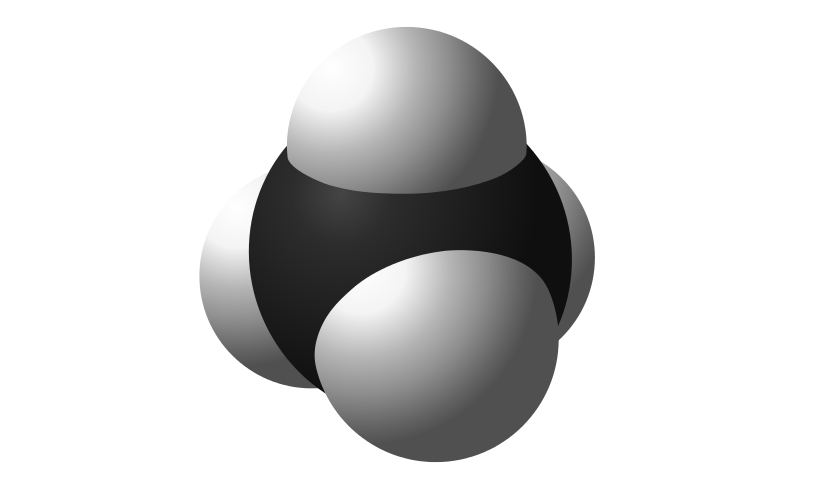
Methane, whose molecules are composed of one carbon atom and hydrogen atoms, is the simplest hydrocarbon. The place of carbon in the periodic table indicates that it has four valence electrons. In organic compounds carbon is always four‑valent (IV) – it can form up to four chemical bonds. The carbon atom, combined with four hydrogen atoms, forms a compound with the formula , i.e. methane. What do we already know about it? Expand the table and find out.
RaM6OIzc6FrLZ1
Ilustracja interaktywna przedstawia czarno-biały model cząsteczki metanu (do czarnej kulki doczepione cztery mniejsze białe). Na ilustracji zamieszczone są cztery cyfry, po których kliknięciu pojawia się informacja o metanie. Pod cyfrą jeden znajduje się informacja: Metan – najprostszy alkan. Najprostszym węglowodorem jest metan, którego cząsteczki są zbudowane z jednego atomu węgla i atomów wodoru. Methane, whose molecules are composed of one carbon atom and hydrogen atoms, is the simplest hydrocarbon. Pod cyfrą dwa znajduje się informacja: Budowa cząsteczki. Cząsteczka metanu ma kształt tetraedru (czworościanu foremnego). Wszystkie wiązania między atomem węgla a atomami wodoru są takie same (kąty pomiędzy wiązaniami wynoszą sto dziewięć stopni i dwadzieścia osiem minut).The methane molecule has the shape of a regular tetrahedron. All bonds between carbon atom and hydrogen atom are the same (the angles between bonds are one hundred nine degrees twenty eight minutes). Pod cyfrą trzy znajduje się informacja: Jak powstaje metan? Powstaje w warunkach beztlenowych podczas rozkładu materii organicznej.Methane is produced under anaerobic conditions during decomposition of organic matter. Pod cyfrą cztery znajduje się informacja: Gdzie powstaje metan? Metan jest głównym składnikiem gazu ziemnego, na terenach bagiennych wydziela się jako gaz błotny. Źródłem metanu są także wysypiska śmieci. Produkują go również zwierzęta przeżuwające (bydło, owce).Methane is the main component of natural gas and is released as a mud gas in wetlands. Landfills are also a source of methane. It is also produced by ruminants (cattle, sheep).
Ilustracja interaktywna przedstawia czarno-biały model cząsteczki metanu (do czarnej kulki doczepione cztery mniejsze białe). Na ilustracji zamieszczone są cztery cyfry, po których kliknięciu pojawia się informacja o metanie. Pod cyfrą jeden znajduje się informacja: Metan – najprostszy alkan. Najprostszym węglowodorem jest metan, którego cząsteczki są zbudowane z jednego atomu węgla i atomów wodoru. Methane, whose molecules are composed of one carbon atom and hydrogen atoms, is the simplest hydrocarbon. Pod cyfrą dwa znajduje się informacja: Budowa cząsteczki. Cząsteczka metanu ma kształt tetraedru (czworościanu foremnego). Wszystkie wiązania między atomem węgla a atomami wodoru są takie same (kąty pomiędzy wiązaniami wynoszą sto dziewięć stopni i dwadzieścia osiem minut).The methane molecule has the shape of a regular tetrahedron. All bonds between carbon atom and hydrogen atom are the same (the angles between bonds are one hundred nine degrees twenty eight minutes). Pod cyfrą trzy znajduje się informacja: Jak powstaje metan? Powstaje w warunkach beztlenowych podczas rozkładu materii organicznej.Methane is produced under anaerobic conditions during decomposition of organic matter. Pod cyfrą cztery znajduje się informacja: Gdzie powstaje metan? Metan jest głównym składnikiem gazu ziemnego, na terenach bagiennych wydziela się jako gaz błotny. Źródłem metanu są także wysypiska śmieci. Produkują go również zwierzęta przeżuwające (bydło, owce).Methane is the main component of natural gas and is released as a mud gas in wetlands. Landfills are also a source of methane. It is also produced by ruminants (cattle, sheep).
1
2
3
4
1. Methane – the simplest alkane Methane, whose molecules are composed of one carbon atom and hydrogen atoms, is the simplest hydrocarbon.
2. Molecule structure The methane molecule has the shape of a regular tetrahedron. All bonds between carbon atom and hydrogen atom are the same (the angles between bonds are 109°28').
3. How it is produced Methane is produced under anaerobic conditions during decomposition of organic matter.
4. Where it is produced Methane is the main component of natural gas and is released as a mud gas in wetlands. Landfills are also a source of methane. It is also produced by ruminants (cattle, sheep).
Task 1
Watch the presentation and learn how to form molecular, structural and semi‑structural formulas of alkanes. Remember the generalized formula of these compounds.
RENSADJZ6x2Oa
Ilustracja przedstawia pierwszą stronę prezentacji. Na niebieskim tle znajduje się tytuł: "Alkanes - saturated hydrocarbons".
As you already know, alkanes are saturated hydrocarbons whose molecules have only single bonds between carbon atoms.
Source: GroMar Sp. z o.o., licencja: CC BY-SA 3.0.
R8BEEK1OPfxdS
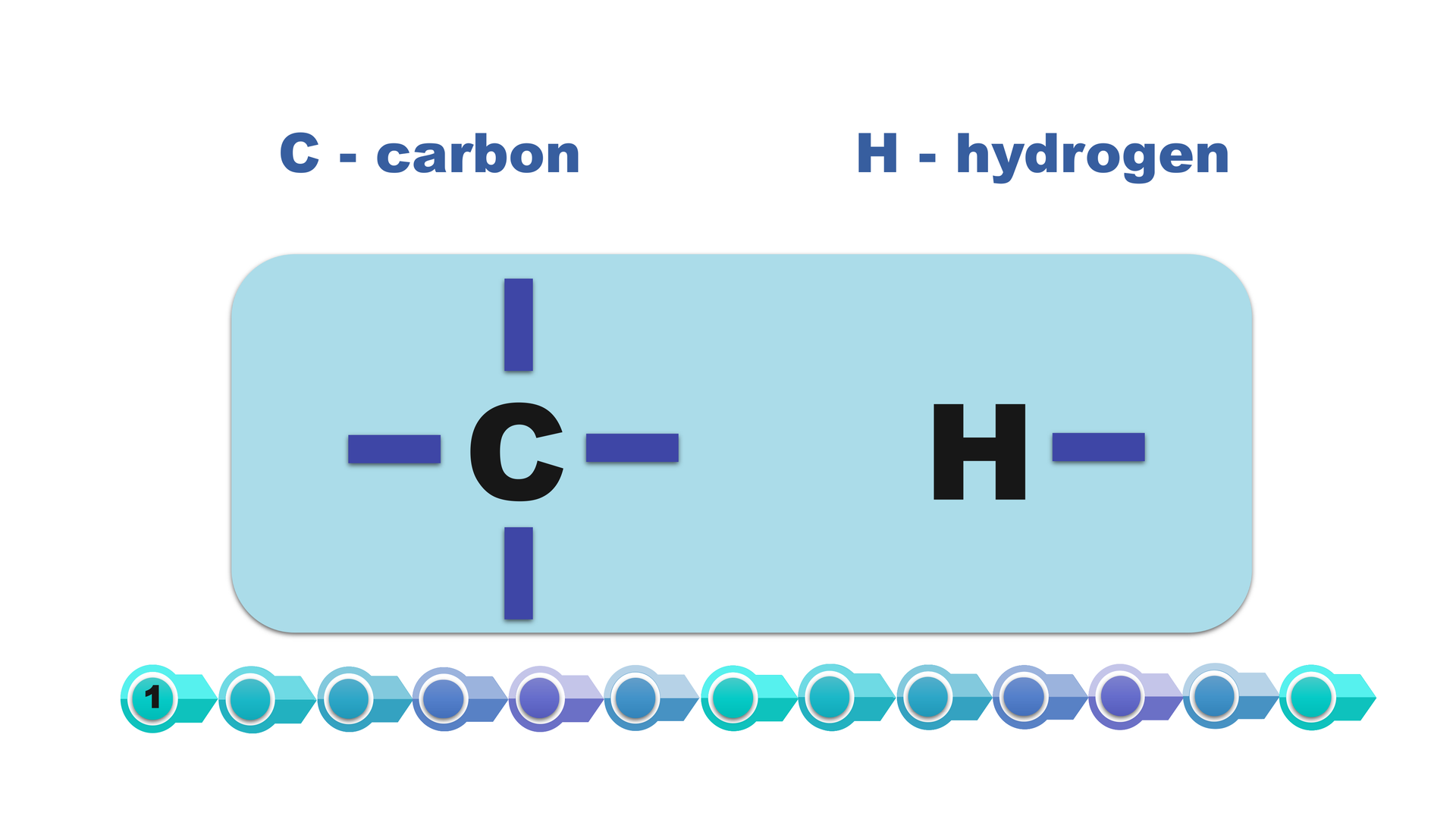
Ilustracja przedstawia symbol węgla (c - carbon) i wodoru (ha - hydrogen) na niebieskim tle. Od wodoru w prawo odchodzi jedno pojedyncze wiązanie. Od wodoru symetrycznie cztery pojedyncze.All the alkane molecules in the homologous series have single bonds, which means that the maximum number of hydrogen or carbon atoms is attached to each carbon atom, hence the name saturated hydrocarbons.
All the alkane molecules in the homologous series have single bonds, which means that the maximum number of hydrogen or carbon atoms is attached to each carbon atom, hence the name saturated hydrocarbons.
Source: GroMar Sp. z o.o., licencja: CC BY-SA 3.0.
RHoxdeOdenmLM
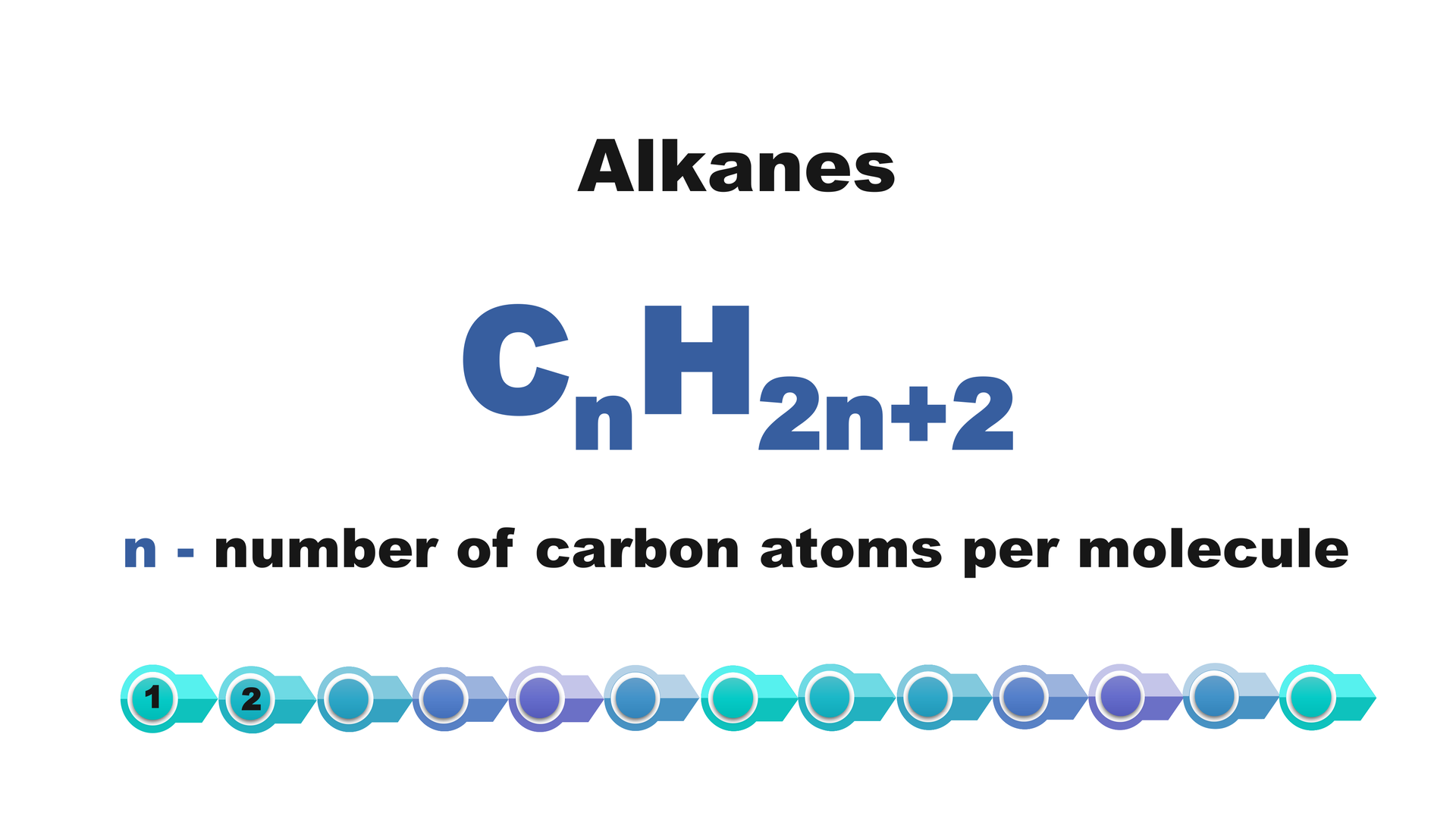
Wzór ogólny dla alkanów to c en ha dwa en plus dwa, gdzie en to liczba atomów węgla w cząsteczce - number of carbon atoms per molecule.
The generalized formula for alkanes is CnH2n+2, where n is the number of carbon atoms per molecule.
Source: GroMar Sp. z o.o., licencja: CC BY-SA 3.0.
R1KVJyLzasnzK
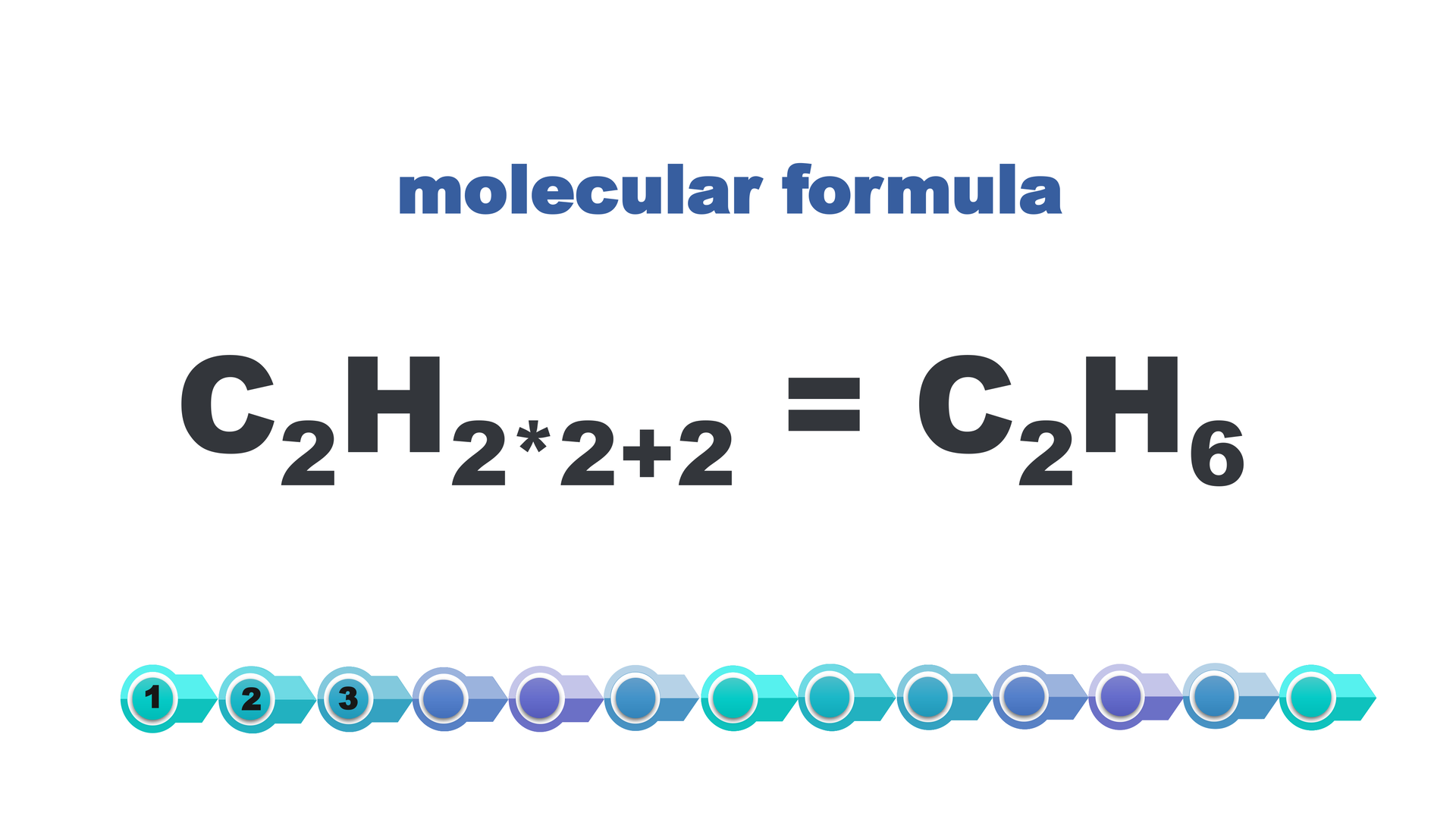
lustracja przedstawia wzór sumaryczny etanu - molecular formula: c dwa ha dwa razy dwa dodać dwa równa się c dwa ha sześć.
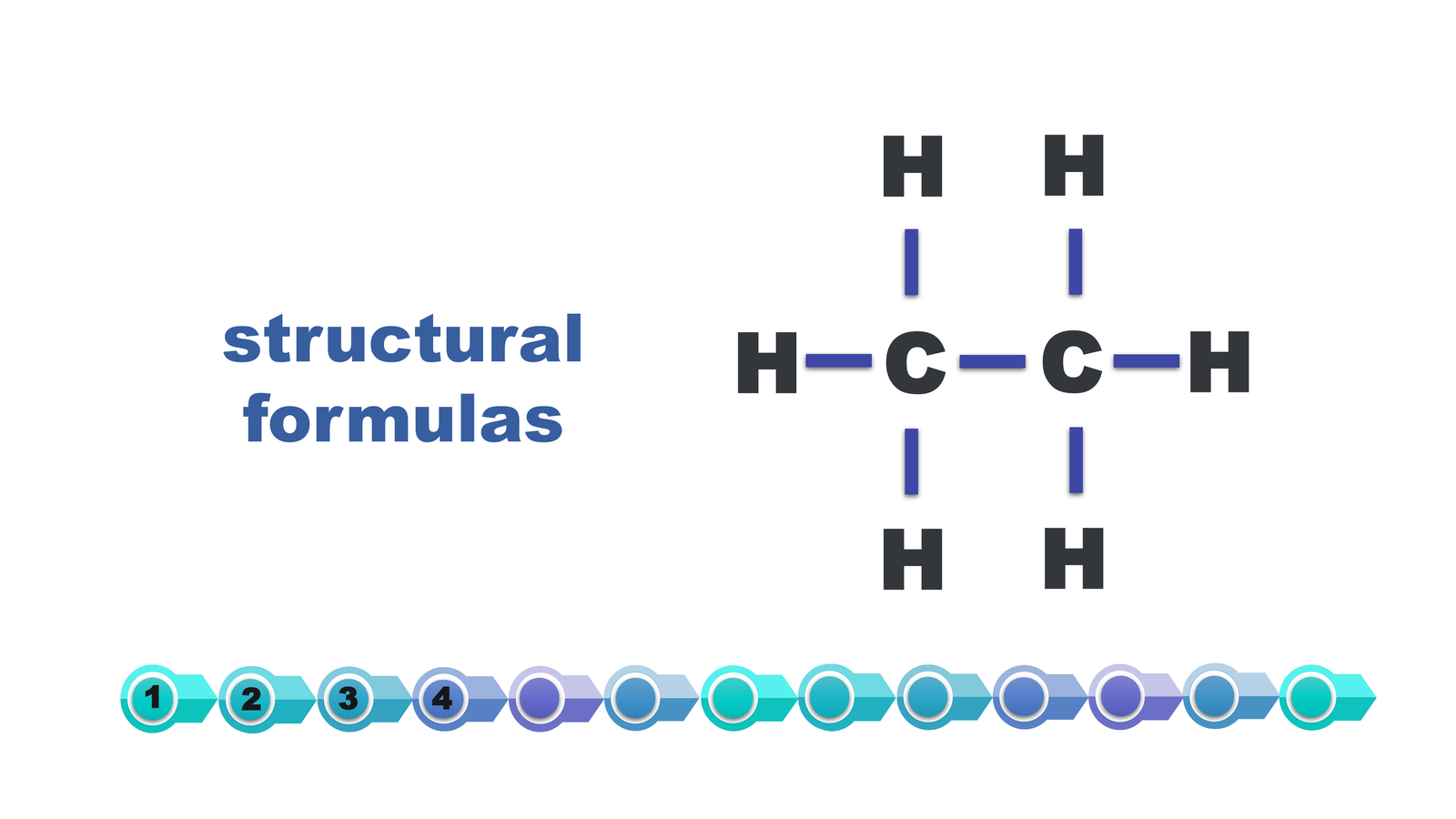
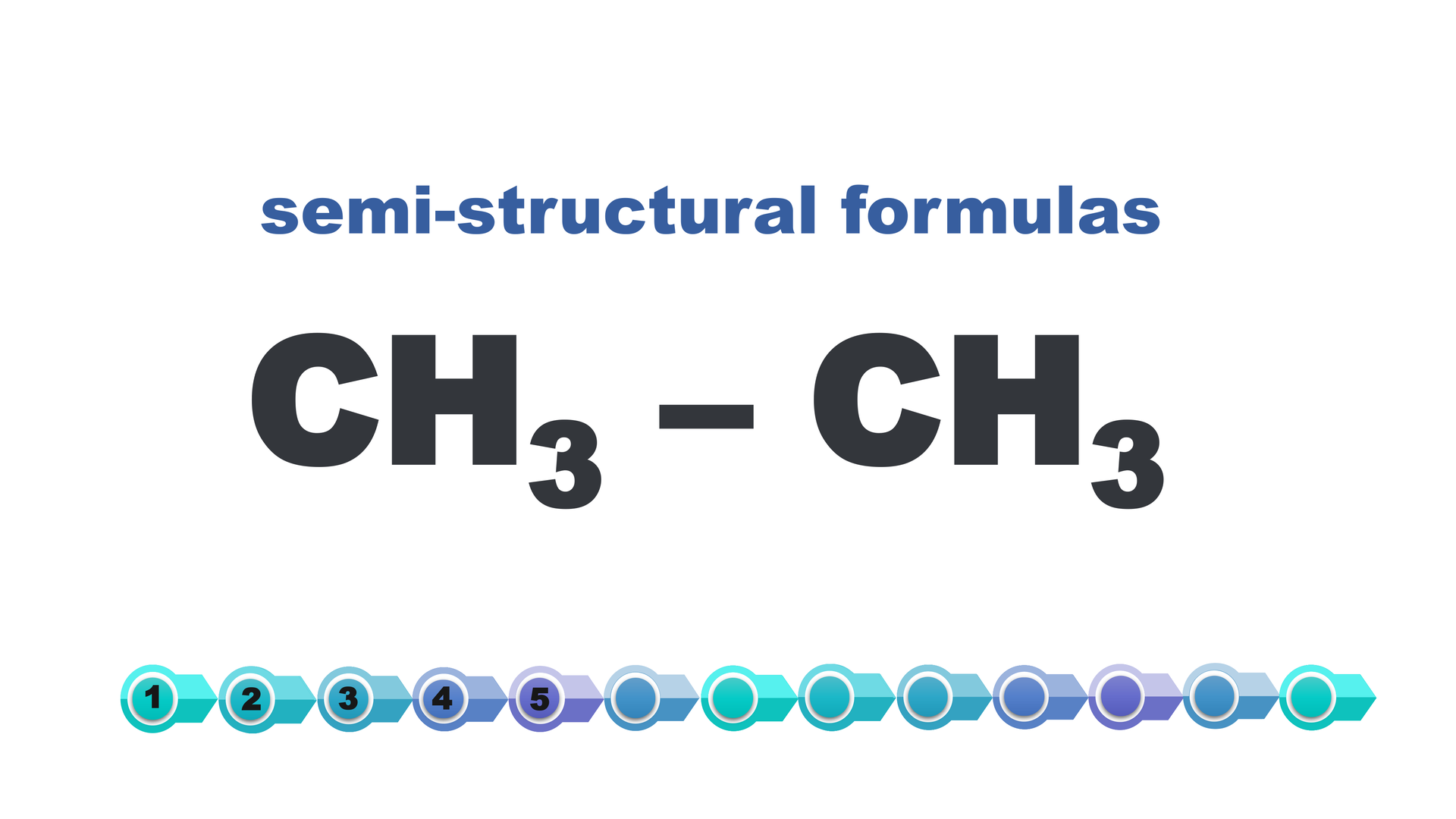
If you know this number, you can also create the structural and semi-structural formulas. Let's see this on the example of ethane, whose molecular formula is C2H6.
Source: GroMar Sp. z o.o., licencja: CC BY-SA 3.0.
RDqvNPNf9ag5V
lustracja przedstawia wzór strukturalny (structural formula) etanu o wzorze c dwa ha sześć. Złożony jest z dwóch atomów węgla oraz sześciu atomów wodoru połączonych wiązaniami pojedynczymi.
Source: GroMar Sp. z o.o., licencja: CC BY-SA 3.0.
RHG8g6qa2SRTD
Ilustracja przedstawia wzór półstrukturalny (semi-structural formula) etanu. grupa C ha trzy jest połączona pojedynczym wiązaniem z kolejną grupą c ha trzy.
Source: GroMar Sp. z o.o., licencja: CC BY-SA 3.0.
RuF472zWVxxDP
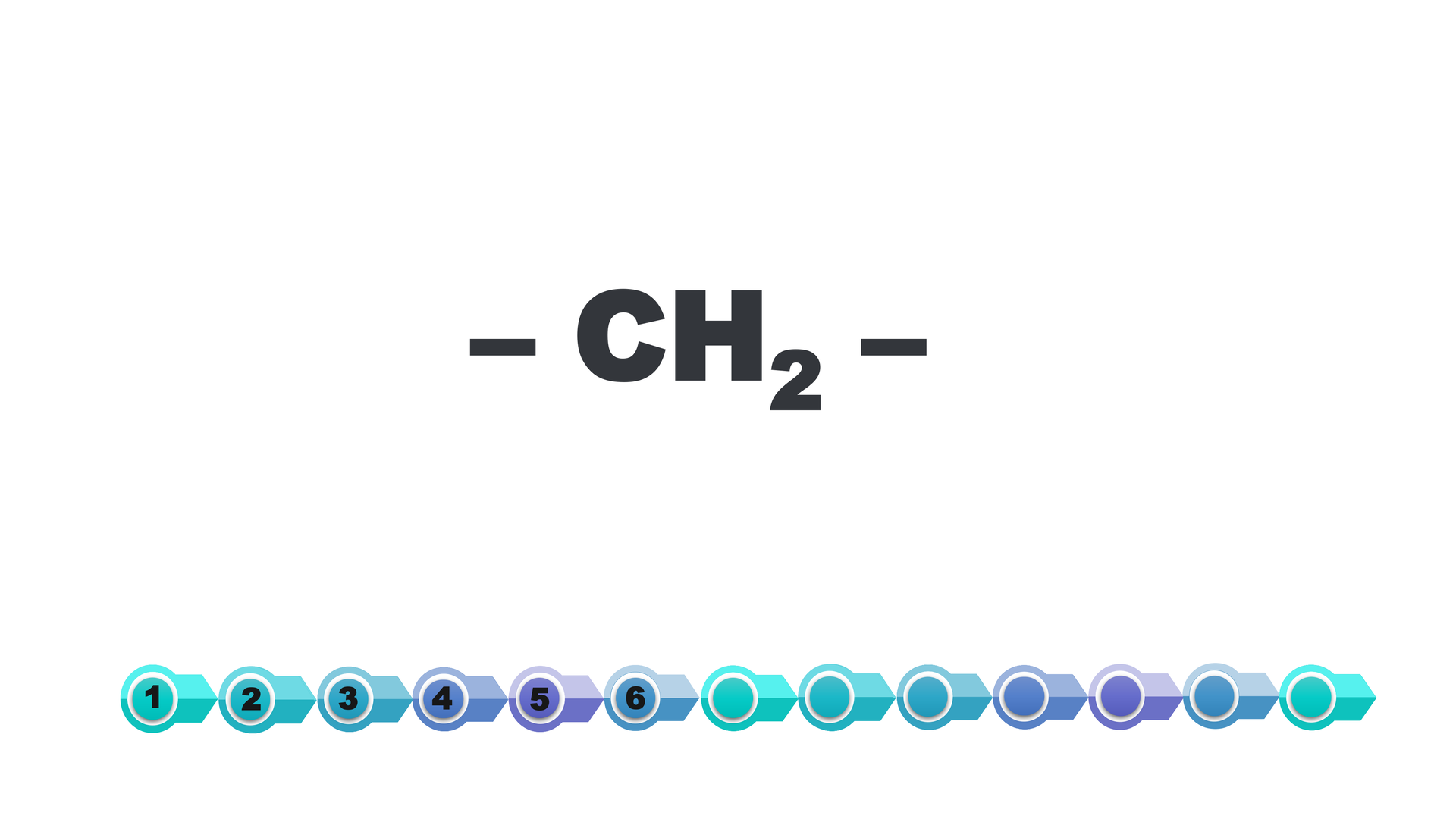
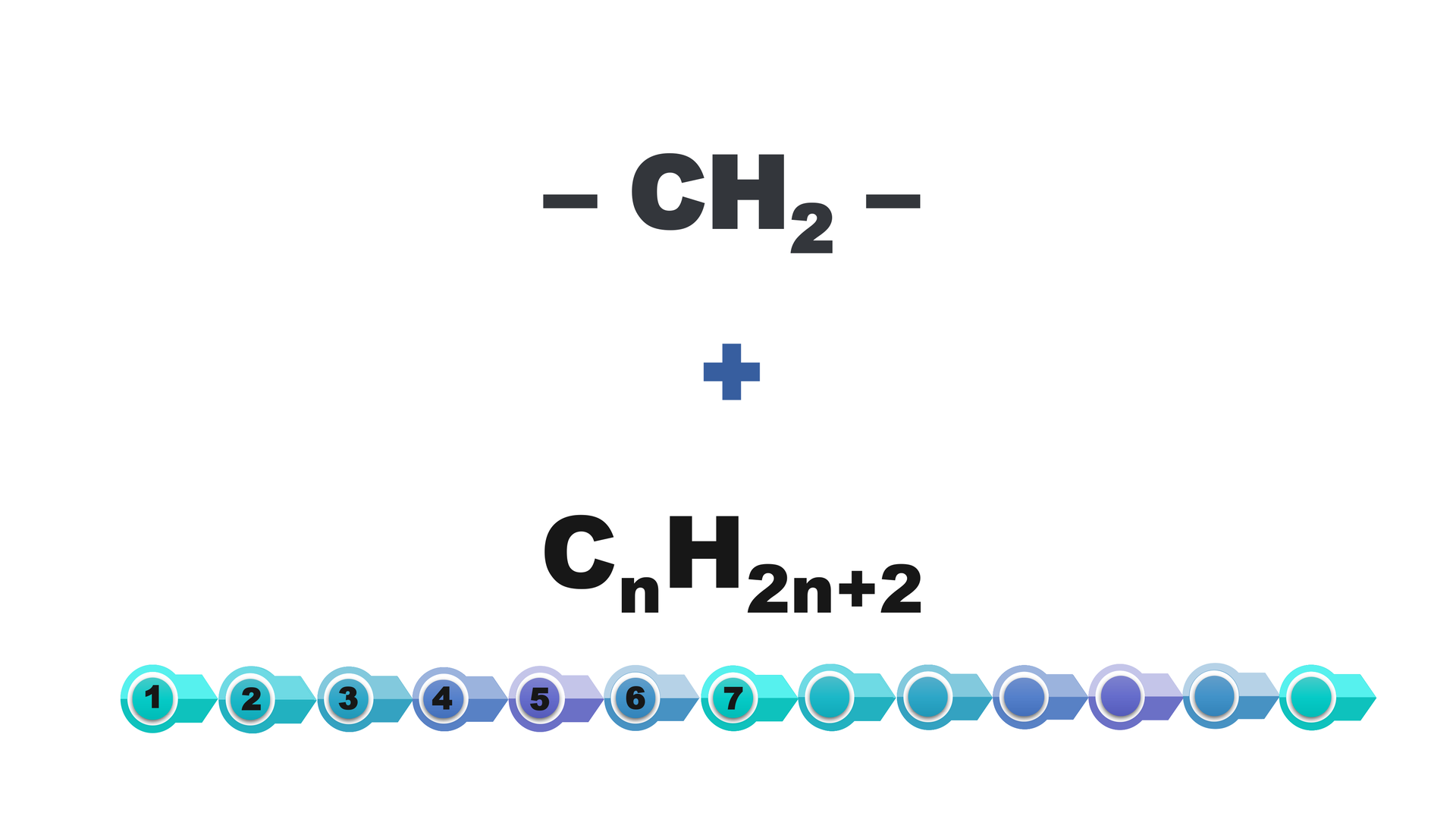
Ilustracja przedstawia wzór półstrukturalny c ha dwa. Każdy kolejny przedstawiciel rodziny alkanów jest bogatszy o jeden atom węgla i dwa atomy wodoru, czyli właśnie o grupę ce ha dwa. Ta seria nazywa się szeregiem homologicznym. Each subsequent representative of the alkane family is richer by one carbon atom and two hydrogen atoms, that is, by the c ha dwa group. This series is called the homologous series.
Each subsequent representative of the alkane family is richer by 1 carbon atom and 2 hydrogen atoms, that is, by the CH2 group. This series is called the homologous series.
Source: GroMar Sp. z o.o., licencja: CC BY-SA 3.0.
Rg2vofrYYyzZV
Ilustracja przedstawia wzór. Grupa ce ha dwa jest dodawana do wzoru ce en ha dwa en dodać dwa. Therefore, the series of consecutive alkanes is formed by ‘adding’ the ce ha dwa group to the formula of the previous alkane.
Therefore, the series of consecutive alkanes is formed by ‘adding’ the CH<s2 group to the formula of the previous alkane.
Source: GroMar Sp. z o.o., licencja: CC BY-SA 3.0.
R17fwnDDJl8SK
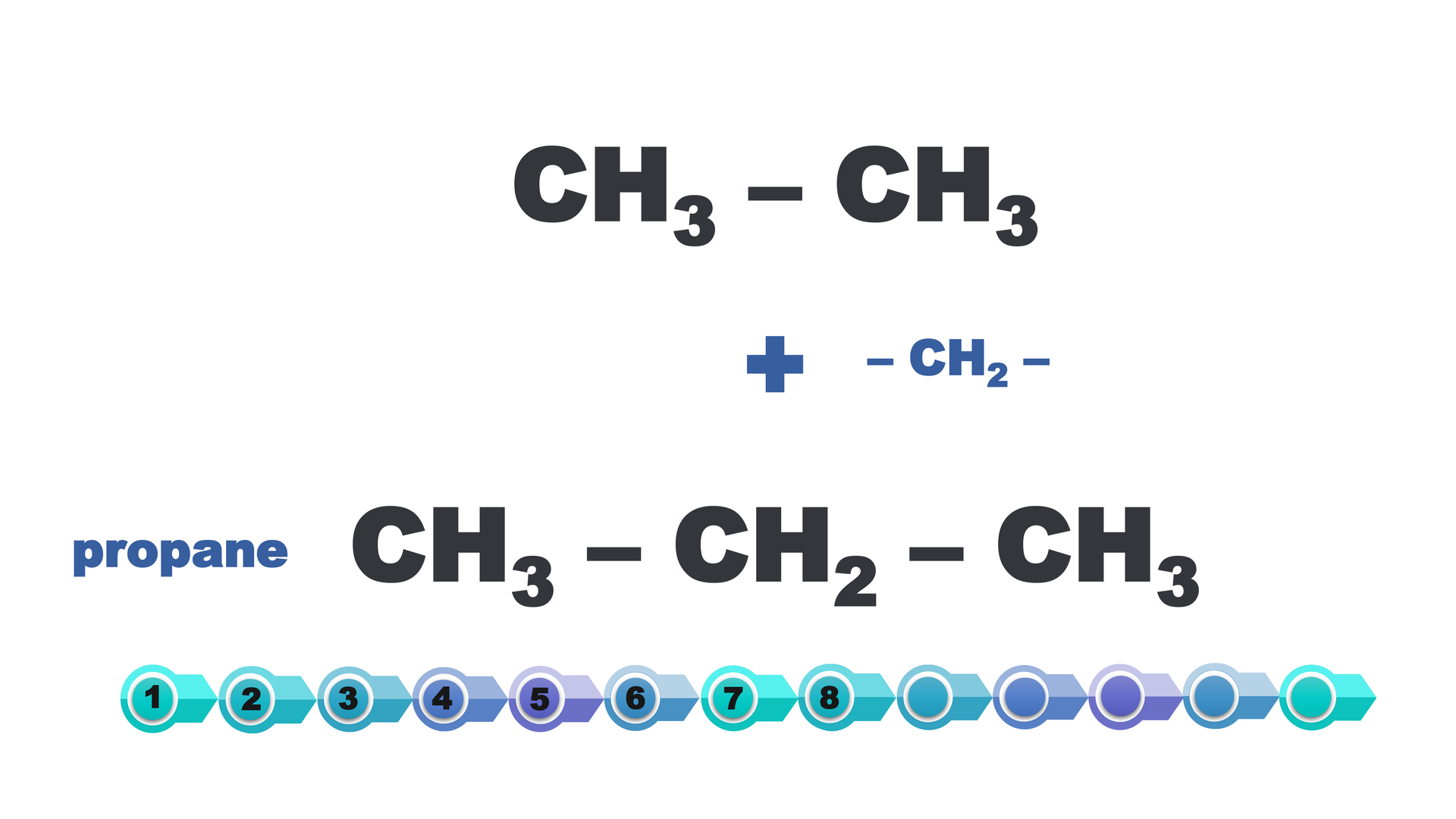
Ilustracja przedstawia poprzez wzór półstrukturalny otrzymanie propanu (po angielsku "propane"). Dwie grupy ce ha trzy z pojedynczym wiązaniem po dodaniu grupy ce ha dwa tworzy propan (zapis: ce ha trzy połączony pojedynczym wiązaniem z ce ha dwa i wiązaniem z ce ha trzy).When you ‘add’ the ce ha dwa group to the ethane chain with the formula ce ha trzy — ce ha trzy, you will get another representative of alkanes – propane.
When you ‘add’ the CH2 group to the ethane chain with the formula CH3 — CH3, you will get another representative of alkanes – propane.
Source: GroMar Sp. z o.o., licencja: CC BY-SA 3.0.
RhaPTYf2sLwe4
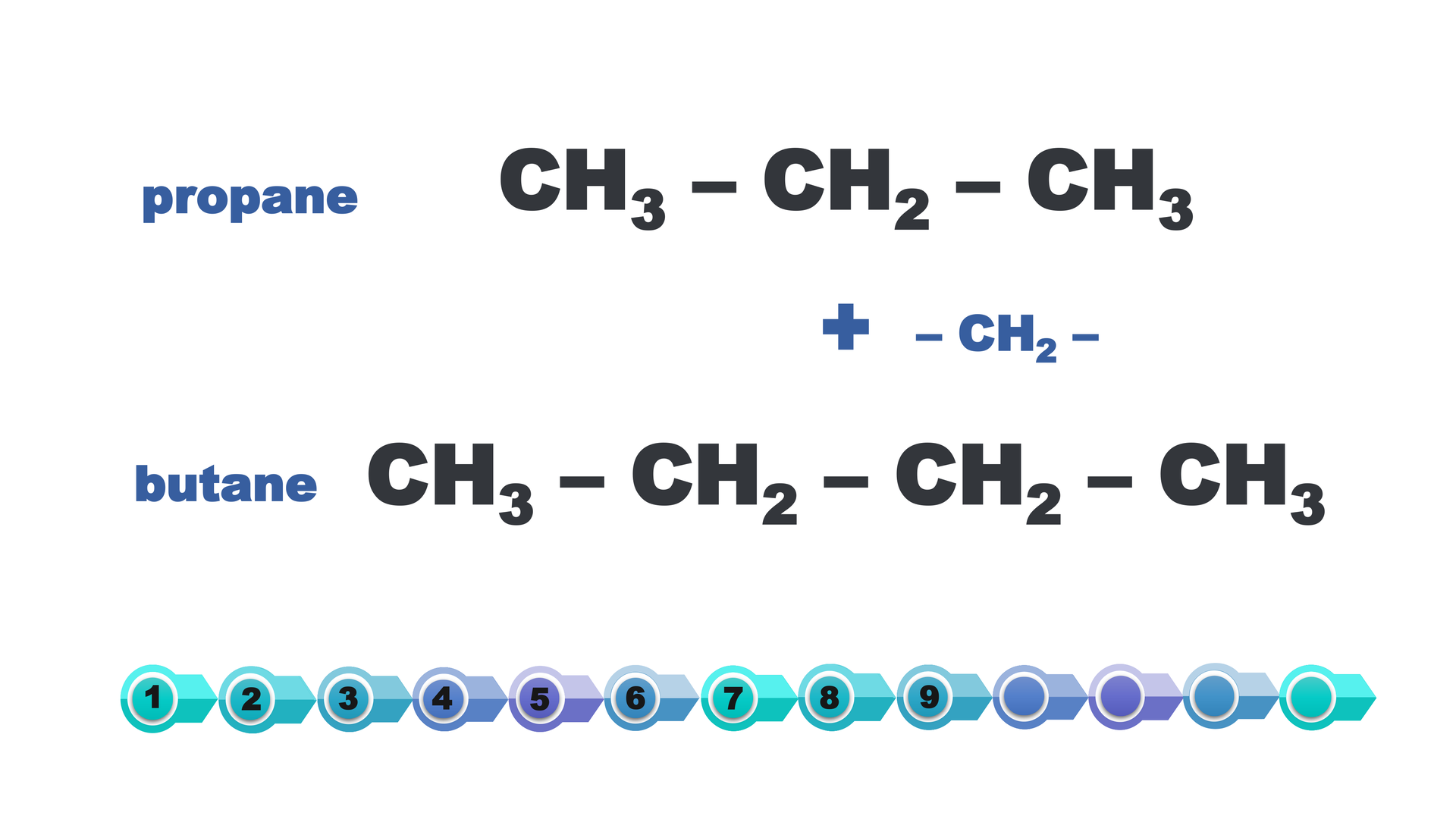
Ilustracja przedstawia połączenie wzoru propanu (ce ha trzy z pojedynczym wiązaniem z ce ha dwa i ce ha trzy) z butanem (wzór: ce ha trzy z pojedynczym wiązaniem z ce ha dwa, następnym ce ha dwa oraz ce ha trzy). Łącząc propan i butan uzyskuje się pentan. When the ce ha dwa group is ‘added’ to the butane chain, pentane will be obtained – another representative of the family.
When the CH2 group is ‘added’ to the butane chain, pentane will be obtained – another representative of the family.
Source: GroMar Sp. z o.o., licencja: CC BY-SA 3.0.
RwnOmtphQgc8W
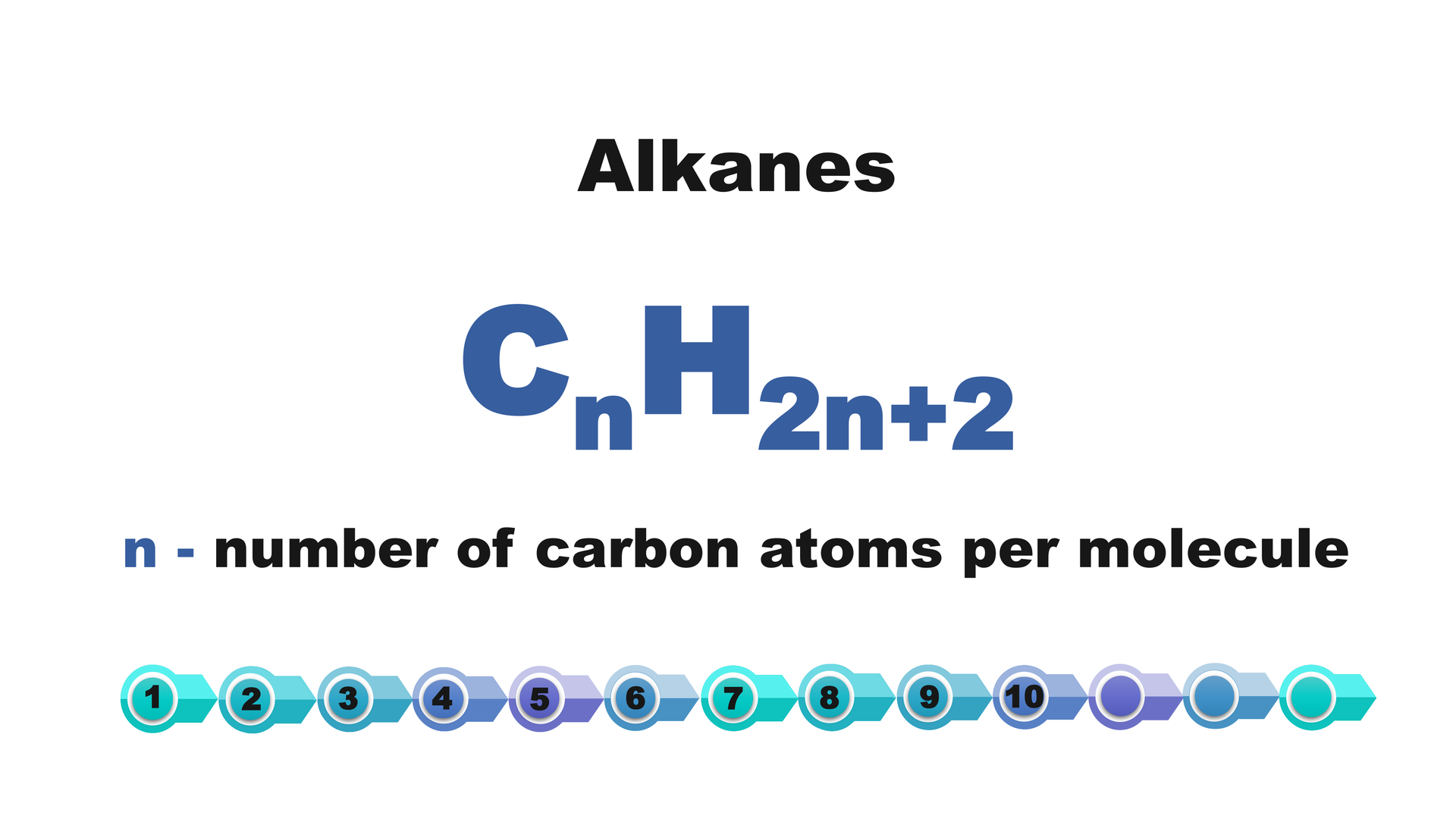
Ilustracja zawiera napis "Alkanes" oraz wzór ce en dwa en dodać dwa, w którym "en" oznacza liczbę atomów węgla w cząsteczce - "number of carbon atoms per molecule".
Summing up: the series of consecutive alkanes can be written down using the generalized formula Cn H2n+2, where n means the amount of carbon atoms in the carbon chain of alkanes.
Source: GroMar Sp. z o.o., licencja: CC BY-SA 3.0.
RFZ3cc8OzjP9c
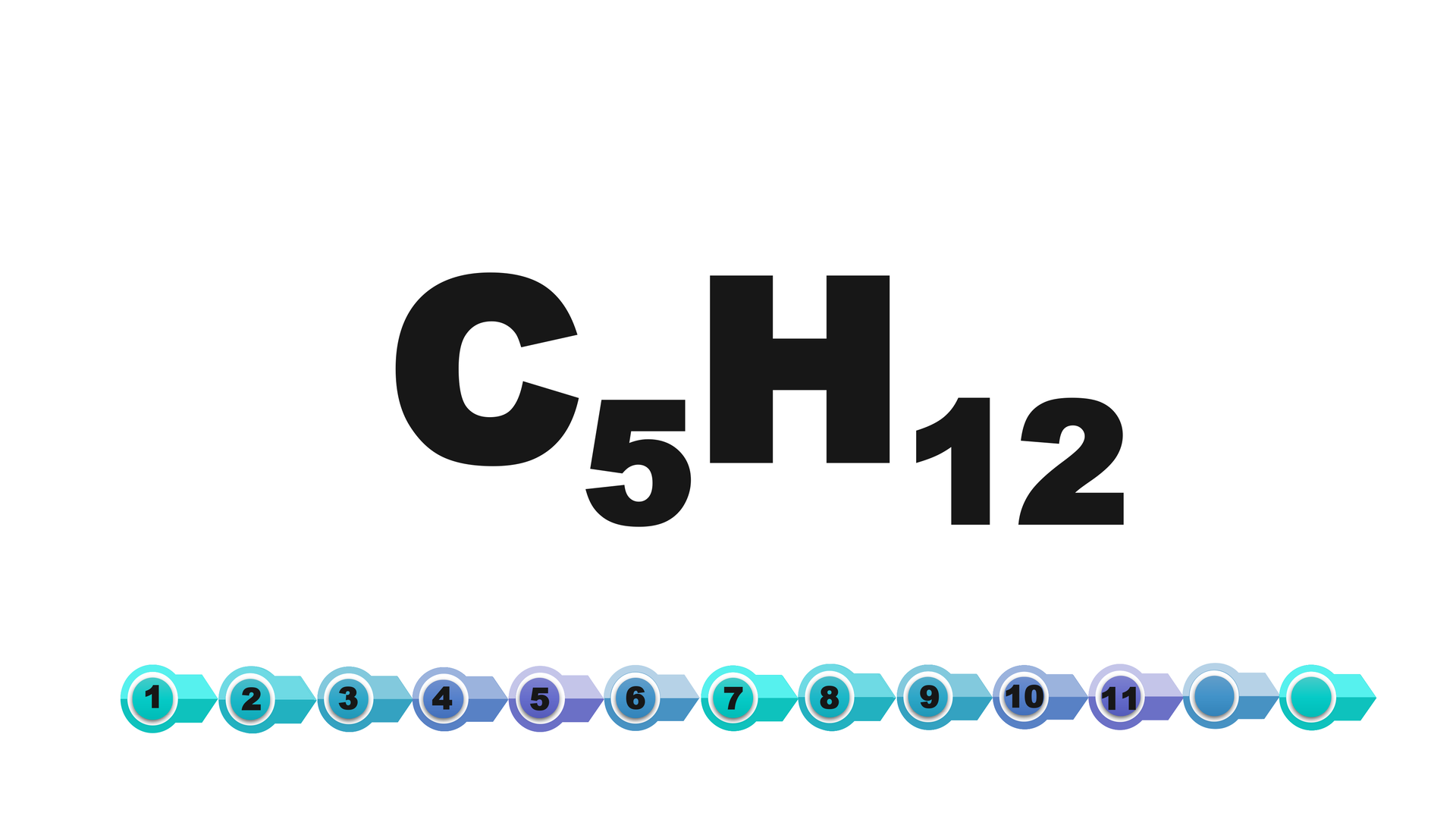
Ilustracja przedstawia wzór ce pięć ha dwanaście.
Knowing this formula, you can easily write down the formula for any alkane: for example, an alkane with 5 carbons in the chain will have the molecular formula C5 H12.
Source: GroMar Sp. z o.o., licencja: CC BY-SA 3.0.
RHakwvJ3OAj4C
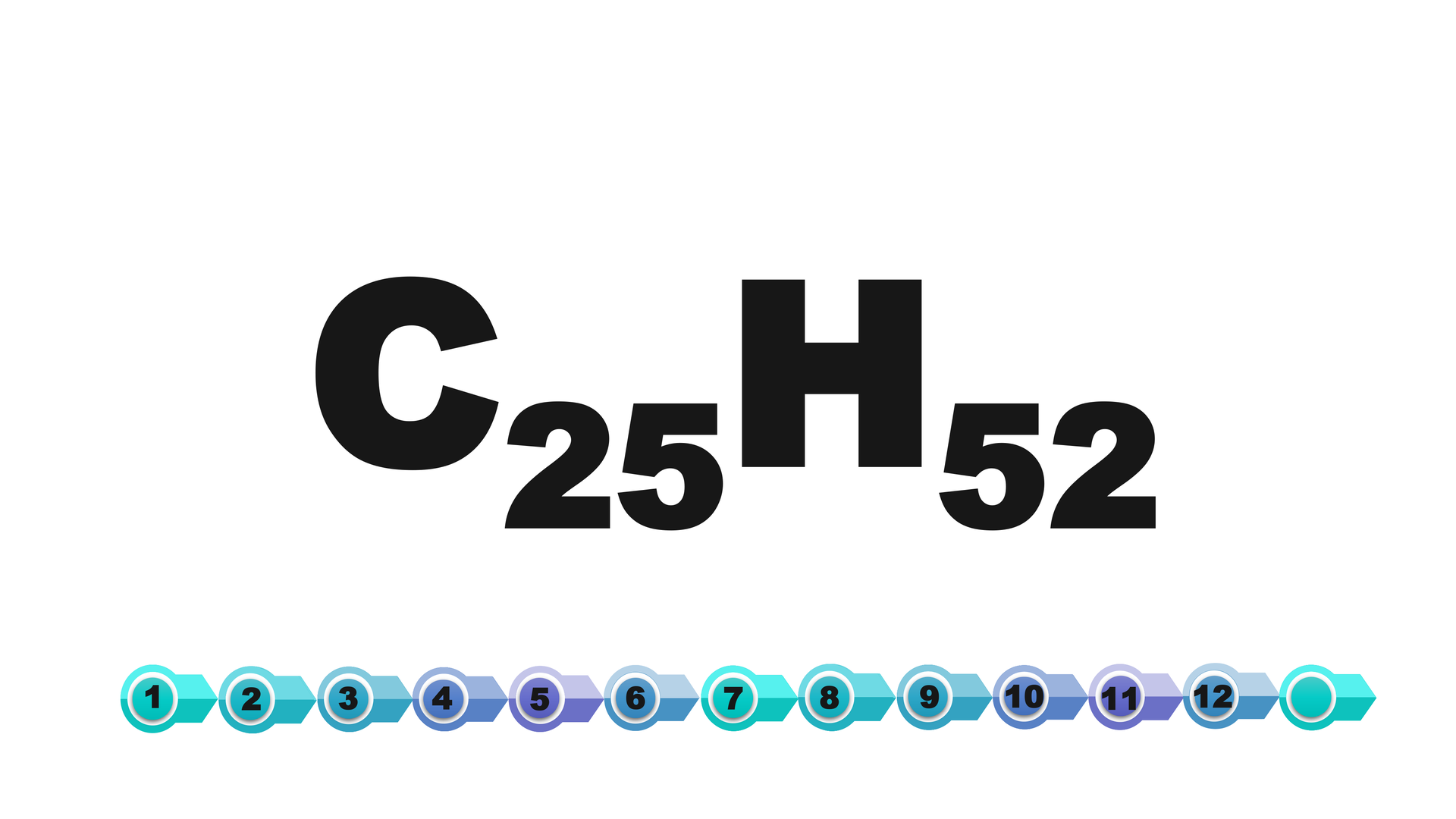
Ilustracja przedstawia wzór ce dwadzieścia pięć ha pięćdziesiąt dwa.
If the alkane has 25 carbon atoms in the chain, its molecular formula is C25 H52.
Source: GroMar Sp. z o.o., licencja: CC BY-SA 3.0.
R1JEeXecX1Cbp
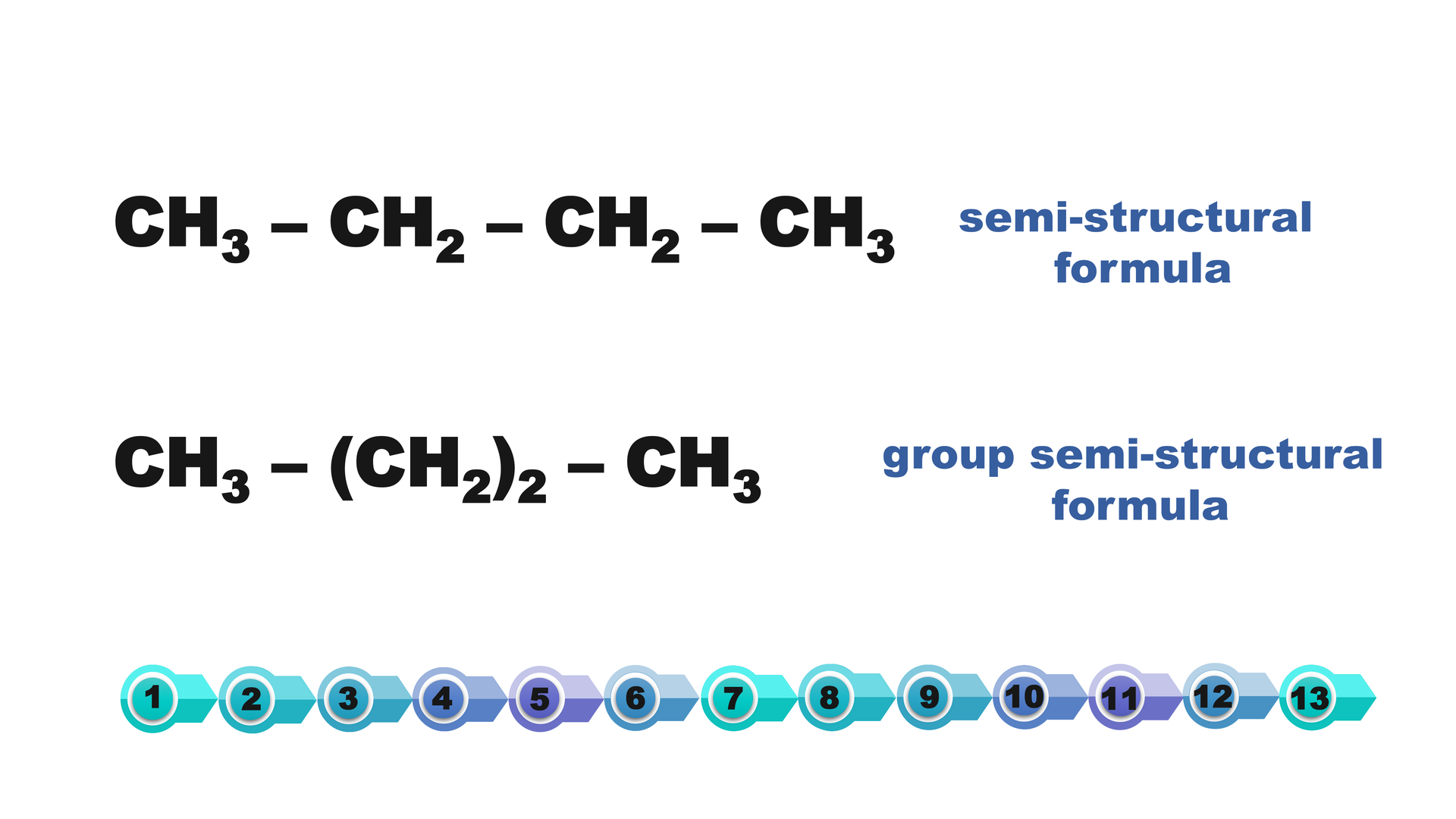
Ilustracja przedstawia wzór półstrukturalny (semi-structural formula) butanu: grupa c ha trzy jest połączona wiązaniem pojedynczym z grupą c ha dwa, która jest połączona kolejnym wiązaniem pojedynczym z grupą c ha dwa i kolejne wiązanie pojedyncze do grupy c ha trzy. Group semi-structural formulas are created only starting from butane, because this is about grouping of CH 2 groups in the carbon chain and stating their number after parentheses.
Note: group semi-structural formulas are created only starting from butane, because this is about grouping of CH2 groups in the carbon chain and stating their number after parentheses.
Source: GroMar Sp. z o.o., licencja: CC BY-SA 3.0.
RqAZDwYApf9xM
Nagranie dźwiękowe abstraktu dotyczące wzorów strukturalnych i półstrukturalnych alkanów
Nagranie dźwiękowe abstraktu dotyczące wzorów strukturalnych i półstrukturalnych alkanów
Nagranie dźwiękowe abstraktu dotyczące wzorów strukturalnych i półstrukturalnych alkanów
Important!
Generalized formula of alkanes:
CIndeks dolny nnHIndeks dolny 2n+22n+2
n – number of carbon atoms per molecule
The names of all the alkanes end with -ane.
Saturated hydrocarbons
Natural gas components, apart from methane, are other alkanes: ethane, propane, butane. Their names are common. Starting with the pentane, the names are made up of Greek numerals: penta- (five), hexa- (six) etc., denoting the number of carbon atoms in the molecule, by the addition of suffix -ane.
AlkanesalkanesAlkanes are saturated hydrocarbons whose molecules have only single bonds between carbon atoms.
Important!
Homologous series is a series of compounds with the same functional group and similar chemical properties in which the members of the series differ by the number of repeating units they contain.
R1F8gSxPcaJQx
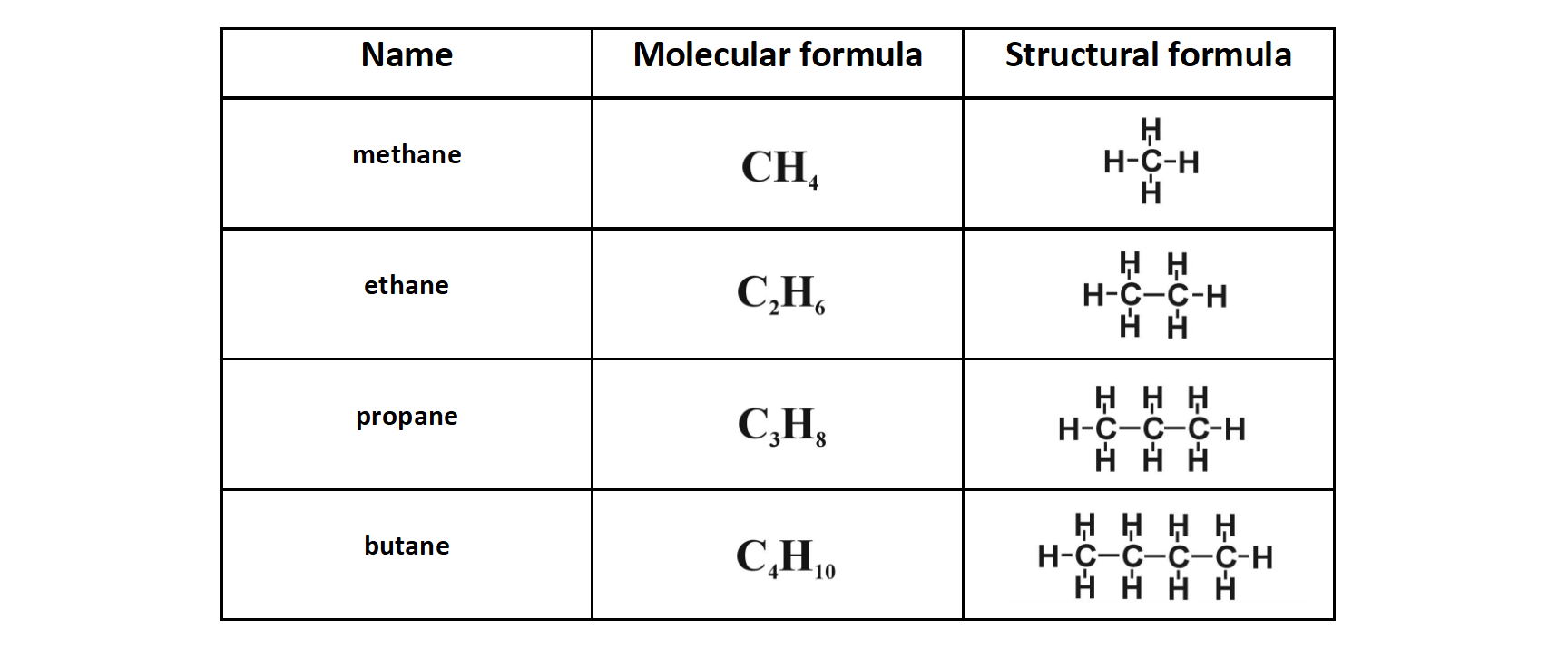
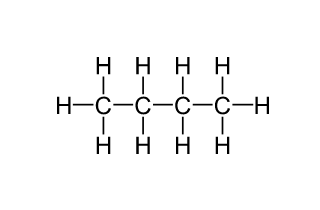
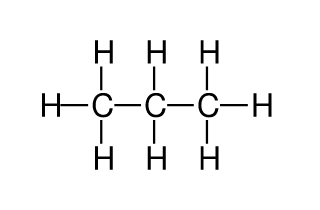
Ilustracja przedstawia tabelę alkanów, w której podana jest informacja o wzorze sumarycznym i strukturalnym. Metan (methane), wzór sumaryczny: c ha cztery, wzór strukturalny: symbol węgla połączony pojedynczymi wiązaniami z czterema symbolami wodoru. Etan (ethane), wzór sumaryczny: c dwa ha sześć, wzór strukturalny: dwa oxnnaczone symbolami atomy węgla oraz sześć atomów wodoru - wodoru z pojedynczymi wiązaniami. Propan (propane), wzór sumaryczny: c trzy ha osiem, wzór strukturalny: trzy symbole węgla połączone pojedynczymi wiązaniami z ośmioma atomami wodoru. Butan (butane), wzór sumaryczny: ce cztery ha dziesięć, wzór strukturalny: cztery symbole węgla połączone pojedynczymi wiązaniami z dziesięcioma atomami wodoru.
All the alkane molecules in the homologous series have single bonds (which means that the maximum number of hydrogen or carbon atoms is attached to each carbon atom), hence the name saturated hydrocarbons.
Isomers
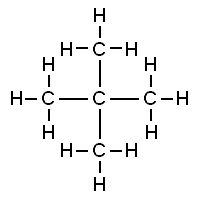
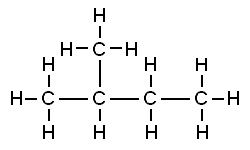
Alkanes or other organic compounds of the same molecular formula may differ in structure – such compounds are called isomersisomersisomers. There are compounds with a „straight” chain, in which all carbon atoms are bonded to no more than two other carbon atoms, and compounds with a „branched” chain, in which at least one carbon atom is bonded to more than two other carbon atoms.
The more carbon atoms in the alkane molecule, the more possibilities of bonding between them. If all carbon atoms in the alkane molecule are arranged in one line and there are no branches, the name of the molecule can be given with the letter n- at the beginning (abbreviation from normal). Butane with the molecular formula CIndeks dolny 44HIndeks dolny 1010 may form a chemical compound with a straight chain (n‑butane) or a branched chain (isobutane).
R1Zuvj1cHslaN
Exercise 1
Arrange the molecular formulas and systematic names below according to the increasing number of carbon atoms in the molecule. ethane Możliwe odpowiedzi: 1. ce pięć ha dwanaście, 2. ce osiem ha osiemnaście, 3. ce trzy ha osiem, 4. ce cztery ha dziesięć, 5. ce dwa ha sześć Możliwe odpowiedzi: 1. Propane, 2. Butane, 3. Pentane, 4. Octane, 5. Ethane
Arrange the molecular formulas and systematic names below according to the increasing number of carbon atoms in the molecule. ethane Możliwe odpowiedzi: 1. ce pięć ha dwanaście, 2. ce osiem ha osiemnaście, 3. ce trzy ha osiem, 4. ce cztery ha dziesięć, 5. ce dwa ha sześć Możliwe odpowiedzi: 1. Propane, 2. Butane, 3. Pentane, 4. Octane, 5. Ethane
Arrange the molecular formulas and systematic names below according to the increasing number of carbon atoms in the molecule.
Arrange the homologous series of alkanes starting with methane. Elementy do uszeregowania: 1. pentane, 2. hexane, 3. heptane, 4. propane, 5. octane, 6. nonane, 7. methane, 8. butane, 9. decane, 10. ethane
Arrange the homologous series of alkanes starting with methane. Elementy do uszeregowania: 1. pentane, 2. hexane, 3. heptane, 4. propane, 5. octane, 6. nonane, 7. methane, 8. butane, 9. decane, 10. ethane
Arrange the homologous series of alkanes starting with methane.
octane
hexane
methane
pentane
propane
butane
ethane
nonane
heptane
decane
RkiI9VdPFOrxD
Exercise 3
Wysłuchaj nagrania abstraktu, wyodrębnij jego części i nadaj im tytuły.
Wysłuchaj nagrania abstraktu, wyodrębnij jego części i nadaj im tytuły.
From the presented structural formulas, select all pentane isomers.
Isopentane
Neopentane
butane
propane
RTssmcpduOfsd
Create a multiple-choice test based on today's lesson. Then exchange your questions with a friend or classmate.
Create a multiple-choice test based on today's lesson. Then exchange your questions with a friend or classmate.
Create a multiple-choice test based on today's lesson. Then exchange your questions with a friend or classmate.
Question: ...
...
...
...
...
Conclusion
In organic compounds carbon is always of four‑valent.
Saturated hydrocarbons (alkanes) are saturated hydrocarbons whose molecules have only single bonds between carbon atoms.
Saturated hydrocarbons form the homologous series with the following generalized formula CIndeks dolny nnHIndeks dolny 2n+22n+2.
R18Tcfx8PL0qw1
Grafika przedstawiająca tablicę szkolną, na której znajdują się zdania do dokończenia. Finish selected sentences. 1 It was easy for me (uzupełnij). 2 It was difficult for me (uzupełnij). 3 Today I learned (uzupełnij). 4 I understood that (uzupełnij). 5 It surprised me (uzupełnij). 6. Today I found out (uzupełnij). 7. I was interested in (uzupełnij). 8. I still have to repeat (uzupełnij).
Grafika przedstawiająca tablicę szkolną, na której znajdują się zdania do dokończenia. Finish selected sentences. 1 It was easy for me (uzupełnij). 2 It was difficult for me (uzupełnij). 3 Today I learned (uzupełnij). 4 I understood that (uzupełnij). 5 It surprised me (uzupełnij). 6. Today I found out (uzupełnij). 7. I was interested in (uzupełnij). 8. I still have to repeat (uzupełnij).
Source: GroMar Sp. z o.o., licencja: CC BY-SA 3.0.
Keywords
saturated hydrocarbons, carbon, alkanes, isomers, homologous series
szereg homologiczny – szereg związków organicznych uporządkowanych według wzrastającej liczby atomów węgla, np. alkanów, w którym dwa kolejne związki różnią się od siebie o grupę atomów –CH2–