Soil – composition and properties
that solid substances have different solubility in water, and you can find information on the solubility of the selected substance;
what the properties of selected groups of inorganic and organic compounds are and what their composition is.
to define the term “soil”;
to describe the composition of soil;
explain what the sorption properties of soil consist in and indicate factors affecting soil sorption properties;
explain how soil pH can affect the growth and development of plants;
give examples of plants and their requirements regarding soil pH;
plan and conduct soil acidity testing and study soil sorption properties.
Soil composition
The composition of soilof soil depends on the type of rock being the substrate and undergoing (physical and chemical) soil formation processes, the amount of humus and the diversity of organisms living in it. Approx. 45% of the soil volume is made of mineral substances, approx. 25% of gases, 25% – of water and 5% – of organic substances.
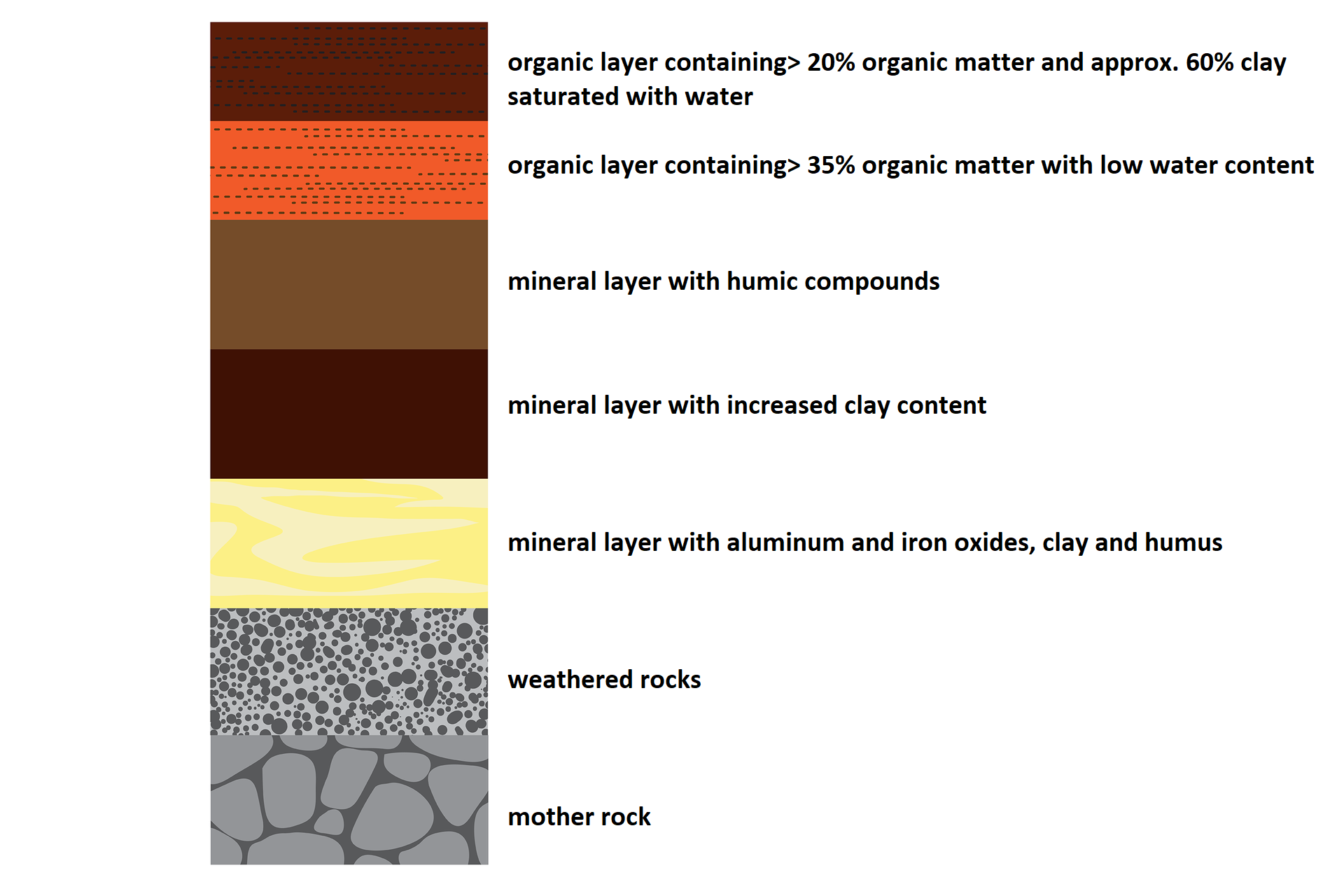
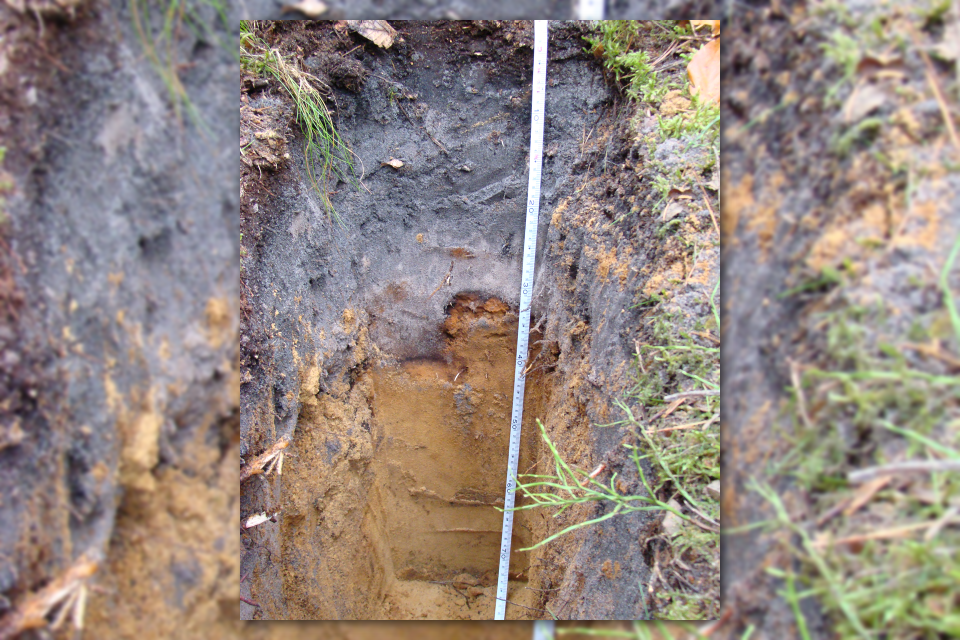
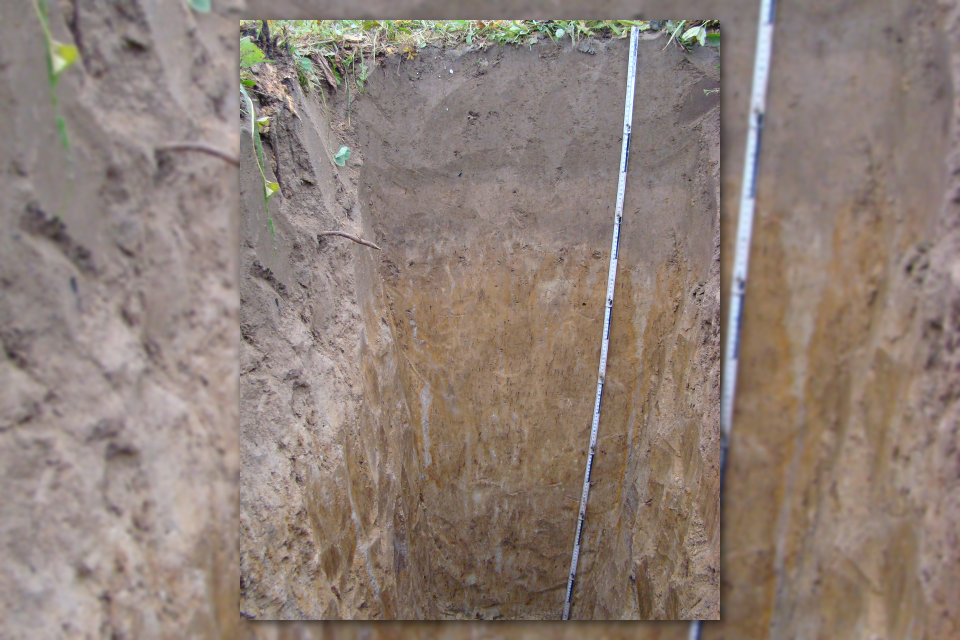
Soil formation is a continuous process including:
weathering of minerals in the rock substrate under the soil layer: physical weathering – the breakdown of rocks caused by water, wind and temperature fluctuations, chemical weathering – reactions of minerals that make rocks with water and carbon dioxide, leading to the formation of simpler, water‑soluble compounds;
biological weathering – transformation of biological matter, mainly plant matter, reactions involving microorganisms leading to the formation of humus (organic matter formed resulting from incomplete decomposition of plants and animals).
Soil properties
Write the research question and hypothesis before conducting the experiment “What properties does the soil have?”. Furthermore, write your observations and test conclusions and finally write the summary.
Does the soil have any special properties?
The soil, due to its structure, may exhibit properties similar to the properties of activated carbon.
2 beakers,
2 funnels,
2 stirring rods,
paper filters,
soil,
active carbon,
water stained with ink.
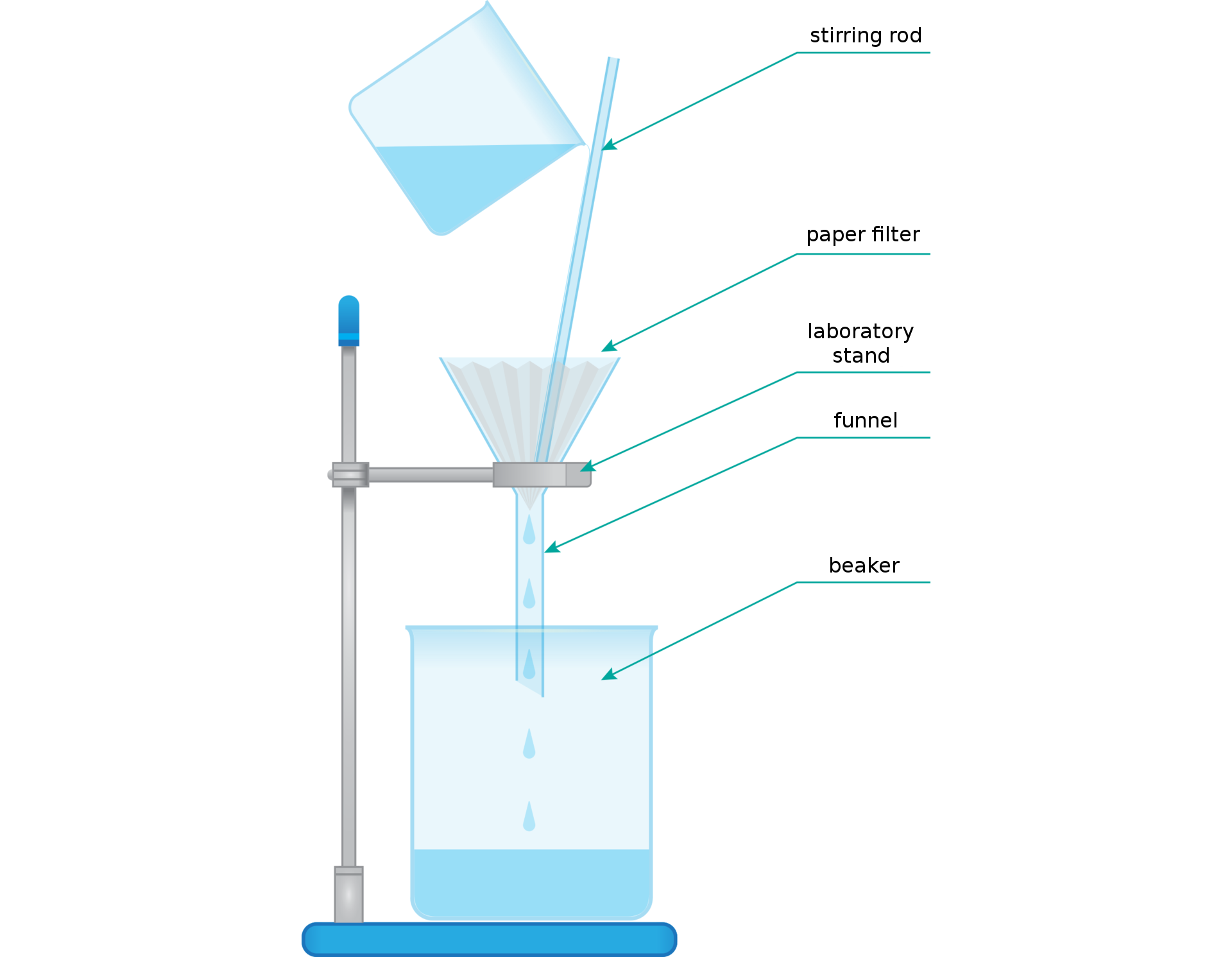
Prepare two filtration sets with paper filters.
On one filter, pour two tablespoons of soil, the other - two tablespoons of activated carbon.
Filter a few milliliters of water with ink through the soil layer and a layer of activated carbon. Watch the changes taking place.
Write your own suggestion for the term “sorption”.
Just like previously, write the research question and hypotheses before conducting the experiment “Sorption properties”. Furthermore, write your observations and test conclusions and the summary.
Does soil and sand have the same sorption properties?
Soil and sand due to their structure, does not have the same sorption properties.
3 test tubes,
water with ink,
sand,
loess soil.
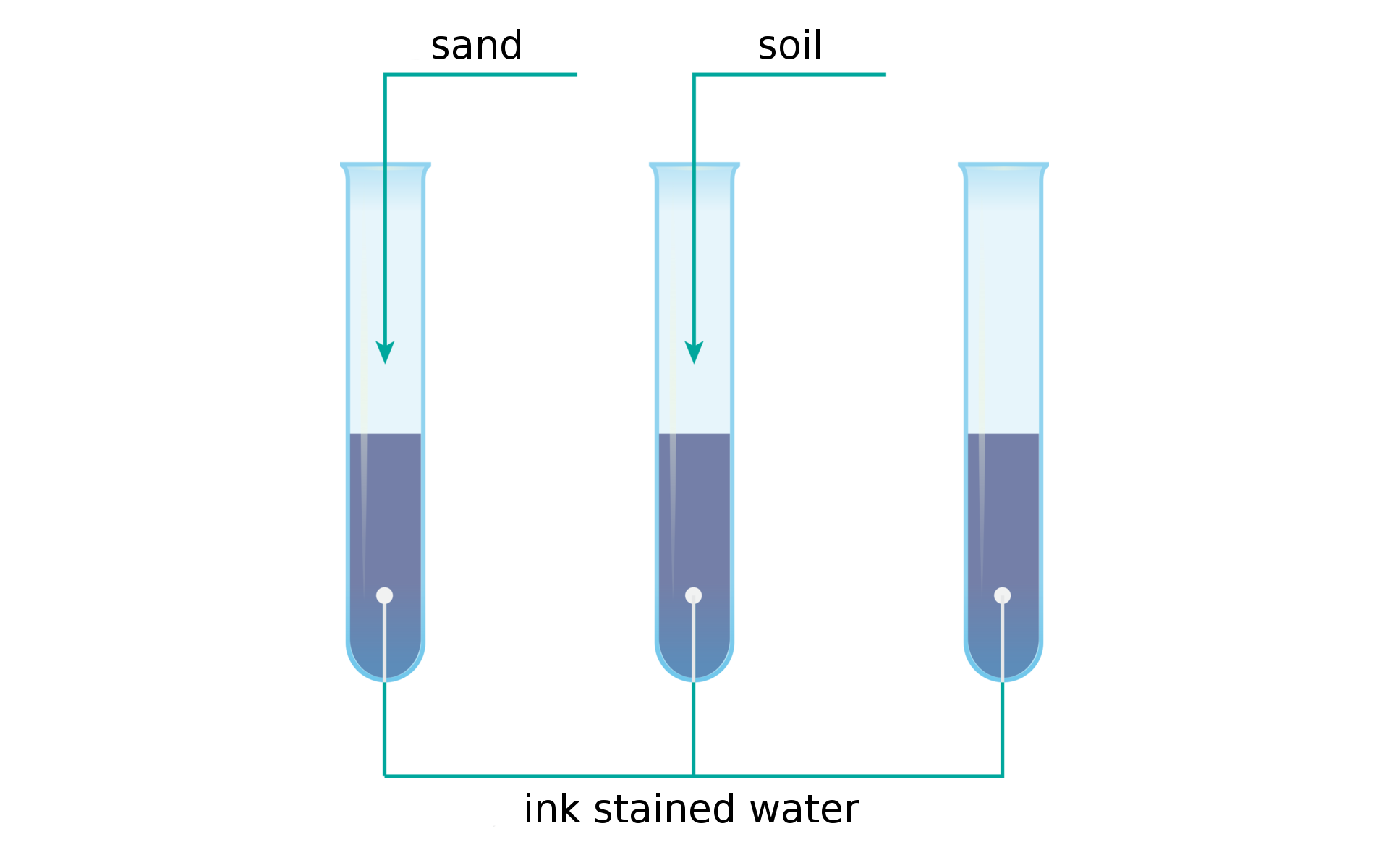
Pour approximately 3 cmIndeks górny 33 of water stained with ink into three tubes.
Pour about 2cmIndeks górny 33 of soil into the first tube, the second - about 2cmIndeks górny 33 of quartz sand, and the third - leave as it is as a comparative one.
The contents of the tubes should be thoroughly mixed and after sedimentation of sand and loess compare the color of the liquid over the sediment with the solution in the third tube.
The following types of sorption can be distinguished:
mechanical sorption, which consists in the retention in the open spaces of the soil of particles and microorganisms contained in soil solutions and suspensions;
physical sorption – the process of retaining water and gases (carbon dioxide and nitrogen oxides) by fragmented solid components of soil;
chemical sorption – the process of retaining ions contained in the soil solution by way of the reaction of digestion and precipitation of sparingly soluble salts.
Write the research question and hypothesis before conducting the experiment “Soil pH”. Furthermore, write your observations and test conclusions and finally write the summary.
What is the pH of the soil? Can the soil differ in reaction?
Depending on the place of collection (origin), soils may have a different pH.
test tubes,
universal indicator papers,
soil samples - garden soil, forest soil,
distilled water.
Place about 1cmIndeks górny 33 of the test soil in the test tube.
Add approximately 3cmIndeks górny 33 of distilled water to the test tube. Close the tube with a stopper and shake for several minutes. Place the tube in a laboratory stand. 3.After the sediment has settled, immerse the universal indicator paper in the solution above the precipitate. Remove the paper and read the result using the scale.
Repeat the activities using the second soil sample.
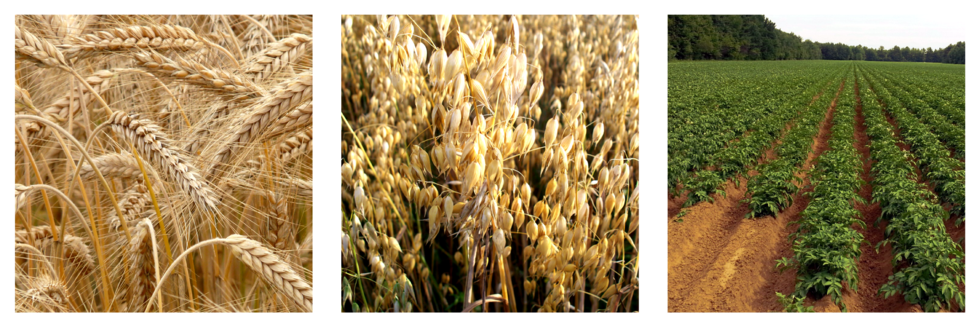
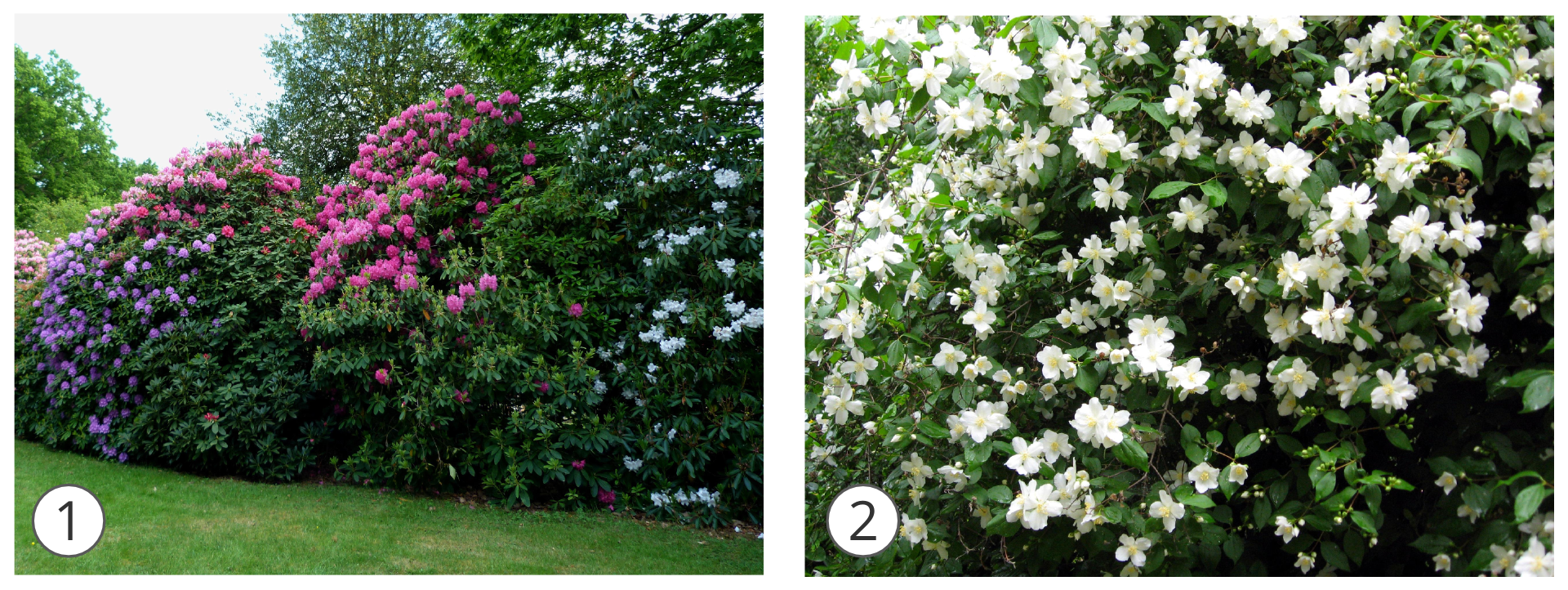
Plants have different degrees of tolerance of soil acidity. Soil with pH close to neutral (6.6 to 7.2) or slightly acidic pH (5.6–6.5) is best for crops. It was found that the decrease in soil pH in the arable layer below 5 results in a decrease in crop yields. Forest plants grow normally in soils with a pH of 4.5 – 5.5.
In Poland, over 80% of arable soils are acid soils that require liming, i.e. fertilization with alkaline calcium compounds (calcium fertilizers).

Write your hypotheses before watching the teacher demonstration or performing the experiment “How can you influence the soil pH?”. Write your observations and conclusions.
How can you change the soil pH?
2 test tubes,
a teaspoon,
a sample of acid soil,
universal indicator papers,
calcium oxide.
Check the soil pH.
Add a pinch of calcium oxide to half a teaspoon of acid soil and mix thoroughly.
Check the pH of the soil mixed with calcium oxide.
What does the composition of soil depend on? Mark the correct answers.
- type of the rock forming the soil substrate
- plants that grow in it
- diversity of organisms that live in it
- quantity of humus
Solve the crossword and explain the meaning of the result you receive.
- Chemical sorption consists in the retention of some ... in the soil solution
- The elements occurring in relatively large amounts in the soil are called...
- It is used to measure the soil pH
- The elements occurring in very small amounts in the soil are called...
| 1 | |||||||||||||||
| 2 | |||||||||||||||
| 3 | |||||||||||||||
| 4 |
Summary
Soil formation is a continuous process including among others, weathering of minerals in the in the rock substrate under the soil layer, reactions involving microorganisms, metabolism of biological matter, mainly plants.
Weathering of minerals is a set of physical, chemical and biological processes occurring with the participation of living organisms. An important role in the course of these processes is played by water flowing through the soil and dissolving mineral components. The weathering processes take place in the environment with low acidity.
Soil has strong sorption properties, i.e. the ability to absorb gases and vapors from the air, particles or ions from solutions as well as microorganisms and fine particles from suspensions in the soil.
Most plants thrive on soils with neutral or slightly acidic pH.
Chemical weathering of rocks takes place, among others, by way of the action of water in which carbon dioxides, sulfur dioxides and nitrogen oxides are dissolved, causing the acidic pH of the solution acting on the rocks. The rocks react with acid, which causes their fragmentation.
Design the experiment allowing to determine which rock type (e.g. sandstone, marble, granite, limestone) is most susceptible to acid treatment and is most exposed to chemical weathering. Present the description or design of the experiment and the list of necessary equipment and reagents.
Keywords
soil, soil sorption properties
Glossary
gleba – powierzchniowa warstwa skorupy ziemskiej powstająca w wyniku wietrzenia skał, czyli długotrwałych, złożonych procesów fizycznych, chemicznych i biologicznych zachodzących pod wpływem czynników atmosferycznych, wody oraz działania mikroorganizmów
właściwości sorpcyjne gleby – zdolność gleby do pochłaniania atomów, cząsteczek i jonów z gazów, powietrza, roztworów i zawiesin