Soils in Poland
what the soil is;
what the soil‑forming process is and how it goes through;
what the differences between soil, vegetation and climate zones are.
you will name soil‑forming factors;
discuss the soil profiles of basic soils in Poland;
indicate the differences between basic soil profiles;
show the occurrence of soils in Poland on the map;
determine the basic features of soils in Poland;
classify soils in terms of fertility;
assess the agricultural usefulness of soils in Poland.
The fact that in a given area there is a certain type of soilsoil is determined by not only climate and vegetation. An important role in the soil‑forming processsoil‑forming process play the following factors: parent rock, water, animals and other organisms, relief and human activities.
Soils are used by man for growing plants. Therefore, an important issue is their good quality so that the yields were high. The quality of soil is affected by humus content – the higher the better. In this respect, the best soil is chernozem. Other really good soils are fen soil and black earth, as well as some brown soils and limestone soils. Whereas the least content of humus is found in mountain soil, podzol and luvisol.
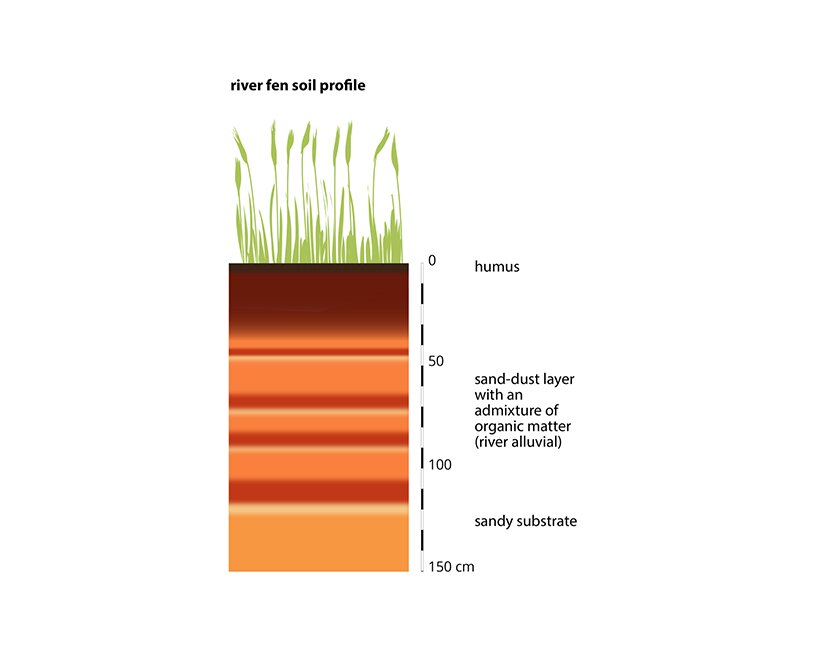
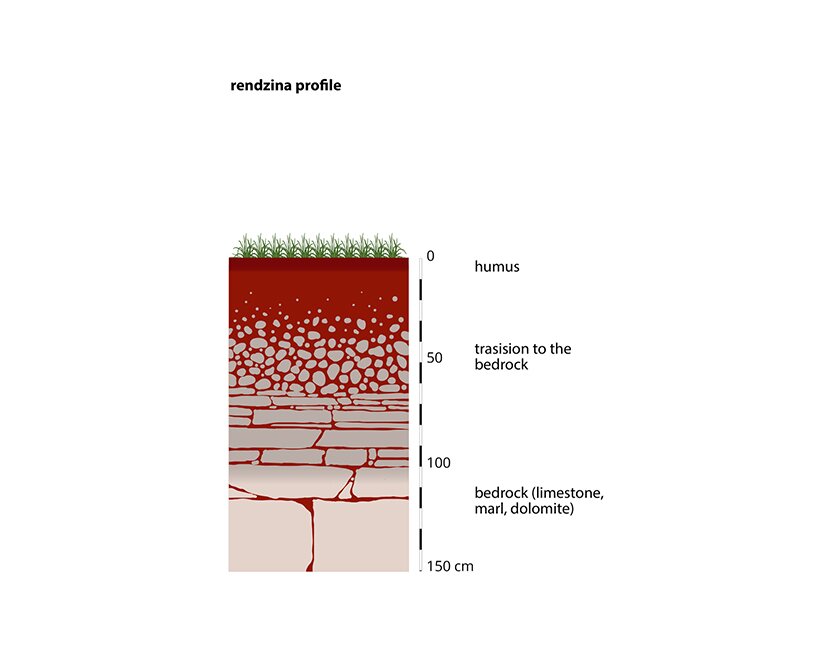
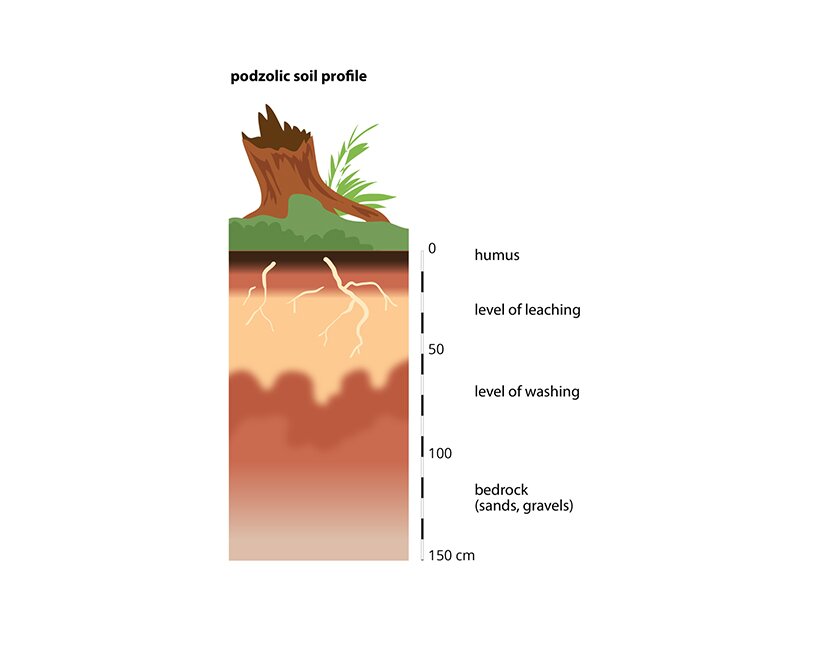
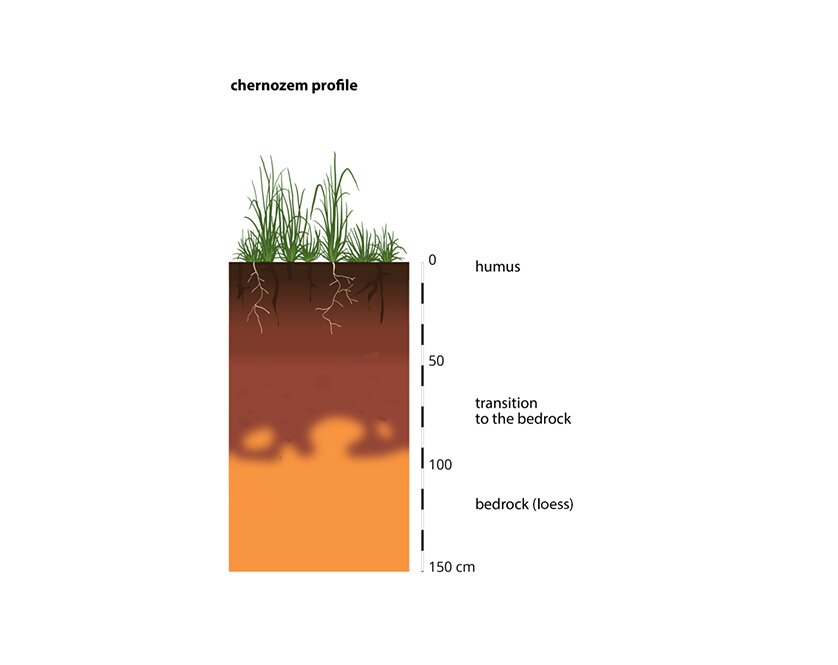
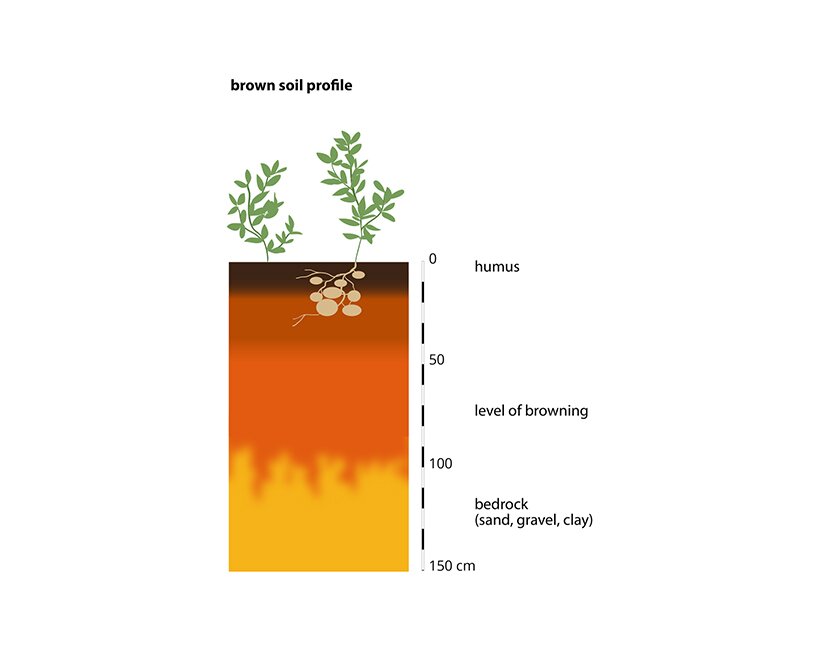
Set the chernozem layers in the correct order.
- bedrock (loess)
- humus
- transition to the bedrock
It takes 200 to 500 years to produce a 1 cm layer of soil. The time that is needed to produce soil suitable for cultivation in natural conditions and without the human activity is several thousand years.
Nearly 80% of Poland's area is covered by brown soils, podzols and luvisols. They occur commonly in lowland areas and lakelands. There is less of them in the highlands and in the mountains (especially podzols). In terms of agricultural suitability, the most valuable of them are brown soils.
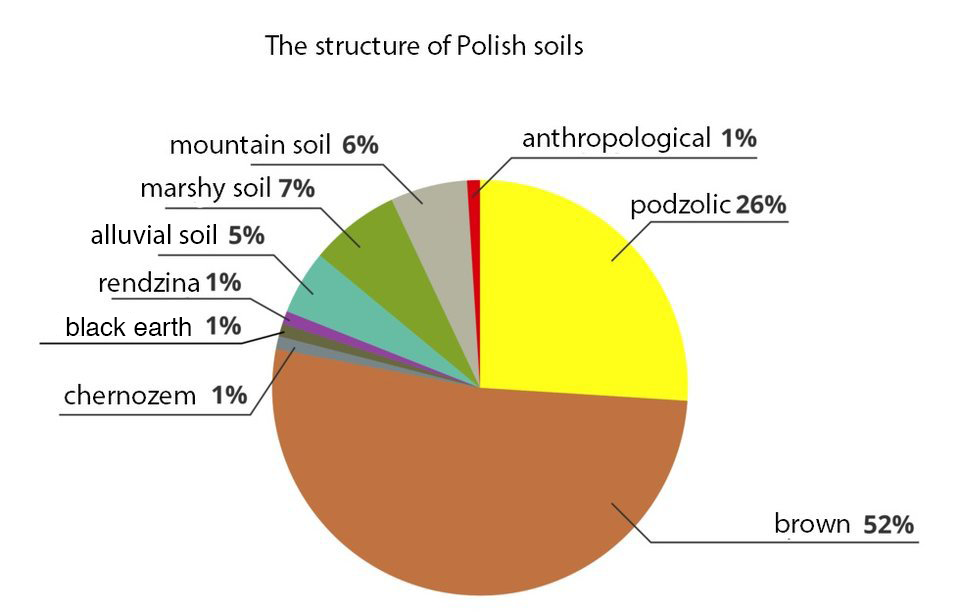
There is little soil of the highest quality in our country – chernozem occupies only about 1% of the area. It can be found on the Lublin Upland, Lesser Poland Upland and on the Głubczyce Plateau (Opole Province).
Black earth is characterized by little lower quality but has only about 1% share in the country as well. It occurs mainly in the Kuyavy region, in the Greater Poland Lowland, the Szczecin Lowland and the Silesian Lowland.
A larger percentage (about 5%) falls on fen soil. On a large surface it has formed in the Vistula delta, thanks to which Żuławy Wiślane is one of the most fertile areas in Poland.
Bog soil occupies about 7% of the country's area and outside river valleys it occurs mainly in Podlasie, Polesie and lakelands. This type of soil is quite good, but due to high moistness it is primarily used as meadows and pastures.
Due to the deep profile, limestone soil also is of good quality. Limestone soil has formed on carbonate rocks of the Lesser Poland Upland and the Lublin Upland. They represent a total of approximately 1% of the country's area.
However, for the typical, mountainous initial soil, the percentage is around 6%. You can find it on the slopes of the Carpathians and the Sudetes. It is not very fertile and generally overgrown with grass, which is why animals are most often grazed there.
The last group forms anthropogenic soil, that is soil transformed by man's activity. It occurs in urban areas (the so‑called urbisol), suburban areas (e.g. garden soil – hortisol), and industrialized areas (technosol). Larger complexes can be found in the Upper Silesian Industrial District and other large cities (in Warszawa, Trójmiasto, Łódź, Kraków, Wrocław, Poznań, and Szczecin) and in the area of opencast brown coal mines (Bełchatów, Konin, Turoszów).
The following graphic shows selected soil types. Read the information.
Match the right soil with the right description.
The highest quality soils. They constitute 1% of the surface of our soils. They are located on the Lublin Upland, among others., They are soils created on weathered limestone and gypsum rocks. In Poland, they are mainly located on limestone highlands., Present in areas of overgrown lakes and swamps. They owe their dark colour to high humus content. They occur in the Kuyavia region, among others., Larger complexes occur in the Upper Silesian Industrial District and other large cities (in Warsaw, the Tricity (Gdańsk-Gdynia-Sopot), Łódź, Kraków, Wrocław, Poznań, and Szczecin) and in the area of opencast brown coal mines (Bełchatów, Konin, Turoszów)., Formed from sediments deposited by flooded rivers, which is why they occur in river valleys. Their fertility depends on the quantity and quality of the planted material. They occupy an area of 5%.
| Anthropogenic soils | |
| Chernozems | |
| Black earth | |
| Fen soils | |
| Rendzinas |
Keywords
soil, soil profile, soil‑forming process
Glossary
gleba - powierzchniowa, biologicznie czynna warstwa skorupy ziemskiej składająca się z cząstek mineralnych i organicznych oraz z powietrza i wilgoci
żyzność gleby - naturalna zdolność gleby do dostarczania roślinom składników pokarmowych oraz wody i powietrza
proces formowania gleby - ogół wzajemnych powiązań i oddziaływań czynników glebotwórczych (skały macierzystej, wody, klimatu, organizmów żywych, rzeźby terenu, działalności człowieka) prowadzący do powstania gleby