1
Show exercises:
1
Exercise 1

Match the words with their translations.

Połącz wyrazy z ich tłumaczeniami.

RuHk5KxWoPtWr
attachment Możliwe odpowiedzi: 1. groźba, 2. dane, 3. okup, 4. złośliwe oprogramowanie, 5. załącznik, 6. cel data Możliwe odpowiedzi: 1. groźba, 2. dane, 3. okup, 4. złośliwe oprogramowanie, 5. załącznik, 6. cel malware Możliwe odpowiedzi: 1. groźba, 2. dane, 3. okup, 4. złośliwe oprogramowanie, 5. załącznik, 6. cel ransom Możliwe odpowiedzi: 1. groźba, 2. dane, 3. okup, 4. złośliwe oprogramowanie, 5. załącznik, 6. cel target Możliwe odpowiedzi: 1. groźba, 2. dane, 3. okup, 4. złośliwe oprogramowanie, 5. załącznik, 6. cel threat Możliwe odpowiedzi: 1. groźba, 2. dane, 3. okup, 4. złośliwe oprogramowanie, 5. załącznik, 6. cel
Źródło: GroMar Sp. z o.o., licencja: CC BY-SA 3.0.
2
Exercise 2

Match the words with their definitions.

Połącz wyrazy z ich definicjami.

RkNnNMaLBtMHB
verify Możliwe odpowiedzi: 1. to stop something from happening or succeeding, 2. to find a solution to a problem, 3. to check or prove that something is correct or true, 4. to be able to get to or get inside a place, 5. to need help and support of someone or something in order to continue rely on Możliwe odpowiedzi: 1. to stop something from happening or succeeding, 2. to find a solution to a problem, 3. to check or prove that something is correct or true, 4. to be able to get to or get inside a place, 5. to need help and support of someone or something in order to continue access Możliwe odpowiedzi: 1. to stop something from happening or succeeding, 2. to find a solution to a problem, 3. to check or prove that something is correct or true, 4. to be able to get to or get inside a place, 5. to need help and support of someone or something in order to continue block Możliwe odpowiedzi: 1. to stop something from happening or succeeding, 2. to find a solution to a problem, 3. to check or prove that something is correct or true, 4. to be able to get to or get inside a place, 5. to need help and support of someone or something in order to continue crack Możliwe odpowiedzi: 1. to stop something from happening or succeeding, 2. to find a solution to a problem, 3. to check or prove that something is correct or true, 4. to be able to get to or get inside a place, 5. to need help and support of someone or something in order to continue
Źródło: GroMar Sp. z o.o., licencja: CC BY-SA 3.0.
2
Exercise 3

Pick the right response to each situation.

Wybierz reakcję odpowiednią do danej sytuacji.

Rb9Sh5ChwWT9R
1. Your older brother found an amazing job offer online. It requires no effort and promises a lot of money. What do you say?
a) Don’t fill in any paperwork. It’s a quick-money promise.
b) This job sounds amazing. Nothing bad can happen!
c) It sounds like a ransomware attack. Don’t apply for this job.

2. Your mum wants to install a security suite, but she doesn’t know how it works. What do you say?
a) It blocks malware and keeps you safe from scams.
b) It wants you to verify your identity with the use of codes.
c) It uses links and attachments to take advantage of you.

3. Your brother needs a strong password. What do you recommend?
a) Use a lot of characters and include your personal data.
b) Use a lot of characters and add special symbols.
c) Use personal information as well as letters and numbers.

4. Your sister doesn’t know what two-factor authentication is. What do you say?
a) It’s when you have to use two types of letters in your password.
b) It’s when a strange message you get has both a link and an attachment.
c) It’s when you have to verify your identity with a code.
Źródło: GroMar Sp. z o.o., licencja: CC BY-SA 3.0.
2
Exercise 4

Study the text below.  Fill in the text with letters A‑F which stand for the words that best fit the gaps 1‑3.  (Note: three words don’t fit into any gap.)

Zapoznaj się z tekstem poniżej. Wpisz litery A–F, które oznaczają wyrazy będące uzupełnieniem luk 1‑3.  Uwaga! Trzy wyrazy nie pasują do żadnej luki.

RpM6tHJ1giBKr
Źródło: GroMar Sp. z o.o., licencja: CC BY-SA 3.0.
2
Exercise 5

Study the sentences and write the right words in the gaps.

Zapoznaj się z poniższymi zdaniami, a następnie wpisz w luki właściwe wyrazy.

RAYmNOSicR6jd
What do we call a ransomware attack? It’s when you click on a pop-up 1. Tu uzupełnij or open a link from an unknown 2. Tu uzupełnij and get malware on your computer. This way, cybercriminals get access to your 3. Tu uzupełnij information such as medical or financial records. Then, they ask for 4. Tu uzupełnij to give your data back.
Źródło: GroMar Sp. z o.o., licencja: CC BY-SA 3.0.
3
Exercise 6

Based on the text below, fill in the gaps in the email. All gaps should be filled in with Polish words.

Na podstawie poniższego tekstu uzupełnij luki w e‑mailu. Wszystkie luki powinny być wypełnione wyrazami w języku polskim.

RUa62yhyYqBAm
Cybercrimes aren’t a joke, but there are many ways to protect yourself. Most importantly, you should install a security suite. It blocks malware! You should also remember to always use strong passwords. They’re long and complex. Set up two-factor authentication as well. Oh, and never click on strange links or attachments! Drogi Michale, właśnie przeczytałam ciekawy artykuł o tym, jak chronić się przed 1. Tu uzupełnij. Najważniejsze to zainstalować program ochronny, który blokuje 2. Tu uzupełnij. Warto też używać 3. Tu uzupełnij, czyli takich, które są długie i skomplikowane. Pamiętaj również o ustawieniu 4. Tu uzupełnij. Nie powinieneś też klikać w żadne dziwne linki ani Tu uzupełnij, ale to na pewno już wiesz. Pozdrawiam Kasia
Źródło: GroMar Sp. z o.o., licencja: CC BY-SA 3.0.
3
Exercise 7

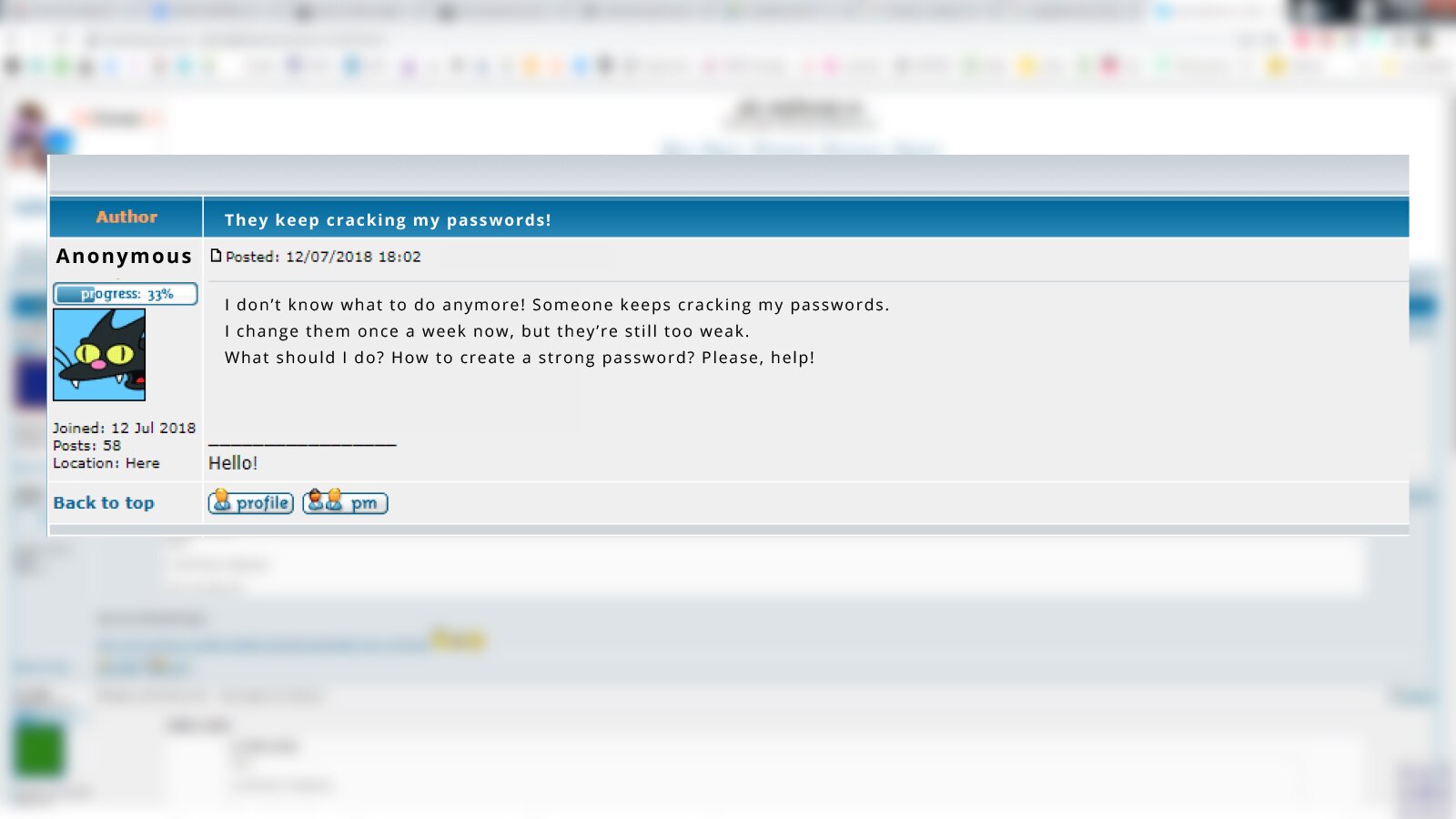
Look at the comments from an online forum about cybercrime. Give three‑sentence advice to each commenter.

Spójrz na komentarze z forum internetowego dotyczącego cyberprzemocy. Napisz po trzy zdania, w których udzielisz rady komentującym.
RC6hIeS04PGV0
Źródło: Maciej Tomaszewski, domena publiczna.
R1UVqBqpSYyfi
(Uzupełnij).
Źródło: GroMar Sp. z o.o., licencja: CC BY-SA 3.0.
Show hintazurewhite
Show answerazurewhite
R1dB8ZhGD8HeM
Źródło: Maciej Tomaszewski, domena publiczna.
R1Xv83L8oguWy
(Uzupełnij).
Źródło: GroMar Sp. z o.o., licencja: CC BY-SA 3.0.
Show hintazurewhite
Show answerazurewhite
R1CFfJf1BSkoD
Źródło: Maciej Tomaszewski, domena publiczna.
RE0rEmbGtPoGO
(Uzupełnij).
Źródło: GroMar Sp. z o.o., licencja: CC BY-SA 3.0.
Show hintazurewhite
Show answerazurewhite
3
Exercise 8

Write a short article about cybercrime for your school magazine. In the article:

  • provide examples of two cybercrimes;

  • explain how they work;

  • inform the readers how to protect yourself from them.

Your answer should be 50–120 words long.

Napisz krótki artykuł do szkolnej gazetki na temat cyberprzestępczości. W artykule:

  • podaj dwa przykłady cyberprzestępstw;

  • wyjaśnij, na czym polegają;

  • poinformuj czytelników, jak się przed nimi chronić.

Twój artykuł powinien składać się z 50–120 wyrazów.

Napisz swoją wypowiedź w języku angielskim. Podpisz się jako XYZ.

Rozwiń swoją wypowiedź w każdym z trzech podpunktów, tak aby osoba nieznająca polecenia w języku polskim uzyskała wszystkie wskazane w nim informacje. Pamiętaj, że długość wypowiedzi powinna wynosić od 50 do 120 wyrazów. Napisz każdy z realizowanych podpunktów w oddzielnym akapicie. W ten sposób będziesz wiedzieć, czy na pewno dany podpunkt został przez ciebie wystarczająco rozwinięty (nie licząc wyrazów podanych na początku wypowiedzi).

Rn1dfqyxs7yzQ
(Uzupełnij).
Źródło: GroMar Sp. z o.o., licencja: CC BY-SA 3.0.