Sprawdź się
Drag the words to put them in the correct place to create questions with idioms related to the weather.
Drag the words to put them in the correct order to create questions with idioms related to the weather.
2. Lightning burns result from energy caused by lightning strikeslightening strikeslighting strikes.
3. Springtime lethargy refers to a state of tireda state of fatiguea state of confusion associated with spring onset.
4. Some people who were affected by an asthma breakout during a thunderstorm had experienced an airborne allergensasthmaasthma attack before.
5. Sweating is a body function that helps regulate barometric pressuredifficulty breathingbody temperature.
6. When humidityarthritispollen is high, we need to cool off to remain safe.
2. It was so hot that my energy was 1. limb, 2. lowered, 3. wheezing, 4. tale, 5. shine, 6. treating, 7. gale, 8. threatening, 9. gust, 10. dehydration, 11. blunt all the time.
3. Remember to drink water, otherwise you risk 1. limb, 2. lowered, 3. wheezing, 4. tale, 5. shine, 6. treating, 7. gale, 8. threatening, 9. gust, 10. dehydration, 11. blunt.
4. A sudden 1. limb, 2. lowered, 3. wheezing, 4. tale, 5. shine, 6. treating, 7. gale, 8. threatening, 9. gust, 10. dehydration, 11. blunt of wind opened the window in our living room.
5. Our party will be on Saturday, come rain or 1. limb, 2. lowered, 3. wheezing, 4. tale, 5. shine, 6. treating, 7. gale, 8. threatening, 9. gust, 10. dehydration, 11. blunt.
6. That’s an old wives’ 1. limb, 2. lowered, 3. wheezing, 4. tale, 5. shine, 6. treating, 7. gale, 8. threatening, 9. gust, 10. dehydration, 11. blunt! How can you believe that?
7. You should see a doctor before your heart problems become life 1. limb, 2. lowered, 3. wheezing, 4. tale, 5. shine, 6. treating, 7. gale, 8. threatening, 9. gust, 10. dehydration, 11. blunt.
8. Mark suffered a severe 1. limb, 2. lowered, 3. wheezing, 4. tale, 5. shine, 6. treating, 7. gale, 8. threatening, 9. gust, 10. dehydration, 11. blunt injury when he was struck by lightning.
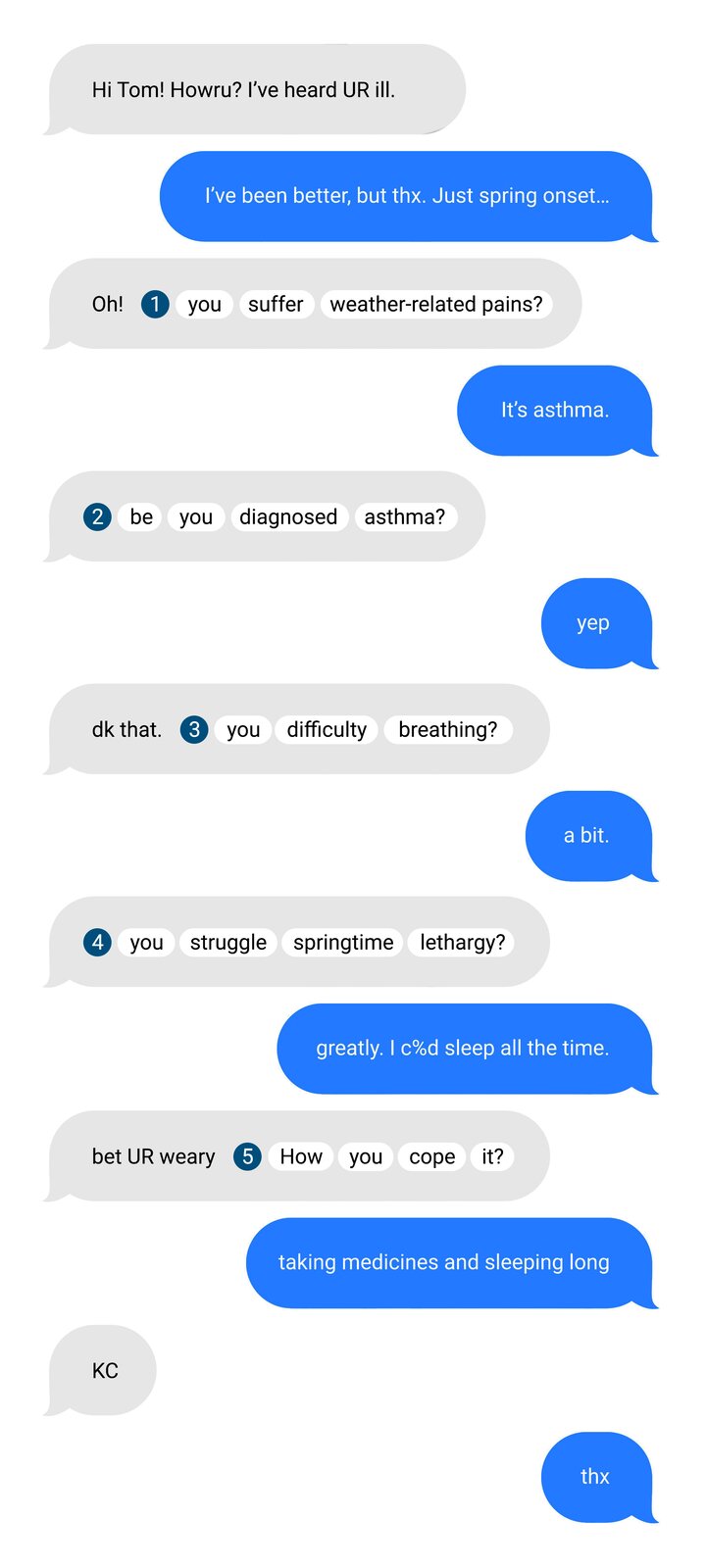
You’ve just found out that your friend isn’t feeling well and you chat with him/ her on instant messenger. Make questions for your friend’s answers using the words given.
PERSON 1: Hi Tom! Howru? I’ve heard UR ill.
PERSON 2: I’ve been better, but thx. Just spring onset…
PERSON 1: Oh! 1.{you/suffer/weather‑related pains?}
PERSON 2: It’s asthma.
PERSON 1: 2.{be/you/diagnosed/asthma?}
PERSON 2: yep
PERSON 1: dk that. 3.{you/difficulty/breathing?}
PERSON 2: a bit.
PERSON 1: 4.{you/struggle/springtime/lethargy?}
PERSON 2: greatly. I c%d sleep all the time.
PERSON 1: bet UR weary. 5.{How/you/cope/it?}
PERSON 2: taking medicines and sleeping long
PERSON 1: KC
PERSON 2: thx
You’ve just found out that your friend isn’t feeling well and you chat with him/ her on instant messenger. Make questions for your friend’s answers using the words given.
Recently you’ve watched a programme about the influence of the weather on peoples’ well‑being and health. You found out that some weather‑related conditions might be dangerous to us. You decided to share your knowledge with your friend from England. In the email:
inform him/her when and where you watched the programme;
mention and describe one aspect of a weather‑related issue that you learnt from the programme;
explain if and how the spring onset affects you;
ask your friend if anyone in their family suffers from any weather‑related problems and how he/she copes with it.
Use 100–150 words. Try to use at least one idiom associated with the weather you learnt in this material.
Begin in this way:
Hi Tom,
How are you? Recently, I’ve watched a very interesting programme about the influence of the weather conditions on human health.
End in this way:
Write to me soon!
Take care,
XYZ