Struggle for the political shape of Poland's statehood. The March Constitution
to describe the events which led to the women's suffrage in Poland;
characterise the system of government of the Second Polish Republic in the first years of independence;
to list the facts and causes of the assassination of Gabriel Narutowicz.
Works on the new constitution commenced already in 1919, but it was only enacted on 17 March 1921. The President was elected on 9 December 1922. It was Gabriel Narutowicz. On 16 December 1922, he was shot to death by painter Eligiusz Niewiadomski, a supporter of the National Democracy (ND), while attending an art exhibition at Warsaw's National Gallery of Art „Zachęta”. The next President was Stanisław Wojciechowski.
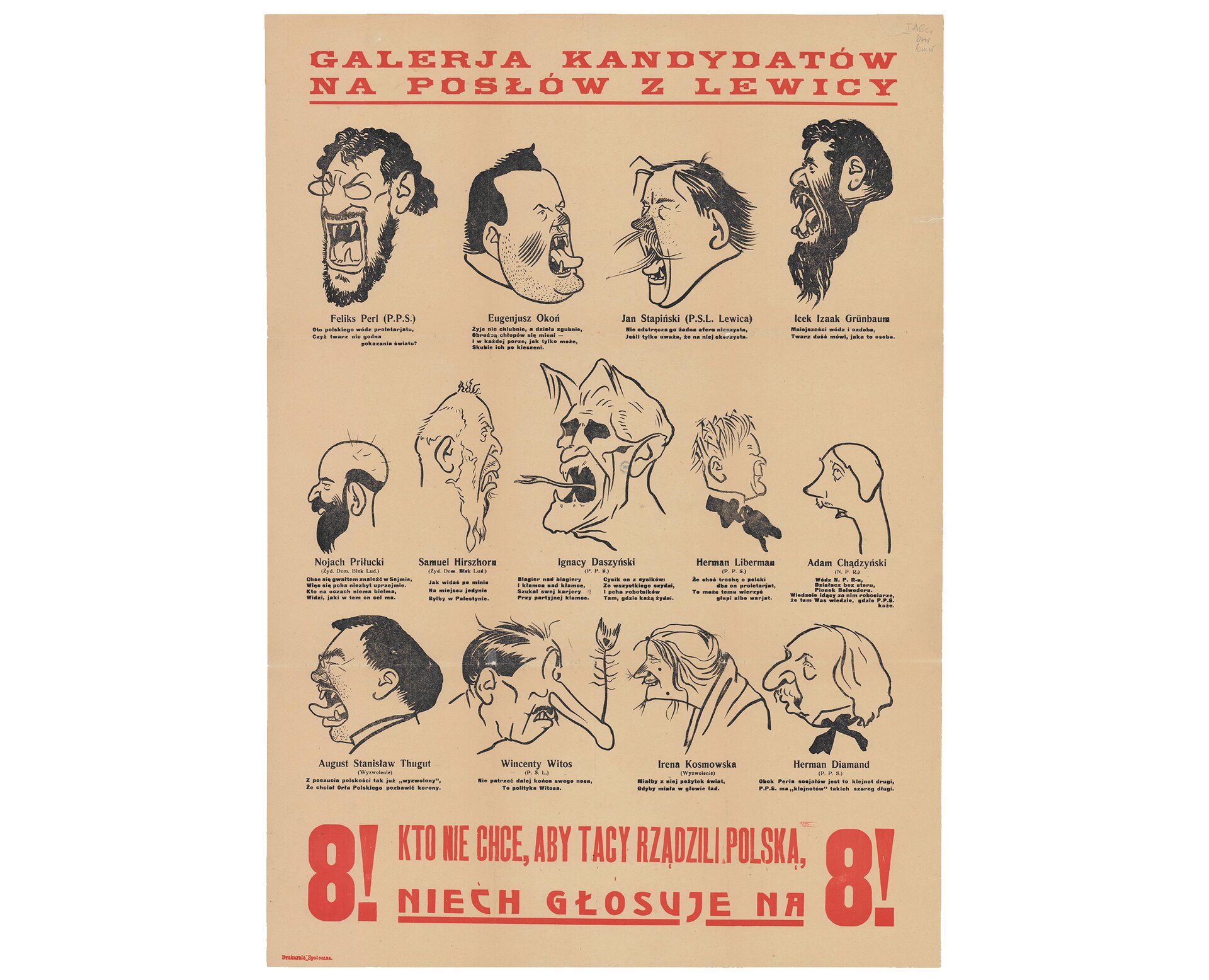
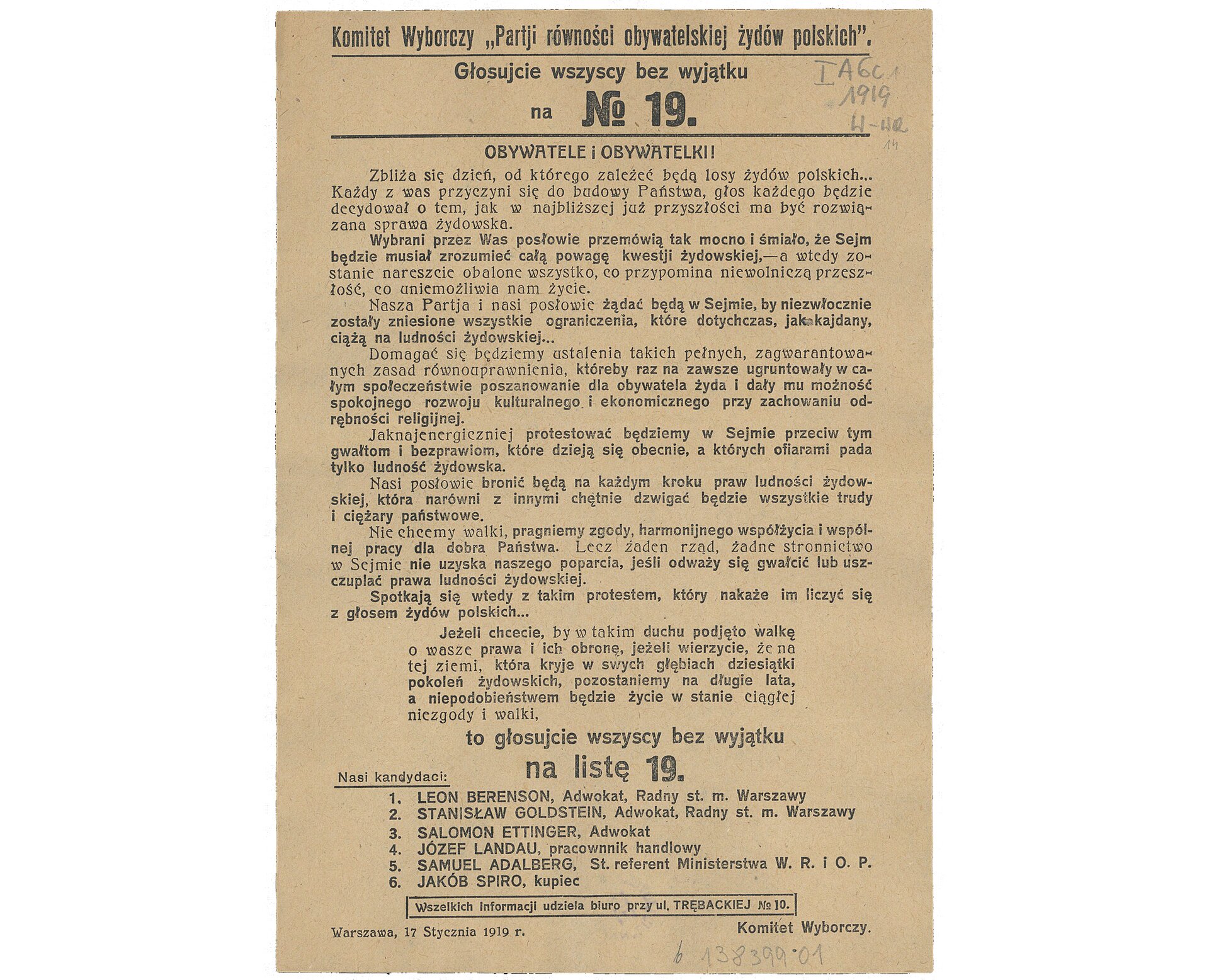
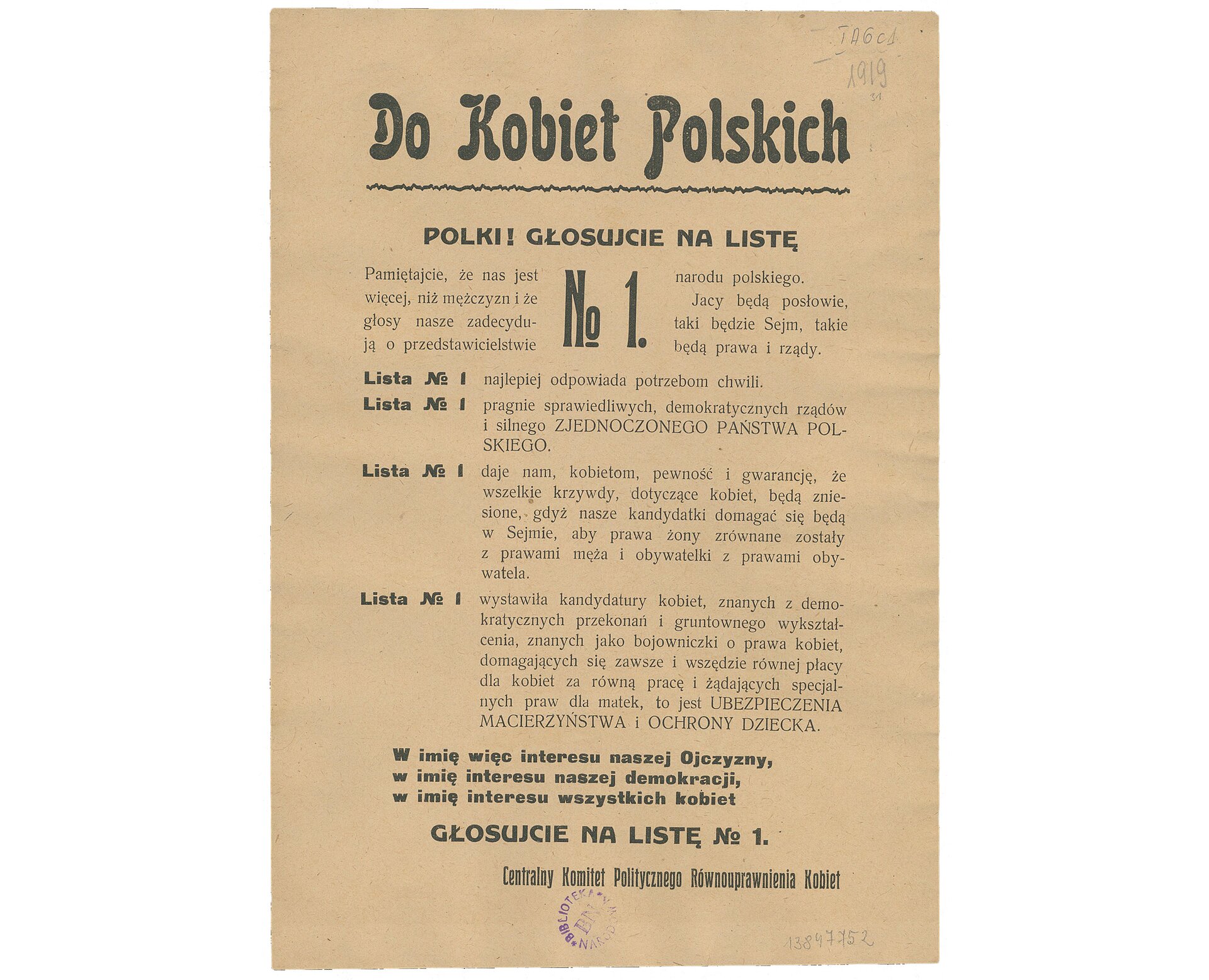
Read about the Polish women's journey to suffrage. Were women able to make full use of it?
Identify which of the statements below are true.
- The right-wing members of the Parliament were the main contributors to the March Constitution.
- Following the parliamentary elections of 1922, the majority of seats went to the National Democracy and the Christian Democracy, which had formed the Christian Union of National Unity (ChZJN) for the purpose of the elections, nicknamed "Chjena" by the coalition's opponents (the word pronounced as "hiena", the Polish name for "hyena").
- The constitution limited the role of the executive branch, especially the powers of the President. Its authors feared that Piłsudski might take over as the head of state.
- Gabriel Narutowicz was elected President in December 1922, largely with the votes of MPs representing the right-wing party coalition.
- Gabriel Narutowicz was assassinated by a fanatic supporter of the Polish Socialist Party (PPS).
Consider how voters' preferences evolved and explain what might have determined those changes.
Keywords
advocacy, women, feminists, March Constitution
Glossary
agitacja – działalność służącą zjednanie zwolenników dla jakichś poglądów, jakiejś sprawy, idei
prohibicja – wydany przez państwo zakaz prowadzenia działalności społecznie niepożądanej lub szkodliwej (zwłaszcza produkcji lub sprzedaży napojów alkoholowych) na określonym obszarze
mała konstytucja – akt prawny, przeważnie regulujący tylko zasady funkcjonowania naczelnych organów państwa, na mocy którego w 1919 r. Józef Piłsudski został Naczelnikiem Państwa