When we prepare ice for drinks, we pour water into special containers, which we then put in the freezer. Due to the low temperature, the water freezes (solidifies), taking the shape of the container. However, water in the ice cube remains water, it only occurs as different states of matter.We can say that we have observed a physical changephysical changephysical change.
Physical changes include processes consisting in changing the shape of the substance (eg crushing), changes in the physical states (eg solidification, melting, condensation, evaporation) and formation and separation of mixtures. Physical change can also be the change in the speed of movement.
R1C2TwRZZXfcW
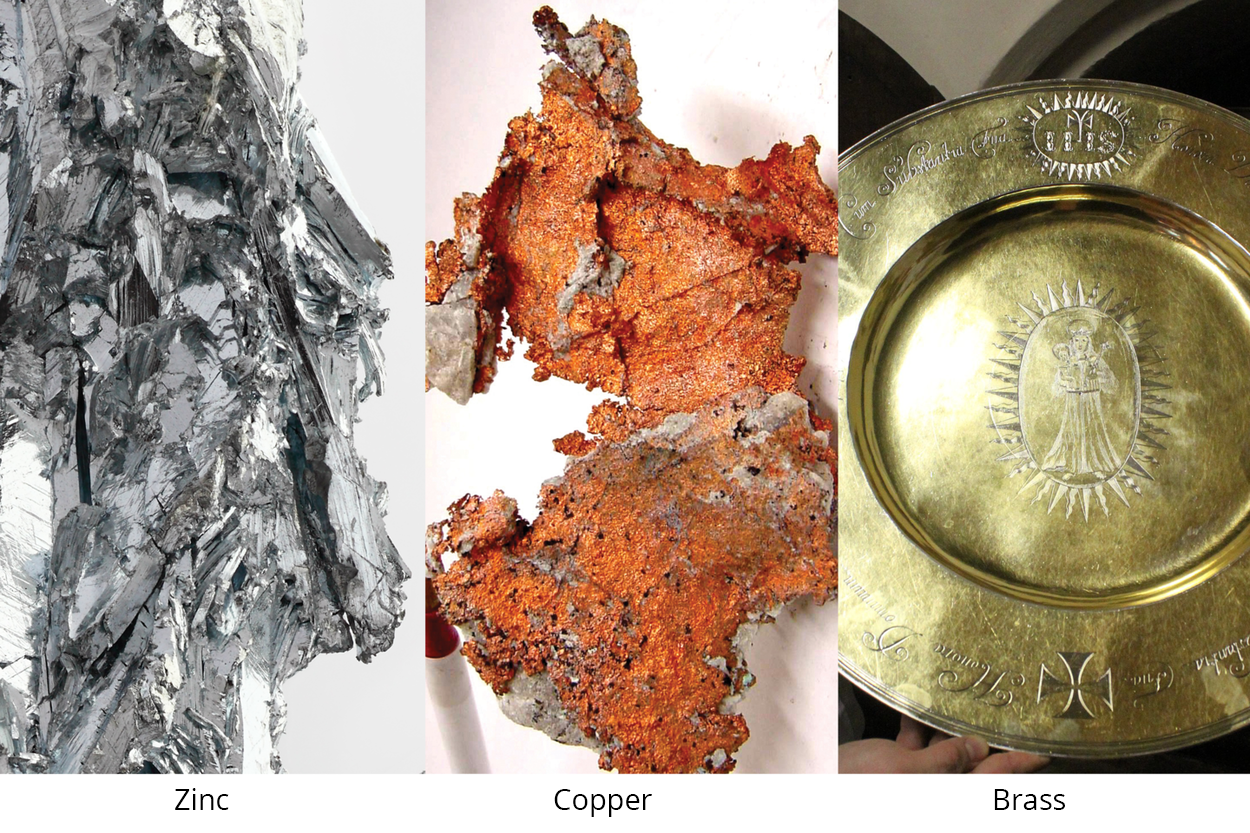
Ilustracja składająca się z trzech fotografii. Przedstawia trzy próbki metali podpisanych: cynk, miedź, mosiądz. Cynk jest szary, miedź pomarańczowa. Z miedzi wykonana jest patera z symbolami religijnymi. Ma jasnobrązowy, złotawy kolor.
Brass is formed as a result of a physical transformation of copper and zinc. Its production does not constitute a new substance but a homogeneous mixture. However, metals and their alloy (mixture of metals) differ in many properties, including color
Source: Alchemist-hp, James Bradley, Mike Beauregard, Tomorrow Sp. z o.o., U.S. Geological Survey, licencja: CC BY-NC-ND 3.0.
Chemical changes
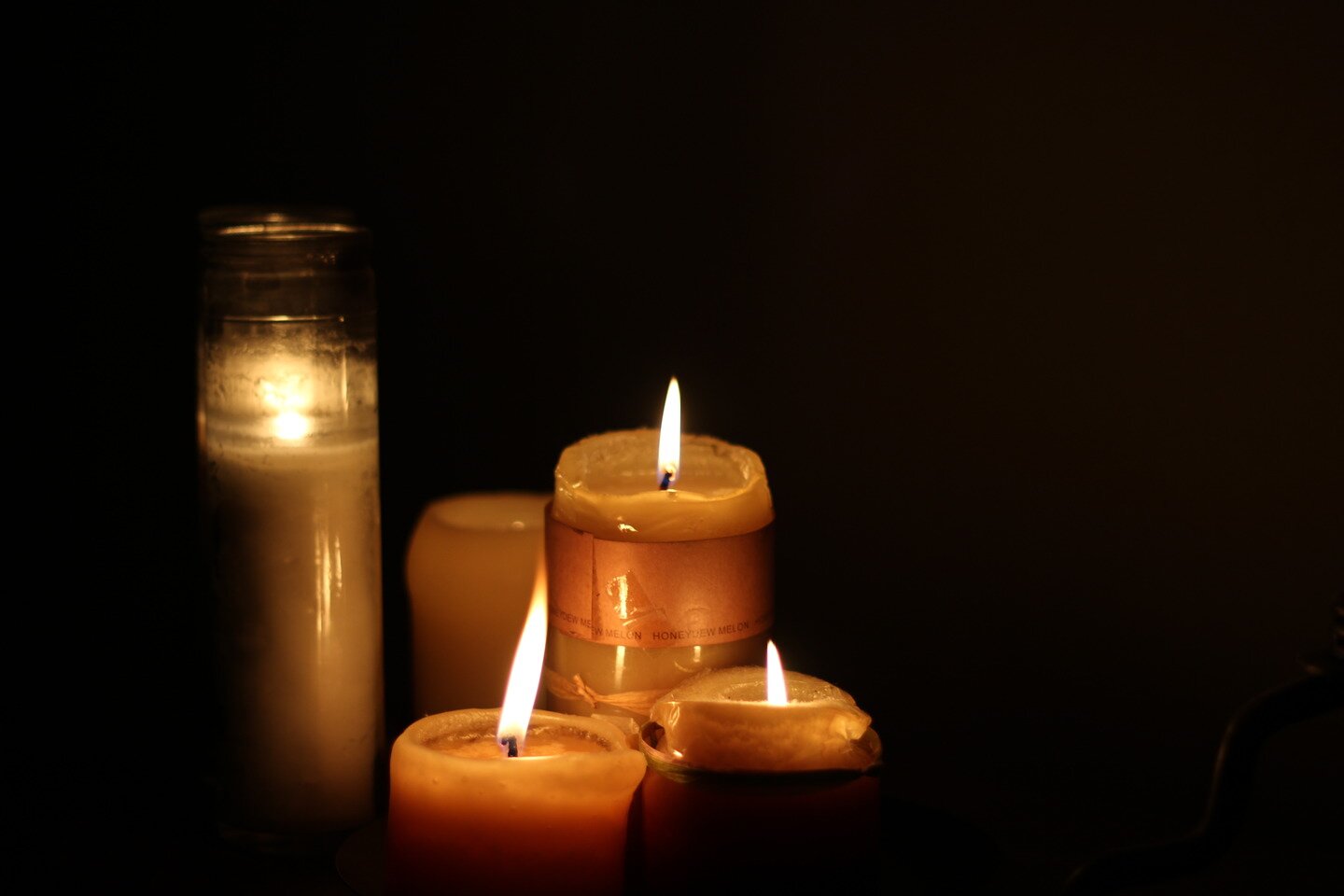
In addition to physical changes, there are also chemical changeschemical changechemical changes around us. As a result, new substances are created with different properties than the original ingredients. Chemical transformation occurs, for example, when lighting a match, rusting metal surfaces, spoiling food and the darkening of peeled apples. It can also be seen by looking at a burning candle, which becomes smaller every minute.Why is this happening? Wax or stearin, from which candles are made, during combustion, change into other substances which are then dispersed into the air.
Chemical transformations in our environment
Chemical transformations in our environment
Rvpq4ya5XMFyH
Fotografia przedstawia pięć palących się grubych świec woskowych na czarnym tle.
Burning candles
Source: ElTico68, www.flickr.com, licencja: CC BY 2.0.
RJEwCzEsejMfy
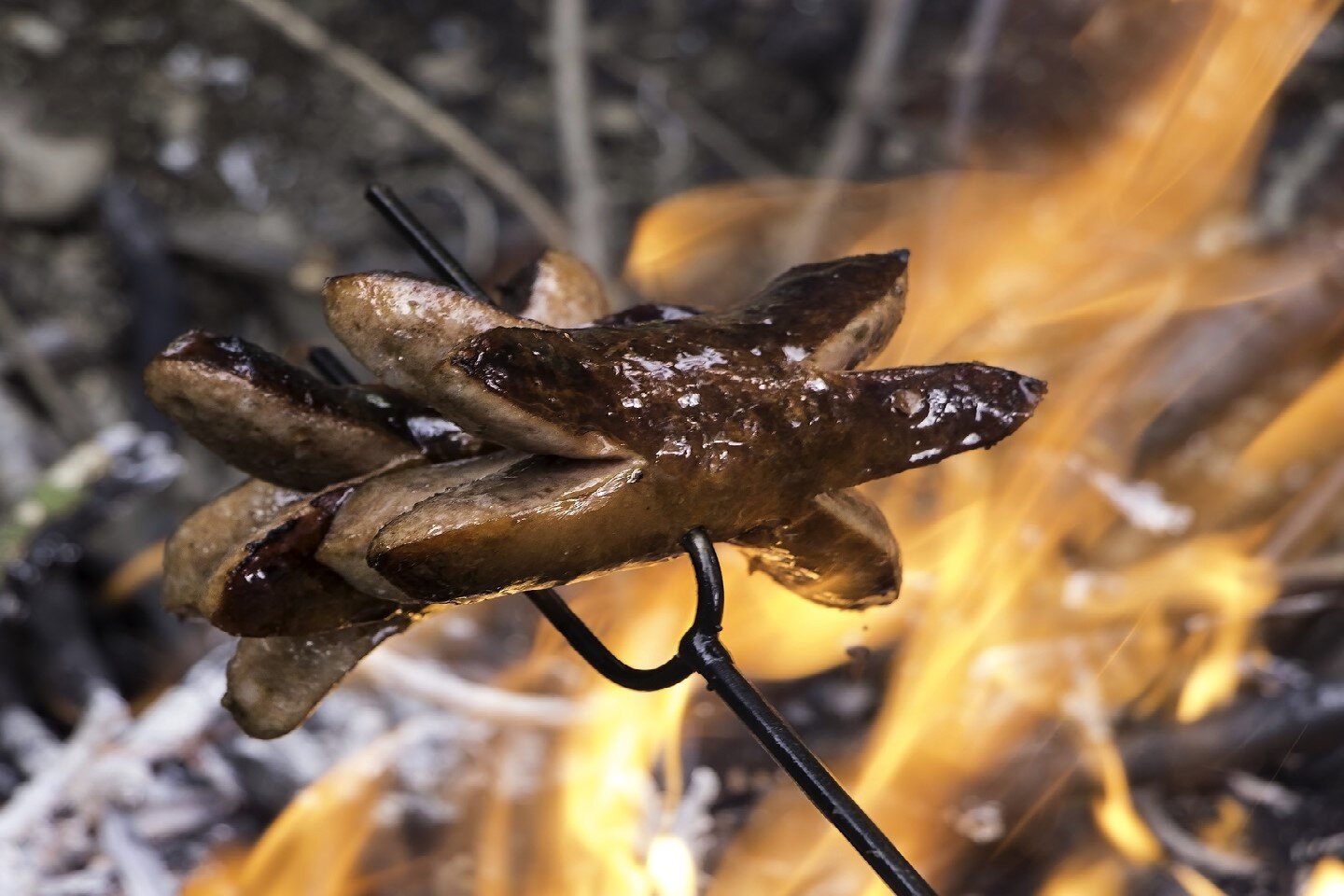
Fotografia przedstawia piekące się kiełbasy na ognisku. Kiełbasy są porozcinane i nabite na kij. Mają kolor brązowy.
Cooking sausages on a campfire
Source: Jan Fidler, licencja: CC BY 2.0.
RfKhFKOhnOhZR
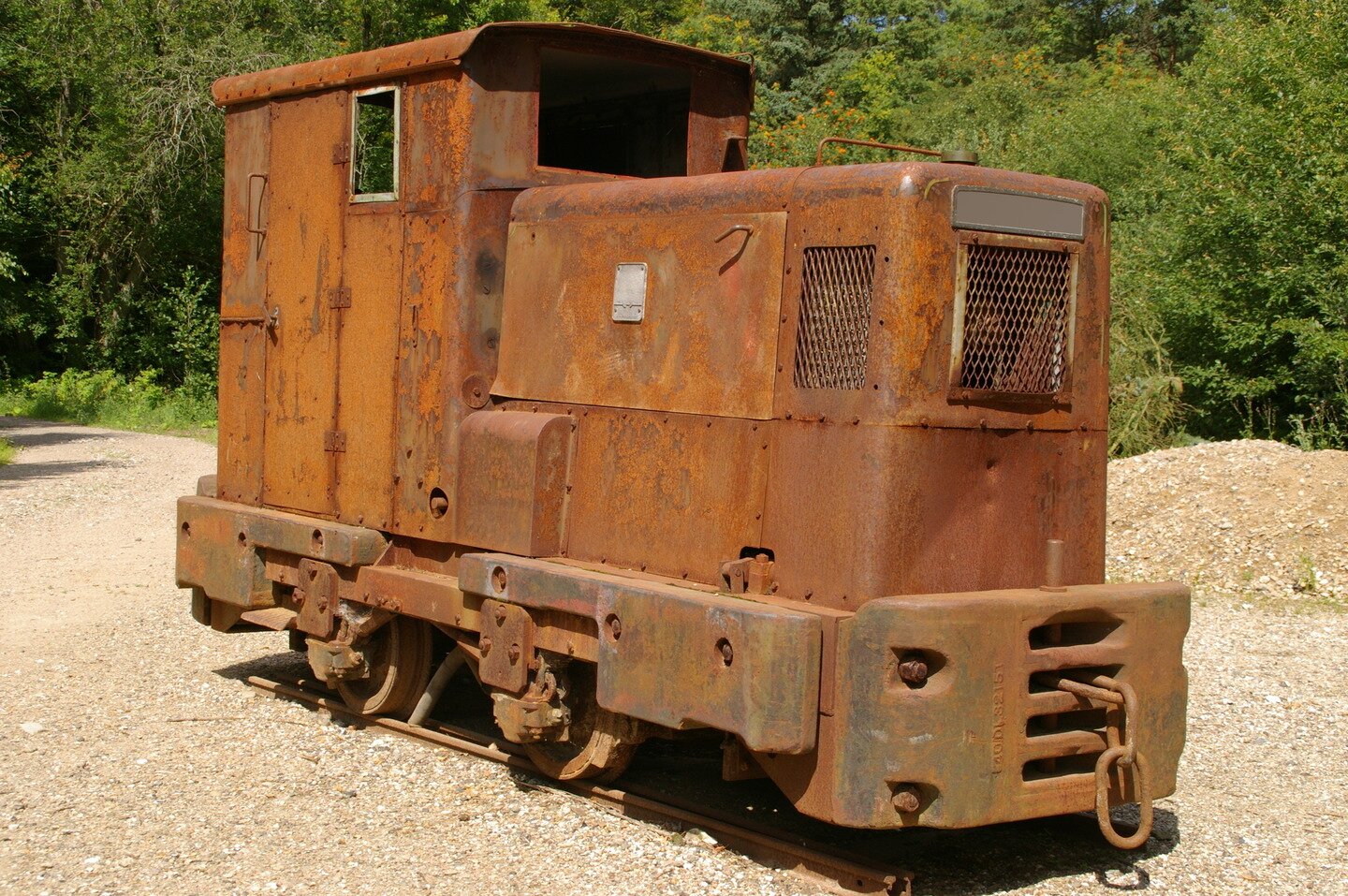
Ilustracja przedstawia zardzewiałą małą, starą lokomotywę.
Rusting of iron objects
Source: greenoid, www.flickr.com, licencja: CC BY-SA 3.0.
Sometimes it is difficult to say whether there has been a physical or chemical change. It is helpful to carefully observe the whole process and examine the properties of the resulting substances. Let's check, for example, how two substances often used in cooking are dissolved in water: sugar and baking soda.
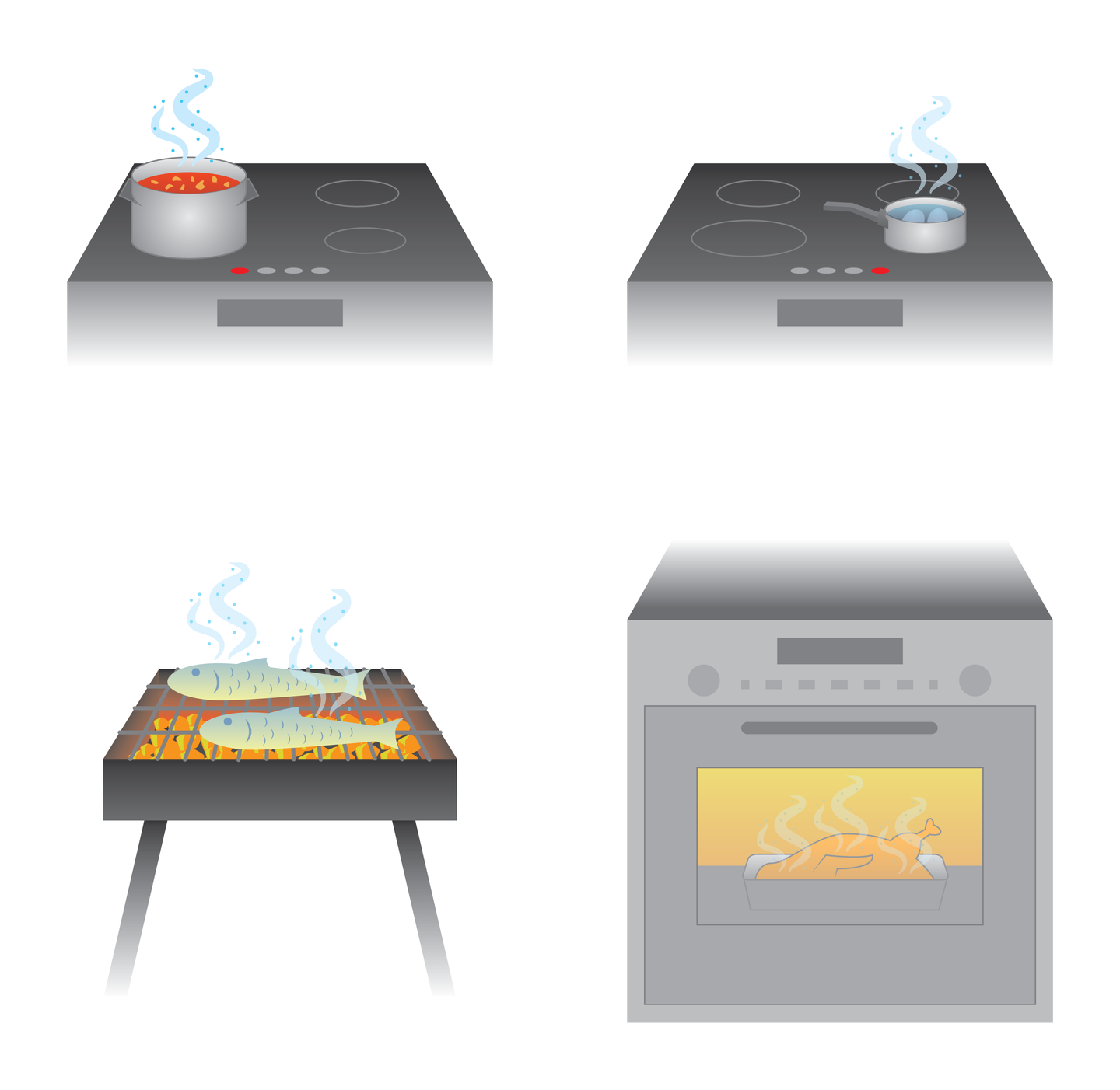
Many interesting examples of chemical reactions in our environment can be observed during cooking. Cooking is accompanied by complicated chemical processes.
RH5aK7bOeAeCi
Na ilustracji zaprezentowano różne sposoby przygotowywania potraw: podgrzewanie na wolnym ogniu, gotowanie we wrzącej wodzie, grillowanie i pieczenie w piekarniku.
During cooking, frying and baking many complex transformations take place. Most of them are chemical changes - that's why the taste of dishes changes after cooking. For example, raw dough tastes completely different when it's baked
Source: autor, licencja: CC BY-SA 3.0.
Task 1
Before you watch the film „Comparison of physical and chemical transformations of a piece of paper”, write down the research question and the hypothesis. Make notes while watching the movie, and finally make conclusions.
RzTxpuRUXG9Ue
Przed zapozmaniem się z poniższym eksperymentem sformułuj pytanie badawcze i hipotezę. Na koniec wygłoś wnioski.
Przed zapozmaniem się z poniższym eksperymentem sformułuj pytanie badawcze i hipotezę. Na koniec wygłoś wnioski.
Analysis of the experiment
RTT5rJOoFWIxL
nagranie filmowe z eksperymentem. Eksperymentator tnie połówkę kartkę papieru na kilka małych części. Jedną z nich spala nad świeczką. Pozostaje popiół.
nagranie filmowe z eksperymentem. Eksperymentator tnie połówkę kartkę papieru na kilka małych części. Jedną z nich spala nad świeczką. Pozostaje popiół.
Comparison of physical and chemical transformations of a piece of paper
Source: GroMar Sp. z o.o., licencja: CC BY-SA 3.0.
Comparison of physical and chemical transformations of a piece of paper
Source: GroMar Sp. z o.o., licencja: CC BY-SA 3.0.
nagranie filmowe z eksperymentem. Eksperymentator tnie połówkę kartkę papieru na kilka małych części. Jedną z nich spala nad świeczką. Pozostaje popiół.
Reversible and irreversible processes
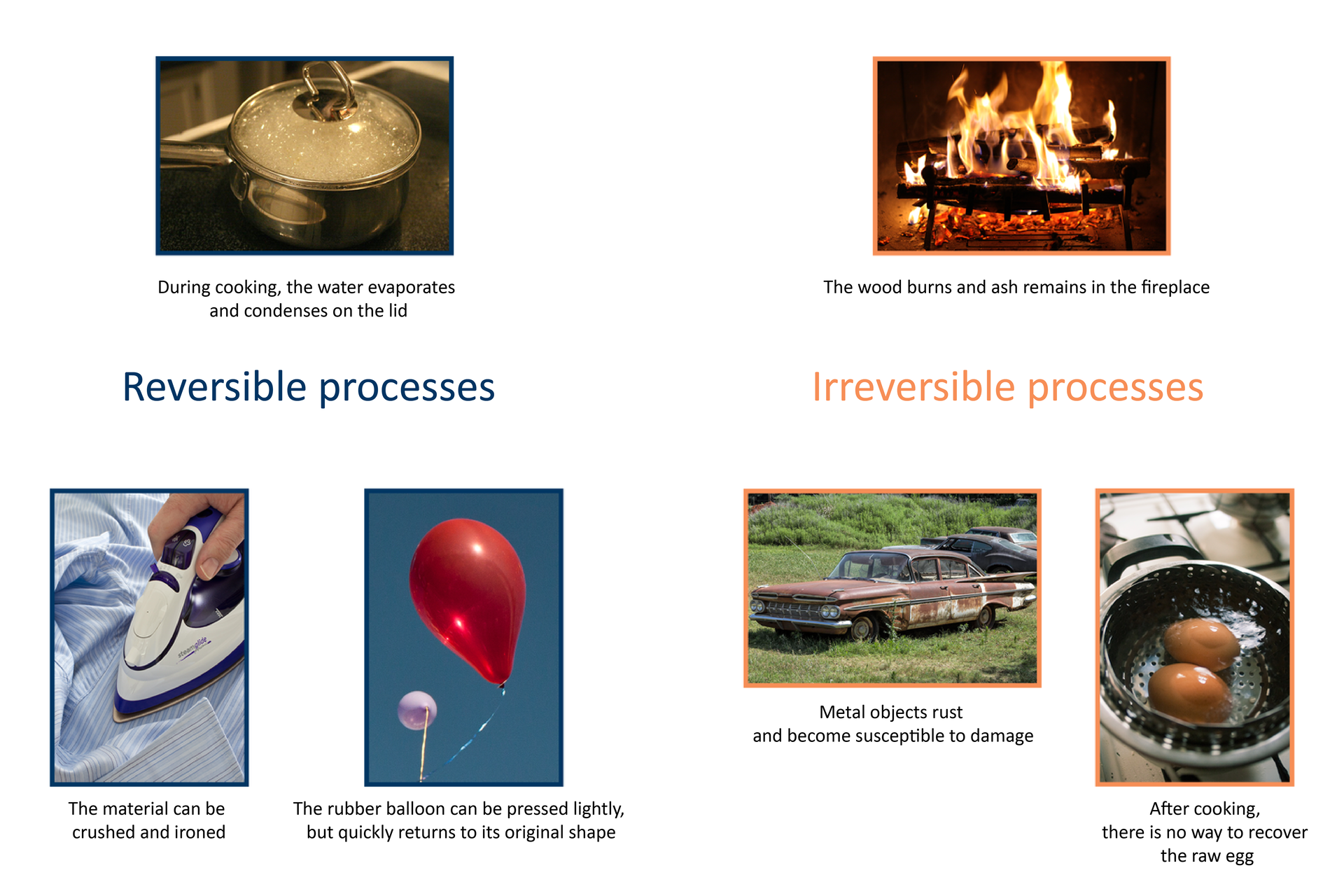
Ice melts when its surroundings have a temperature higher than 0°C. As soon as the temperature drops, the water will freeze again. This is often observed during in the winter, when the cold days are intertwined with days of thawing. We say that the process of changing the state of water from solid to liquid is a reversible processreversible processreversible process. All changes of it’s state are reversible processes.
In our kitchen we can see an example of an irreversible processirreversible processirreversible process. When we cook or fry an egg, it changes its appearance and hardens.In no way can the egg be restored to its original form and properties. Irreversible transformations are, for example, cooking, frying, baking, and burning various substances. Corrosion is also irreversible, i.e. the destruction of metal objects under the influence of environmental conditions.
RCSijjjhrphyL
Schemat prezentujący procesy odwracalne Reversible processes - po lewej stronie (ściskanie balonu The rubber balloon can be pressed lightly, but quickly returns to its original shape, parowanie i skraplanie wody w czasie gotowania During cooking, the water evaporates and condenses on the lid, prasowanie i gniecenie materiału The material can be crushed and ironed) oraz nieodwracalne Irreversible processes po prawej (spalanie The wood burns and ash remains in the fireplace, rdzewienie Metal objects rust and become susceptible to damage , gotowanie jaj After cooking, there is no way to recover the raw egg).
Examples of reversible and irreversible processes
Source: Ildar Sagdejev, Jonathan Lin, Kool Cats Photography over 3 Million Views, Matteo Paciotti, Shaun Fisher, Tomorrow Sp. z o.o., User:Colin, www.flickr.com, licencja: CC BY-SA 2.0.
RZs1HAxUJTp4G
Exercise 1
Indicate irreversible processes. Możliwe odpowiedzi: 1. wood burning in a bonfire, 2. rusting of a metal structure, 3. fried eggs, 4. dissolving sugar in tea
Indicate irreversible processes. Możliwe odpowiedzi: 1. wood burning in a bonfire, 2. rusting of a metal structure, 3. fried eggs, 4. dissolving sugar in tea
Indicate irreversible processes.
wood burning in a bonfire
rusting of a metal structure
fried eggs
dissolving sugar in tea
R18RW8URE9NKv
Exercise 2
Which of the following changes are chemical changes and which are physical changes. physical changes Możliwe odpowiedzi: 1. sugar syrup by adding sugar to hot water, 2. rust on iron, 3. burning paper, 4. frying meat, 5. boiling water, 6. salt produced by the evaporation of seawater chemical changes Możliwe odpowiedzi: 1. sugar syrup by adding sugar to hot water, 2. rust on iron, 3. burning paper, 4. frying meat, 5. boiling water, 6. salt produced by the evaporation of seawater
Which of the following changes are chemical changes and which are physical changes. physical changes Możliwe odpowiedzi: 1. sugar syrup by adding sugar to hot water, 2. rust on iron, 3. burning paper, 4. frying meat, 5. boiling water, 6. salt produced by the evaporation of seawater chemical changes Możliwe odpowiedzi: 1. sugar syrup by adding sugar to hot water, 2. rust on iron, 3. burning paper, 4. frying meat, 5. boiling water, 6. salt produced by the evaporation of seawater
Which of the following changes are chemical changes and which are physical changes.
boiling water, burning paper, frying meat, salt produced by the evaporation of seawater, sugar syrup by adding sugar to hot water, rust on iron
physical changes
chemical changes
Summary
In nature, there are physical changes, in which substances do not change their properties, and chemical changes, in which new substances are created.
The processes occurring in nature may be irreversible, such as burning or cooking dishes, or reversible, such as evaporation and condensation.
proces odwracalny – proces, który może przebiegać w odwrotną stronę, skutkiem czego po jego zakończeniu można przywrócić substancji jej początkową postać
proces nieodwracalny – proces, który nie może przebiegać w odwrotną stronę, skutkiem czego po jego zakończeniu nie można przywrócić substancji jej początkowej postaci