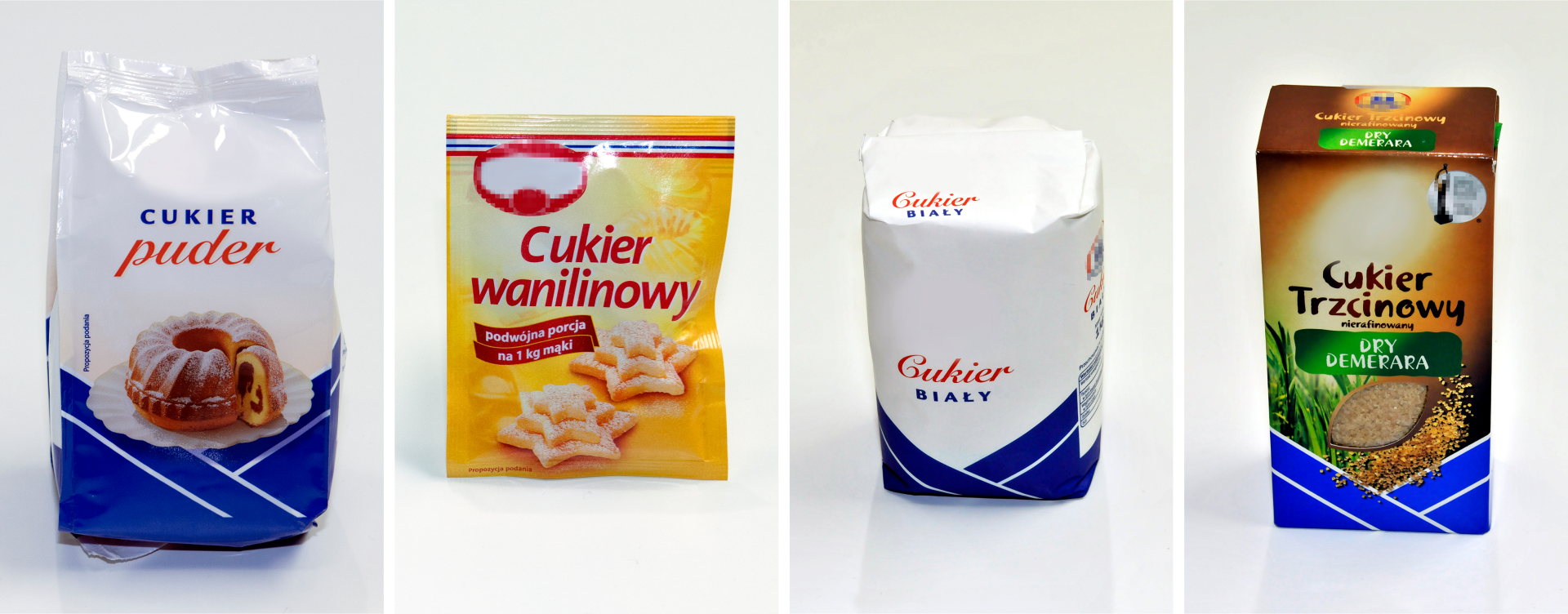
Ilustracja przedstawia różne typy cukrów.Cukier puder, cukier wanilinowy, cukier biały, cukier trzcinowy.
There are different types of sugars. Powdered sugar, vanillin sugar, white sugar, cane sugar.
Source: Tomorrow Sp.z o.o., licencja: CC BY 3.0.
Structure of sucrose
This sugar, which we use every day e.g. for sweetening tea, was already known in ancient times. It was obtained on an industrial scale from sugarcanes in the Middle East. It was brought to Europe by the Greeks in the 4th century BC. – at that time it was used as a medication. Deliveries to Europe increased significantly when America was discovered because sugarcane plantations were established there. In the mid‑18th century people started to obtain sugar from sugar beets. In Poland the first sugar factory was built in 1802 in Lower Silesia.
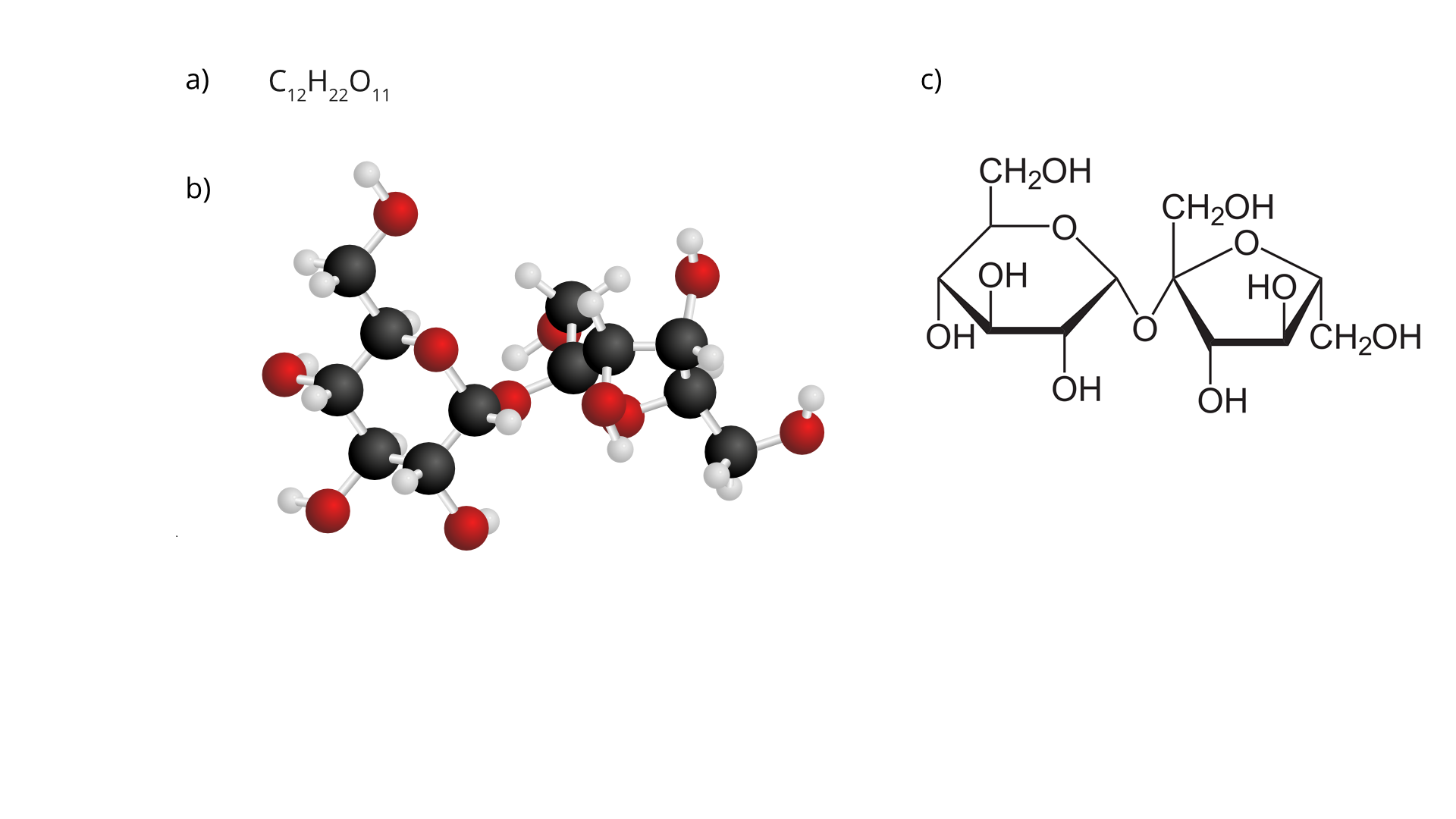
SucrosesucroseSucrose is one of the disaccharides and has the following formula: CIndeks dolny 1212HIndeks dolny 2222OIndeks dolny 1111. The sucrose molecule is composed of fragments of two simple sugars: glucose and fructose.
RU16Sl3Gr5UYY
Ilustracja przedstawia wzór strukturalny sacharozy - Structural formula of sucrose ce dwanaście ha dwadzieścia dwa o jedenaście, model cząsteczki -Sucrose molecule model, model uproszczony cząsteczki sacharozy - Haworth formula of molecule.
a) Structural formula of sucrose; b) Sucrose molecule model; c) Haworth formula of molecule
Source: Andrzej Bogusz, licencja: CC BY 3.0.
Are the properties of sucrose similar to those of glucose?
Task 1
Before conducting experiment, formulate research question and hypothesis.
RqZchIuaWVRtk
Analysis of the experiment: What are the properties of sucrose?. Research question (Uzupełnij). Hypothesis (Uzupełnij).
Analysis of the experiment: What are the properties of sucrose?. Research question (Uzupełnij). Hypothesis (Uzupełnij).
Analysis of the experiment: What are the properties of sucrose?
Test of sucrose properties
Experiment 1
Research problem
What are the properties of sucrose?
Hypothesis
Sucrose is a white, crystalline substance which dissolves well in water.
You will need
white sugar,
water,
test tube,
burner,
test tube holder.
Instruction
Examine the properties of sugar: state of aggregation, colour and odour.
Add a teaspoonful of sugar to water and evaluate the solubility of this substance in water.
Add a teaspoonful of sugar into a test tube and heat it up.
The experiment provided the following information:
Substance
State of aggregation
Colour
Odour
Water solubility
Effect of heating
sugar
solid
white
odourless
dissolves well in water
sugar melts, changing colour to brown
Each of you can make candies called caramels. Just pour a few spoonfuls of sugar into a saucepan and keep it over low heat. As a result of heating, caramel is created, which should be poured into a bowl and allowed to cool down. Candy is ready!
Task 2
Before conducting experiment, formulate research question and hypothesis.
R1ApoTgi4eyrX
Analysis of the experiment: Does sucrose (like glucose) give a positive result in the Trommer's test?. Research question (Uzupełnij). Hypothesis (Uzupełnij).
Analysis of the experiment: Does sucrose (like glucose) give a positive result in the Trommer's test?. Research question (Uzupełnij). Hypothesis (Uzupełnij).
Analysis of the experiment: Does sucrose (like glucose) give a positive result in the Trommer's test?
Trommer's test for sucrose
Experiment 2
Research problem
Does sucrose (like glucose) give a positive result in the Trommer's test?
Hypothesis
Sucrose do not gives a positive result in the Trommer's test.
You will need
test tube,
beaker,
burner,
tripod,
dropper,
aqueous solution of sucrose,
copper(II) sulfate solution,
sodium hydroxide solution,
water.
Instruction
Place the aqueous sucrose solution in tube.
Add a few cubic centimeters of the sodium hydroxide solution to a few cubic centimeters of the copper(II) sulfate solution, in order to precipitate copper(II) hydroxide.
Add the freshly precipitated copper(II) hydroxide into the tube with the sucrose solution.
Heat the resulting mixtures in the beaker with hot water.
Film pokazuje eksperyment. Problem badawczy: Czy sacharoza wykazuje właściwości redukujące? Test Trommera dla sacharozy. Trommer's test for surcose. Hipoteza: Sacharoza jako dwucukier hydrolizuje na fruktozę i glukozę. Będziesz potrzebować: roztwór sacharozy, sucrose solution, roztwór siarczanu sześć miedzi dwa, copper (dwa) sulfate, roztwór wodorotlenku sodu, sodium hydroxide, szczypce do probówki, test tube clamps, zlewkę z wodą. Do próbówki pipetą wprowadzony został roztwór siarczanu sześć miedzi dwa, oraz wodorotlenku sodu. Opisano równanie reakcji: ce u es o cztery dodać dwa en a o ha strzałka w prawo ce u o ha dwa razy wzięte dodać en a dwa es o cztery. Wytrącony osad wodorotlenku miedzi dwa w środowisku zasadowych dodano do probówki zawierającej wodny roztwór sacharozy. Zaobserwowano dwie warstwy cieczy. Bezbarwną warstwę na dole i niebieską na górze cieczy. Następnie probówkę umieszczono w zlewce z wodą i ogrzano. Niebieski osad sczerniał. Opisano równania reakcji: ce u o ha dwa razy wzięte strzałka w prawo, nad strzałką napis temperatura, za strzałką ce u o dodać ha dwa o. Druga reakcja: ce dwanaście ha dwadzieścia dwa o jedenaście dodać dwa ce u o strzałka w prawo the reaction does not take place. Film wykazał, że sacharoza nie wykazuje właściwości redukujących.
Film pokazuje eksperyment. Problem badawczy: Czy sacharoza wykazuje właściwości redukujące? Test Trommera dla sacharozy. Trommer's test for surcose. Hipoteza: Sacharoza jako dwucukier hydrolizuje na fruktozę i glukozę. Będziesz potrzebować: roztwór sacharozy, sucrose solution, roztwór siarczanu sześć miedzi dwa, copper (dwa) sulfate, roztwór wodorotlenku sodu, sodium hydroxide, szczypce do probówki, test tube clamps, zlewkę z wodą. Do próbówki pipetą wprowadzony został roztwór siarczanu sześć miedzi dwa, oraz wodorotlenku sodu. Opisano równanie reakcji: ce u es o cztery dodać dwa en a o ha strzałka w prawo ce u o ha dwa razy wzięte dodać en a dwa es o cztery. Wytrącony osad wodorotlenku miedzi dwa w środowisku zasadowych dodano do probówki zawierającej wodny roztwór sacharozy. Zaobserwowano dwie warstwy cieczy. Bezbarwną warstwę na dole i niebieską na górze cieczy. Następnie probówkę umieszczono w zlewce z wodą i ogrzano. Niebieski osad sczerniał. Opisano równania reakcji: ce u o ha dwa razy wzięte strzałka w prawo, nad strzałką napis temperatura, za strzałką ce u o dodać ha dwa o. Druga reakcja: ce dwanaście ha dwadzieścia dwa o jedenaście dodać dwa ce u o strzałka w prawo the reaction does not take place. Film wykazał, że sacharoza nie wykazuje właściwości redukujących.
Source: GroMar Sp. z o.o., licencja: CC BY-SA 3.0.
Source: GroMar Sp. z o.o., licencja: CC BY-SA 3.0.
Film pokazuje eksperyment. Problem badawczy: Czy sacharoza wykazuje właściwości redukujące? Test Trommera dla sacharozy. Trommer's test for surcose. Hipoteza: Sacharoza jako dwucukier hydrolizuje na fruktozę i glukozę. Będziesz potrzebować: roztwór sacharozy, sucrose solution, roztwór siarczanu sześć miedzi dwa, copper (dwa) sulfate, roztwór wodorotlenku sodu, sodium hydroxide, szczypce do probówki, test tube clamps, zlewkę z wodą. Do próbówki pipetą wprowadzony został roztwór siarczanu sześć miedzi dwa, oraz wodorotlenku sodu. Opisano równanie reakcji: ce u es o cztery dodać dwa en a o ha strzałka w prawo ce u o ha dwa razy wzięte dodać en a dwa es o cztery. Wytrącony osad wodorotlenku miedzi dwa w środowisku zasadowych dodano do probówki zawierającej wodny roztwór sacharozy. Zaobserwowano dwie warstwy cieczy. Bezbarwną warstwę na dole i niebieską na górze cieczy. Następnie probówkę umieszczono w zlewce z wodą i ogrzano. Niebieski osad sczerniał. Opisano równania reakcji: ce u o ha dwa razy wzięte strzałka w prawo, nad strzałką napis temperatura, za strzałką ce u o dodać ha dwa o. Druga reakcja: ce dwanaście ha dwadzieścia dwa o jedenaście dodać dwa ce u o strzałka w prawo the reaction does not take place. Film wykazał, że sacharoza nie wykazuje właściwości redukujących.
Task 3
Before conducting experiment, formulate research question and hypothesis.
RbOoKdZav4SLR
Analysis of the experiment: Sucrose hydrolysis by hydrochloric acid. Research question (Uzupełnij). Hypothesis (Uzupełnij).
Analysis of the experiment: Sucrose hydrolysis by hydrochloric acid. Research question (Uzupełnij). Hypothesis (Uzupełnij).
Analysis of the experiment: Sucrose hydrolysis by hydrochloric acid.
The hydrolysis of sucrose by hydrochloric acid
Experiment 3
Research problem
Does hydrochloric acid hydrolyze sucrose?
Hypothesis
Sucrose undergoes hydrolysis at acidic pH. Sucrose as a disaccharide hydrolyzes to D‑fructose and D‑glucose.
You will need
test tube,
dropper,
sodium hydroxide solution,
aqueous solution of sucrose,
hydrochloric acid,
all‑purpose indicator paper,
holder,
burner.
Place the aqueous sucrose solution in tube.
Pour a few drops of hydrochloric acid into the tube with the sucrose solution and heat it in the burner's flame. Then add the sodium hydroxide solution to neutralize the solution. Check the acidity of the solution using the all‑purpose indicator paper.
Film pokazuje eksperyment hydrolizę sacharozy za pomocą kwasu solnego. Będziesz potrzebować: dwie probówki, zlewka, palnik, trójnóg, zakraplacz, wodny roztwór sacharozy, roztwór kwasu solnego, uniwersalny papierek wskaźnikowy, woda. Instrukcja: W dwóch probówkach umieść wodny roztwór sacharozy. Do jednej z probówek z roztworem sacharozy wlej kilka kropli kwasu solnego i ogrzej w płomieniu palnika. Następnie dodaj zasadę sodową, aby zobojętnić roztwór. Odczyn roztworu sprawdź za pomocą uniwersalnego papierka wskaźnikowego.
Film pokazuje eksperyment hydrolizę sacharozy za pomocą kwasu solnego. Będziesz potrzebować: dwie probówki, zlewka, palnik, trójnóg, zakraplacz, wodny roztwór sacharozy, roztwór kwasu solnego, uniwersalny papierek wskaźnikowy, woda. Instrukcja: W dwóch probówkach umieść wodny roztwór sacharozy. Do jednej z probówek z roztworem sacharozy wlej kilka kropli kwasu solnego i ogrzej w płomieniu palnika. Następnie dodaj zasadę sodową, aby zobojętnić roztwór. Odczyn roztworu sprawdź za pomocą uniwersalnego papierka wskaźnikowego.
Source: GroMar Sp. z o.o., licencja: CC BY-SA 3.0.
Source: GroMar Sp. z o.o., licencja: CC BY-SA 3.0.
Film pokazuje eksperyment hydrolizę sacharozy za pomocą kwasu solnego. Będziesz potrzebować: dwie probówki, zlewka, palnik, trójnóg, zakraplacz, wodny roztwór sacharozy, roztwór kwasu solnego, uniwersalny papierek wskaźnikowy, woda. Instrukcja: W dwóch probówkach umieść wodny roztwór sacharozy. Do jednej z probówek z roztworem sacharozy wlej kilka kropli kwasu solnego i ogrzej w płomieniu palnika. Następnie dodaj zasadę sodową, aby zobojętnić roztwór. Odczyn roztworu sprawdź za pomocą uniwersalnego papierka wskaźnikowego.
In the human body, during digestion, sucrose is broken down into simple sugars. The following are necessary for this reaction: enzymes, water and the hydrochloric acid found in the digestive tract. This process is called hydrolysis.
The initial digestion of sucrose may begin already in the oral cavity under the influence of the enzyme – salivary amylase – present in the saliva. Therefore, sugar does not even need to be swallowed. Just put a small amount of it in your mouth and wait until saliva decomposes it into simple sugars. They will be absorbed by the epithelium of the oral cavity's mucous membrane.
Task 4
Before conducting experiment, formulate research question and hypothesis.
R1WhV8S5uUNPa
Analysis of the experiment: Does hydrolysed sucrose give a positive result in the Trommer's test?. Research question (Uzupełnij). Hypothesis (Uzupełnij).
Analysis of the experiment: Does hydrolysed sucrose give a positive result in the Trommer's test?. Research question (Uzupełnij). Hypothesis (Uzupełnij).
Analysis of the experiment: Does hydrolysed sucrose give a positive result in the Trommer's test?
Trommer's test for hydrolysed sucrose
Experiment 4
Research problem
Does hydrolysed sucrose give a positive result in the Trommer's test?
Hypothesis
Sucrose as a disaccharide hydrolyzes to D‑fructose and D‑glucose. These monosaccharides give a positive result in the Trommer's test.
You will need
test tube,
beaker,
burner,
tripod,
dropper,
aqueous solution of hydrolysed sucrose,
copper(II) sulfate solution,
sodium hydroxide solution,
water.
Instruction
Place the aqueous solution of hydrolyzed sucrose in the tube.
Add a few cubic centimeters of the sodium hydroxide solution to a few cubic centimeters of the copper(II) sulfate solution, in order to precipitate copper(II) hydroxide.
Add the freshly precipitated copper(II) hydroxide into the tube with the previously prepared mixture of the solution of sucrose and hydrochloric acid.
Heat the resulting mixture in the beaker with hot water.
What reactions occurred during the experiment? The reaction of copper(II) sulphate with the sodium hydroxide solution produces copper(II) hydroxide.
As a result of heating, copper(II) hydroxide is decomposed into copper(II) oxide and water.
Glucose reacts with copper(II) oxide.
R1ctWAgfWsCy3
Film pokazuje eksperyment - badanie właściwości redukujących zhydrolizowanej sacharozy. Trommer's test for hydrolysed sucrose. W probówkach roztwór zhydrolizowanej sacharozy, siarczan sześć miedzi dwa oraz wodorotlenek sodu. Do probówki dodajemy kilka kropli siarczanu sześć miedzi dwa. Do niego dodajemy kilka kropli wodorotlenku sodu. Taki roztwór wlewamy do probówki z sacharozą. Podgrzewamy nad palnikiem. Zawartość probówki przyjmuje ceglastoczerwone zabarwienie.
Film pokazuje eksperyment - badanie właściwości redukujących zhydrolizowanej sacharozy. Trommer's test for hydrolysed sucrose. W probówkach roztwór zhydrolizowanej sacharozy, siarczan sześć miedzi dwa oraz wodorotlenek sodu. Do probówki dodajemy kilka kropli siarczanu sześć miedzi dwa. Do niego dodajemy kilka kropli wodorotlenku sodu. Taki roztwór wlewamy do probówki z sacharozą. Podgrzewamy nad palnikiem. Zawartość probówki przyjmuje ceglastoczerwone zabarwienie.
Film pokazuje eksperyment - badanie właściwości redukujących zhydrolizowanej sacharozy. Trommer's test for hydrolysed sucrose. W probówkach roztwór zhydrolizowanej sacharozy, siarczan sześć miedzi dwa oraz wodorotlenek sodu. Do probówki dodajemy kilka kropli siarczanu sześć miedzi dwa. Do niego dodajemy kilka kropli wodorotlenku sodu. Taki roztwór wlewamy do probówki z sacharozą. Podgrzewamy nad palnikiem. Zawartość probówki przyjmuje ceglastoczerwone zabarwienie.
Occurrence and use of sucrose
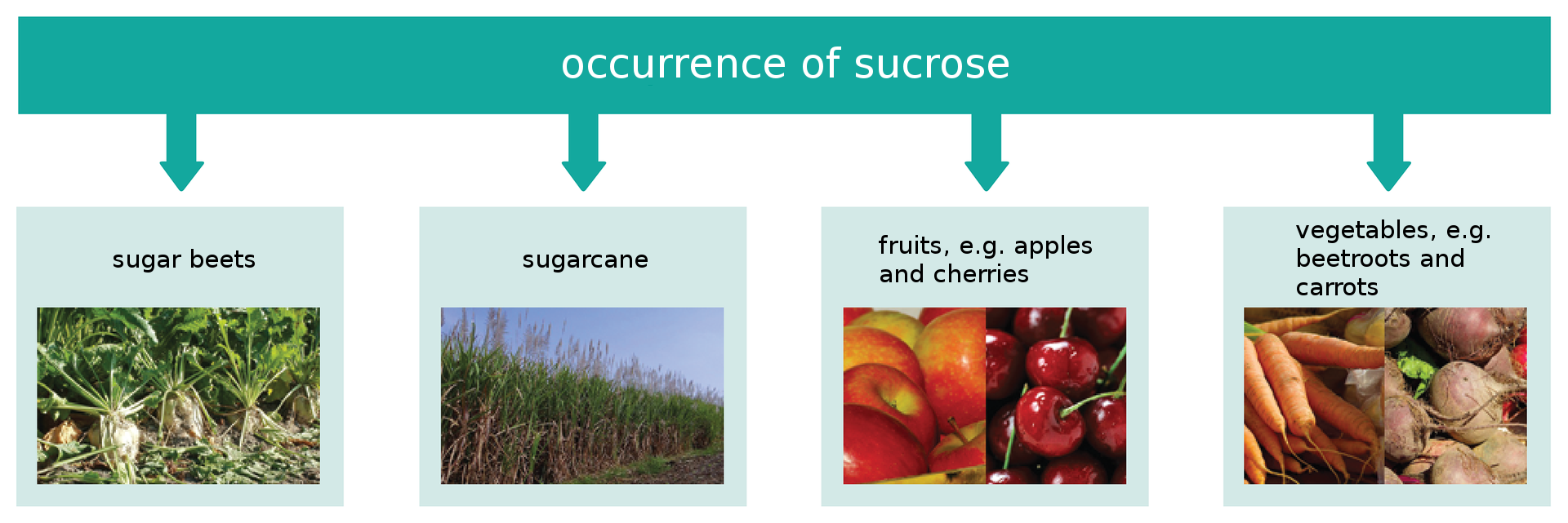
The bulbs of sugar beets and stems of sugarcanes are the main sources of sucrose. In small quantities, it may also be present in some fruit and vegetables.
R1DOmW2U7XD9v
Ilustracja przedstawia występowanie sacharozy - occurence of sucrose. Buraki cukrowe - sugar beets, trzcina cukrowa - sugarcane , owoce, na przykład jabłka i czereśnie - fruits e. g. apples and cherries, warzywa na przykład buraki, marchew - vegetables e. g. beetroots and carrots.
Occurrence of sucrose. Sugar beet, sugar cane, fruits, vegetables.
Source: Dariusz Adryan, licencja: CC BY 3.0.
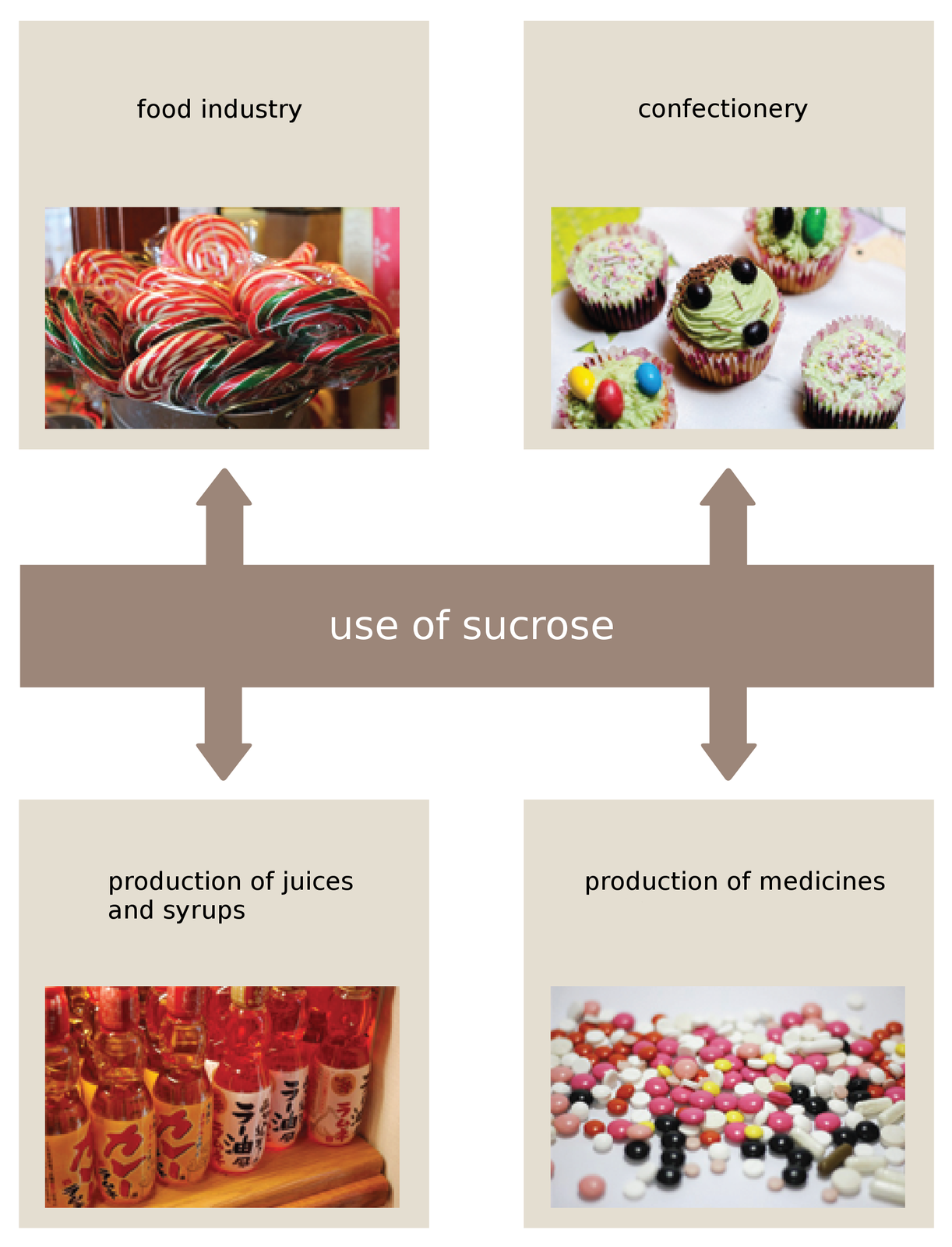
Owing to its properties, sucrose has been used in many sectors of industry.
RwJgn5DP8J7Zz
Ilustracja przedstawia zastosowania sacharozy. Przemysł spożywczy - food industry, słodycze - confectionery, soki i syropy - products of juices and syrups, lekarstwa - production of medicine.
Uses of sucrose. Food, confectionery, juices and syrups, medicine.
Source: Dariusz Adryan, licencja: CC BY 3.0.
Sugar – sweet poison
R1Gqt0PQBFRWK
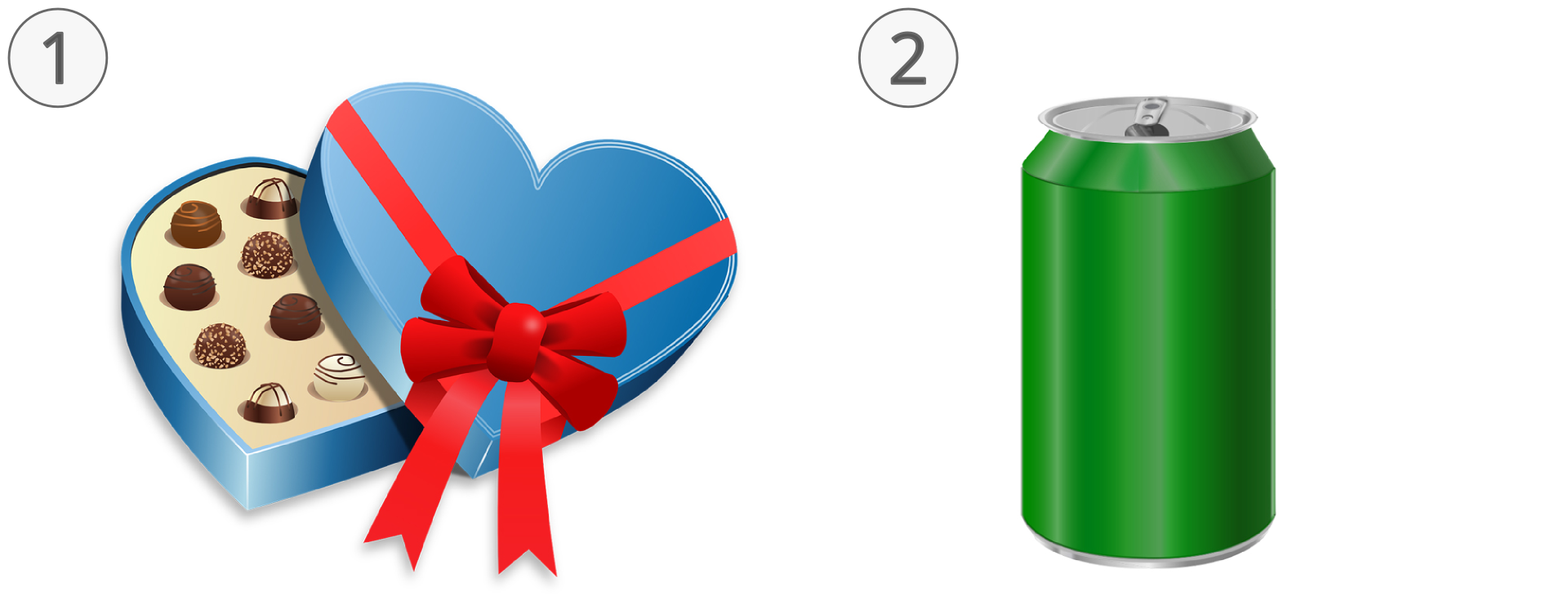
Ilustracja przedstawia bombonierkę z czekoladkami oraz puszkę napoju.
1) When eating large amounts of sweets, we limit the consumption of fruits, vegetables and other valuable products. We deprive the body of vitamins and minerals in this way; 2) The can of a cola beverage contains about 12 teaspoons of sugar. Another ingredient is phosphoric acid, which contributes to to spoiling teeth
Source: OpenClipartVectors, Vectorscape, licencja: CC 0 1.0.
RrKNBqPBHS0Hn
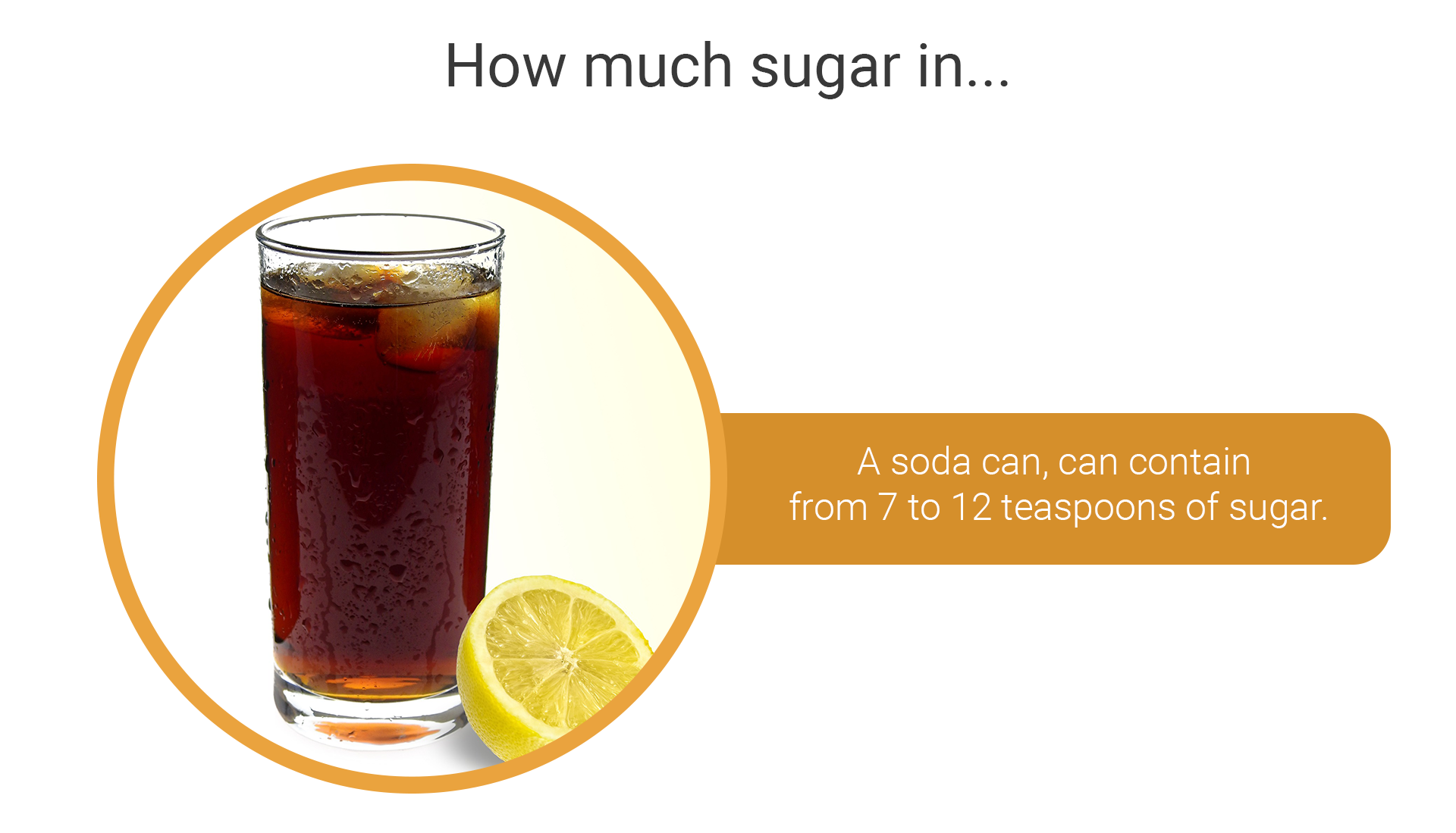
Ilustracja przedstawia ilość cukru w różnych produktach spożywczych. Puszka coli, może zawierać od siedmiu do dwunastu łyżeczek cukru. Opis: How much sugar in... A soda can, can contain from seven to twelve teaspoons of sugar.
Source: GroMar, licencja: CC BY 3.0.
RQ1e3YUPkkPWP
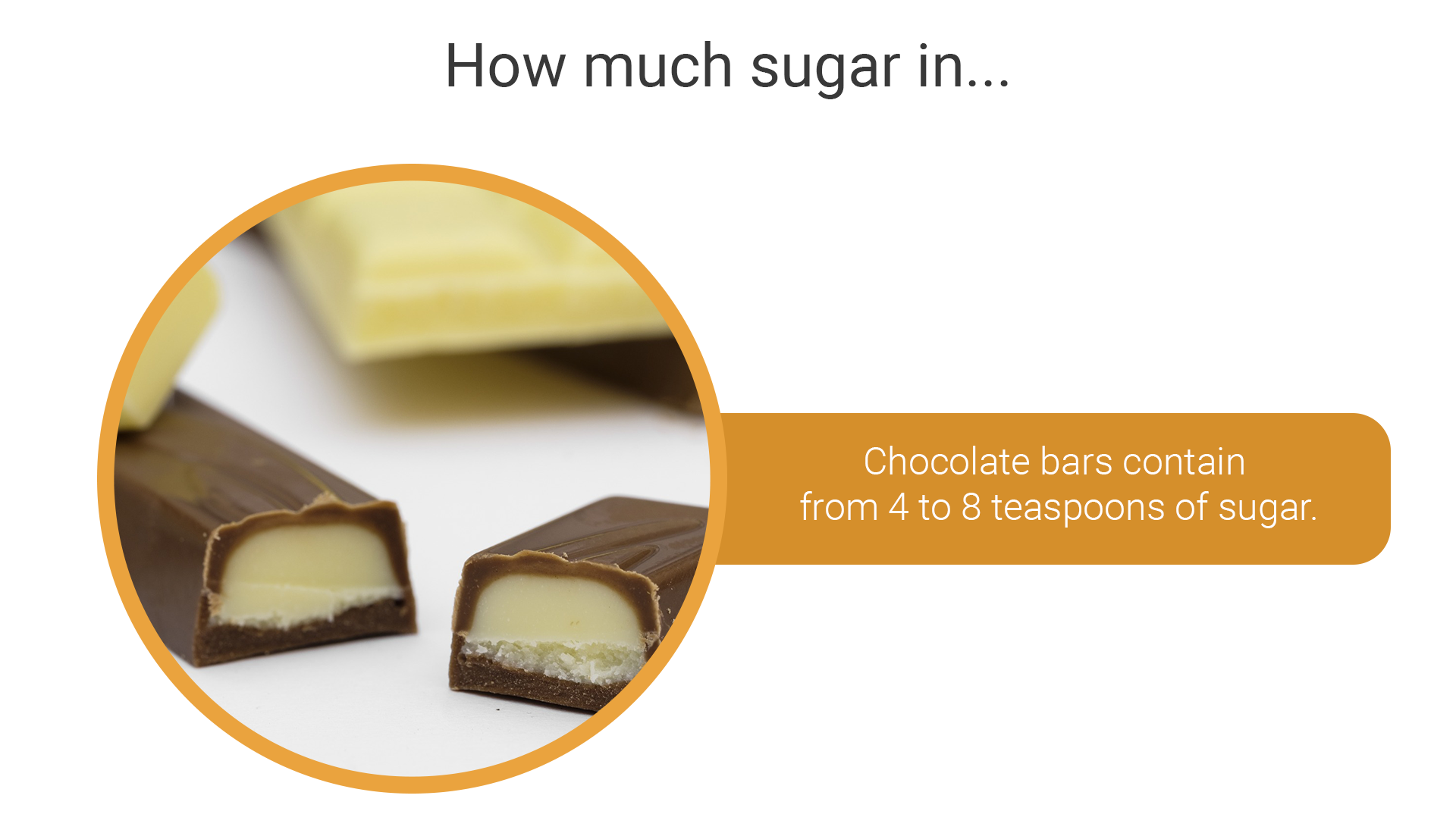
Ilustracja przedstawia ilość cukru w różnych produktach spożywczych.Tabliczka czekolady zawiera od czterech do ośmiu łyżeczek cukru. How much sugar in... Chocolate bars contain from four to eight teaspoons of sugar.
Source: GroMar, licencja: CC BY 3.0.
R1YPqaTcc7PqE
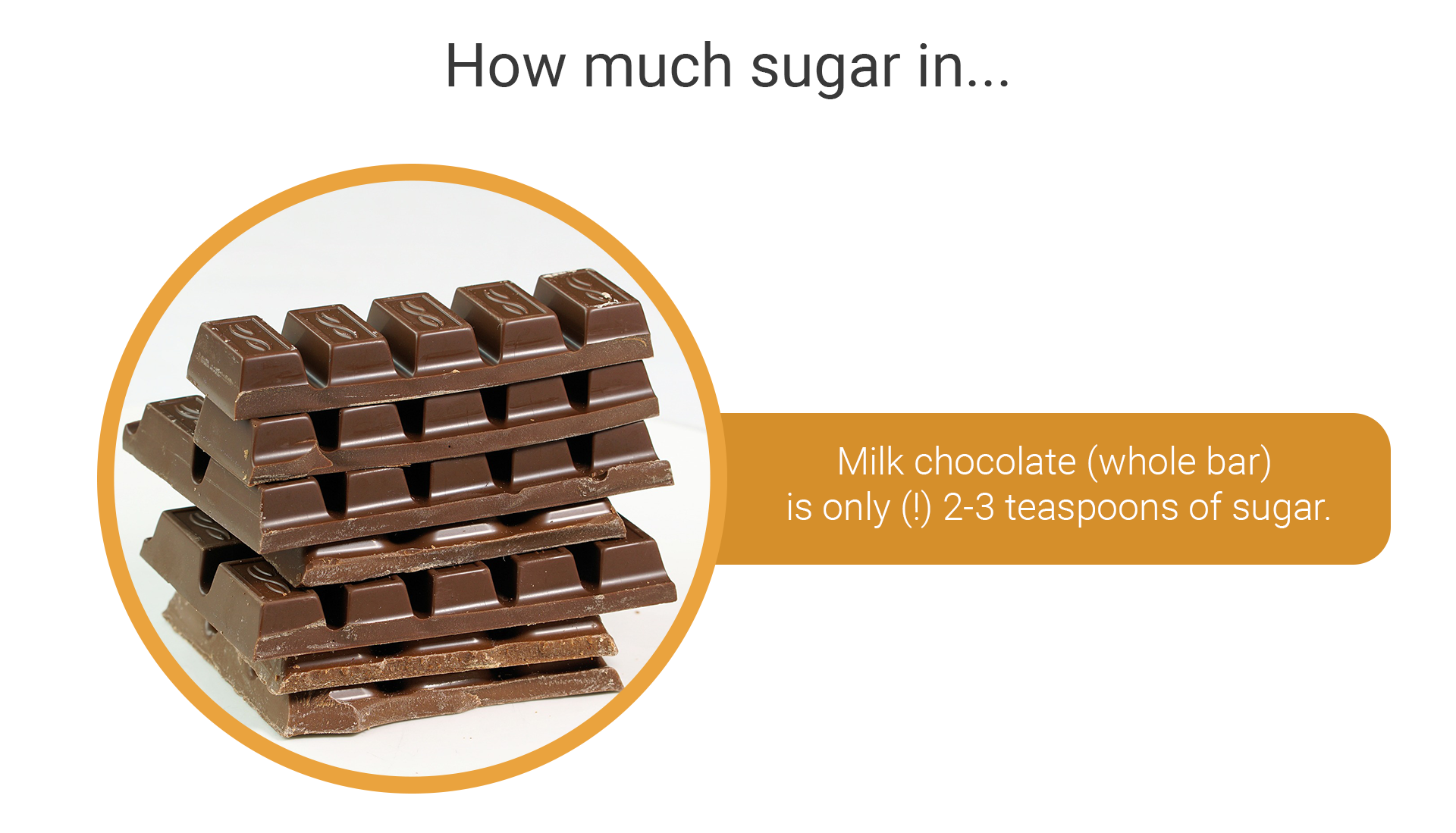
Ilustracja przedstawia ilość cukru w różnych produktach spożywczych.Czekolada mleczna (cała tabliczka) zawiera od dwóch do trzech łyżeczek cukru. Milk chocolate (whole bar) is only (wykrzyknik) two- three teaspoons of sugar.
Source: GroMar, licencja: CC BY 3.0.
R1SEAjlpkYRpv
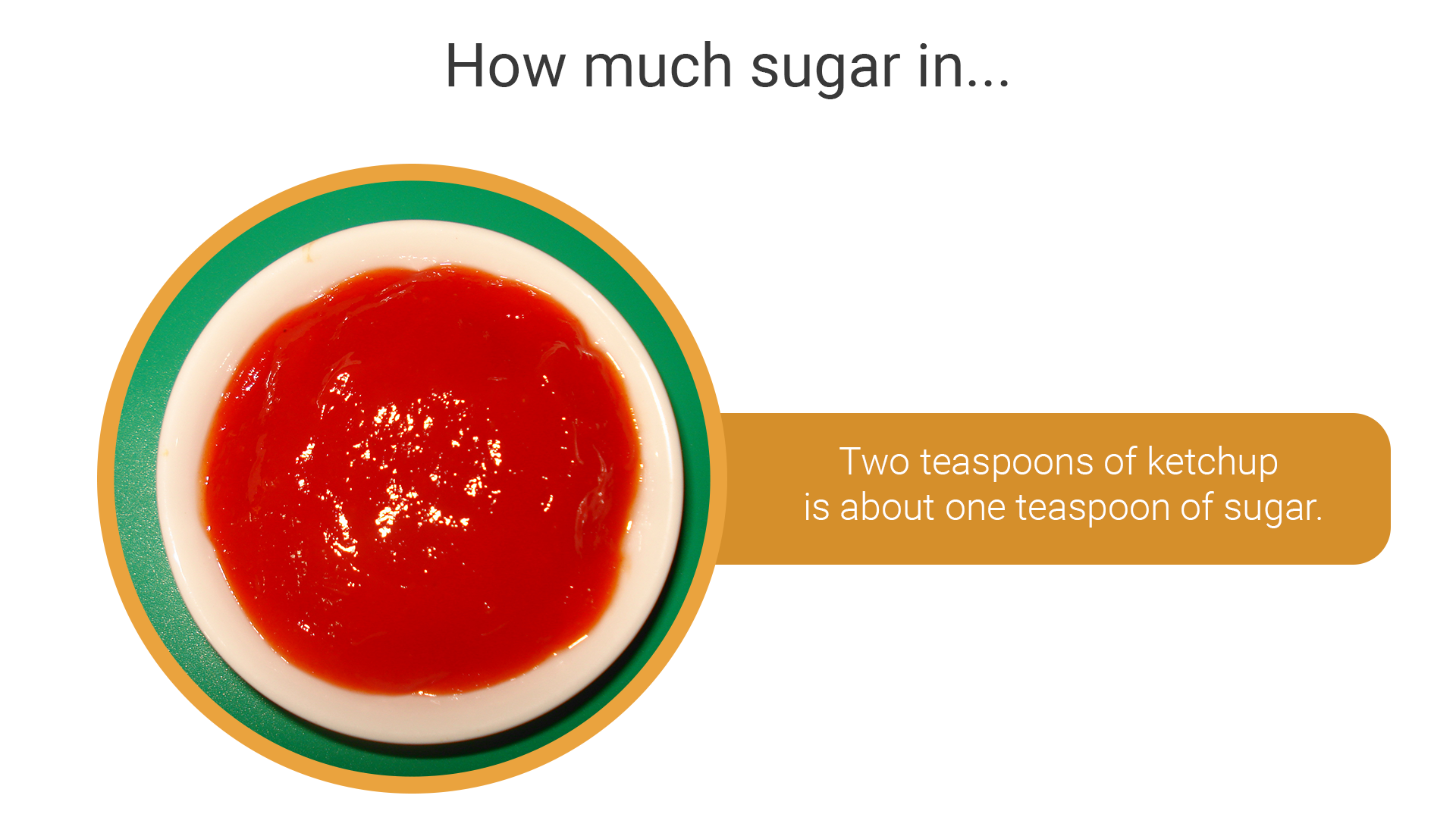
Ilustracja przedstawia ilość cukru w różnych produktach spożywczych. Dwie łyżeczki ketchupu to około łyżeczka cukru. Napis: Two teaspoons of ketchup is about one teaspoon of sugar.
Source: GroMar, licencja: CC BY 3.0.
R1ZAP8QiyIDhU
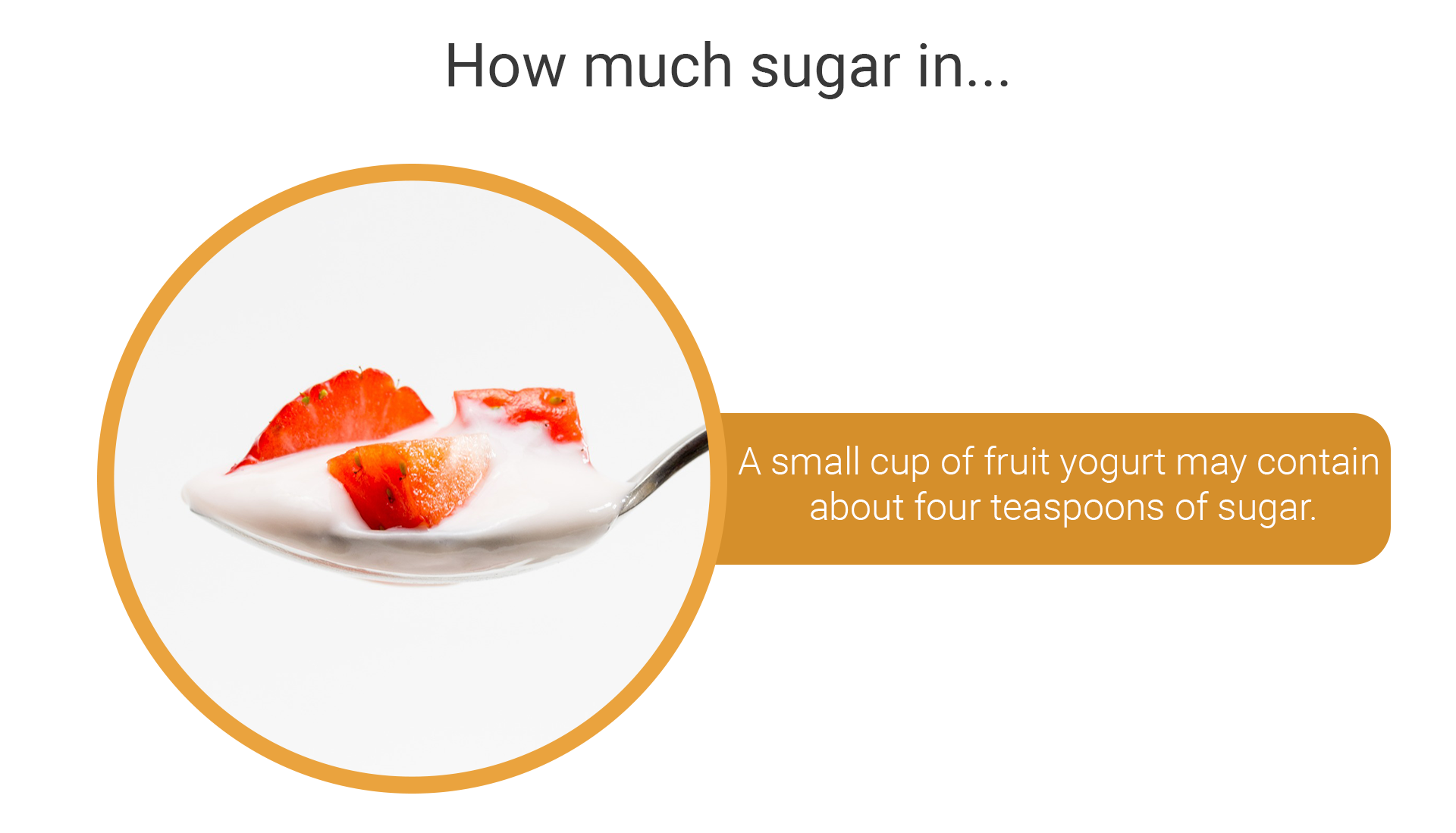
Ilustracja przedstawia ilość cukru w różnych produktach spożywczych. Mały kubeczek jogurtu może zawierać około czterech łyżeczek cukru. Napis: A small cup of fruit yogurt may contain about four teaspoons of sugar.
Source: GroMar, licencja: CC BY 3.0.
It is a well known fact that excessive amounts of sweets can lead to obesity. But is this the only effect? Excessive amount of sugars in our body is not recommended because it can cause many health issues, such as:
damage to the immune system,
disturbance of the mineral balance in the body,
increase in glucose and insulin levels,
vision impairment,
spoilage of teeth,
heart diseases,
raised cholesterol levels,
diabetes, and many others.
Excessive consumption of sugar has a negative effect on the brain tissue. Children and adolescents eating large amounts of sugar do not control their emotions, are nervous and aggressive. Sugar can also cause depression, irritation and fatigue. What's important, sugar can be addictive, much like nicotine and alcohol.
RIO6Z7dgvJRjW
Exercise 1
Wysłuchaj nagrania abstraktu, ułóż do niego pytania i zadaj je koledze.
Wysłuchaj nagrania abstraktu, ułóż do niego pytania i zadaj je koledze.
Rbxi0CEMkoQgd
Exercise 2
Compound sugar belonging to the disaccharide group of the formula ce dwanaście ha dwadzieścia dwa o jedenaście; a white crystalline substance with a sweet taste; it dissolves well in water is called: Możliwe odpowiedzi: 1. sucrose, 2. fructose, 3. glucose
Compound sugar belonging to the disaccharide group of the formula ce dwanaście ha dwadzieścia dwa o jedenaście; a white crystalline substance with a sweet taste; it dissolves well in water is called: Możliwe odpowiedzi: 1. sucrose, 2. fructose, 3. glucose
Compound sugar belonging to the disaccharide group of the formula C12H22O11; a white crystalline substance with a sweet taste; it dissolves well in water is called:
sucrose
fructose
glucose
Conclusion
Sucrose is a disaccharide with the following formula: CIndeks dolny 1212HIndeks dolny 2222OIndeks dolny 1111. It is a white, crystalline substance and has a sweet taste. It dissolves well in water.
Sucrose has no reducing properties and does not give a positive Trommer's test result.
In the human body, sucrose undergoes hydrolysis under the influence of enzymes and the hydrochloric acid – it decomposes into glucose and fructose.
Sucrose is present in sugar beets and sugarcanes. In smaller quantities, it may also be found in fruit and vegetables.
R18Tcfx8PL0qw1
Grafika przedstawiająca tablicę szkolną, na której znajdują się zdania do dokończenia. Finish selected sentences. 1 It was easy for me (uzupełnij). 2 It was difficult for me (uzupełnij). 3 Today I learned (uzupełnij). 4 I understood that (uzupełnij). 5 It surprised me (uzupełnij). 6. Today I found out (uzupełnij). 7. I was interested in (uzupełnij). 8. I still have to repeat (uzupełnij).
Grafika przedstawiająca tablicę szkolną, na której znajdują się zdania do dokończenia. Finish selected sentences. 1 It was easy for me (uzupełnij). 2 It was difficult for me (uzupełnij). 3 Today I learned (uzupełnij). 4 I understood that (uzupełnij). 5 It surprised me (uzupełnij). 6. Today I found out (uzupełnij). 7. I was interested in (uzupełnij). 8. I still have to repeat (uzupełnij).
Source: GroMar Sp. z o.o., licencja: CC BY-SA 3.0.
Exercise 3
Sformułuj zagadkę odnoszącą się do porównania właściwości glukozy i sacharozy.
Sformułuj zagadkę odnoszącą się do porównania właściwości glukozy i sacharozy.
Compare the properties of glucose and sucrose. To do this, make a table in which you will note the common features of the substances and the differences between them.
Substance
State of aggregation
Colour
Odour
Water solubility
Types of sugar
Ability to reduce
Presence of glycosidic bonds
sucrose
solid
white
odourless
dissolves well
disaccharide
a non‑reducing sugar
has glycosidic bonds between glucose and fructose molecules
glucose
solid
white
odourless
dissolves well
monosaccharide
a reducing sugar
non glycosidic bonds
Keywords
sugars, disaccharides, sucrose, hydrolysis, molecular formula, reducing properties of sucrose
sacharoza – cukier złożony należący do grupy dwucukrów o wzorze CIndeks dolny 1212HIndeks dolny 2222OIndeks dolny 1111; biała substancja krystaliczna o słodkim smaku; dobrze rozpuszcza się w wodzie