Synthesis reactions - principles
Synthesis and analysis reactions - principles;
substances that undergo chemical changes are substrates, and those that result from them are products;
on the left side of the reaction equation substrates are written, on the right – products.
describe what the synthesis reactions consist in;
indicate examples of synthesis reactions;
save the synthesis reactions equations;
choose coefficients in the chemical reaction equations;
adhere to safety rules when performing chemical experiments;
describe a chemical experiment, including: glass and laboratory equipment, chemical reagents, apparatus schema, observations and conclusions.
What rules apply when writing reaction equations?
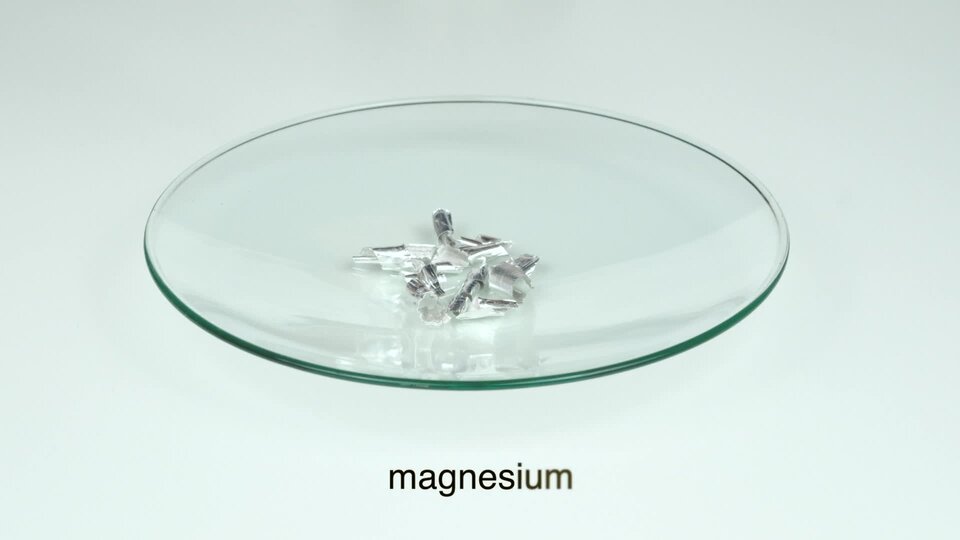
Watch the movie „Testing the reaction of magnesium with oxygen”, formulate a research question and a hypothesis. Write down the observations and conclusions.
Film dostępny na portalu epodreczniki.pl
Nagranie filmowe przedstawia doświadczenie - spalanie magnezu w powietrzu. Użytkownik pobiera próbkę magnezu i podstawia ją pod płomień palnika kuchenki gazowej. Magnez zaczyna płonąć jasnym mocnym płomieniem.
The course of chemical transformation, including substrates and products, can be described in words, for example: carbon reacts with oxygen and as a result of this reaction carbon dioxide is formed. Instead of a long description, one can use a reaction equation containing names of elements and chemical compounds:
Although the above methods of presenting the course of chemical reactions are correct, it turns out to be of little use to chemists. In their work, they use equations of reactions in which they use symbols of elements and chemical formula. The chemical transformation discussed above is recorded using the following reaction equation:
In order for the equation to be correctly written, the number of atoms of particular elements recorded on both sides of this equation must be identical. In the reaction equation presented above () obtaining carbon dioxide from carbon and oxygen this condition is met.

Element | The number of atoms on the left side of the equation | The number of atoms on the right side of the equation |
carbon | 1 | 1 |
oxygen | 2 | 2 |
The number of atoms of each element on both sides of the equation is the same. The reaction equation is written correctly. It is said that it is agreed or balanced. The activities that we have been doing since writing the equation of reactions using symbols and formulas to obtain its correct recording are called reconciliation (or balancing) of the reaction equation.
How do we call the reaction, as a result of which substances combine with each other to form one chemical compound?
Look at the following reaction equations:
Note that as a result of these transformations, one product is obtained from two elements. They can be described by the following equation:
Such conversions are said to be synthesis reactionssynthesis reactions or otherwise linking reactionslinking reactions.
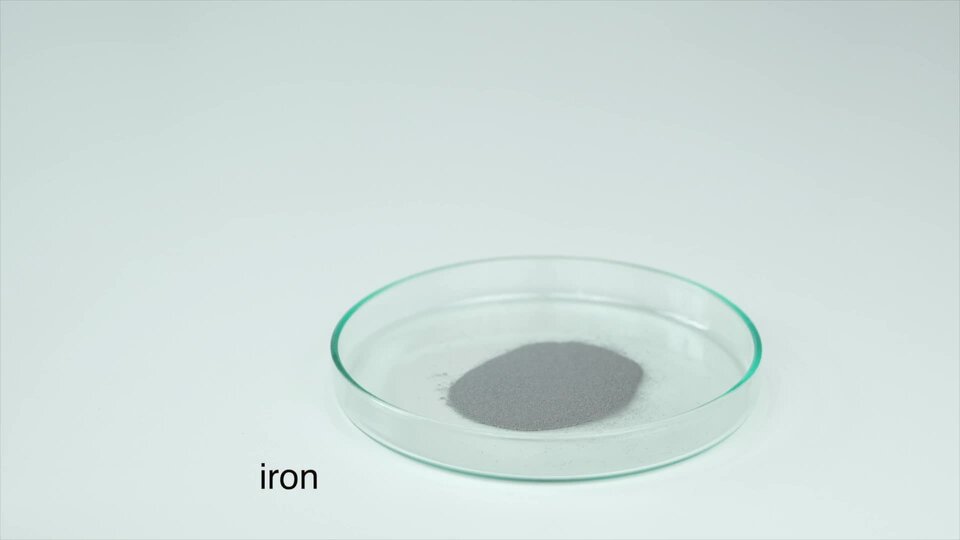
Before looking at the film „Study of the reaction of iron with sulfur”, formulate a research question and a hypothesis. Write down your observations and conclusions.
Film dostępny na portalu epodreczniki.pl
Nagranie filmowe przedstawia eksperyment pokazujący reakcję zachodzącą między żelazem i siarką. W moździerzu umieszczono siarkę, a następnie pył żelazny. Składniki wymieszano i utarto, a następnie pobrano i przesypano do próbówki. Probówkę wraz z zawartością ogrzewano w płomieniu palnika. Pod wpływem ogrzewania mieszanina żarzy się. Wydzielają się też żółte pary, które resublimują na ściankach probówki.
Fill in the equation
O3, H2O, O2
2Ca + → 2CaO
Fill in the equation
2Fe2O3, 4Fe2O3, Fe2O2
4Fe + 3O2 →
Summary
Equations of chemical reactions are recorded using symbols and chemical formulas. The number of atoms of individual chemical elements on both sides of the equation must be identical.
Supplementing the equation of the reaction with stoichiometric coefficients is called reconciliation (balancing) the chemical reaction equation.
Keywords
Synthesis reaction
Match the pairs: English words with Polish definition.
przemiana chemiczna polegająca na rozkładzie jednego substratu (związku chemicznego) na co najmniej dwa produkty (pierwiastki bądź związki chemiczne), przemiana chemiczna polegająca na łączeniu się dwóch lub większej liczby substratów w jeden produkt
| synthesis reaction (coupling reaction) | |
| analysis reaction (decomposition reaction) |
Glossary
reakcja syntezy (reakcja łączenia) – przemiana chemiczna polegająca na łączeniu się dwóch lub większej liczby substratów w jeden produkt
reakcja analizy (reakcja rozkładu) – przemiana chemiczna polegająca na rozkładzie jednego substratu (związku chemicznego) na co najmniej dwa produkty (pierwiastki bądź związki chemiczne)