The Communists’ Takeover of Poland
why did Poland find itself in the Soviet sphere of influence;
how did the Communists take over all aspects of life after the war;
what were the most important organizations of the independence undergroundindependence underground;
how did the Communist authorities fight against the resistance;
what political, economic and social changes transpired in post‑war Poland.
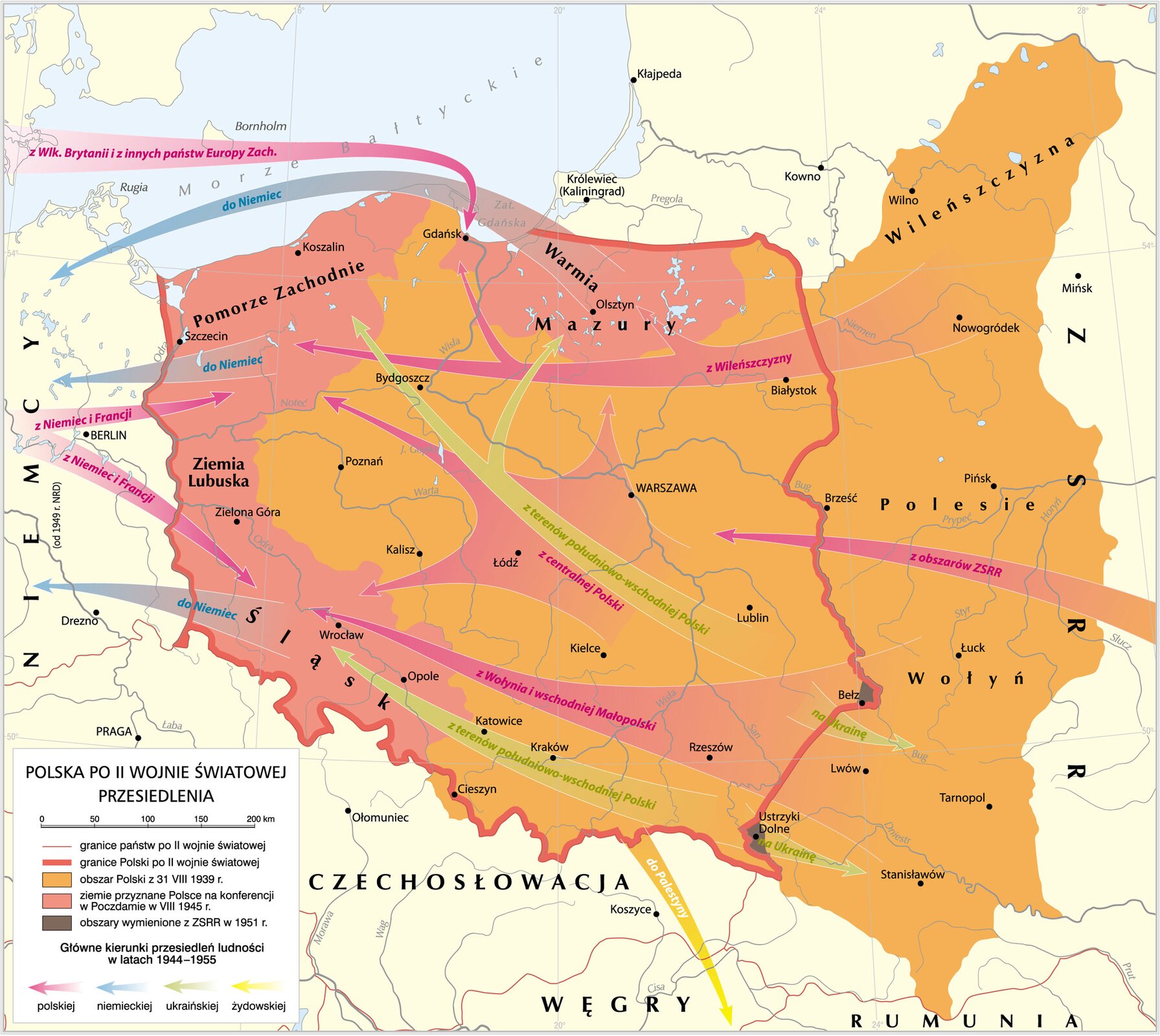
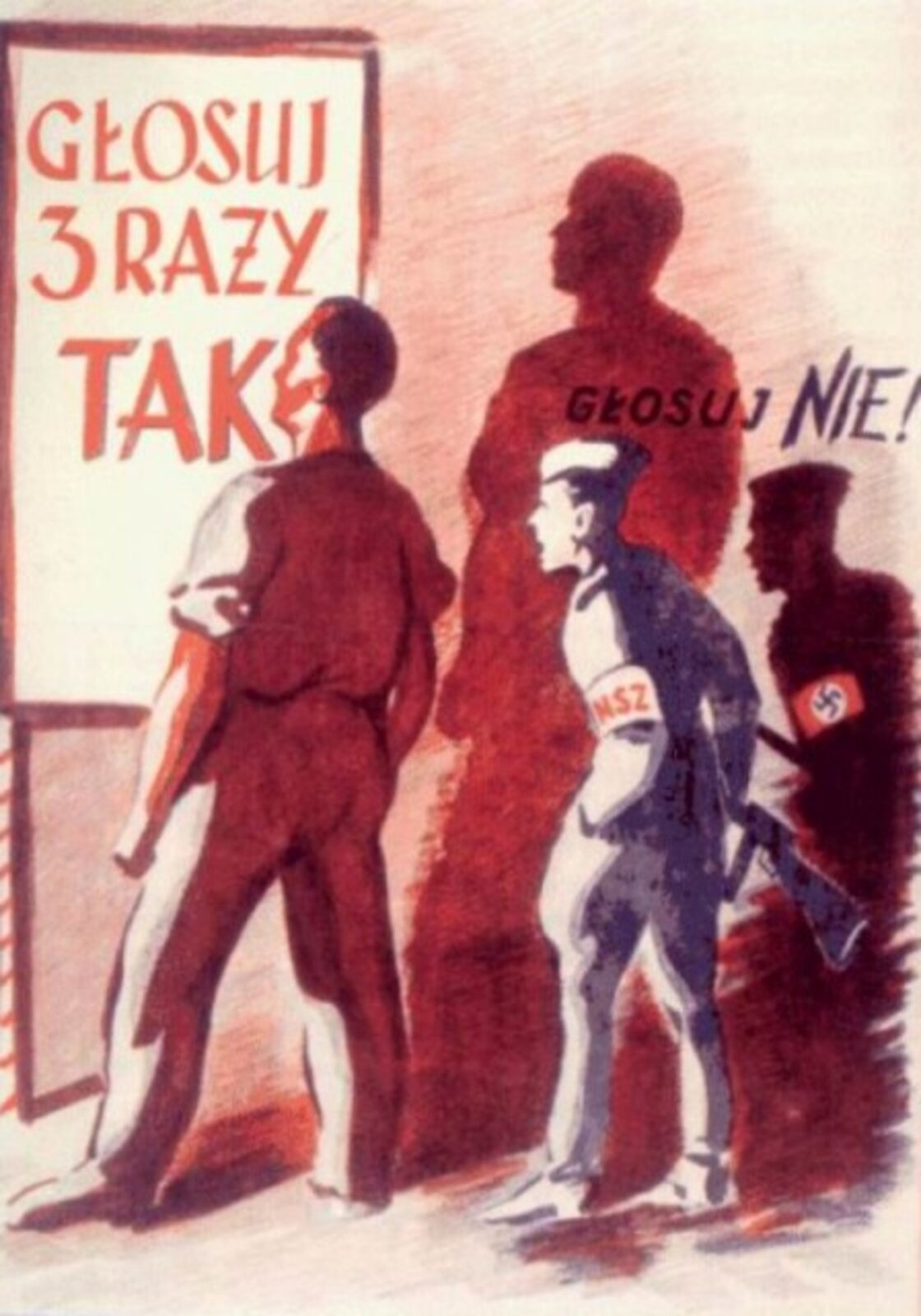
Due to the agreements of the Big Three, Poland found itself in the Soviet Union’s sphere of influence. Her borders and territory changed; in the West, her border was made up of the Oder and Lusatian Neisse, and in the East, it was demarcated by the Curzon Line. Poland acquired territories formerly belonging to Germany, commonly called the Recovered TerritoriesRecovered Territories. As stipulated at the Conference of Potsdam, the Germans living there were expelledexpelled and replaced with the repatriatedrepatriated Poles from the KresyKresy, who were forced to leave their homes. Poles from other regions came as well, counting on the improvement of their living conditions. The Provisional Government of National UnityProvisional Government of National Unity, created in June 1945 and controlled by the Communists, began implementing changes that quickly led to them taking control of the country and its society. Reforms following the Soviet model were introduced, changes to the economy were started (economic plans, the battle for tradebattle for trade), and the fight against the armed underground and opposition, represented by the Polish People’s Party (PSL) and Stanisław Mikołajczyk (a PSL member, and a Deputy Prime Minister in the TRJN). Mass indoctrination and propaganda were conducted. The Communists’ main task was that of preparing elections that would sanction their authority. However, they needed time. Thus, they first conducted the referendum of June 1946, asking the citizens whether they wished to abolish the Senate, to introduce agrarian reform, and to affirm the Western border. According to the official data falsified by the authorities, the vast majority of people answered “yes” (3xTAK) to all of the questions. Notwithstanding the rigging and threats to political opponents, the opposition believed that it would still be possible to conduct a free parliamentary election, with the Western powers as the guarantors of its legitimacy. This, however, did not happen. The Communists fully controlled the elections, terrorized their political opponents, and rigged the results; this caused the authorities’ Democratic Bloc to receive 80% of votes. The people counted on the Western powers to react, but it merely amounted to expressions of disapproval. The elections caused the Communists to take full power. 1948’s “Small Constitution”, the election of Bolesław Bierut as President, and, above all, the creation of the Communist monoparty – the Polish United Workers’ Party (PZPR) merely affirmed this state of affairs. As early as 1944, a large part of the underground circles began their armed response against the Sovietization of society. The biggest organizations to take part in this were the National Armed ForcesNational Armed Forces and the Freedom and Independence associationFreedom and Independence association. They aimed to fight for the freedom of Poland, the departure of the Soviet military, and the return of the Eastern border as it was before the war. Their members are called the cursed soldierscursed soldiers. However, by the end of 1949, most of them were defeated by the forces of the Polish People’s Republic and the USSR.
Explain the propaganda message of the poster. Who is its author – communists or PSL?
Match the terms with their definitions.
a collective cancellation or attentuation of the sentence for crimes, a civillian and armed resistance movement against the Communist authorities and the dominance od the USSR, literally, the return to one’s homeland; the resettlement of a country’s citizens who, due to changes to the borders or war operations, found themselves outside of its territory, the forced deportation from one’s place of living. It is often associated with changes to the borders due to conflicts, a term used to refer to Poland’s Eastern territories during the Interbellum, which presently constitute parts of Ukraine, Belarus, and Lithuania, an expression commonly used to refer to the anti-Communist, pro-independece underground (partisans) that opposed the sovietization of Poland and the dominance of Communists in the social and political life of the country after World War II, the Polish economic policy of 1947-1949 aiming to eliminate the private sector, an expression used in the Polish People’s Republic to describe the former German territories acquired due to the agreements of the Potsdam Conference
| Recovered Territories | |
| Expulsion | |
| Kresy | |
| Repatriation | |
| Independence underground | |
| Amnesty | |
| Cursed soldiers | |
| Battle for trade |
Keywords
Recovered Territories, expulsion, Kresy, repatriation, amnesty, cursed soldiers
Glossary
Ziemie Odzyskane – określenie używane w okresie Polski Ludowej na przedwojenne ziemie niemieckie przyznane na mocy postanowień z Poczdamu Polsce.
Wysiedlenie – przymusowy nakaz opuszczenia miejsca zamieszkania. Często jest związany ze zmianami granic w wyniku konfliktów.
Kresy Wschodnie – określenie wschodnich terenów Rzeczypospolitej w okresie międzywojennym, stanowiących dzisiaj ziemie należące do Ukrainy, Białorusi i Litwy.
Repatriacja – dosłownie powrót do ojczyzny; przesiedlanie do kraju obywateli, którzy na skutek zmiany granic lub działań wojennych znaleźli się poza jego terytorium. W Polsce Ludowej używano także określenia „repatrianci” w kontekście mieszkańców Kresów Wschodnich.
Nagranie dostępne na portalu epodreczniki.pl
Nagranie słówka: Provisional Government of National Unity (TRJN)
Tymczasowy Rząd Jedności Narodowej (TRJN) – koalicyjny rząd Rzeczypospolitej Polskiej powołany do życia 28 czerwca 1945 r. jako realizacja postanowień konferencji jałtańskiej. Na jego czele stanął Edward Osóbka‑Morawski. Istniał do 1947 r. Został uznany przez państwa koalicji antyhitlerowskiej, które tym samym odmówiły dalszego poparcia dla Rządu RP na uchodźstwie.
Podziemie niepodległościowe – cywilny i zbrojny ruch oporu przeciwko powojenne władzy komunistycznej w Polsce i dominacji ZSRS. Przyjmuje się, że jesienią 1945 r. liczyło ponad 80 tys. członków.
Nagranie dostępne na portalu epodreczniki.pl
Nagranie słówka: Freedom and Independence association (WiN)
Zrzeszenie Wolność i Niezawisłość (WiN) – antykomunistyczna organizacja cywilno‑wojskowa założona w 1945 r., której celem była walka o wolną Polskę, opuszczenie kraju przez wojska sowieckie i powrót do przedwojennej granicy na wschodzie. Pierwszym prezesem został Jan Rzepecki.
Narodowe Siły Zbrojne (NSZ) – organizacja konspiracyjna o charakterze narodowym działająca w latach 1942‑1947. W czasie wojny walczyła zarówno z Niemcami jak i formacjami komunistycznymi (Gwardia Ludowa, partyzantka radziecka). Po wojnie przeciwstawiła się zbrojnie nowemu systemowi.
Amnestia – zbiorowe darowanie lub złagodzenie kary za popełnione przestępstwa.
Żołnierze wyklęci – potoczna nazwa antykomunistycznego, niepodległościowego podziemia (partyzantki) sprzeciwiającego się sowietyzacji i dominacji komunistów w życiu społecznym i politycznym po II wojnie światowej w Polsce.
Ukraińska Powstańcza Armia (UPA) – ukraińska formacja zbrojna stworzona przez nacjonalistów pod koniec 1942 r. Działała głównie na Wołyniu i Galicji Wschodniej. Nie uznała granic ustanowionych na wielkich konferencjach i walką zbrojną dążyła do powstania niepodległego państwa ukraińskiego.
Bitwa o handel – prowadzona przez Polskę w latach 1947‑1949 polityka gospodarcza, której celem było wyeliminowanie sektora prywatnego. Opierała się na trzech ustawach dotyczących: walki z drożyzną, obywatelskich komisjach podatkowych oraz zezwoleniu na prowadzenie przedsiębiorstw handlowych. Doprowadziła do ogromnych trudności w zaopatrzeniu ludności w towary codziennego użytku.