The foreign policy of the Second Republic of Poland 1922-1936
to list the most important international agreements concerning Poland in 1922‑1936 were;
to characterize the international situation of Poland in 1922‑1936 was;
to describe the achievements and mistakes of the Polish foreign policy during that period were.
After regaining independence, Poland tried to carry out a policy of supporting national groups living in the East to hit USSR. There were also efforts to create the IntermariumIntermarium. It was proposed by Józef Piłsudski and its objective was to form an alliance of countries situated between the Baltic Sea and the Black Sea. The relations with Lithuania were determined by the issue of the occupation of the Vilnius area, and with Czechoslovakia – by the dispute about Zaolzie. Poland had friendly relations only with Latvia and Romania. The Republic of Poland would like to see France as a major political ally. In the mid‑1920s, the alliance with France weakened after Paris signed a treaty, which was not favourable to Poland, in Locarno, in 1925. Not a believer in collective solutions in international politics, Piłsudski arrived at a conclusion that the best idea was to pursue a policy of keeping equal distances (or balance) from both Moscow and Berlin. In 1932, the Soviet–Polish Non‑Aggression Pact was signed in Moscow. The German‑Polish Declaration on Non‑Aggression in Mutual Relations was signed in 1934.
Justify the point that the German‑Russian Treaty signed in RapalloRapallo can be considered to have been the worst possible array that could have happened in the history of Poland.
What importance could the Germany's failure to guarantee the involiability of borders have for the future of Poland and Czechoslovakia?
- The importance depended on the development of the international situation.
- Germany could demand revision of borders.
- It forced another agreement with Poland and Czechoslovakia.
Listen to the programme. Listen to the opinion on the foreign policy of the Second Republic of Poland by Włodzimierz Mędrzecki.
The battles of 1918‑1923 resulted in the best borders possible. However, the price was high. The Second Republic of Poland found itself in territorial conflicts with Germany, Lithuania, USSR and Czechoslovakia. Apart from that, it “won” a permanently unfriendly attitude of the US and the UK. Only France showed greater understanding for Polish aspirations. The above circumstances determined the international situation of Poland.
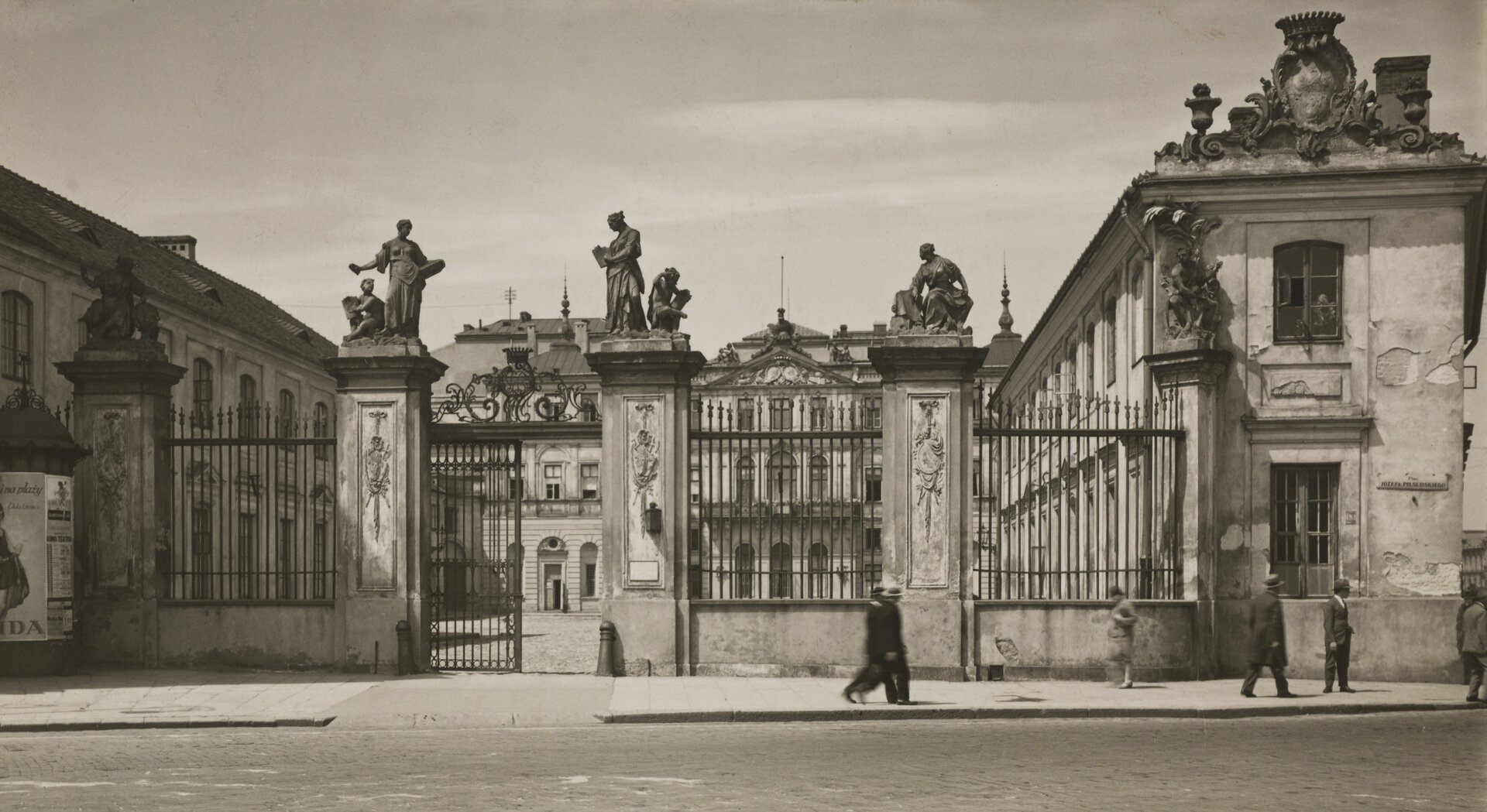
In 1920s, the Polish state was an equal player on the European arena, because Germany was still militarily weak and USSR was preoccupied mainly with its internal affairs. However, the accusation of political belligerence, which the West considered to be Poland's fight for borders after gaining independence, weighed heavily on Poland. The conflicts with virtually every neighbour were attributed to the Polish. That is why, the Western countries decided to stop defending Polish interests during the international discussions at the conference in Locarno in 1925. Germany was guaranteed its borders in Western Europe, which significantly improved its situation on the international arena, and Poland (as well as Czechoslovakia) ended up in a grey area of European security.
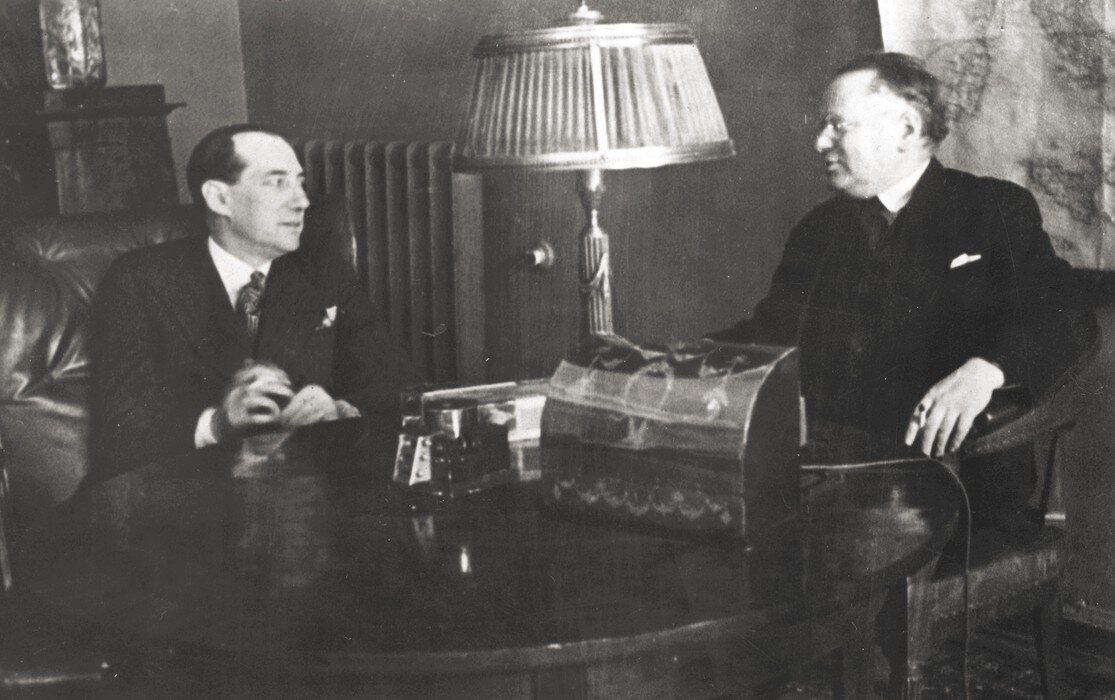
There are two conflicting opinions on the so‑called balancing policy from the first half of the 1930s. Some consider it to be a proof that Poland brilliantly used the Russian‑German conflict, which started to grow after the 1930, to improve its own relations with both neighbours. Its objective was to make Poland an independent player again. That is why Poland could afford to reject disadvantageous proposals, such as the Anti‑Comintern PactAnti‑Comintern Pact, or the so‑called Eastern PactEastern Pact proposed by France.
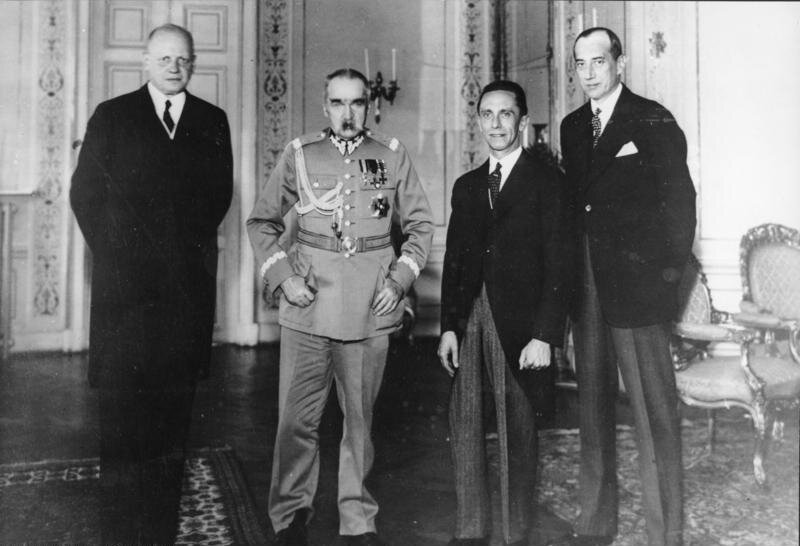
Critics of the Polish diplomacy headed by Józef Beck, point out, however, that the potential of Poland in relation to the major European countries was getting weaker in 1930s. When other countries overcame the Recession and started strenuous armaments – Poland had the potential comparable to the one from the time of the Polish‑Soviet War during all that period. It entered the second half of 1930s as an unequal partner of USSR and Germany. Like the Western countries, it only mattered as a force capable of holding Germany in check at most. What is worse, both the potential allies and enemies of Poland - France and Romania, were aware of the change in the international balance of power. And the leaders of the Second Republic of Poland – not really.
Based on: Włodzimierz Mędrzecki, Polska międzywojenna – mocarstwo czy prowincja Europy?, Pomocnik Historyczny. 100 pytań na 100 lat historii Polski (1918‑2018), 5/2018]
Which of the following ideas has never appeared in Polish foreign policy:
- An alliance with Spain and Japan.
- An idea to form a bloc of the Baltic States.
- Peaceful coexistence in international relations.
Which of the following persons did not serve as the Minister of Foreign Affairs of the Second Republic of Poland in the 1930s?
- Władysław Grabski.
- Józef Beck.
- August Zaleski.
Assess the Polish foreign policy from 1922 to 1935. Use a SWOT analysis to do it.
Keywords
The Eastern Pact, the Locarno Treaties, the Rapallo Treaty
Glossary
Koncepcja „Międzymorza” – federacyjna propozycja Piłsudskiego, zmierzająca do powstania sojuszu łączącego kraje między Morzem Bałtyckim i Morzem Czarnym.
Pakt antykominternowski – układ zawarty w listopadzie 1936 w Berlinie przez Niemcy (III Rzeszę) i Japonię pod hasłem walki z Międzynarodówką Komunistyczną (Kominternem)
Pakt wschodni – (nazywane też wschodnie Locarno – według tego pomysłu Polska, Niemcy, ZSRS i Czechosłowacja oraz kraje bałtyckie miałyby oficjalnie uznać swoje granice, zapewnić sobie pomoc w wypadku agresji, a także wszystkie państwa obiecałyby nie udzielać wsparcia agresorowi. Wzajemne animozje ewentualnych sygnatariuszy, niechęć Niemiec oraz obawy Polski, że ZSRR stanie się dominującym sojusznikiem francuskim w Europie Środkowo‑Wschodniej, unicestwiły ideę paktu.
traktaty lockarneńskie – międzynarodowe porozumienia opracowane i parafowane w X 1925 na konferencji w Locarno, z udziałem Belgii, Francji, Niemiec, Wielkiej Brytanii i Włoch (Czechosłowacja i Polska jedynie asystowały obradom), podpisane 1 XII 1925 w Londynie;
Układ w Rapallo – umowa międzynarodowa zawarta w kwietniu 1922 pomiędzy Republiką Weimarską a Rosją Sowiecką we włoskim mieście Rapallo.