The importance of predators in ecosystems
that food taken in by animals provides them with the components vital for the development and proper functioning of the body and the energy necessary for them to carry out their vital activities;
that body characteristics and its functions and behaviour are adapted to the life they lead.
to explain what determines the number of predators and their prey in the ecosystem
The importance of predators in the ecosystem
PredatorsPredators usually choose old or very young individuals as their prey, those who are sick, weakened by parasites or hunger, i.e. those who are easy to catch. Thanks to this, they leave the strongest individuals alive, who will produce healthy and strong offsprings. The elimination of the weakest individuals results in more environmental resources for the remaining strong ones.
Sometimes predators excessively hunt one species. This results in a significant reduction in the number of potential prey. It is becoming increasingly difficult to find them and hunt them down, and many hunting activities fail. As a result, the predator starts to starve. The weakest carnivores die due to lack of food, some are attacked by diseases and parasites, which leads to the decrease in the number of predators. When the number of hunters falls, their prey is safer. It can feed more calmly, reproduce and hence, soon their number increases. This makes prey easily accessible again, often caught by predators, and leads to their proliferation and abundance.
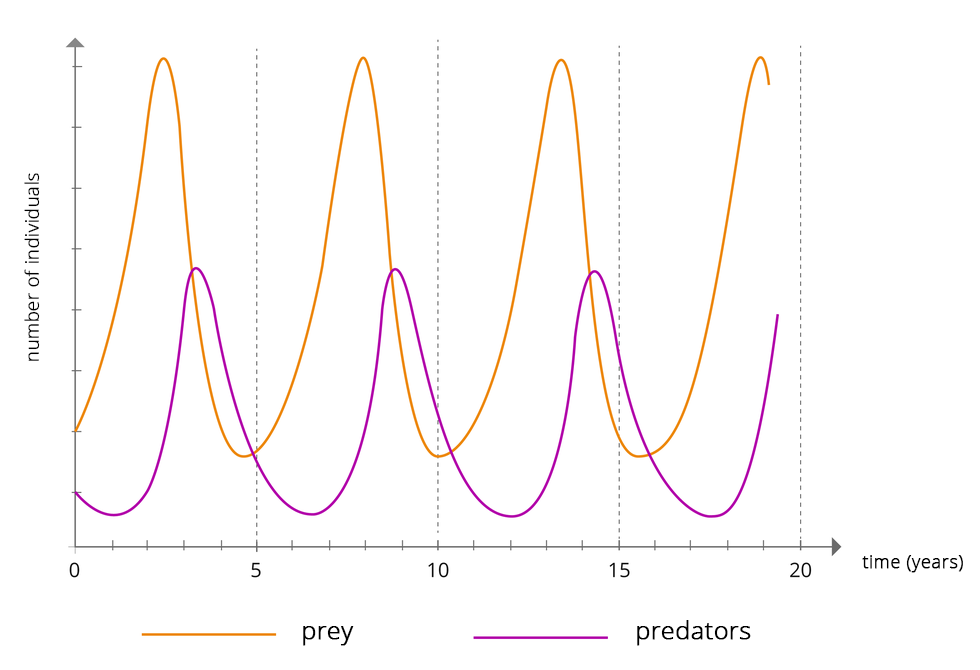
Explain why hunters shoot animals such as roe deer, deer, elks and wild boars every year.
Predators play an important role in many ecosystems. What is their role in an ecosystem?
- Elimination of all individuals of the species they feed on.
- Elimination of the weakest, usually old and sick individuals of the species they feed on.
- Elimination of the strongest and healthiest individuals of the species they feed on.
- Elimination the resources needed by the species they feed on
Arrange the predator and prey control cycle in the right order.
- an increase in the number of potential prey
- frequent successful predator hunting
- an increase in the number of predators
- decline in the number of potential prey
- a large number of potential prey
- death of certain predators from hunger and disease
Summary
The predators and prey mutually regulate their amount.
Keywords
abundance control, predator, ecosystem
Glossary
drapieżnik – zwierzę, którego pokarmem są inne zwierzęta, najczęściej stare lub osłabione, które łatwo schwytać