The medieval town
indicate the reasons for establishing medieval cities;
to recognize the most important features of the medieval city (a characteristic plan and elements of development);
find, unassisted, information about the medieval legacy of selected Polish cities and give examples of it;
the term “self‑governance”, you will be able to give examples of actions taken by the city's self‑government in the Middle Ages;
use the term „self‑government” to describe your school community.
The origins of the majority of contemporary Polish cities date back to the Middle Ages. Some of them were located near boroughs, monasteries and castles, others - at the crossroads of trade routes. They were inhabited by artisans and merchantsmerchants. Many towns were founded in new, previously uninhabited places. They were created in accordance with a fixed set of rules by striking a deal with the land owner. The deal specified the rights and the duties of the inhabitants. Then, a location was selected for the market square, and the streets were charted. The townsmen themselves decided about their fate and the future of their town. They chose the authorities: the city council lead by the mayormayor, as well as the court bench. These authorities were called municipal self‑governmentmunicipal self‑government. Even to this day, many towns are governed by a city council, and the mayormayor is considered the most important official. Many medieval towns were surrounded by fortified walls and a moat, which protected them from an invasion of foreign soldiers and potential attacks of marauders. A town could be accessed through a gate, which was guarded by town guardsmen.
Read the text below. Check the meaning of the terms you came across when looking for information about a selected medieval city. Which information have you encountered for the first time?
The origins of most modern Polish cities date back to the Middle Ages. Some of them were created as a result of the transformation of the settlements located nearby gords, monasteries and castles. They were inhabited by craftsmencraftsmen and merchantsmerchants. Settlements located at the crossroads of trade routes also transformed into cities. Regular fairs were held there, where merchantsmerchants sold their goods. Many cities were founded in new places where nobody had lived before. Such cities were founded on the basis of established principles. A group of people founding the city concluded a contract with the landowner, which defined the rights and obligations of the residents. The place where the market square was to be located and the layout of streets were selected.
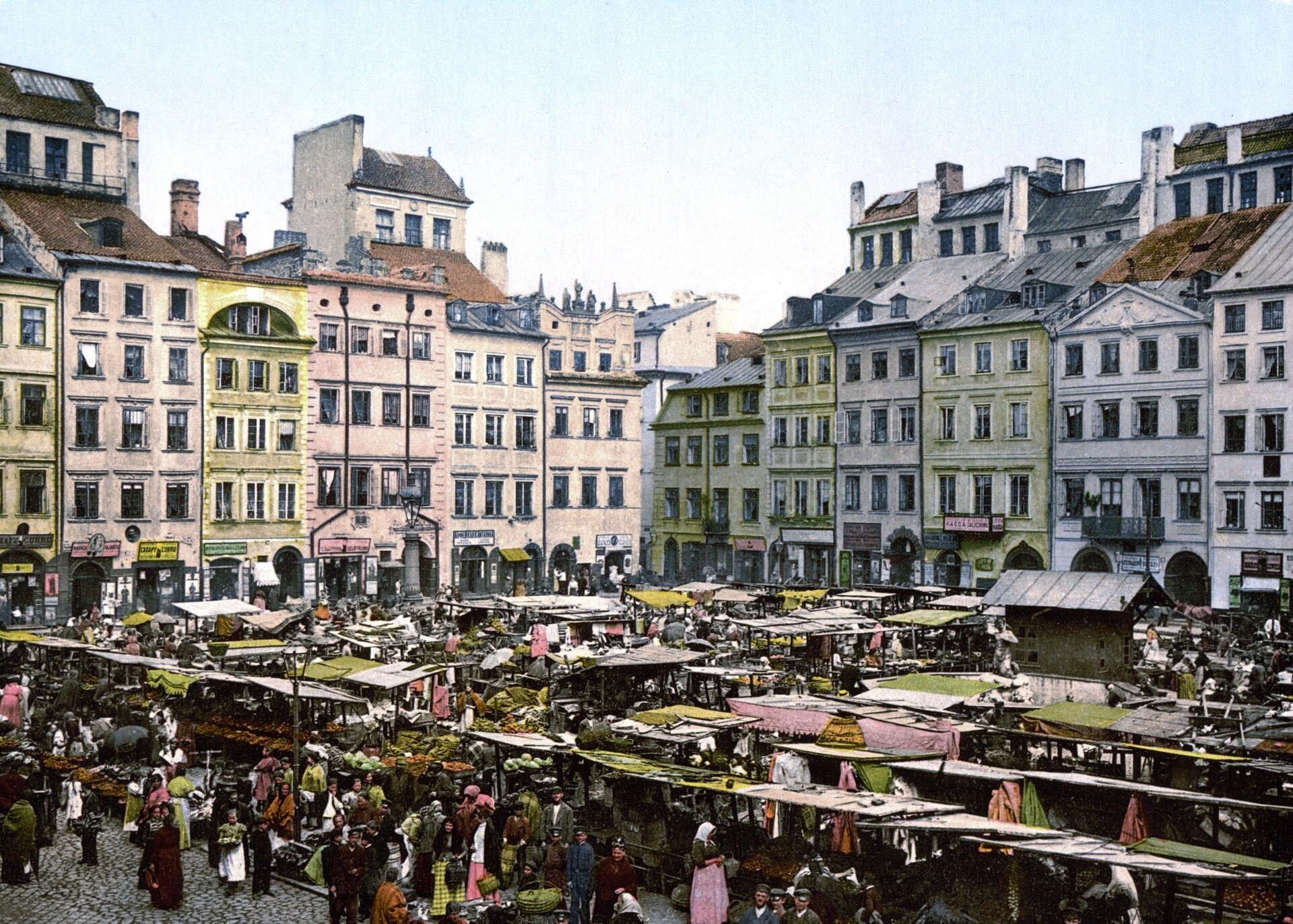
There was always a market square in the middle of the newly planned city. The most important buildings were built there: the town hall - the seat of the city authorities - and the church, where the spiritual life of the city's inhabitants was concentrated. Next to the town hall there was a town scale house, where merchantsmerchants could check the weight of sold goods and buyers could check whether bought goods were fairly weighed or measured. The square was surrounded by several‑storey tenement houses, which belonged to the richest residents. Fairs were held on the market square, where local peasants sold agricultural products and craftsmencraftsmen sold their products. Cloth halls built in some cities were also used for trade. They accommodated stands with different goods, especially with a cloth (hence the name), i.e. a type of woolen fabric. Tightly built‑up streets were leading to each corner of the market square.
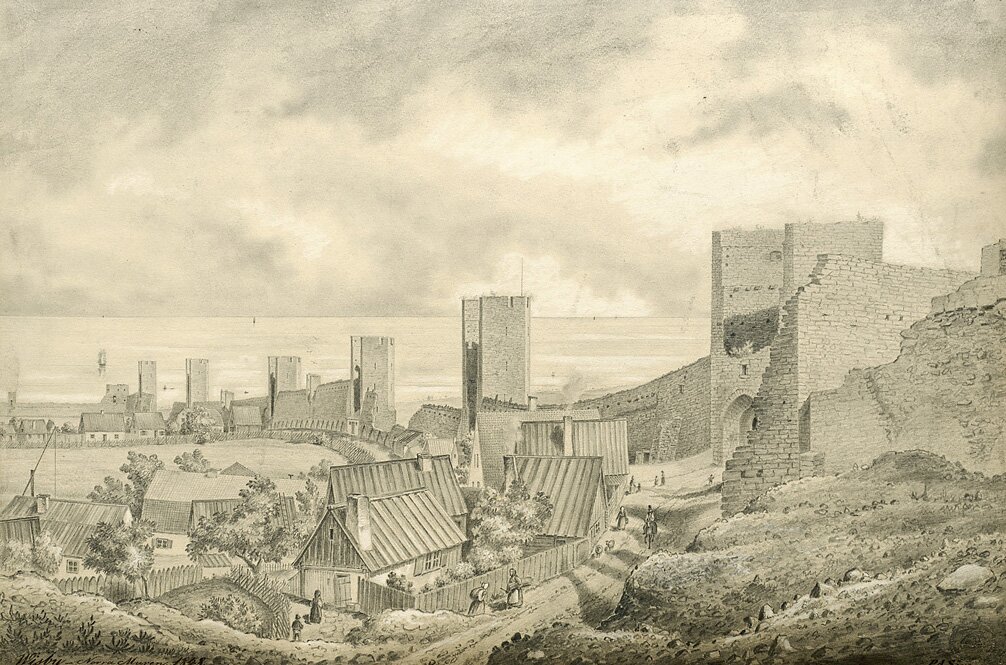
Many medieval cities were surrounded by fortifications and a moat. The inhabitants of the city were proud of them. The fortifications protected them from the invasion of foreign troops and robberies. One could enter a city through a gate, which was closed for the night. Often, the entrance to the city led through a drawbridge, and the gate was additionally secured with a lowered grille. The security was protected by municipal guards.
Listen to the recording and learn about the functions of a medieval city. Find out why in the Middle Ages it was said that „urban air makes you free”.
Nagranie dostępne na portalu epodreczniki.pl
Nagranie lektorskie
Urban air makes one freeThe city has always had many functions. One of them was the political function, because here was the seat of the authorities, including the church. Another was the economic function, as the city was the center of craft and trade. They were not the only activities of burghers, because the cities that were being established in Poland were granted agricultural lands or even whole villages as economic facilities. The townspeople sometimes had their own fields.
The cultural function was also important. In the city, various cultural institutions were located, and the inhabitants of nearby villages came to it for commercial purposes or looking for entertainment. Let us also mention the religious function, because churches were built in the city, usually more beautiful than those in the countryside; there were also religious orders and places of pilgrimage.
Generally, the city was associated with comforts, especially to the inhabitants of villages. Above all, however, it was associated with freedom. The city created and still creates an open society. Residents from other cities, and especially from the country came to it. After all, as the old saying went, „urban air makes you free”. If a peasant, a serf of a given feudal party, even voluntarily left his property and settled in the city, after a few years he obtained municipal rights. Of course, provided that he made a roof over his head and had a permanent source of income. Thanks to this principle, ambitious and enterprising individuals from the peasant group fed the burgher estate.
However, freedom was not the same for everyone - the inhabitants were divided. The classical division, based on the economic criterion, is the division into patricians, commoners and plebs. Only the first two categories counted: those living inside the wallswalls, owners of plots and houses. Only they had rights and were citizens of the city.
Source: Antoni Barciak, Urban air makes one free.
How many city functions have been mentioned during the recording? Select the correct answer.
- one
- two
- four
- any
Read the text below and explain how a town was governed.
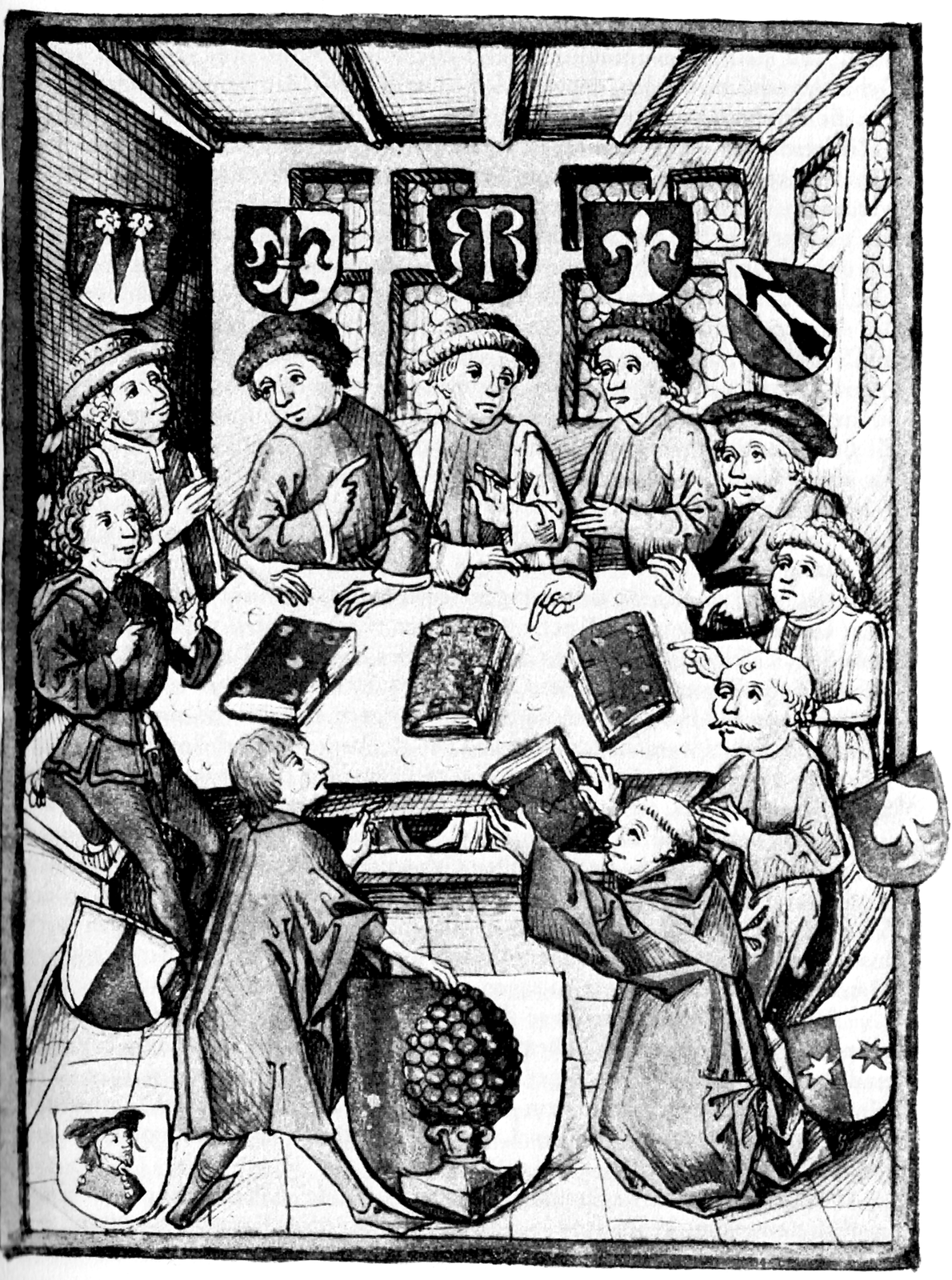
The urban community operated according to the principles of law, which were given to medieval cities. The inhabitants elected the city authorities. It was a town council with a mayormayor at its head and the council of justice. The members of town council, called councilorscouncilors, decided on the most important issues for the city: they set laws and taxes, they decided on trade issues. The mayor was the most important official in the city. He was the one who guarded the observance of borough rights. Local jurors tried the criminals caught in the city. These municipal authorities are called self‑government authorities. It was the townspeople who decided on their own and their city’s destiny.
Municipal self‑governmentMunicipal self‑government has survived to this day. Today, many cities are run by city councils and the mayormayor is the most important official.
Analyze a map showing the colonization of Polish lands in the 13th‑14th centuries.
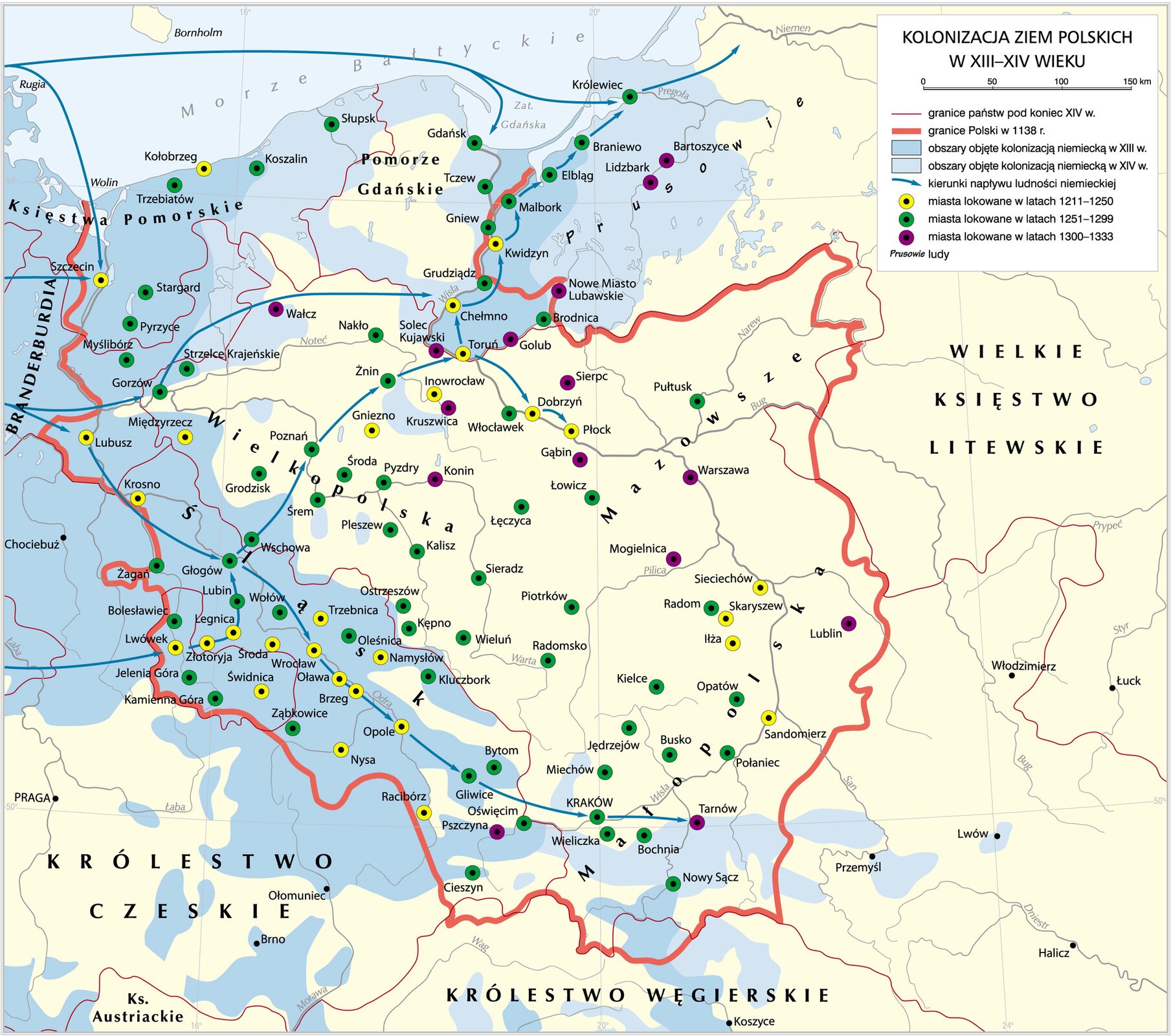
Look at the map showing the colonization of Polish lands in the 13th–14th centuries. Pay attention to the number of cities founded in subsequent periods: in the years 1211-1250, 1251-1299, 1300-1333. Try to estimate which of them are the most numerous. On this basis, arrange the information from the map key in the order from the highest to the lowest number of cities.
- cities founded in the years 1211-1250
- cities founded in the years 1251–1299
- cities founded in the years 1300-1333
Complete the sentence, summarizing your estimates.
1251-1299, 1300-1333, 13th century, 1211-1250, second, 14th, first
Most cities in Poland were founded between ........................, that is in the ........................ half of .........................
Keywords
city, colonization, town, council, urban
Glossary
kupiec.
rzemieślnik.
burmistrz – najważniejszy urzędnik w mieście.
samorząd miejski – władze miejskie wybierane spośród mieszkańców danego miasta.
mury miejskie.
rajcy – członkowie rady miejskiej.