The period of "Sturm und Drang” in painting
to characterize the Sturm und Drang period in art
to discuss important works of art of the Polish and European Romanticism period
to indicate the characteristics of romantic paintingromantic painting in the works of art
to formulate conclusions regarding the romantic worldview based on the viewed works of art
Before the lesson
Visit virtual National Museum in Krakow. Visit the Gallery of 19th‑century Polish Art in the Kraków Cloth Hall (Sukiennice) – focus on the room: „Romanticism, towards national art”.
Romantic painting
The beginning of the 19th century was a time of Napoleonic wars and political conflicts in Europe. The uprisings in Greece against the Ottoman Empire, in Spain fighting against the French Empire or in Poland struggling with the three invaders favored the emergence of a new, emotionally involved civic attitude.
Complete the following fragment with the appropriate words. Check the meaning of the words you don't know.
emotions, Orient, criticized, heroes, nature, elements, social, antique, contemplation, moral, fantasy
The romantics not only .......................... the current political and .......................... situation, but also focused on the dramatic existence of the individual. They were also characterized by a special admiration of .......................... – understood as a domain of uncontrollable ........................... The artists combined realism with visionariness, individualism with turning to history, the world of .......................... with exoticism. The .......................... trend, with its sensuality, mystery and cruelty, introduced uncommon .......................... and the richness of the unknown fairytale world to literature and painting.
Explain the meaning of the term Sturm und Drang. List the characteristics of this time period. Do you know any literary works that were created at the time?
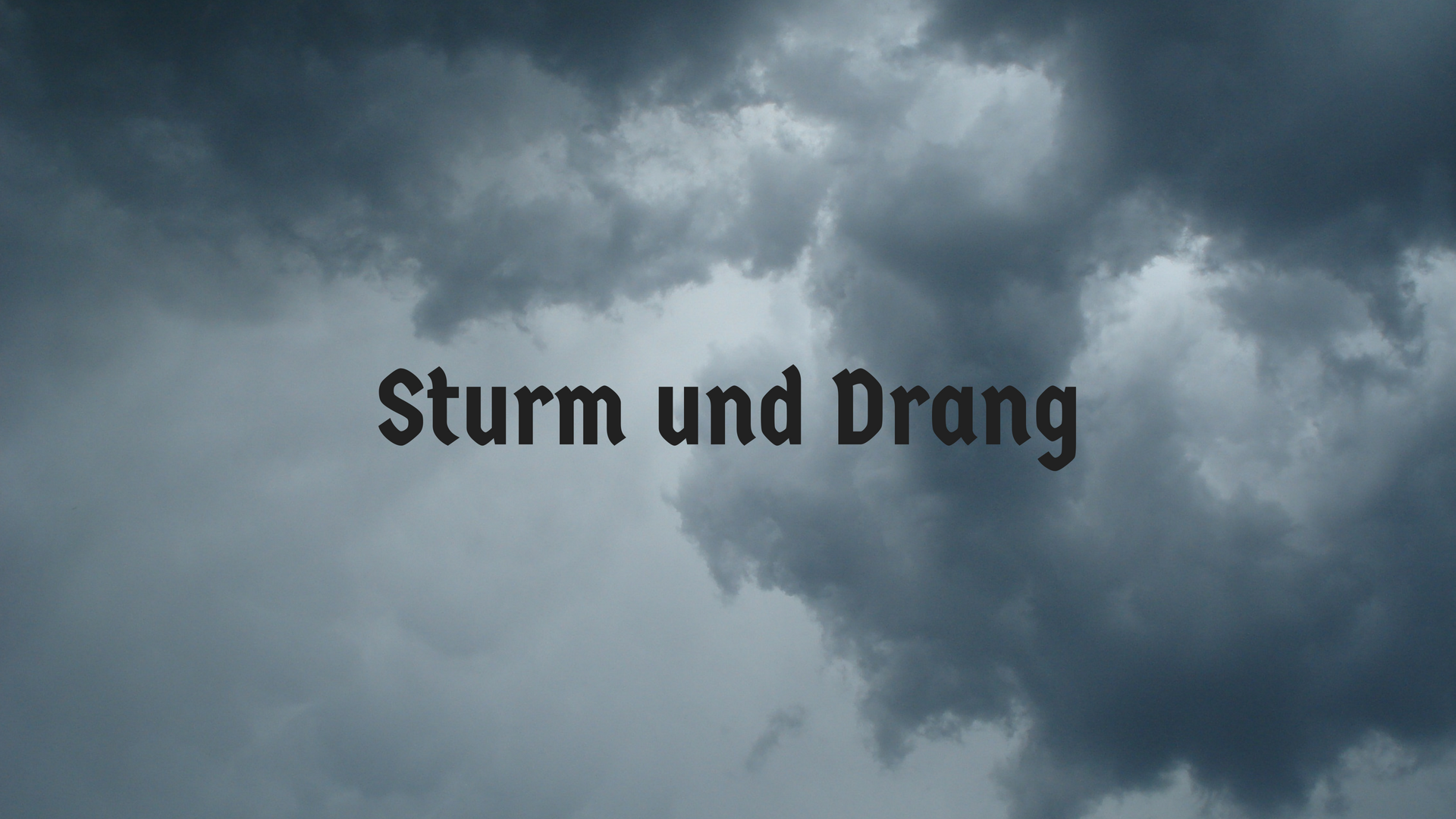
Get acquainted with the presentation on the most important subjects taken up by romantic painters.
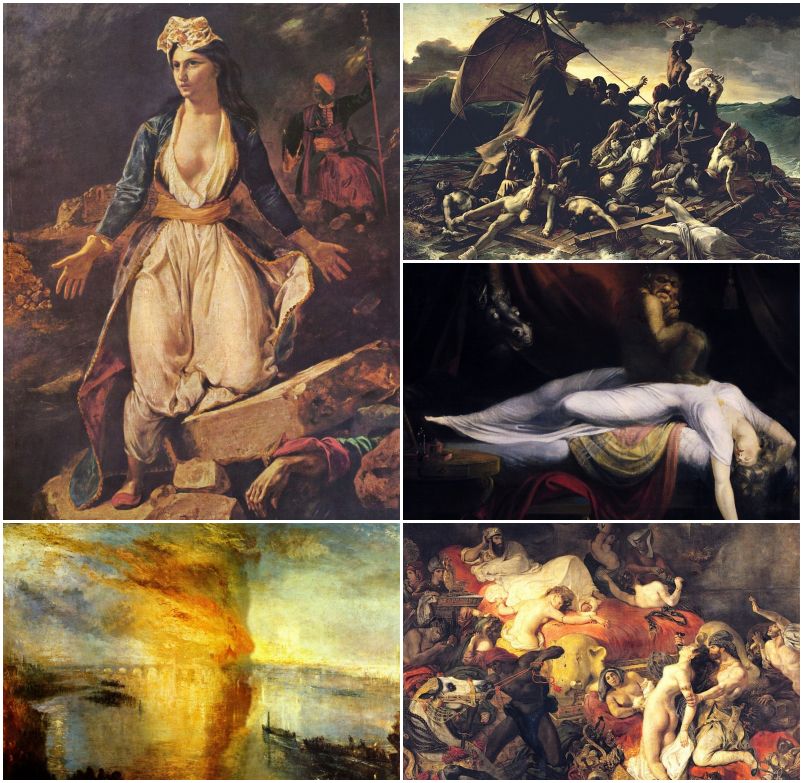
1. REVOLTS AND LIBERATION FIGHTS The subject of the independence of Greece, subjected to the Turkish yoke, was vividly debated by the Romantics. George Byron, who went to fight alongside the Greeks against the Ottomans, died in the repeatedly besieged and liberated, thanks to the support of foreigners, Missolungi. Delacroix presented the allegorical personification of Greece after Missolungi's capitulation. A woman in a traditional Hellenic robe, leaning on fragments of the walls of the destroyed city, has been defeated, but she is ready to drop her shackles. (based on Ilaria Ciseri, Romanticism: 1780–1860: the birth of a new sensitivity)
Eugène Delacroix, Greece on the Ruins of Missolonghi (1826)
2. THE DRAMAS OF EXISTENCE In the summer of 1816, as a result of the captain's mistake, the frigate "Medusa" sank off the coast of Africa with one hundred and fifty people on board, several of which were found drifting on a raft two weeks later. Géricault read a book written by a doctor, who was a survivor of the disaster, describing incidents of cannibalism that took place there, he also got acquainted with other reports of survivors. The creation of the Raft was preceded by dozens of composition studies, including numerous auxiliary sketches in the morgue. (based on Anna Lewicka-Morawska, Spór Ingres - Delacroix, [w:] tejże, Sztuka świata, t. 8, Warszawa 1994, p. 97.)
Théodore Géricault, The Raft of the Medusa (1819)
3. THE POWER OF NATURE AND THE ELEMENTS Exhibited in 1835 Turner's The Burning of the Houses of Lords and Commons caused a great stirring among artists. His boldness in depicting the phenomena of flames, smoke, and flares on the water was admired, as was the artist's mastery, but at the same time the audacity of color combinations shocked many viewers. (based on Maria Rzepińska, Historia koloru w dziejach malarstwa europejskiego, Warszawa 1989, p. 452–453)
William Turner, The Burning of the Houses of Lords and Commons (1835)
4. VISIONS AND FANTASIES Romanticism was characterized by irrationalism and a taste for the extraordinary and fantasy. The Swiss painter Johann Heinrich Füssli (1741-1825) explored other realms of the imagination. His painting depicts the demons of the subconscious released during sleep - the emanations of animal and erotic instincts. The artist focused on the mysterious areas of the human soul and psyche. The head of a blind mare emerging from behind the curtain is the personification of the worst kind of dream - a nightmare.
Johann Heinrich Füssli, The Nightmare (1781)
5. ORIENTALISM AND EXOTICISM The pictorial splendour of this "orgy of death" is probably unprecedented in European painting. We are in a palace chamber. Sardanapalus, resting on his bed, observes the following of his order, unmoved. And according to it, everything that was the love and the delight of his life has to die: women, horses, valuables. Thus, there is slaughter around his bed. The perverse beauty of this painting was too shocking for the painting to be accepted by the audience and the critics of the Salon in 1827. (Based on: Maria Poprzęcka, Kochankowie z masakrą w tle i inne eseje o malarstwie historycznym, Warszawa 2004, p. 55–56.)
Discuss the images in pairs. Which subject did you find particularly interesting? Try to point out the characteristics common to all works.
Based on the information contained in the presentation, match the following descriptions to the appropriate images.
<i> "The Raft of the Medusa"<i/i></i>, <i>The Nightmare</i>, <i> Greece on the Ruins of Missolonghi</i>, <i> The Burning of the Houses of Lords and Commons </i>, <i>The Death of Saradanapalus</i>
| Studies depicting the cut heads of the condemned became a macabre aid for the author in the creation the painting. | |
| The painting is characterized by the splendour of the "death orgy". | |
| Echoes of the tragedy can be discerned in the bloodstained stones visible in the foreground and the body of the fallen defender. | |
| The author of the painting has been described as the perpetrator of bizarre spots of chromium, ultramarine and white. | |
| The image depicts the demons of the subconscious released during sleep. |
Get acquainted with the presentation on the most important subjects taken up by romantic painters.
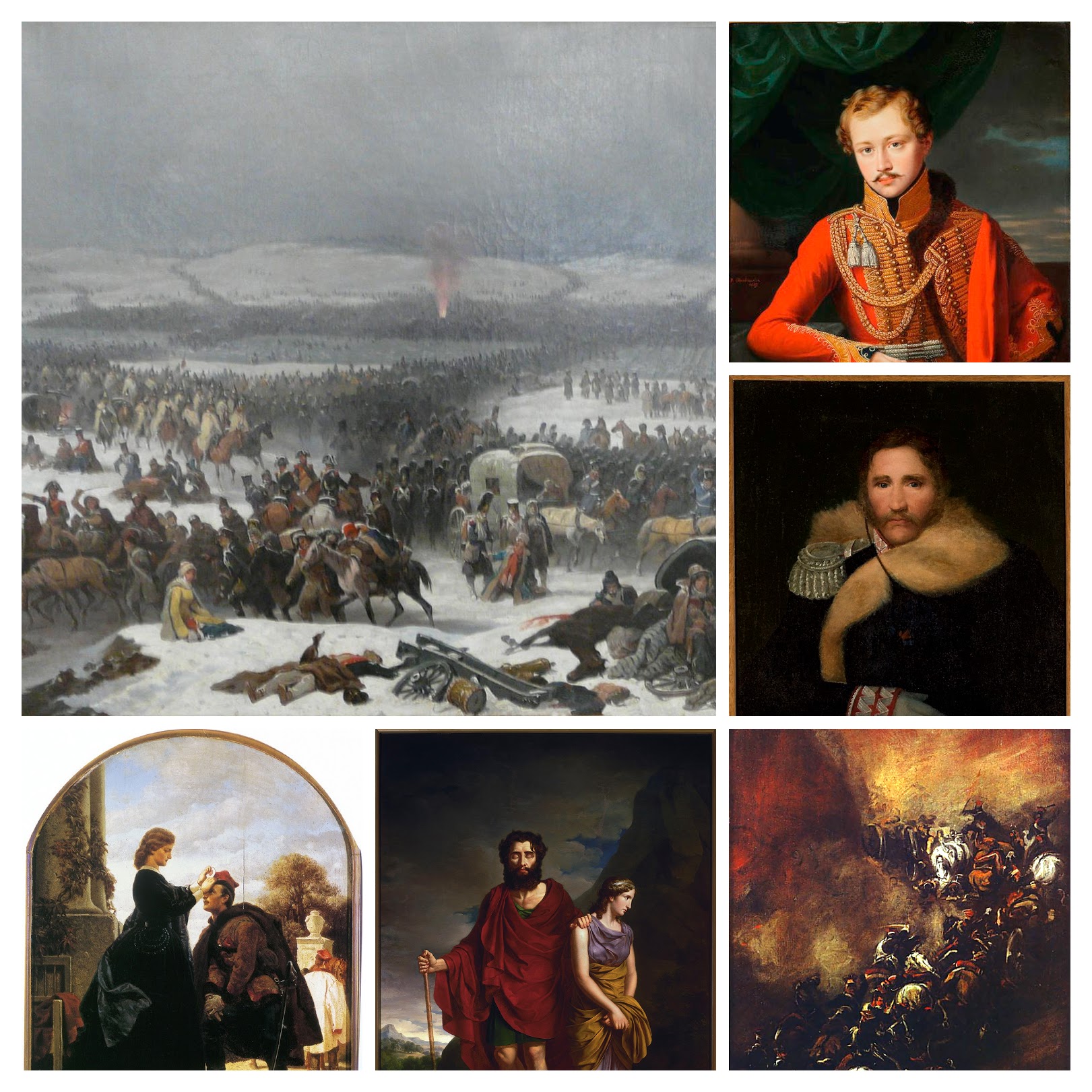
1. Portrait of Władysław Branicki Józef Oleszkiewicz, 1819, National Museum in Warsaw
2. Portrait of General Henryk Dembiński Wojciech Korneli Stattler, around 1850, National Museum in Warsaw
3. Somosierra Piotr Michałowski, 1844–1855, National Museum in Krakow
4. Oedipus and Antigonus Antoni Brodowski, 1828, National Museum in Warsaw
5. Farewell to the insurgent Artur Grottger, 1866, National Museum in Krakow
6. Crossing of the Berezina January Suchodolski, 1859, National Museum in Poznan
Based on the paintings of Turner ("The Burning of the Houses of Lords and Commons") and Delacroix ("The Death of Sardanapalus"), point out five characteristics of Romantic painting.
- a search for uniqueness
- a perfect drawing
- a surprising and bold color combination
- frenzy
- rich color
- serene and balanced composition
- powerful expression
- subtle and soft light
Keywords
romantic painting, orientalismorientalism, tragedy, sublimitysublimity, fantasyfantasy
Glossary
orientalizm
panteizm
podniosłość
fantazja
obraz romantyczny
baśniowość
sensualność