The Polish Cause in the Policies of the Big Three
what questions pertaining to the Polish cause were raised during the conferences of the Big Three;
how did the world powers shape Poland’s postwar borders;
what were the political agreements pertaining to Poland reached at the conferences of the Big Three;
why was the Provisional Government of National Unity acknowledged as the legal Polish government.
From the beginning, the Polish cause was a problematic question in the policies of the world powers, which manifested in, among others, their passivity in September 1939, despite the agreements between Poland and other states remaining in force. After Germany attacked the Soviet Union, the situation became even more complicated – suddenly, one of the aggressors came into the anti‑Hitler camp. This caused the Government‑in‑Exile’s expectations of preserving the pre‑war Eastern border of Poland and her diplomatic position to go unfulfilled.
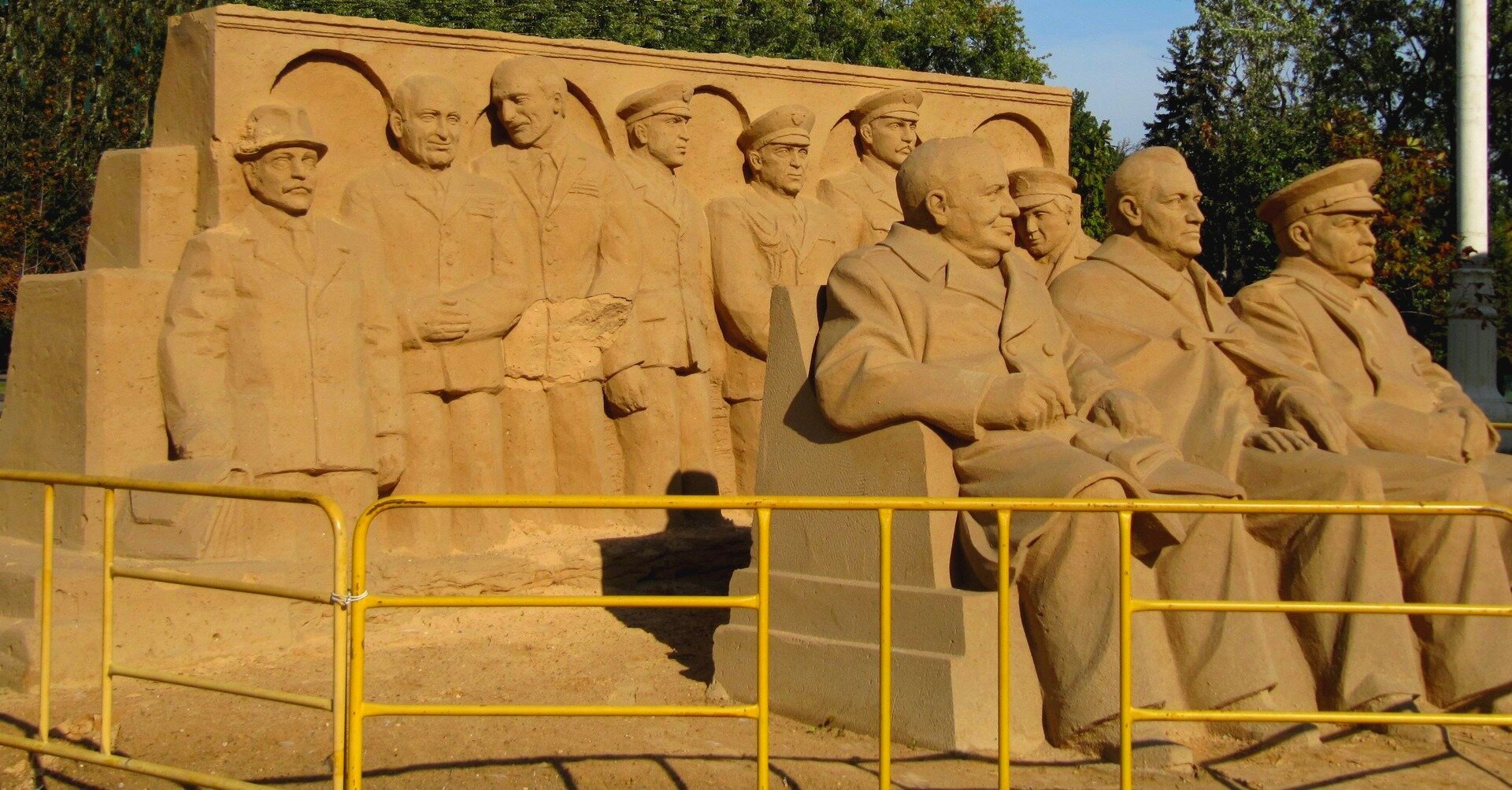
Poland’s postwar future was decided during the three conferences of the Big ThreeBig Three that took place in Tehran (1943), Yalta, and Potsdam (1945). The leaders of the three powers – the United States, Great Britain, and the Soviet Union – established the new Polish borders between the Oder and the Curzon LineCurzon Line (Tehran and Yalta), agreed for Poland to join the Soviet sphere of influence, and agreed that a coalition government would be appointed, with the preparation of free, unrestrained parliamentary elections as its task (Yalta, Potsdam).
Those decisions were confirmed in Potsdam, where the Big Three accepted the Communist‑controlled Provisional Government of National UnityProvisional Government of National Unity, created in June 1945. The shape of the Oder‑Neisse border was determined as well, leaving the post‑German territories under the Polish administration (Silesia, Pomerania, East Prussia). Unfortunately, the territories lost to the USSR in the East (KresyKresy) were never returned to Poland.
Create a crossword featuring words associated with the Curzon Line.
Familiarize yourself with the following text and do the exercise.
Agreements of the Potsdam Conference[...]
The Three Powers note that the Polish Provisional Government of National Unity, in accordance with the decisions of the Crimea Conference, has agreed to the holding of free and unfettered elections as soon as possible on the basis of universal suffrage and secret ballot in which all democratic and anti‑Nazi parties shall have the right to take part and to put forward candidates (…).
The three Heads of Government agree that, pending the final determination of Poland's western frontier, the former German territories cast of a line running from the Baltic Sea immediately west of Swinamunde, and thence along the Oder River to the confluence of the western Neisse River and along the Western Neisse to the Czechoslovak frontier, including that portion of East Prussia not placed under the administration of the Union of Soviet Socialist Republics in accordance with the understanding reached at this conference and including the area of the former free city of Danzig, shall be under the administration of the Polish State and for such purposes should not be considered as part of the Soviet zone of occupation in Germany.
Source: Agreements of the Potsdam Conference, 1945.
Indicate the conclusions of the Potsdam conference on the Polish issue.
- The Polish administration took over the former German territories in the west and north and the Free City of Gdańsk.
- Finally, the Polish government-in-exile was dissolved.
- It was confirmed that the Provisional Government of National Unity would try to conduct free elections in Poland.
Match the terms with their definitions.
a line that was supposed to demarcate the border between the Second Polish Republic and Soviet Russia, proposed by Georg Curzon at the 1920 Conference of Spa., the Polish government being the only legal representation of Polish authority according to the Polish law, existing between 1939 and 1990., the coalition government of the Republic of Poland created on 28 June 1945 as fulfillment of the stipulations of the Confernce of Yalta., the term for the leaders of three Allied states during World War II (Roosevelt, Churchill and Stalin) who discussed the matters of the war and the future shape of the world., a forced deportation from one’s place of living. Oftentimes associated with changes to borders resulting from conflicts., secret structures of the Polish state existing during World War II under the German and Soviet occupation. It existed from 27 September 1939 until 1 July 1945.
| Big Three | |
| Government-in-Exile | |
| Polish Underground State | |
| Provisional Government of National Unity (TRJN) | |
| Curzon Line | |
| Expulsion |
Keywords
Government‑in‑Exile, Polish Underground State, Curzon Line, Kresy, expulsion
Glossary
Wielka Trójka – określenie przywódców mocarstw alianckich podczas II wojny światowej (Stanów Zjednoczonych – Roosevelt; Wielkiej Brytanii – Churchill; ZSRS - Stalin), którzy omawiali sprawy wojenne i kształt przyszłego świata na konferencjach międzynarodowych w Teheranie (1943), Jałcie i Poczdamie (obie 1945).
Rząd na uchodźstwie – polski rząd w latach 1939‑1990 będący jedyną legalną, w świetle polskiego prawa, kontynuacją władz Rzeczypospolitej Polskiej po wybuchu II wojny światowej. Jego siedzibą był najpierw Paryż, następnie Angers, a od 1940 r. Londyn. Zakończył swoją działalność po wyborze Lecha Wałęsy na prezydenta Polski.
Polskie Państwo Podziemne – istniejące w czasie II wojny światowej tajne struktury państwa polskiego na terenach okupowanych przez III Rzeszę i ZSRS. Istniało od 27 września 1939 do 1 lipca 1945 roku.
Nagranie dostępne na portalu epodreczniki.pl
Nagranie słówka: Provisional Government of National Unity (TRJN)
Tymczasowy Rząd Jedności Narodowej (TRJN) – koalicyjny rząd Rzeczypospolitej Polskiej powołany do życia 28 czerwca 1945 r. jako realizacja postanowień konferencji jałtańskiej. Na jego czele stanął Edward Osóbka‑Morawski. Istniał do 1947 r. Został uznany przez państwa koalicji antyhitlerowskiej, które tym samym odmówiły dalszego poparcia dla Rządu RP na uchodźstwie.
Linia Curzona – zaproponowana na konferencji w Spa, w 1920 r. przez Georga Curzona linia, która miała wyznaczać granicę między II Rzeczpospolitą a Rosją Sowiecką. Miała przebiegać od Karpat, Przemyśla, wzdłuż Bugu, przez Brześć do Grodna. Po II wojnie światowej w wyniku ustaleń konferencji Wielkiej Trójki stała się wschodnią granicą Polski.
Kresy Wschodnie – określenie wschodnich terenów Rzeczypospolitej w okresie międzywojennym, stanowiących dzisiaj ziemie należące do Ukrainy, Białorusi i Litwy.
Proces szesnastu – pokazowy proces polityczny szesnastu przywódców Polskiego Państwa Podziemnego, porwanych przez Rosjan i oskarżonych o kolaborację z Niemcami. Miał miejsce w Moskwie w czerwcu 1945 r.
Wysiedlenie – przymusowy nakaz opuszczenia miejsca zamieszkania. Często jest związany ze zmianami granic w wyników konfliktów.