RZONtPxnCj57e

The Sixteenth Century – Revision

Map of the world by Gerardus Mercator from 1587
Source: Rumold Mercator, Orbis terrae compendiosa descriptio, 1587.

Link to the Lesson

You will learn
  • What influenced the decisions to undertake large‑scale sea expeditions;

  • Who were the great discoverers;

  • What was the Reformation;

  • What religions came into being as a result of the Reformation;

  • What characteristics distinguished the RenaissanceRenaissanceRenaissance.

R9WQpUWZADKKi
Nagranie abstraktu

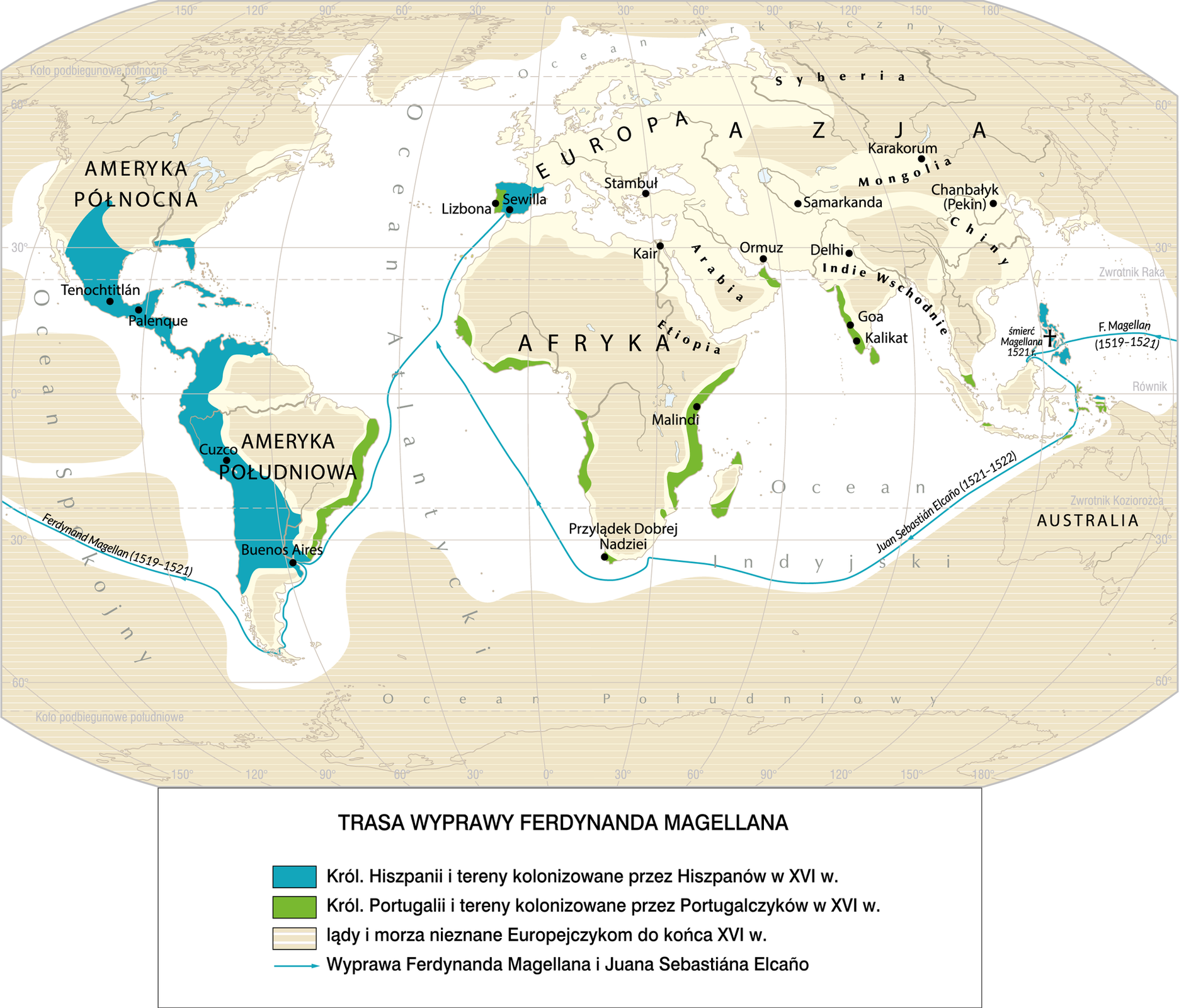
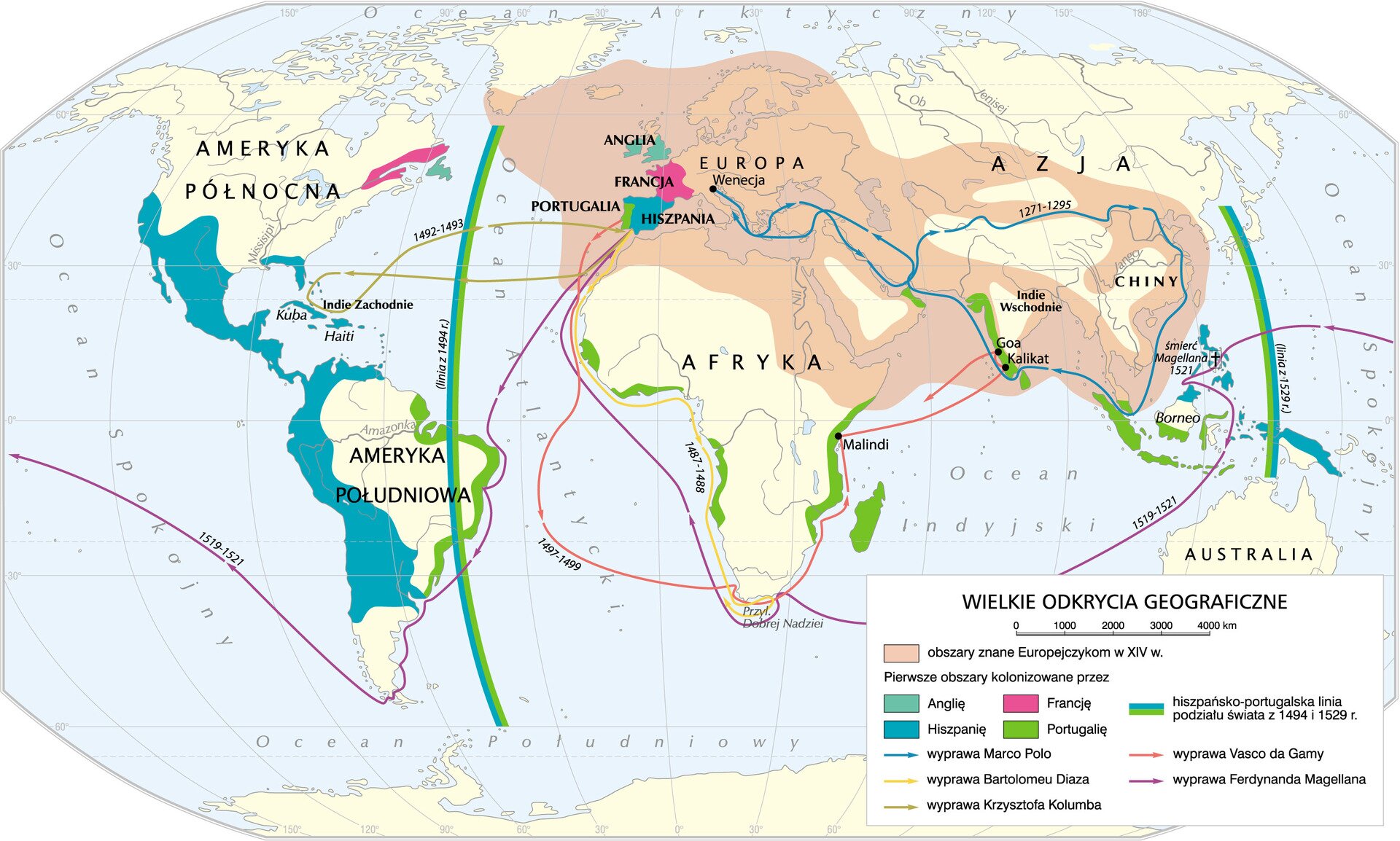
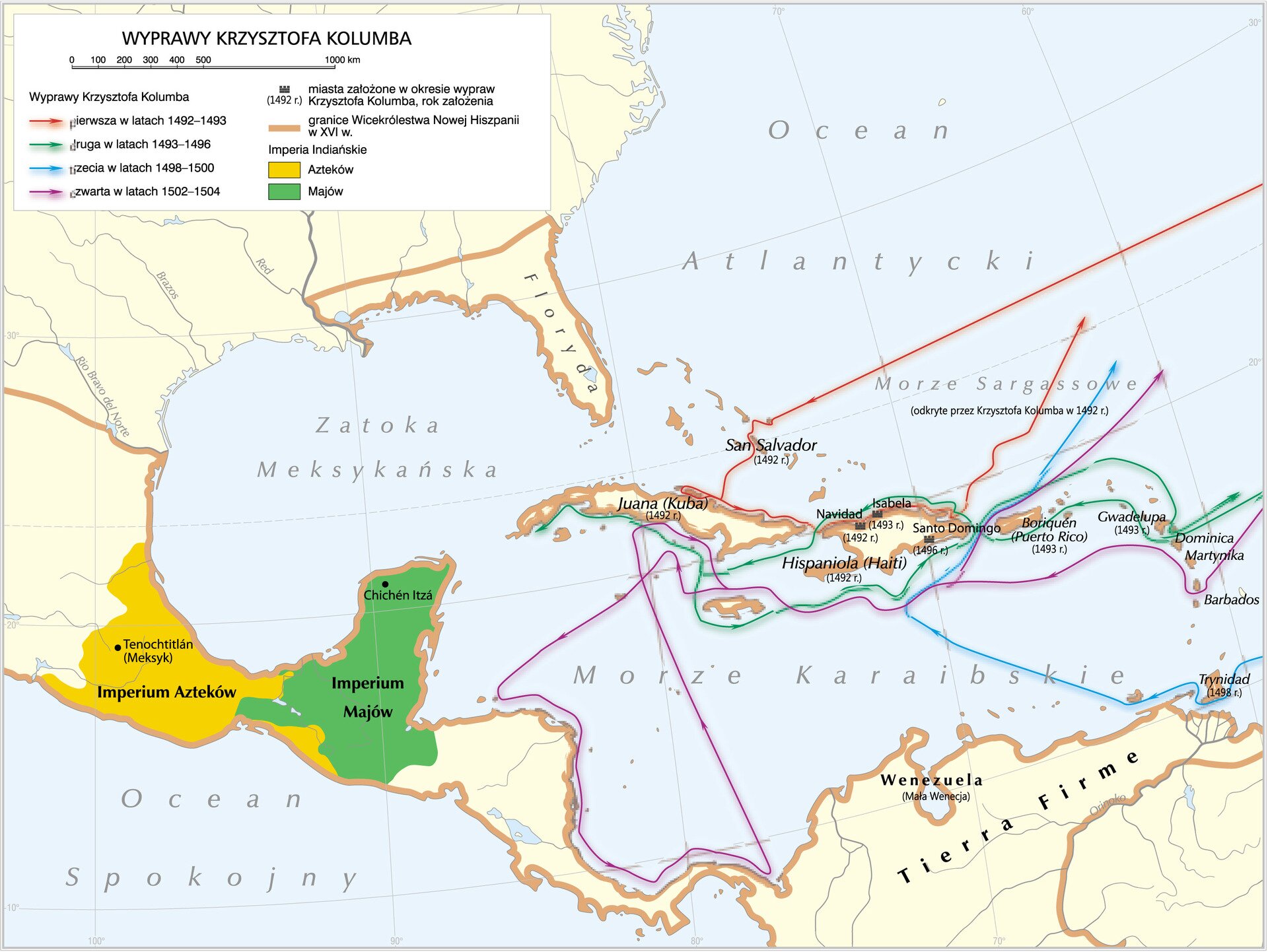
The great geographical discoveries led to the expansion of knowledge about the world and other cultures. The most important states to take part in the discoveries were Spain and Portugal. The faraway sea expeditions were facilitated by the invention of the caravelCaravelacaravel, the compass, and the astrolabeAstrolabeastrolabe. Some of the famous discoverers were: Bartolomeu Dias (Cape of Good Hope), Vasco da Gama (the way to India), Christopher Columbus (discovery of America), Ferdinand Magellan (cruise around the globe). The geographical discoveries bore many consequences, both positive and negative. Owing to their faraway voyages, the Europeans learned of and brought to Europe many new plants, such as beans, potatoes, peppers, pineapples and corn. Owing to the faraway expeditions, cartographyCartographycartography developed. New, more precise maps were created. Unfortunately, the geographical discoveries entailed the destruction of the rich Maya, Aztec and Inca civilizations. After the discoverers’, the conquistadors followed, bringing about the collapse of the indigenous cultures.

The sixteenth century brought the RenaissanceRenaissanceRenaissance (“rebirth”) era upon Europe. It was born in Italy and marked the beginning of the modern era. The rulers and rich magnates, wishing to demonstrate their identities, would build palaces, adorned with paintings and sculptures commissioned to artists. PatronagePatronagePatronage was a very important institution of the era. Some of the most excellent artists of the RenaissanceRenaissanceRenaissance hailed from Italy: Leonardo da Vinci, Rafael Santi, Michelangelo. One should also mention an important Polish scientist, Nicholas Copernicus. He created the heliocentricheliocentrismheliocentric theory, stating that Earth orbited the Sun. The artists of the RenaissanceRenaissanceRenaissance took their models from the Antiquity. The ideal Renaissance man was one of wide‑ranging education, sought to learn about the world, and drawing joy from the surrounding nature. A new philosophical current – HumanismHumanismHumanism – was born, with Terence’s words, “I am a man: and I deem nothing pertaining to man is foreign to me”, became its credo.

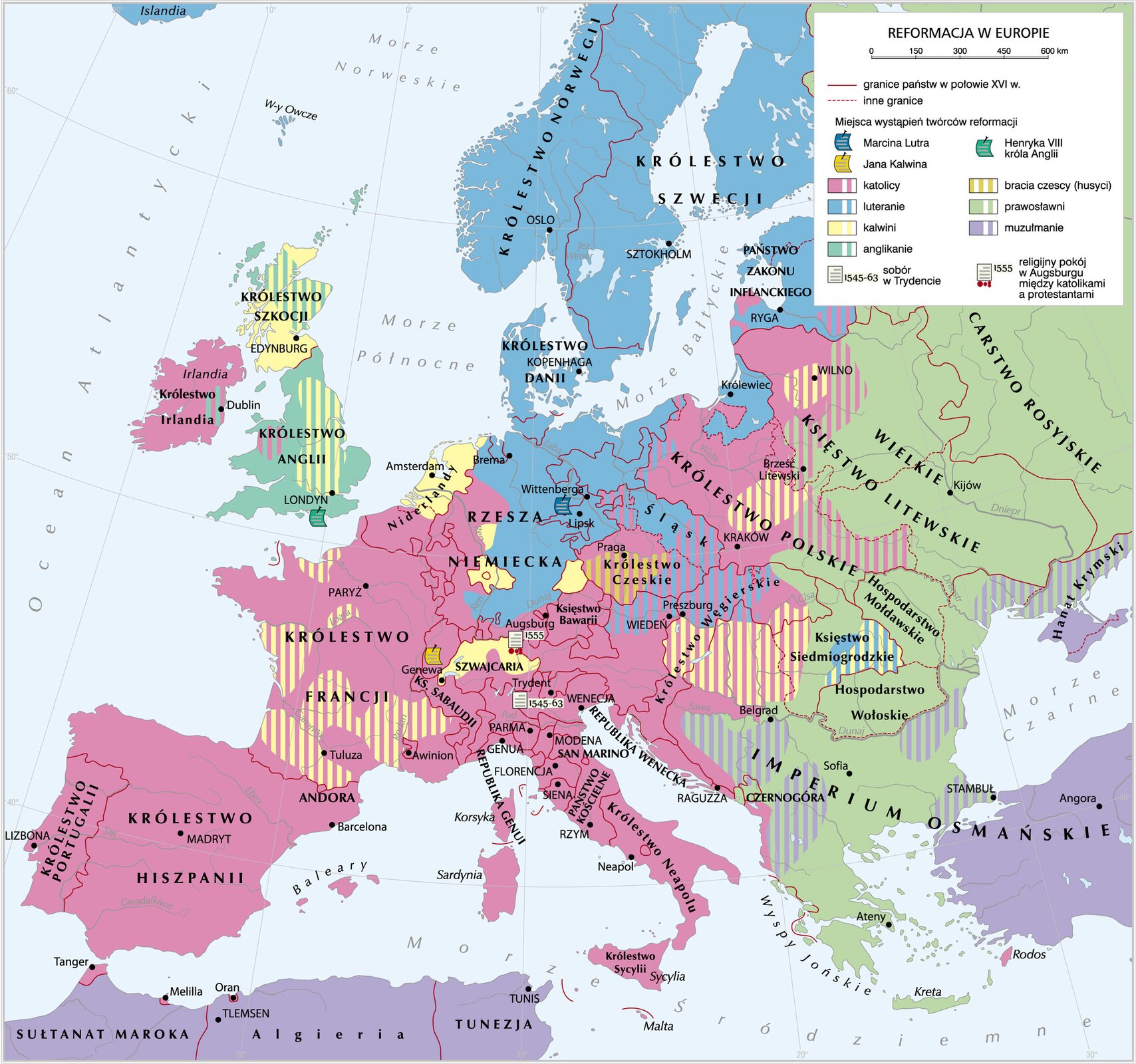
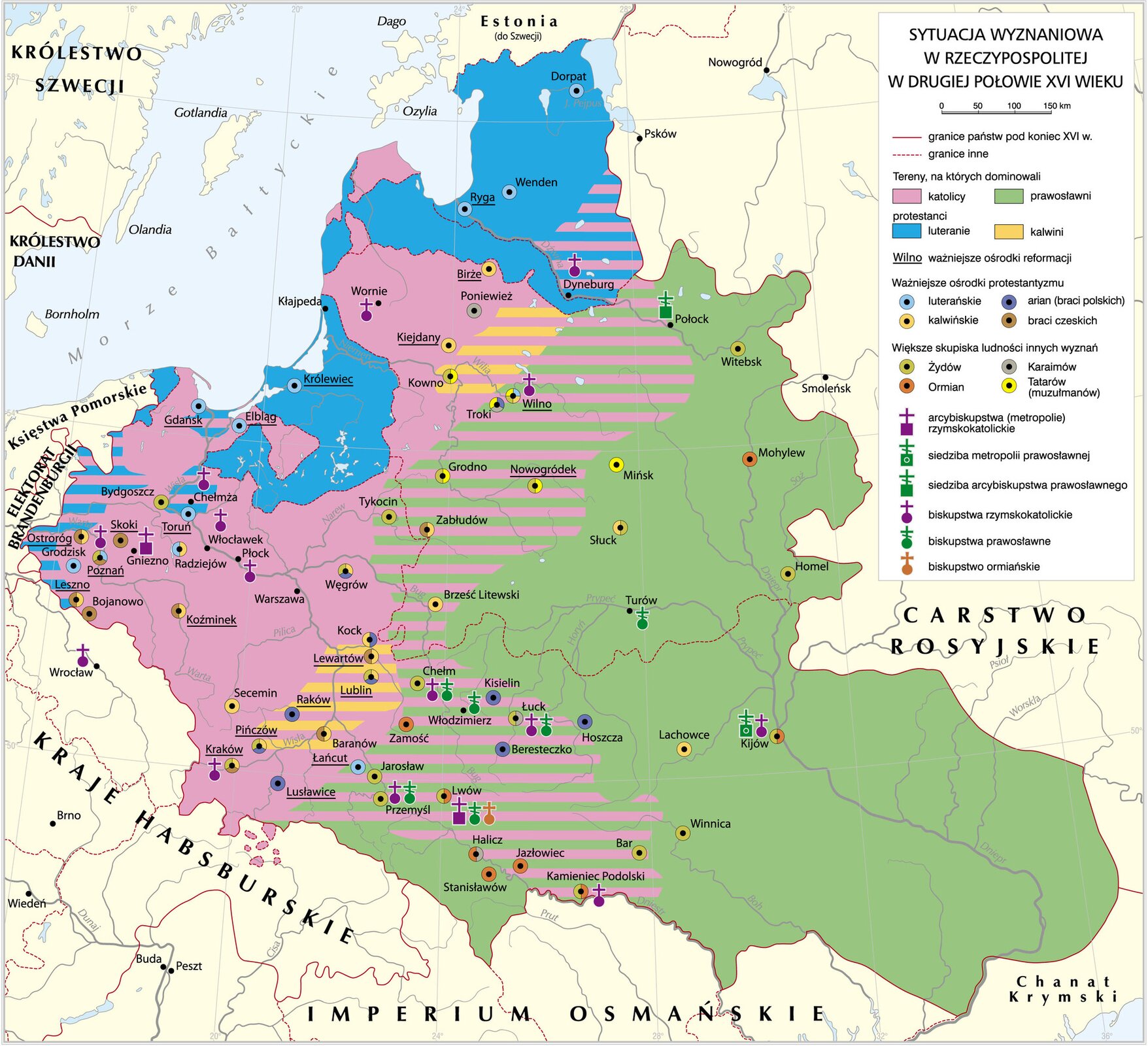
Another important event of the sixteenth century was the reformation. It was started by the German monk Martin Luther, who sought to thoroughly reform the Church. Another reformist, John Calvin, preached the doctrine of predestinationPredestinationpredestination, or the view that man has no influence on whether he would be saved or condemned, as his fate was predetermined by God. As a result of the Reformation, new protestant denominations were born: Lutheranism, Calvinism, and Anglicanism, the latter of which were introduced in England by King Henry VIII.

1
Task 1

Study the important events of the sixteenth century. Think about the impact these breakthroughs have on people's lives in the 21st century.
R1eUvFtj3MIcL
The events of the sixteenth century 23.9.1513 The discovery of the Pacific Vasco Núñez de Balboa becomes the first European to reach the shore of the Pacific Ocean., 20.9.1519 Magellan’s expedition Five ships under Ferdinand Magellan’s command depart from the San Lucar port. It would be the first expedition to circle the entire globe., 31.10.1517 The Theses of Luther Martin Luther publishes his 95 Theses, beginning the Reformation., 1512 The frescos of the Sistine Chapel Michelangelo finishes one of his greatest works., 1511 ”The School of Athens” Rafael Santi finishes work on his wall painting.
Source: domena publiczna.
Task 2
Znajdź informacje na temat najważniejszych odkryć i powstawania pierwszych kolonii w szesnastym wieku. Co odkrył Kolumb, Vasco da Gama i Magellan. Jakie było znaczenie ich wypraw?
RoQVA7C4cpMzz1
Exercise 1
Match the terms with their definitions. Patronage Możliwe odpowiedzi: 1. the doctrine stating that a human’s fate and whether they will be saved or condemned are predetermined, and therefore humanity does not possess free will., 2. the main philosophical current of the Renaissance, ascribing the central place and the highest value in the world to humanity., 3. the science of maps and their creation., 4. the settlement of new places outside of a state’s borders., 5. the care extended over artists by rulers or rich magnates., 6. (Italian: “rinascità” – rebirth, awakening, bloom) the era in European culture that lasted from the fifteenth until the sixteenth century., 7. the human being as the center of interest of art and culture. Renaissance Możliwe odpowiedzi: 1. the doctrine stating that a human’s fate and whether they will be saved or condemned are predetermined, and therefore humanity does not possess free will., 2. the main philosophical current of the Renaissance, ascribing the central place and the highest value in the world to humanity., 3. the science of maps and their creation., 4. the settlement of new places outside of a state’s borders., 5. the care extended over artists by rulers or rich magnates., 6. (Italian: “rinascità” – rebirth, awakening, bloom) the era in European culture that lasted from the fifteenth until the sixteenth century., 7. the human being as the center of interest of art and culture. Humanism Możliwe odpowiedzi: 1. the doctrine stating that a human’s fate and whether they will be saved or condemned are predetermined, and therefore humanity does not possess free will., 2. the main philosophical current of the Renaissance, ascribing the central place and the highest value in the world to humanity., 3. the science of maps and their creation., 4. the settlement of new places outside of a state’s borders., 5. the care extended over artists by rulers or rich magnates., 6. (Italian: “rinascità” – rebirth, awakening, bloom) the era in European culture that lasted from the fifteenth until the sixteenth century., 7. the human being as the center of interest of art and culture. Antropocentrism Możliwe odpowiedzi: 1. the doctrine stating that a human’s fate and whether they will be saved or condemned are predetermined, and therefore humanity does not possess free will., 2. the main philosophical current of the Renaissance, ascribing the central place and the highest value in the world to humanity., 3. the science of maps and their creation., 4. the settlement of new places outside of a state’s borders., 5. the care extended over artists by rulers or rich magnates., 6. (Italian: “rinascità” – rebirth, awakening, bloom) the era in European culture that lasted from the fifteenth until the sixteenth century., 7. the human being as the center of interest of art and culture. Carthography Możliwe odpowiedzi: 1. the doctrine stating that a human’s fate and whether they will be saved or condemned are predetermined, and therefore humanity does not possess free will., 2. the main philosophical current of the Renaissance, ascribing the central place and the highest value in the world to humanity., 3. the science of maps and their creation., 4. the settlement of new places outside of a state’s borders., 5. the care extended over artists by rulers or rich magnates., 6. (Italian: “rinascità” – rebirth, awakening, bloom) the era in European culture that lasted from the fifteenth until the sixteenth century., 7. the human being as the center of interest of art and culture. Colonization Możliwe odpowiedzi: 1. the doctrine stating that a human’s fate and whether they will be saved or condemned are predetermined, and therefore humanity does not possess free will., 2. the main philosophical current of the Renaissance, ascribing the central place and the highest value in the world to humanity., 3. the science of maps and their creation., 4. the settlement of new places outside of a state’s borders., 5. the care extended over artists by rulers or rich magnates., 6. (Italian: “rinascità” – rebirth, awakening, bloom) the era in European culture that lasted from the fifteenth until the sixteenth century., 7. the human being as the center of interest of art and culture. Predestination Możliwe odpowiedzi: 1. the doctrine stating that a human’s fate and whether they will be saved or condemned are predetermined, and therefore humanity does not possess free will., 2. the main philosophical current of the Renaissance, ascribing the central place and the highest value in the world to humanity., 3. the science of maps and their creation., 4. the settlement of new places outside of a state’s borders., 5. the care extended over artists by rulers or rich magnates., 6. (Italian: “rinascità” – rebirth, awakening, bloom) the era in European culture that lasted from the fifteenth until the sixteenth century., 7. the human being as the center of interest of art and culture.
Task 3
Znajdź informacje w dostępnych ci źródłach na temat religijnego podziału Europy po pokoju w Augsburgu w 1555 roku.

Keywords

discoveries, Reformation, Renaissance

Glossary

Caravela
Caravela
RRLUFJMkT5wtn
Nagranie słówka: Caravela

Karawela – rodzaj trzymasztowego statku, którego ruchome żagle umożliwiały żeglowanie pod wiatr.

Distance recorder
Distance recorder
Rwem1TMnJ9UXJ
Nagranie słówka: Distance recorder

Log – przyrząd, który służył do mierzenia szybkości statku.

Patronage
Patronage
R1L5aampbuqYo
Nagranie słówka: Patronage

Mecenat – opieka nad artystami i twórczością artystyczną sprawowana przez osoby majętne i wpływowe. .

Renaissance
Renaissance
RMO6zpqfeb93k
Nagranie słówka: Renaissance

Renesans – (wł. rinascita; odrodzenie, obudzenie się, rozkwit) epoka trwająca w Europie w XV i XVI w.

Humanism
Humanism
Rz6ZXHbeBXpLv
Nagranie słówka: Humanism

Humanizm – główny prąd umysłowy epoki odrodzenia, przypisujący człowiekowi centralne miejsce w świecie i najwyższą wartość.

Antropocentrism
Antropocentrism
Rndaim1piO3oz
Nagranie słówka: Antropocentrism

Antropocentryzm – pogląd, według którego człowiek jest ośrodkiem i celem wszechświata.

Astrolabe
Astrolabe
RZA2tq1eCVct9
Nagranie słówka: Astrolabe

Astrolabium – przyrząd, dzięki któremu żeglarze określali położenie geograficzne statku na morzu według położenia gwiazd.

Cartography
Cartography
R1NvgfEb2ApjM
Nagranie słówka: Cartography

Kartografia – nauka o mapach i sposobach ich tworzenia.

Colonization
Colonization
ReoK7yrcx2em6
Nagranie słówka: Colonization

Kolonizacja – zasiedlanie nowych miejsc poza granicami państwa.

Heliocentrism
Heliocentrism
RAlkBoSkNxbLt
Nagranie słówka: Heliocentrism

Heliocentryzm – teoria budowy Układu Słonecznego, której twórcą jest Mikołaj Kopernik, głosząca, że w centrum tego układu znajduje się Słońce, wokół którego krąży Ziemia wraz z innymi planetami.

Predestination
Predestination
R1Tt1CrP3V9WA
Nagranie słówka: Predestination

Predestynacja – pogląd głoszący, że człowiek z góry skazany jest przez Boga na zbawienie lub potępienie.