Two aggressors - the September campaign
what the concept of Blitzkrieg was – BlitzkriegBlitzkrieg;
where and when World War II began;
about the most important battles of the September campaign;
what was meant by the „Phoney WarPhoney War”;
when and why the USSR attacked Poland;
about the conduct of Polish commanders and politicians during the September campaign;
what were the consequences of the disaster of the defensive wardefensive war of 1939.
The lack of reaction by the Western nations to the events of 1938‑39 convinced Hitler that in a future war with Poland, their Allies would not keep their promises. The German's lightening war or (BlitzkriegBlitzkrieg) assumed it would defeat its neighbour in the shortest possible time, particularly in view of the disproportion of numbers of weapons, the size of the armies and their alliancealliance with the Soviet Union.
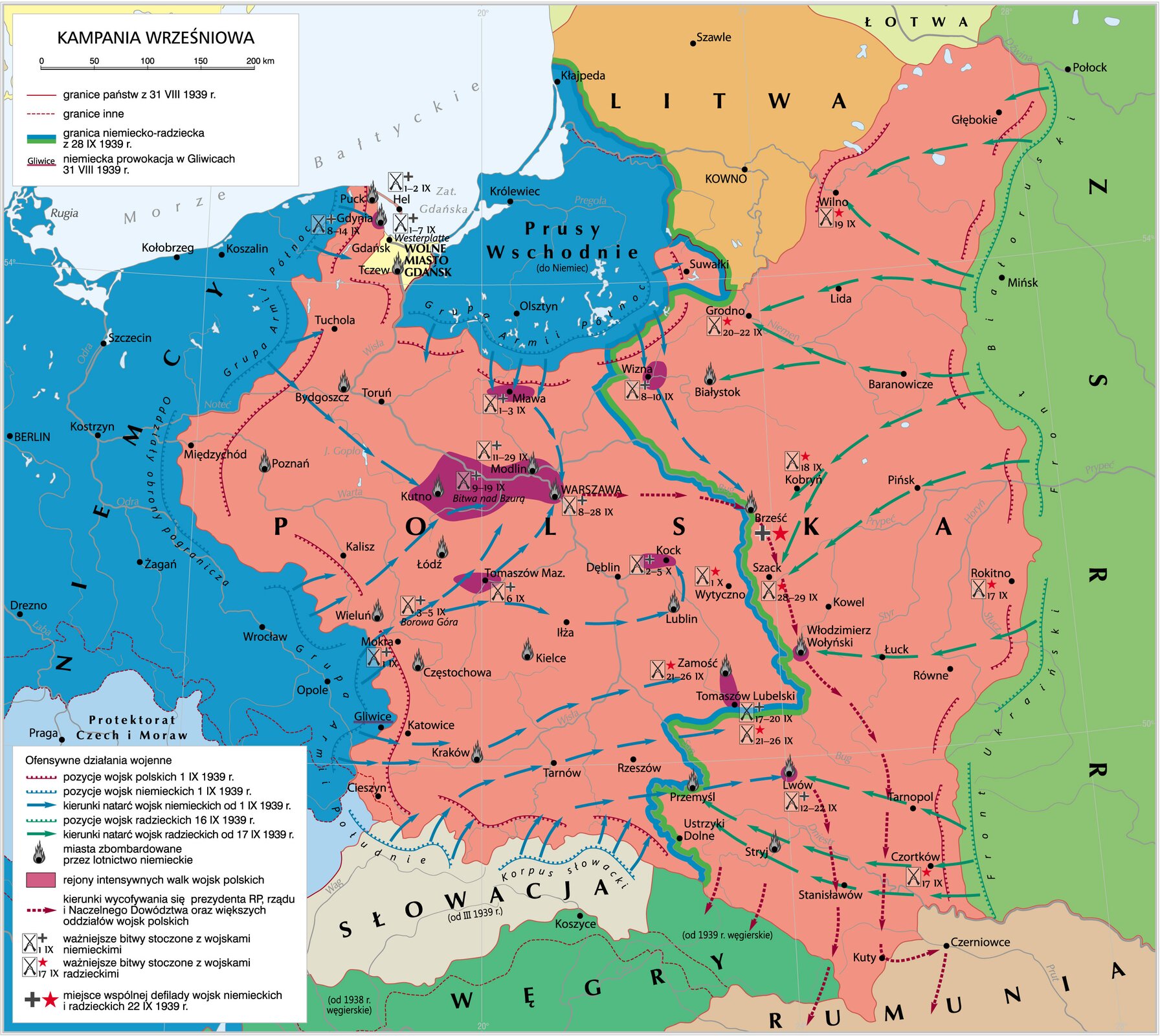
As a result of this on September 1st, 1939, without having declared war, the army of the Third Reich attacked Poland from the north, west and south. The war between Poland and Germany had begun, and Great Britian and France, Poland's allies, joined on our side on September 3rd. Unfortunately they provided no armed assistance, limiting their actions to propaganda. This began the period known in the West as the „Phoney WarPhoney War”.
Germany sent more than 1.5 million soldiers to the war with Poland. Poland could provide less than 1 million. This military advantage and subsequent defeats in battles (at Mokra, on the Warta, near Mława and the occupations of Krakow and Łódź) meant that the Polish army was quickly forced onto the defensive. The largest battle of the September campaign, which took place from the 9th to 16th September, was the Battle of the Bzura, where nearly half a million soldiers fought on both sides. Despite some successes and a primary advantage, this also ended in defeat and opened our opponent's route to Warsaw.
A crucial event was the attack from the east by the Red ArmyRed Army which began on the 16th and 17th of September. This led to the evacuation of the Polish government and the commander in chief to Romania. Deprived of Allied aupport and having a weakened army, Poland was unable to fight on two front and defend the capital, which finally fell into enemy hands when it capitulatedcapitulated on September 28th. At the end of the month the defensive warthe defensive war, despite ongoing fighting in Polesie, was practically over and the lands of the Republic were divided between the two occupiers–the Third Reich and the Soviet Union. Poland again disappeared from the map of Europe.
Try to recall the most important events of the September campaign and organize your knowledge. Which of the events were the most important and why?
Why was one of the first actions taken by the Germans to destroy Polish national symbols?
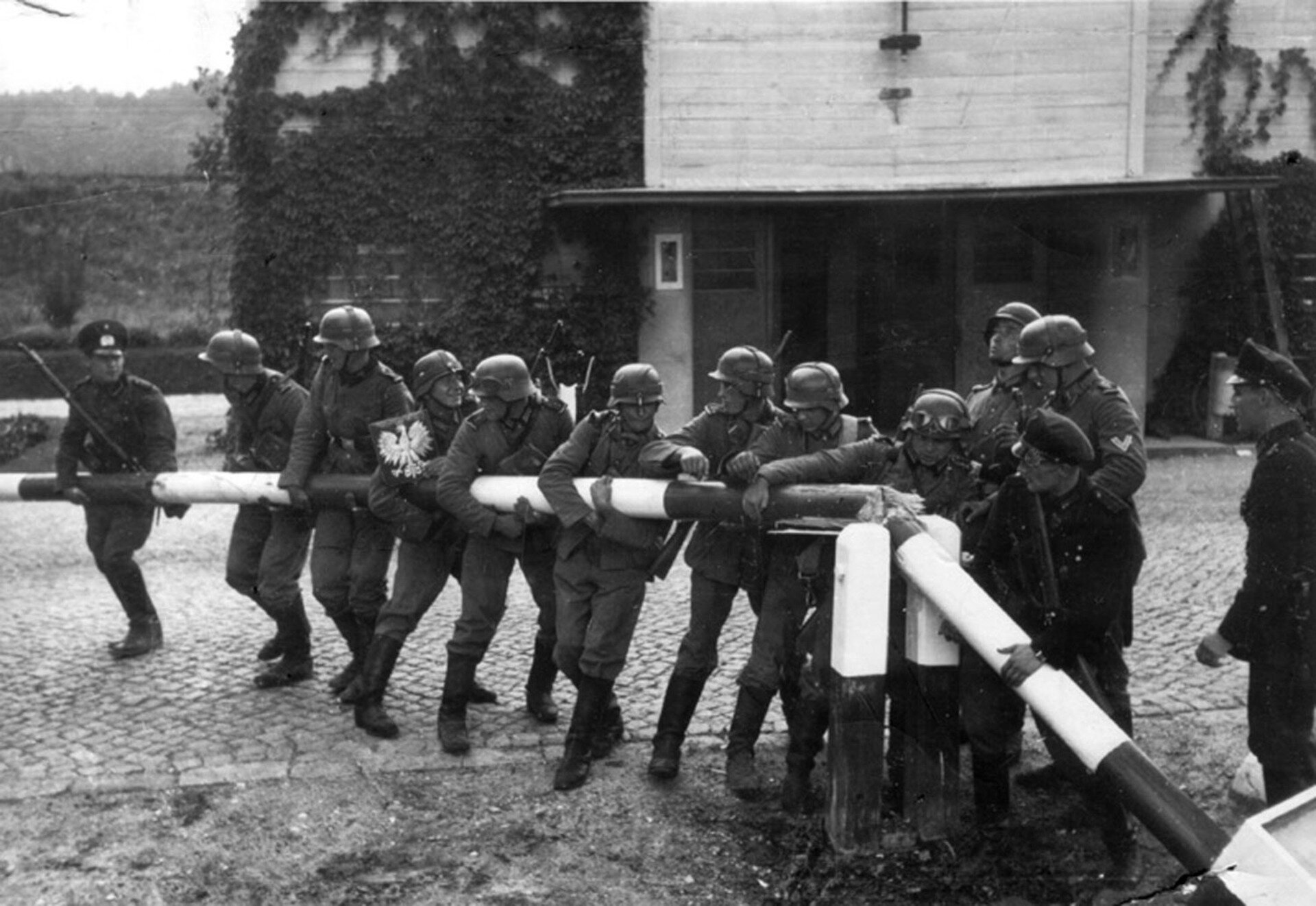
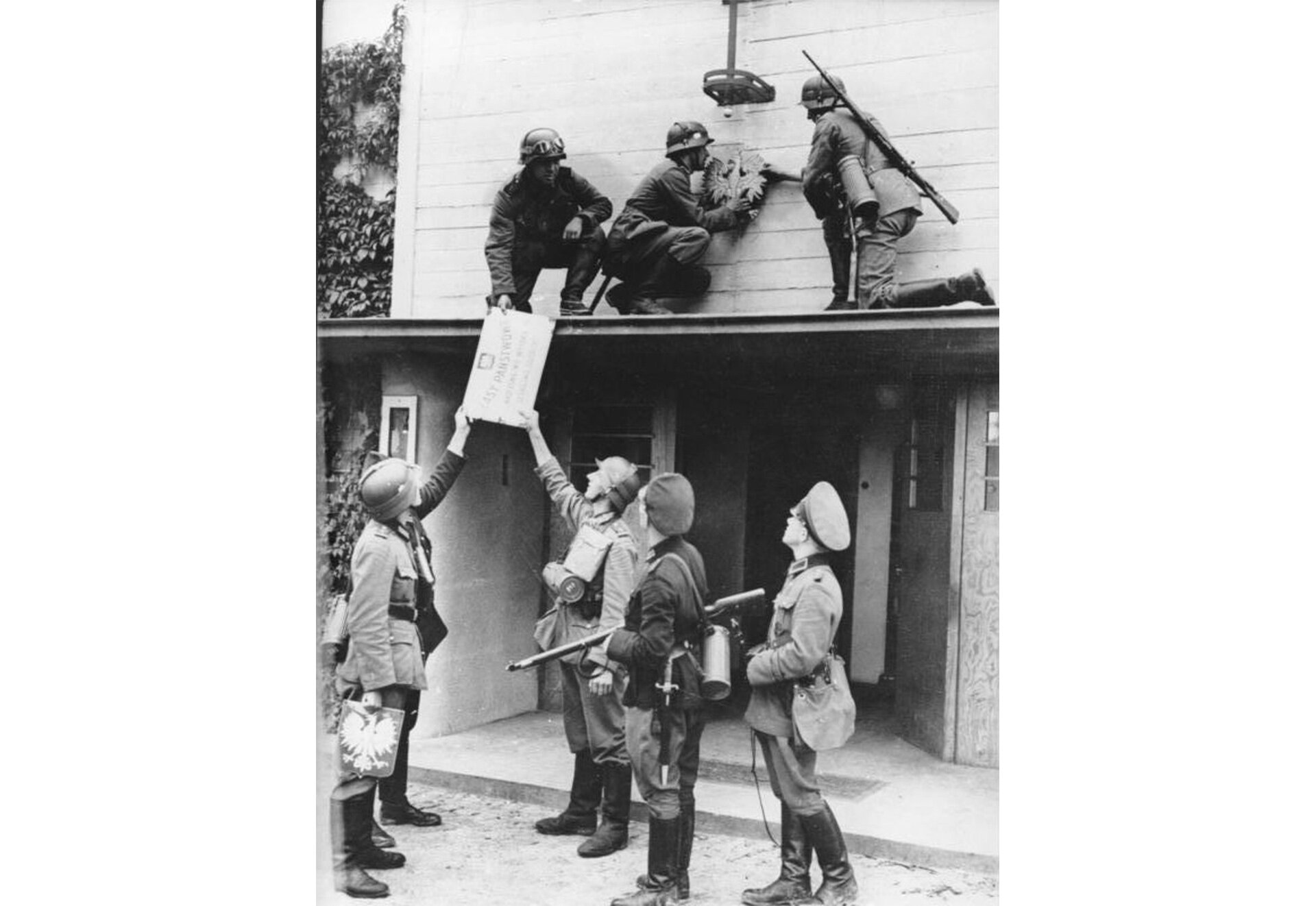
Read the memoirs of Captain Franciszek Dąbrowski and examine the fragment below from K.I. Gałczyński. What demonstrated the exceptional heroism of the defenders?
1939, September, 3-4. The Defense of Westerplatte3rd of September
At dawn, a new avalanche of fire and iron falls upon us. The artillery fire had a harassing character, it stays longer on the barracks building.
The canonade breaks at 7.00. The assault, which is now taking place, is cautious and has a rather reconnaissance character. Germans are examining our defense capabilities. Later its relatively calm again.
The radio reports on the aerial battle over Toruń [...] and the unchangeable words „Westerplatte is still fighting”.
4th of September
After the night, which passed calmly, we found ourselves again under the fire of Schleswig's artillery and land batteries from Brzeźno and Wisłoujście [...].
At. At 5 pm, a very strong Nazi assault begins. This time, the Wehrmacht is attacking for the first time. Its an elite unit of Sturmpionierbatalion from Dessau. The attack was pushed back [...].
The battle staff of the barracks, guardhouses and outposts are fighting without respite, deprived of warm food and sleep. Everyone is feeling severe physical and nervous exhaustion.
Source: kpt. Franciszek Dąbrowski, 1939, September, 3-4. The Defense of Westerplatte, [w:] Westerplatte. Wspomnienia, relacje, dokumenty, Warszawa 1969, s. 19.
Pieśń o żołnierzach z Westerplatte (1939)Kiedy się wypełniły dni
I przyszło zginąć latem,
Prosto do nieba czwórkami szli
żołnierze z WesterplatteWesterplatte [...].
W Gdańsku stanęliśmy tak jak mur,
Gwiżdżąc na szwabską armatę,
Teraz wznosimy się wśród chmur,
Żołnierze z WesterplatteWesterplatte.
Source: Konstanty Ildefons Gałczyński, Pieśń o żołnierzach z Westerplatte (1939), [w:] Pieśni, 1953.
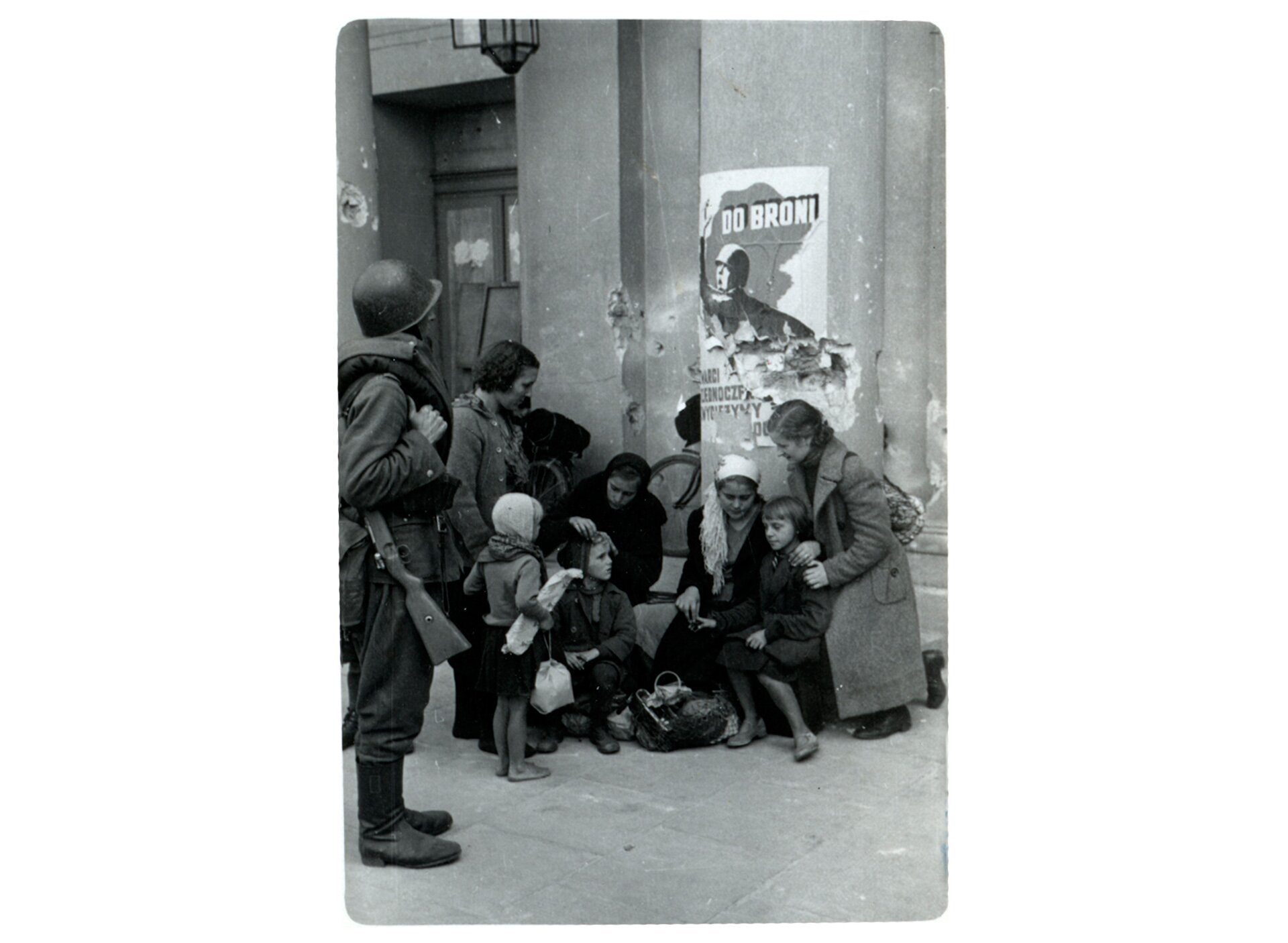
Why, despite fears of German air raids, did crowds gather for demonstrations on the streets of Warsaw after war had been declared by Germany via France and Britain?
- Poland had always organised pro-Western demonstrations.
- They were looking to a swift end to the war.
- It was believed that Western nations would take action against Germany.
Look for information as to why the Battle of Wizna is called "The Polish Thermopylae".
- There was a huge disproportion between the fighting forces of the two sides, with Poles showing great heroism.
- 300 Poles and a few thousand Germans fought here
- The stone commemorating the battle has the same inscription as the one on the stone at Thermopylae: Passer by, tell the motherland that we fought to the end, and did our duty.
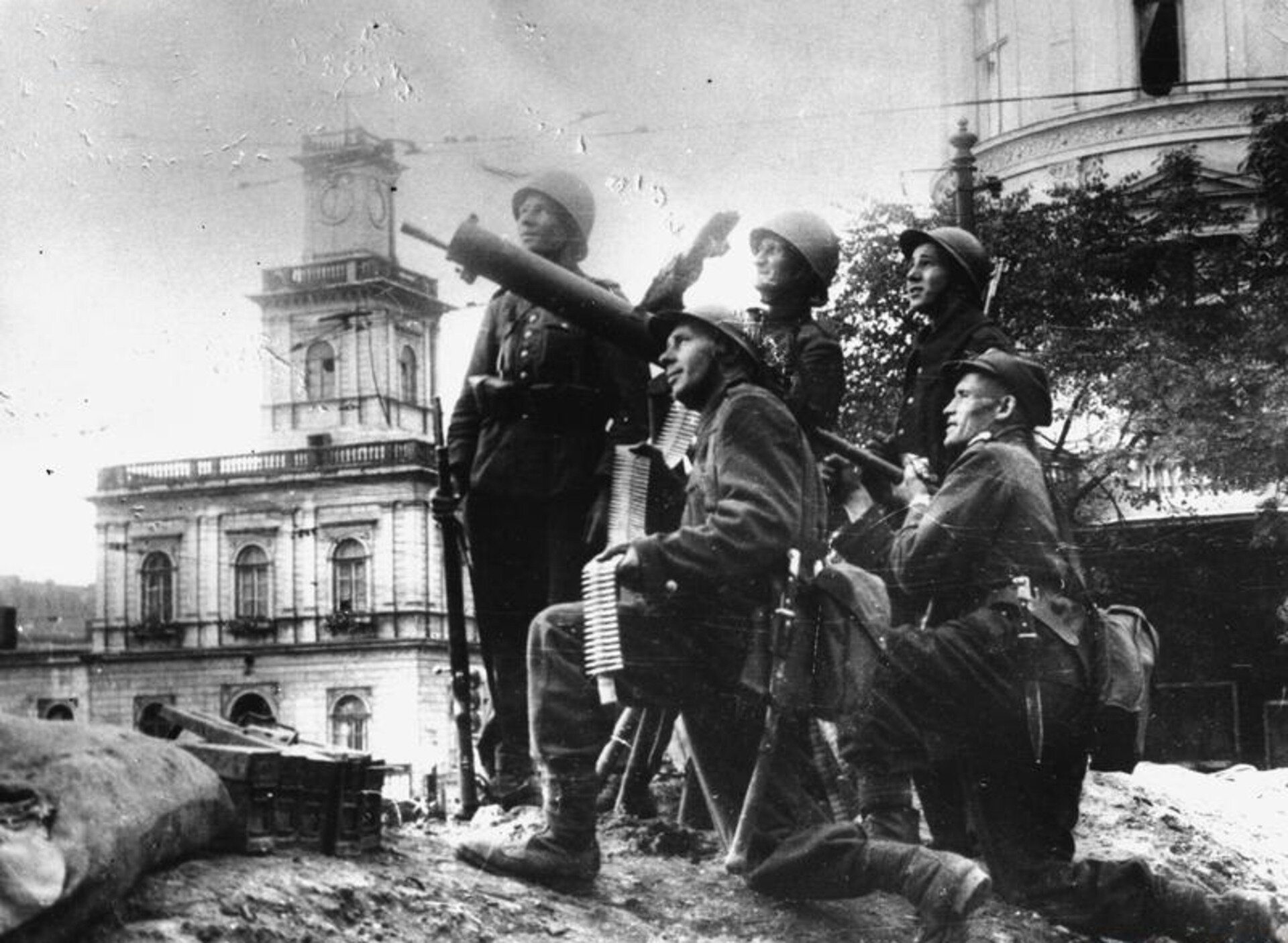
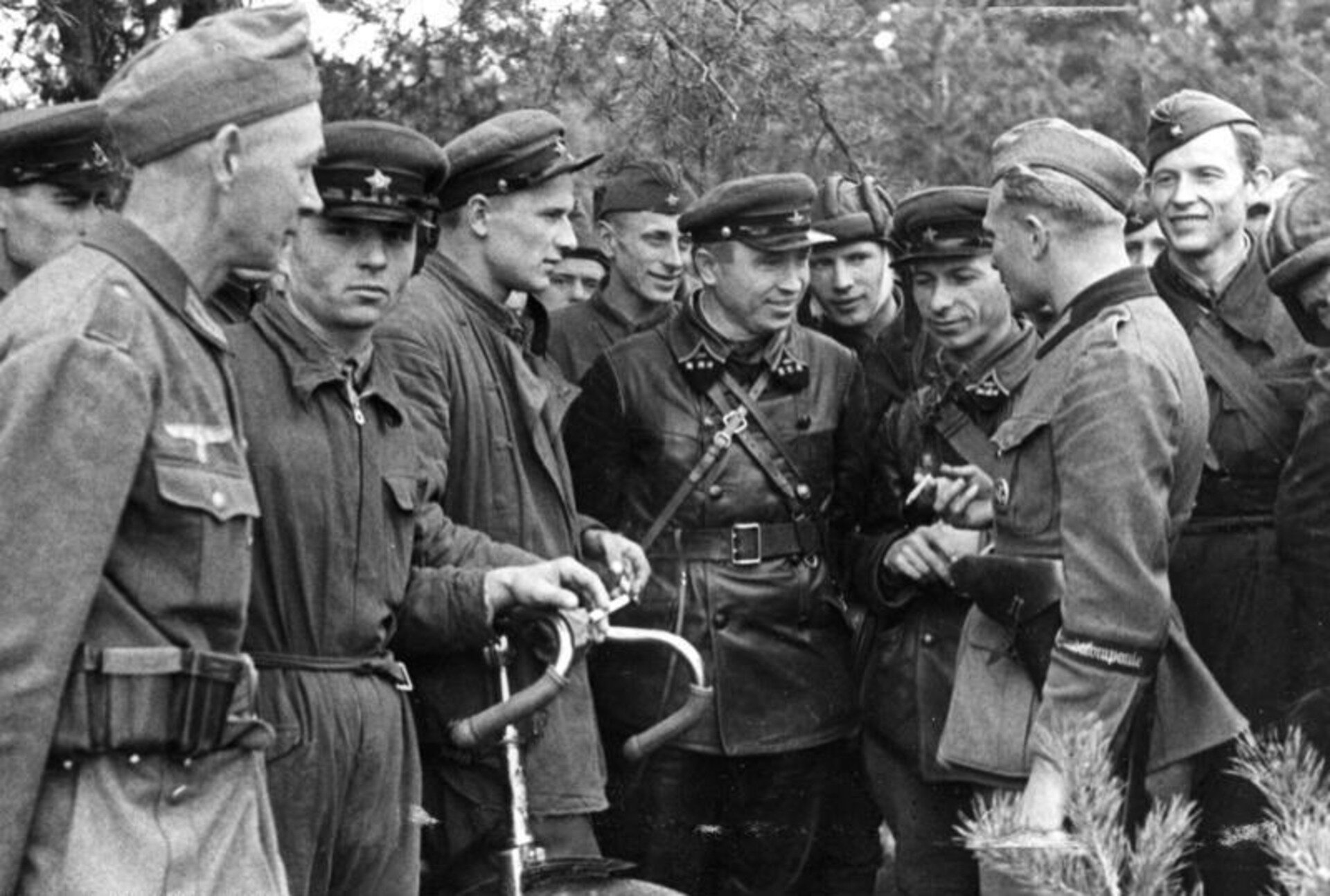
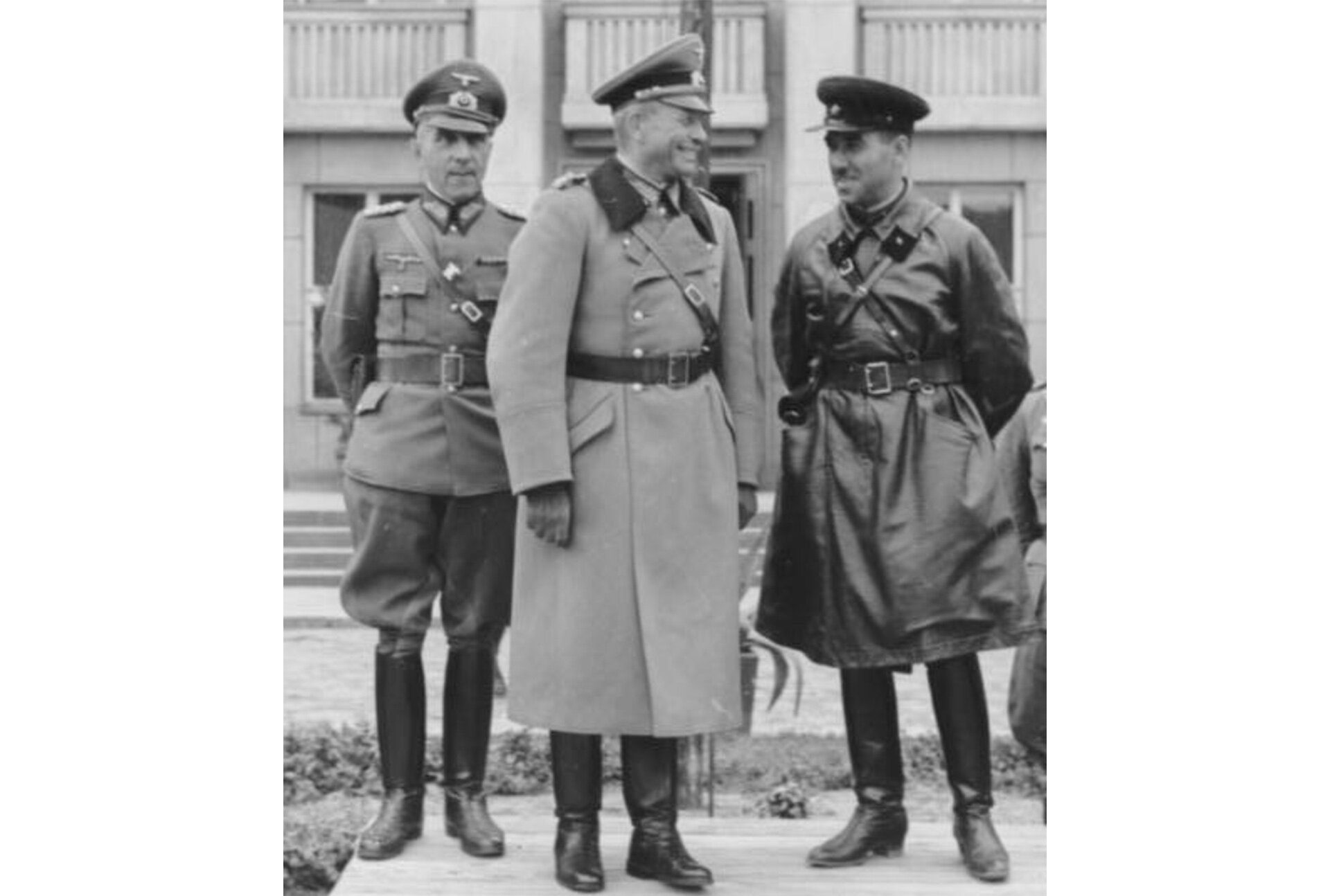
What can be concluded about Soviet‑German relations based on the pictures below?
Match the pairs: English words and Polish definitions.
the German airforce, the armed forces of Soviet Russia (1918 - 1946), in other words, a lightening war, a quick and massive attack by armed forces, usually of all types (air, land and sea), in order to seize territory, the armed forces of the Third Reich from 1939-1945, including the army, air force and navy, putting your army on the highest level of combat readiness and preparing the economy and state administration for the outbreak of war. It is announced when the country is threatened with armed conflict, an agreement between the USSR and the Third Recih on 23rd August 1939, it's secret protocol divided the territories of Poland, the surrender of all or part of one's army to the enemy. This can be unconditional or according to certain pre-set conditions. It mostly ends armed conflict, a request put by one state against another, calling for the meeting of specific demands, under threat of war or other sanctions
| Ultimatum | |
| The Ribbentrop-Molotov Pact | |
| Mobilization | |
| Blitzkrieg | |
| Luftwaffe | |
| Wehrmacht | |
| Red Army | |
| Capitulation |
Keywords
Westerplatte, September campaign, World War II
Glossary
Ultimatum – żądanie wysunięte przez jedno państwo wobec drugiego wzywające do spełnienia określonych żądań pod groźbą wybuchu wojny lub innych sankcji. Stawiane jest przeważnie w sytuacji, gdy zawiodą inne formy dyplomatyczne.
Pakt Ribbentrop‑Mołotow - porozumienie zawarte między ZSRS i III Rzeszą 23 sierpnia 1939 r., jego tajny protokół przewidywał m.in. podział ziem polskich.
Mobilizacja – postawienie armii w stan najwyższej gotowości bojowej oraz przygotowanie gospodarki i administracji państwowej do wybuchu wojny. Ogłasza się ją w momencie zagrożenia państwa konfliktem zbrojnym.
Sojusz – układ dwóch lub więcej państw lub organizacji, który ma doprowadzić do wspólnego zamierzonego celu.
wojna obronna – działania zbrojne, których celem jest obrona przed najeźdźcą.
Blitzkrieg – inaczej wojna błyskawiczna, termin oznaczający szybki i zmasowany atak siłami zbrojnymi, najczęściej wszystkich typów (lotnictwo, marynarka, wojska lądowe), w celu zajęcia kraju.
Ofensywa – gwałtowne uderzenie w przeciwnika, mające na celu przełamanie jego obrony i wdarcie się w głąb jego wojska lub terenu.
Luftwaffe – niemieckie lotnictwo wojskowe.
Wermacht – siły zbrojne III Rzeszy z lat 1935‑1945, w ich skład wchodziła armia lądowa, lotnictwo i marynarka wojenna.
Armia Czerwona – siły zbrojne Rosji Sowieckiej w latach 1918‑1946.
Dziwna wojna – określenie sytuacji trwającej od września 1939 do maja 1940 r. wojny na froncie zachodnim. Gdzie po formalnym wypowiedzeniu wojny przez Wielką Brytanię i Francję nie nastąpiły działania zbrojne.
Westerplatte – półwysep, na którym znajdowała się polska eksklawa (część terytorium) ze składnicą amunicji i jednostką wojskową. Symbol bohaterskiej obrony w czasie kampanii wrześniowej 1939 r. Jednostka skapitulowała dopiero po 7 dniach ciągłych ataków niemieckich, w obliczu ogromnej przewagi wroga i braku amunicji.
Kresy Wschodnie – określenie wschodnich terenów Rzeczypospolitej w okresie międzywojennym, stanowiących dzisiaj ziemie należące do Ukrainy, Białorusi i Litwy.
Kapitulacja – poddanie się części lub całości wojska przeciwnikowi. Może być bezwarunkowa lub pod pewnymi wcześniej ustalonymi warunkami. Najczęściej kończy konflikt zbrojny.