Village in the Middle Ages
what role the villagevillage played in the Middle Ages;
list and characterize the relations prevailing in the village, the works of its inhabitants, everyday activities and ways of spending free time;
what a peasantpeasant croftcroft was and what elements it consisted of;
what farming produce and breeding animals were in the Middle Ages.
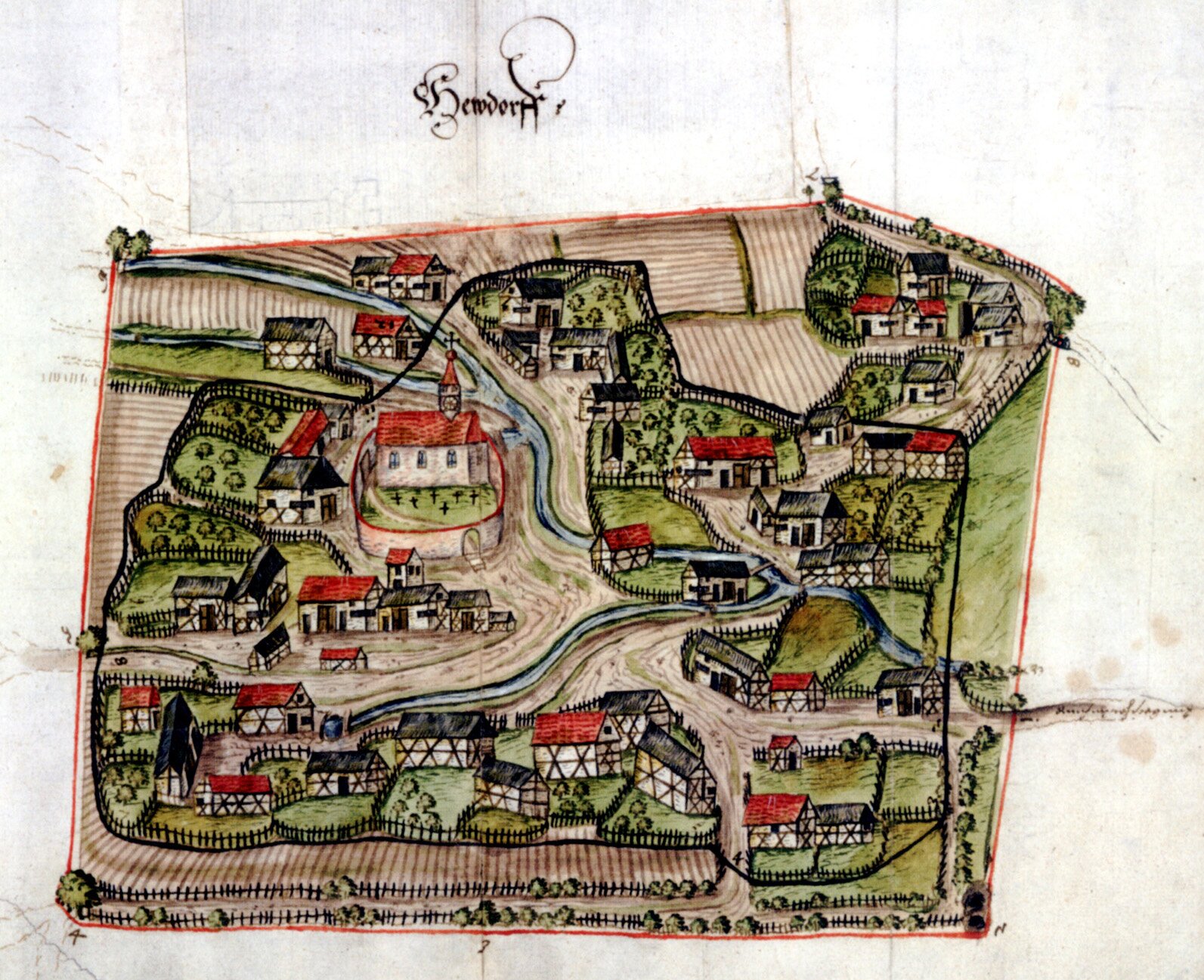
In the Middle Ages, the vast majority of people lived in the village. Village inhabitants – peasants – mainly dealt with agriculture and animal husbandry. They lived in wooden huts which, together with the farm buildings, formed a croft. Peasant crofts were first scattered over a fairly large area. Then – as a result of colonization under German law (from the 13th century) – they were concentrated in one place, e.g. around the square or along the road. The church and inninn were important places in the village.
Peasants were people who were personally free. Their right to land was limited. Peasants were not owners of the land, but only perpetual lessees thereof. This meant that after the death of the peasant, the croft and the land were taken over by his son. However, the peasant could not freely sell, pledge or divide the land. The land belonged to the king, knighthood or monasteries. For this reason, peasants paid the owner a rent in money or farming produce.
Peasants were divided into many categories. The most important (and the most numerous) were serfs, relatively wealthy farmers. They possessed a cottage and a ploughploughland with an average size of 1 lan (17–24 ha). Crofters possessed a cottage and the land, however their sizes were smaller than that of serfs. Landless population lived off work for the village mastervillage master or for richer farmers. Cottagers only possessed a cottage, and tenant farmers did not even have their houses, living in chambers separated for them.
Listen to the recording and answer the following questions: What did the inhabitants of the medieval village do? Was their work different from that of today's farmers? How?
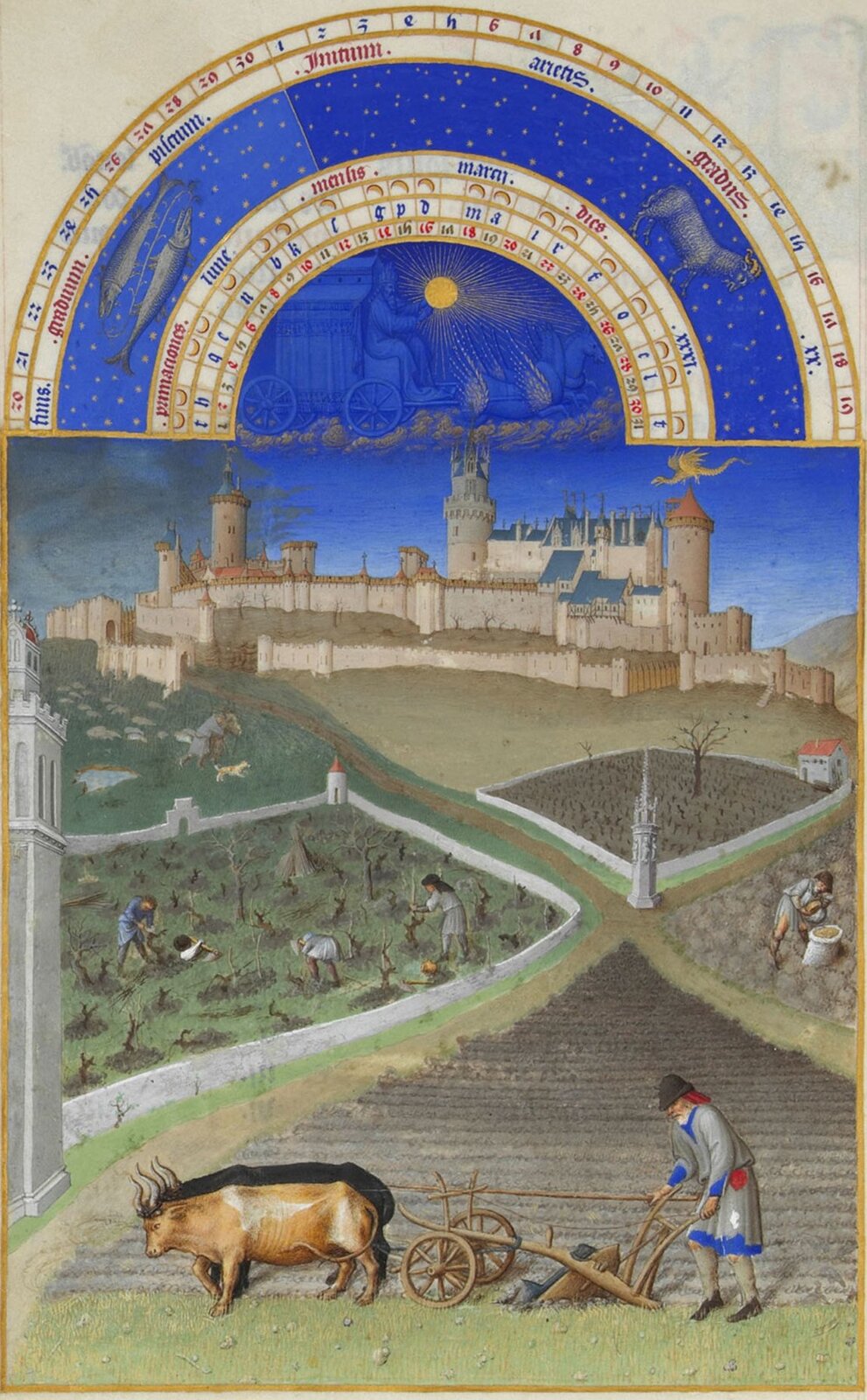
In medieval Poland the majority of people lived in the village and lived off agriculture and animal husbandry. Thanks to their work, the inhabitants of villages, castles and towns had food. Village work was hard and required a lot of skills and tools. Cultivated were mainly different types of cerealcereal: rye, barley, millet, wheat and oat. In gardens near houses, peasants planted onions, broad beans, lentils and peas. Cereals were used to produce flour for bread‑making or as animal feed. Pigs, sheep, cows, goats, geese, hens were bred. The meat of animals was expensive and found on the tables of the wealthiest. Animal leather was used to make shoes and belts. Geese were used to make pillow and eiderdown feathers, while sheep were used to make wool for fabrics. Also oxen were bred, rarely horses, needed for field work.
Indicate the fruit and vegetables which were not cultivated by peasants in medieval Poland.
- pineapple
- lentils
- potato
- broad beans
- corn
- pea
- onion
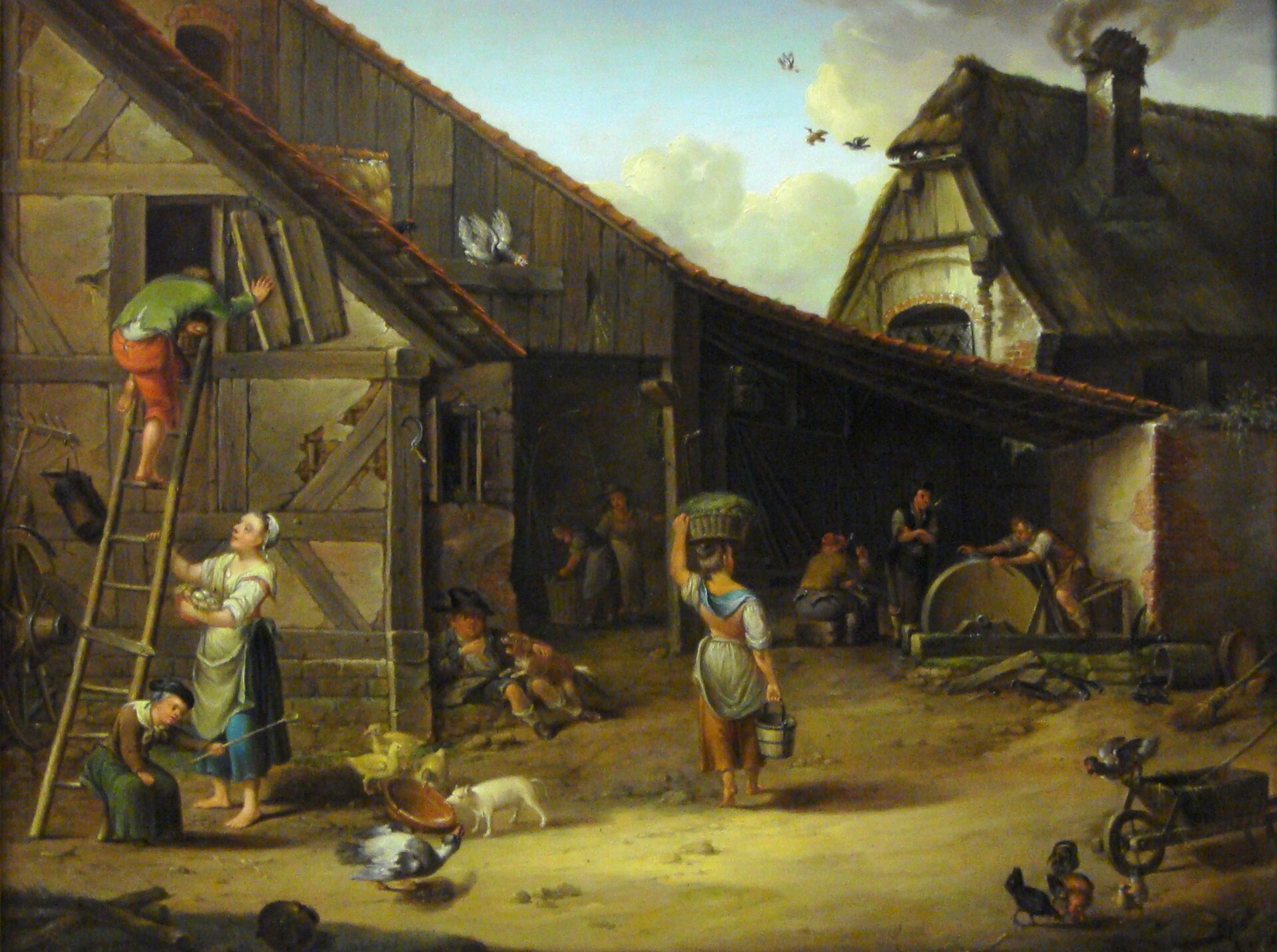
Peasant crofts located next to each other formed village. In the villages there was usually a church where the inhabitants met at mass and on the occasion of other church holidays. Next to the church there was a cemetery. Sometimes there was a marketplacemarketplace in the village, where, among other things, farming produce was sold. Inhabitants also met in an inn, where dancings were organized or important issues for the village were discussed.
In the Middle Ages, the land cultivated by peasants belonged to rulers, knights, churches or monasteries. For its use (leaselease), peasants paid to the landlord the tribute, by giving him part of crops.
Complete the sentences with the words listed below.
money, crops, animal, cereal, village, cottage, crofts
In the Middle Ages, the vast majority of people lived in the ............... Peasants lived off .............. growing and .............. husbandry. The land cultivated by them belonged to the owner who was paid .............. or given part of .............. for its use. They lived in .............. composed of a .............. and farm buildings.
Match the English words with their Polish explanations.
chłopska chata wraz z przylegającymi do niej budynkami gospodarczymi., wydzielony plac, na którym sprzedawano płody rolne., urządzenie do ręcznego mielenia ziarna złożone z dwóch kamieni., budynek służący do mielenia ziaren zbóż w celu uzyskania mąki i innych produktów (np. kaszy). W średniowieczu najpopularniejszymi były młyn wiatrowy i wodny., narzędzie rolnicze służące do spulchniania ziemi bez jej odwracania., zbiór roślin, najczęściej zbóż, z pola w okresie letnim., zamożny chłop posiadający własną chatę i pole., narzędzie rolnicze służące do wykonywania orki, następca radła.
| peasant | |
| ard | |
| lough | |
| mill | |
| quern‑stone | |
| harvest | |
| croft | |
| marketplace |
Keywords
village, Middle Ages, peasantry, peasants, estate society
Glossary
wieś – miejscowość, której mieszkańcy zajmują się uprawą roli lub hodowlą zwierząt.
kmieć (chłop) – zamożny chłop posiadający własną chatę i pole.
radło – narzędzie rolnicze służące do spulchniania ziemi bez jej odwracania.
pług – narzędzie rolnicze służące do wykonywania orki, następca radła.
cep – narzędzie rolnicze służące do ręcznego młócenia zboża.
kosa – narzędzie rolnicze służące do ręcznego ścinania zboża lub traw.
sierp – jedno z najstarszych narzędzi rolniczych służące do ścinania zboża lub traw.
młyn – budynek służący do mielenia ziaren zbóż w celu uzyskania mąki i innych produktów (np. kaszy). W średniowieczu najpopularniejszymi były młyn wiatrowy i wodny.
żarna – urządzenie do ręcznego mielenia ziarna złożone z dwóch kamieni.
zboża – rośliny, wszelkie trawy uprawiane dla uzyskania ziarna i słomy. Wyrabia się z nich m.in. mąki, kasze, oleje.
żniwa – zbiór roślin, najczęściej zbóż, z pola w okresie letnim.
zagroda – chłopska chata wraz z przylegającymi do niej budynkami gospodarczymi.
karczma – na dawnej wsi był to budynek spełniający funkcję miejsca spotkań, gospody i zajazdu dla podróżnych.
dzierżawa – opłata za użytkowanie jakiejś rzeczy lub terenu. Chłopi płacili ją za użytkowanie ziemi właściciela.
plac targowy – wydzielony plac, na którym sprzedawano płody rolne.
sołtys – chłop stojący na czele wsi, któremu właściciel ziemi powierzył jej organizację.