Water: treatment, purification and rational management
that water is a chemical compound;
that the water molecule is composed of one oxygen atom and two hydrogen atoms;
that the water at room temperature is a liquid.
explain what water treatment consists of;
present the process of wastewater treatment;
present ways to save water and justify the necessity of rational management of its resources.
Water purification
What is water treatment in your opinion? What it consists of? Why is water treated? Write down your answers.
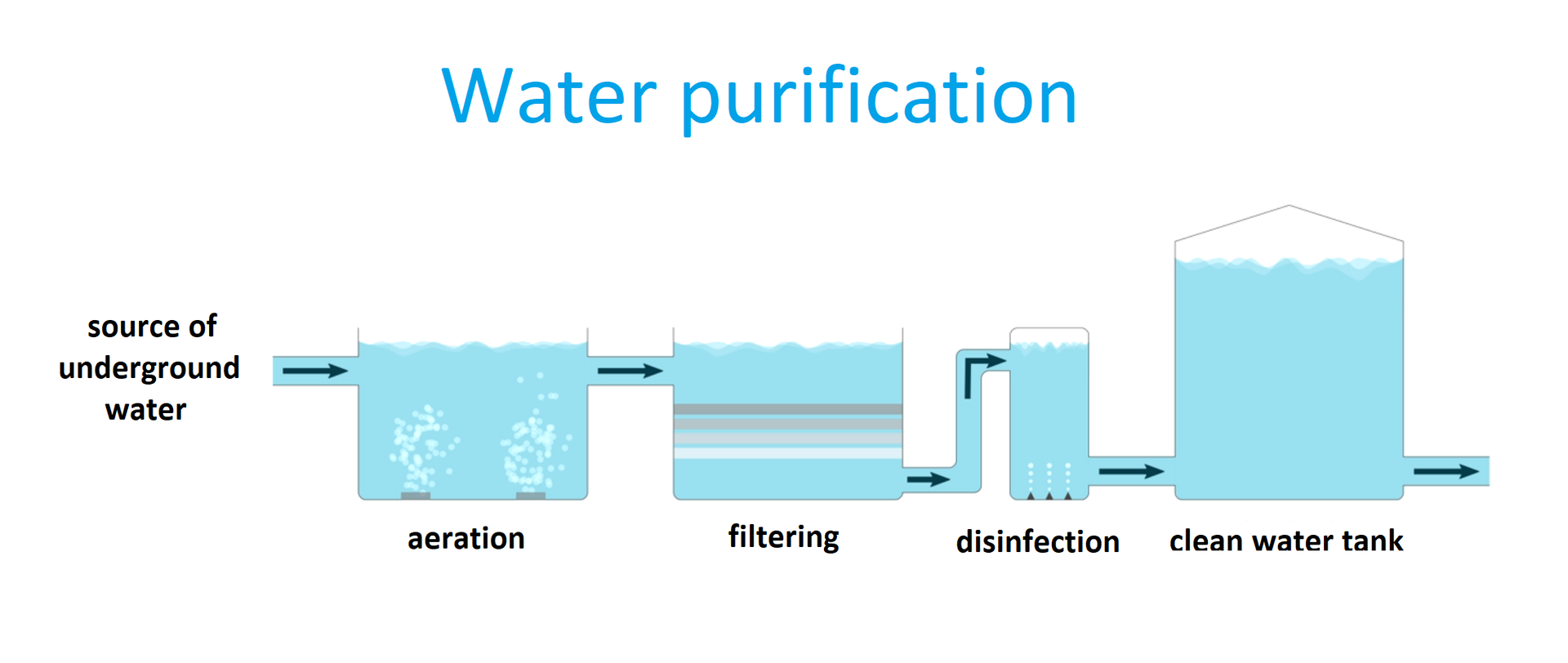
TreatmentTreatment of water is the preparation of water taken from intake to be consumed. This process is performed in the so‑called water treatment stations. Their task is to clean the water in such a way that its quality meets the sanitary requirements.
Wastewater treatment
One of the manifestations of rational water management is the purification of waters contaminated with unwanted substances. All wastewater, regardless of the type (municipal or industrial), is always purified before being discharged into the river, lake, sea or ground. Removal of undesirable substances found in water takes place in the so‑called wastewater treatment plants.
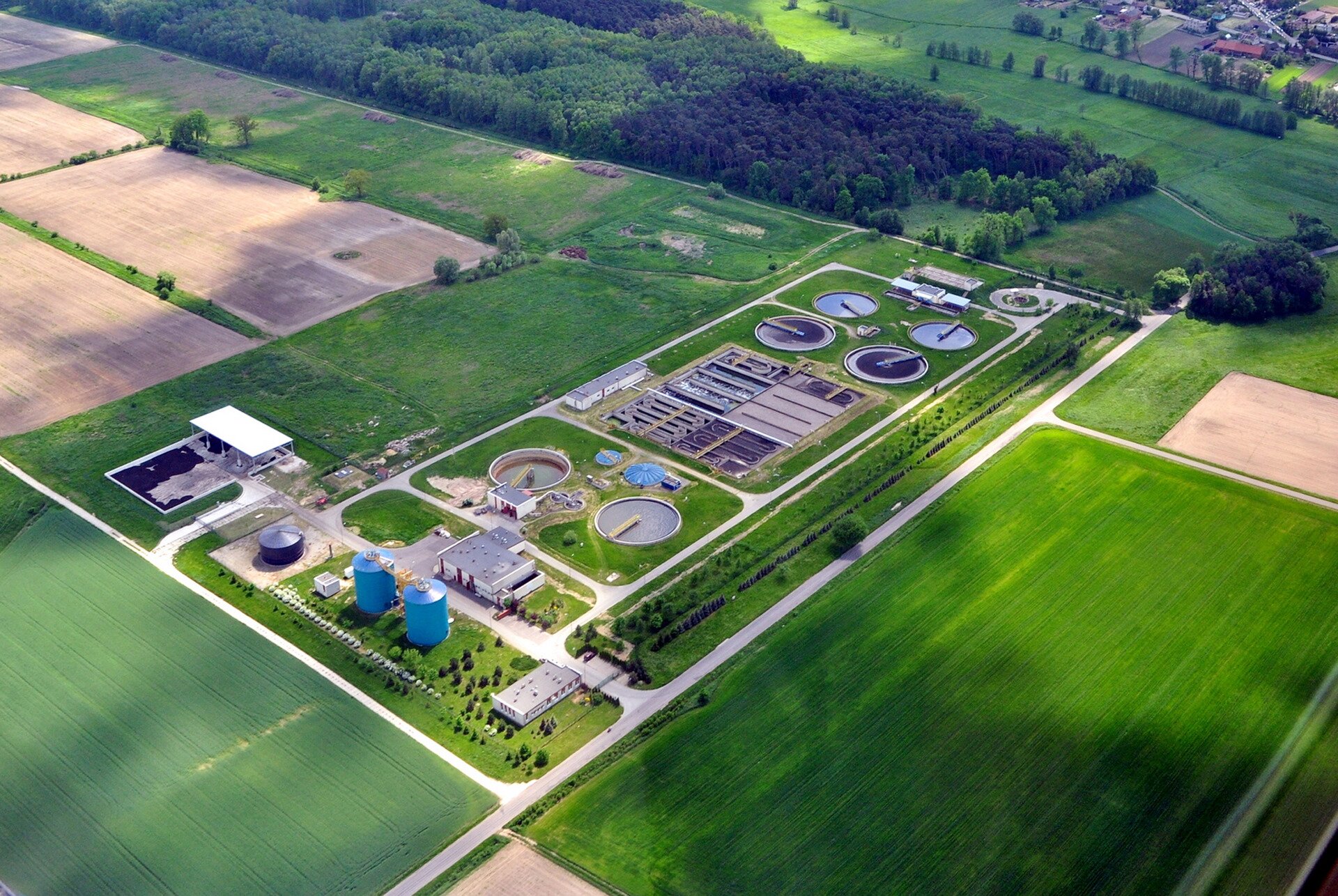
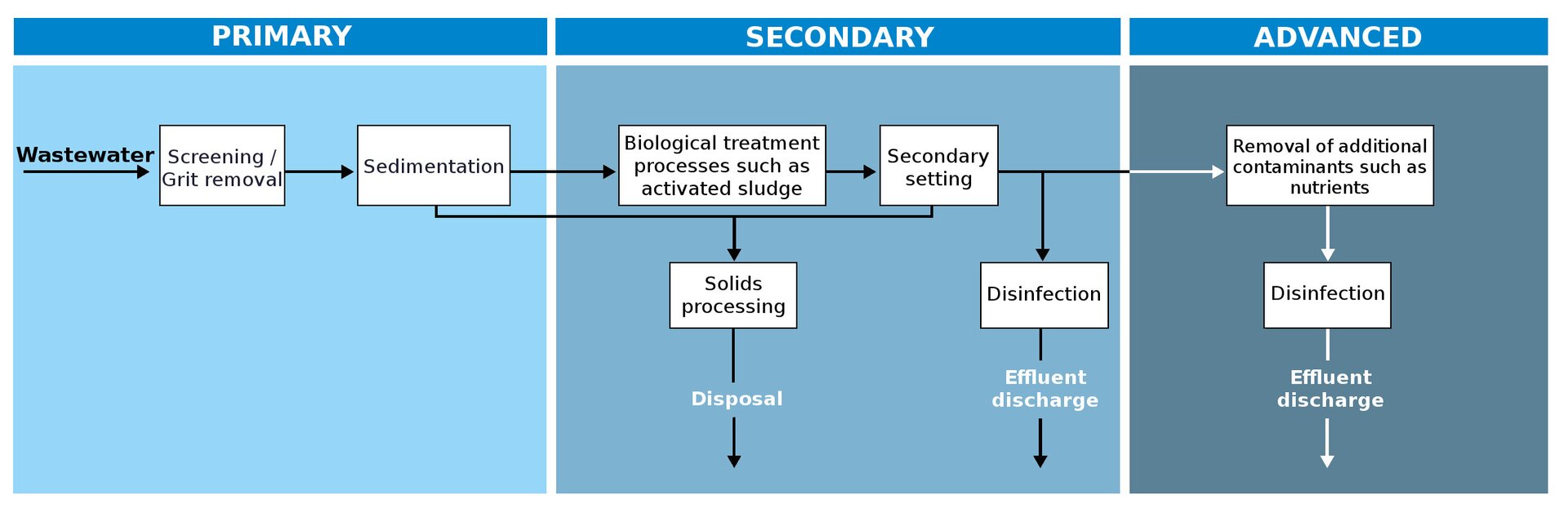
In the wastewater treatment plant, raw sewage moves through consecutive objects equipped with appropriate devices, in which the undesired substances are gradually removed.
The sediment separated in the wastewater treatment process is collected and, depending on the type of wastewater treatment plant, is destined for fermentation or subjected to high temperature. Most often the first method of sediment management is used, i.e. decomposition under the influence of microorganisms. Biogas is formed from the organic matter contained in the sediments, which is a biofuel for the production of electricity and/or heat, often only for the needs of the wastewater treatment plant. The residue after fermentation is used as compost, for example to create land suitable for garden beds and lawns.
Rational water management
Arrange the picture. Consider what this visualization is about? Read the description in the drop-down table below the puzzles and see if it's similar to your idea.
Drop-down the tab and read the information contained there.
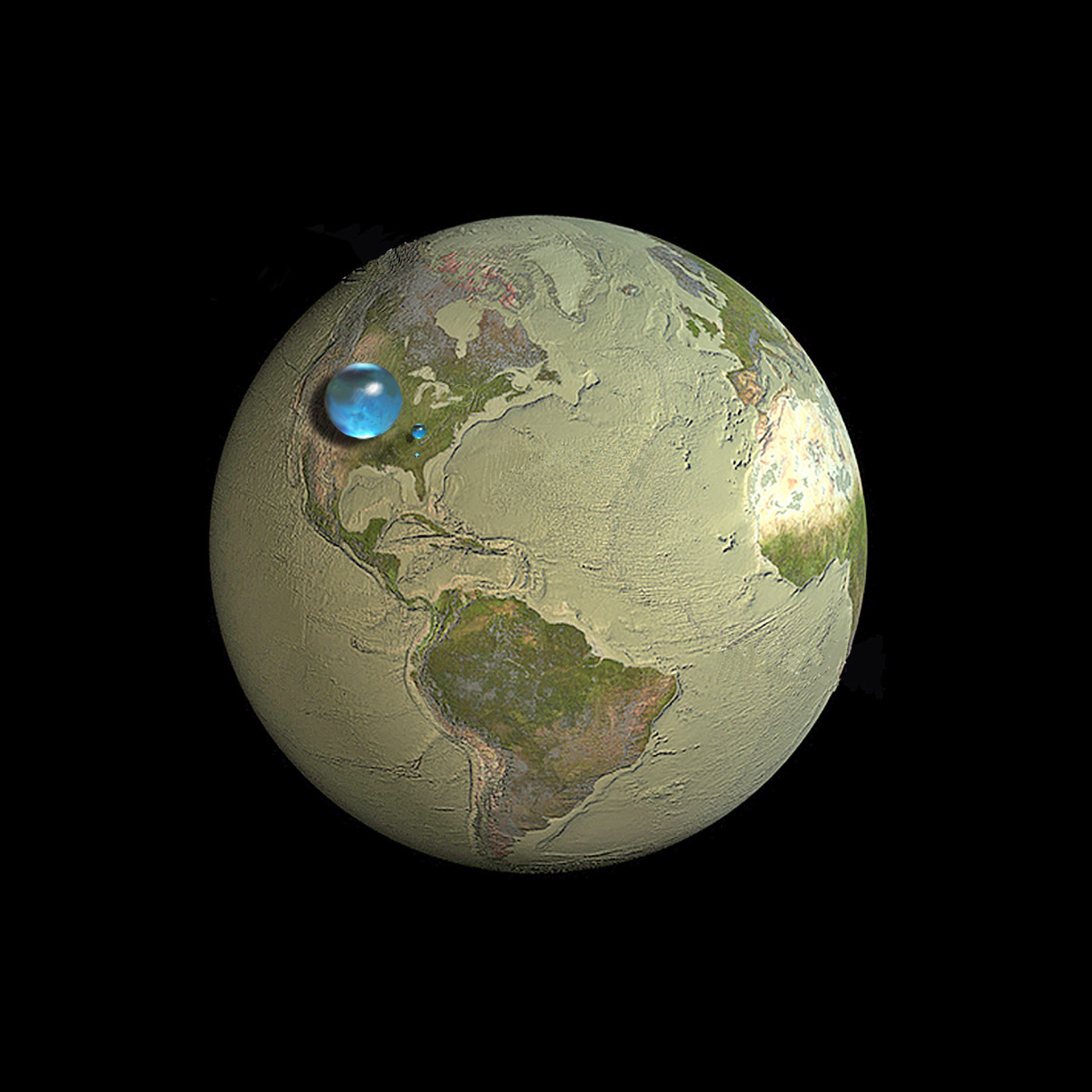
Visualization: water reserves
Researchers from the United States Geological Survey (USGS) agency performed a visualization where they compared the Earth's water reserves with the size of our planet. Water resources occurring on the globe would create a sphere with a diameter of approximately 1384 km. Fresh water, which is safe to drink, would be a sphere with a diameter of 273 km. However, the available fresh water contained in the surface waters would form a ball with a diameter of 56 km
Due to the fact that 1/3 of the world's population lives in areas with water deficit, and 11% of the population is not provided with access to fresh drinking water, saving water seems to be a very legitimate activity. Water is essential for our body and every form of life on Earth. That is why you need to take care of its resources.
Think about how you can save water in your everyday activities. What can be done in the kitchen and what in the bathroom? And what about planning housework? Write down the answers.
Select true statements.
- Drinking water intakes are located in protected areas.
- Wastewater treatment plants deal with, among others, treatment of water for consumption.
- The product obtained in sewage treatment plants is, for example, biogas, which is a biofuel for the production of electricity and/or heat, often only for the needs of treatment plants.
- 1/3 of the world's population lives in areas covered by water deficit.
- When bathing in a bathtub, about 200 litres of water are used – the same amount is used during a 5-minute shower.
Summary
Water‑works are plants in which water is prepared for consumption.
Drinking water intakes are located in protected areas.
All sewage is treated in the so‑called wastewater treatment plants.
Due to the limited resources of available fresh water, drinking water should be saved.
Water should be saved during everyday activities, for example when brushing teeth, washing dishes, watering plants.
Find out from which intake water is brought to your place of residence. If you can, visit this place and see if this area is really protected. Determine whether the water is taken from a surface or underground source.
Check where in your area there is a wastewater treatment plant. Find out what methods are used to treat wastewater? Where is the water drained after it has been treated?
Talk to your family members or friends. Assess the area of life in which their water management is irrational. Prepare a poster promoting economical use of water.
Keywords
Water treatment, purification plant, drinking water intake, wastewater
Glossary
uzdatnianie – proces przygotowania wody pobranej z ujęć do spożycia