What are stars and constellations?
that the Earth is not the center of the Universe;
that the Solar System consists of the Sun and the planets and other celestial bodies circling around it;
that when you look at the sky, you see many stars.
that the Sun is one of many stars;
that the stars are grouping into galaxies;
what a constellation is.
The UniverseUniverse was created almost 14 billion years ago as a result of the Big Bang. Throughout this time it was constantly expanding and changing to achieve the current size and appearance. We must also admit that we still know very little about the Universe, and our knowledge is uncertain.
StarsStars glowing at night over our heads seem small. This is due to the distance that separates us from them. In fact, each star is a huge ball of gases with extremely high temperatures. They are giants, many times bigger than Earth.
Our Sun is also one of many stars. As it is the closest to Earth, it is the brightest object in our sky. Many stars are smaller than the Sun, but many are much larger (even thousands of times!) and brighter than our Sun. However, they are so far away that we can only see them in the form of tiny dots. Even the closest other star, Alpha Centauri, is up to a million times farther away than our Sun! AstronomersAstronomers discovered that planets are circling around some stars. Unfortunately, we are unable to either travel to them or to find out if there is life on them.
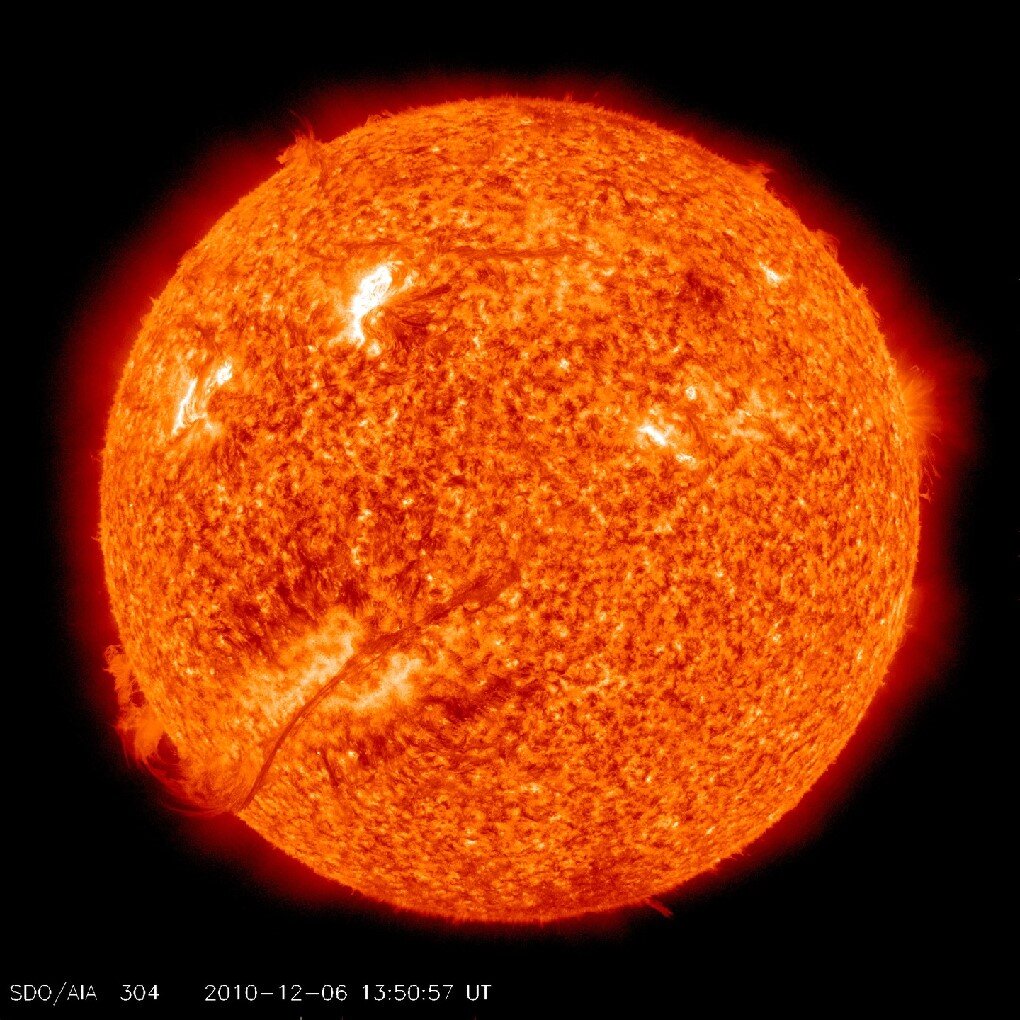
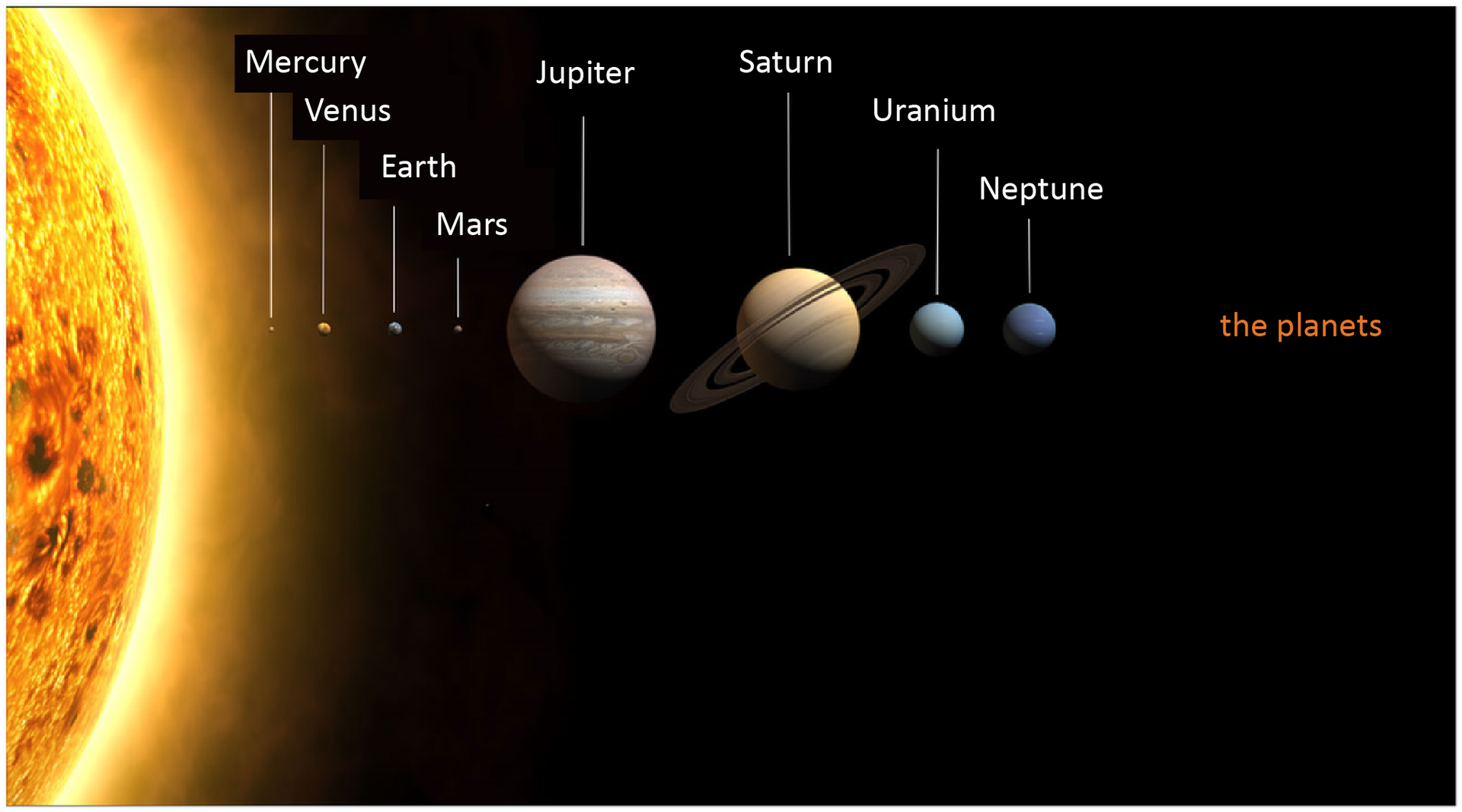
Each star shines with its own light. In contrast, the planets and the Moon shine with reflected light from the Sun.
Before you do the experiment „Create your own constellation”, write down the research question and the hypothesis. Then follow the attached instruction. Make observations during the task, and finally - conclusions.
Create your own constellation.
3‑4 A4 sheets of a transparent binding foil;
3‑4 CD pens, preferably each in a different color;
camera (can be in a mobile phone);
computer with a color printer.
On each foil draw a few circles of different sizes (preferably 2‑5 cm in diameter), symbolizing the stars. All circles on one foil should be drawn with the same color of the pen.
Hold the foil one behind the other against a white wall or plate. The optimal distance between foils is about 30‑40 cm. The foils shall be set against the wall that is opposite a window or other strong light source. 3.The photographer should stand at such a distance from the foil 1 so that the foil fills the whole frame. Give instructions to other students how they should be positioned so as not to cover the foli.
Attention! Under no circumstances should you use a flash!Get the best shot print. Then compare the obtained image of „sky” with the image created on the foils stacked on top of each other.
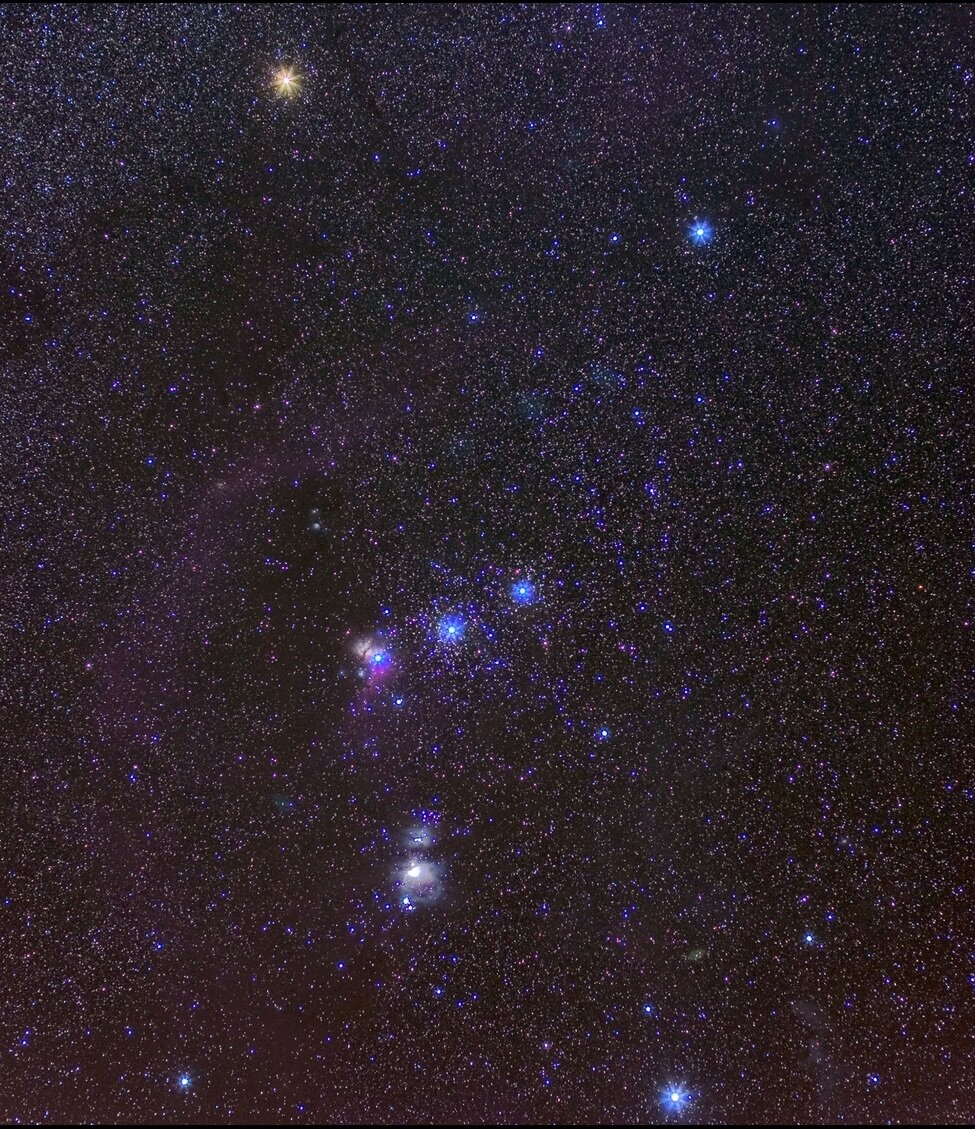
Seen from Earth, the stars appear to be arranged in constellationsconstellations. The term is a reference to group of stars visible in the sky located in a given area, which seem to form certain shapes, e.g. a human figure, an animal, a character from mythology or another object. Currently the celestial sphere is divided into 88 constellations. Stars that belong to one constellation are often at great distances from each other and are in fact not connected with each other. However, such a division for hundreds of years makes it easier for people to search for different celestial bodies in the sky.
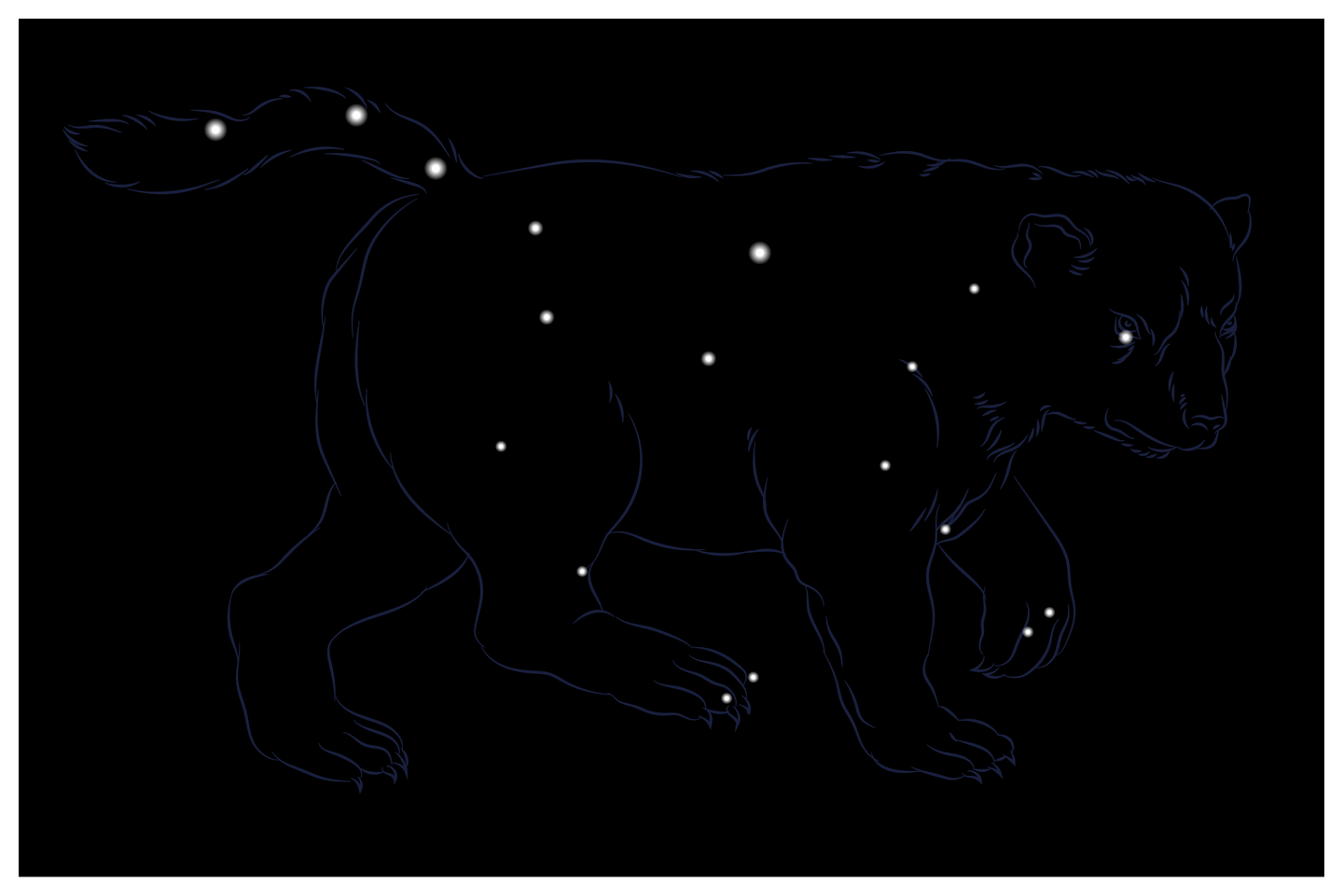
Explain the importance of the ability to locate the constellation Ursa Major in the sky.
Move the descriptions of stars and constellations to the appropriate group.
the Sun is one of them, twelve of them form the belt of the Zodiac, The big dipper (Ursa Major) is one of them, some of them are orbited by planets, groups of stars located in a specific area of the sky, huge balls of high temperature gases, each of them shines with its own light
| Stars: | |
|---|---|
| Constellations: |
Summary
The sun is one of many stars, or balls of gases with very high temperatures.
Stars cluster in large clusters known as galaxies.
Stars seen from Earth can be grouped into constellations.
Keywords
constellation, Universe, star
Glossary
astronomia – nauka zajmująca się badaniem ciał niebieskich
gwiazdozbiór – grupa gwiazd na sferze niebieskiej, zajmująca określony obszar
Wszechświat – cała przestrzeń wraz ze wszystkimi istniejącymi obiektami
gwiazda – najlepiej widoczne na niebie ciała niebieskie. Są bardzo duże i świecą światłem własnym.