What does it mean to be a man?
you will specify the speaking person in the poem
you will present your interpretation of the poem
you will define the functions of stylistic means used by the poet
you will identify stereotypical male features
Is there a ‘real man’ masculinity patternpattern? What is its function? Is it unjust in some way? Discuss it with your colleagues.
Masculinity seems to be something very obvious, but this impression is misleading. Model of masculinity has been changing through the centuries. There are certain behaviour that nowadays are desirable and perceived positively in men, however, in the past they would be considered to be unmanly. Wisława Szymborska looked closely at femininity (i.e., in her poems Przy winie or Portret kobiecy ), but she also thoroughly observed masculinity. Being a careful observer of the reality, she presented one of the masculinity patterns with humour and distance, masterfully using a metaphor.
Read the poem and follow the instructions.
Konkurs piękności męskiejOd szczęk do pięty wszedł napięty.
Oliwne na nim firmamenty .
Ten tylko może być wybrany,
kto jest jak strucla zasupłany.Z niedźwiedziem bierze się za bary
groźnym (chociaż go wcale nie ma).
Trzy niewidzialne jaguary
padają pod ciosami trzema.Rozkroku mistrz i przykucania.
Brzuch ma w dwudziestu pięciu minach.
Biją mu brawo, on się kłania
na odpowiednich witaminach.Source: Wisława Szymborska, Konkurs piękności męskiej, [w:] tegoż, Wiersze wybrane, Kraków 2012, s. 91.
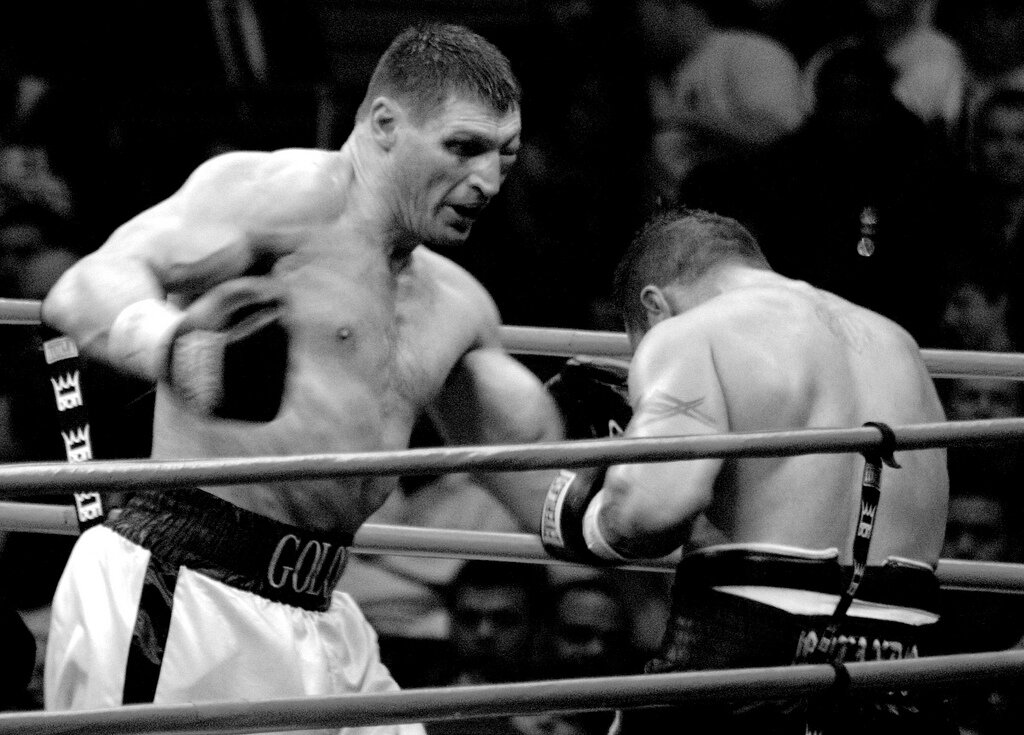
Despite the fact that in the presented poem Wisława Szymborska mockingly referred to the masculinity pattern based on the body cult, she allowed one exception - Andrzej Gołota, a professional boxer. She always watched his fights, which were very often lost, live, regardless of the broadcast time. She also watched the TV show “Dancing with the Stars” in which Gołota participated, and in her room she had his image. Maybe the Szymborska’s genius revealed here as well, maybe she recognised in Andrzej Gołota not only the boxing champion, but also his “not very masculine” sensitivity, that didn't let him achieve the success relevant to his boxing talent. Because that is what some commentators saw in him. Who knows?
In available sources (you can use the Internet) check what does the term kalokagathia mean. What do you think about it? What features does the man from the Szymborska's poem lack?
Poetic thoughts of Wisława Szymborska reflect the problem connected with so‑called: masculinity crisis. This issue is widely discussed by many publicists and scientists. Zbyszko Melosik, the professor of sociology at the University of Adam Mickiewicz in Poznań, devoted his book to this problem.
Read the fragment of the book by Zbyszko Melosik and, in your own words explain what is the masculinity crisis.
Kryzys męskości w kulturze współczesnejCo więc oznacza […] „kryzys męskości”? W tym miejscu zasygnalizuję jedynie kilka wybranych aspektów tego zagadnienia. Pierwszy z nich – najogólniejszy i zapewne najważniejszy – związany jest z typową dla kultury współczesnej rosnącą trudnością w uzyskiwaniu odpowiedzi na pytania: co oznacza być mężczyzną? Kiedyś odpowiedź była prosta, wyznaczona przez jasno określone dotyczące tożsamości i ciała, sposobu myślenia i stylu życia, a także ról społecznych. Standardy te odwoływały do idei „męskości tradycyjnej”, zorientowanej na konstruowanie silnej, dominującej tożsamości. [...] W przeszłości mężczyzna stał „poza kamerą”, a więc „poza krytyką”. Niewzruszony niczym granitowy pomnik, uosabiał stabilność, racjonalność i bohaterstwo. Dziś mężczyzna – detalicznie śledzony przez lustra, kamery i media – jest coraz częściej postrzegany jako „słaba płeć”. Nieustannie poszukuje się jego „słabych stron”.
[…]
W przeszłości pozycja społeczna mężczyzny była niemożliwa do podważenia już choćby przez fakt, iż podejmował on w życiu działania „poważne” i „decydujące”; wchodził w rolę polityka, przedsiębiorcy czy właściciela ziemskiego, względnie pracownika‑wytwórcę , dostarczającego rodzinie środków do życia. Role dawały mu niezaprzeczalną przewagę nad kobietą, która prowadziła dom (pranie, prasowanie, sprzątanie, gotowanie), stroiła się (dla niego) i robiła zakupy (jeśli mężczyzna już coś kupował, to dom lub posiadłość, względnie nowego mercedesa). Dziś sytuacja zmieniła się radykalnie.
Source: Zbyszko Melosik, Kryzys męskości w kulturze współczesnej, Kraków 2006, s. 8–13.
Assign the given elements to the right group.
public criticism, heroism, guided by reason, a weaker sex, sensitivities, advantage over women, weakened social position, stability, high social position, dominant personality
| A man in the past | |
|---|---|
| A man in crisis |
Signs of “masculinity crisis” according to Zbyszko Mellosik:
Signs of “masculinity crisis” according to Zbyszko Mellosik:
Consumerism
Men doing shopping, lured by the advert that targets them.
Medicalisation
Men at the doctor or the therapist, because of their mind and body weakness.
Feminisation of the man's body
Displayed man’s body, waxed, perfumed, dressed up and muscleless.
Domination of women
Occurrence of a woman that dominates in a man-woman relationship, and, for example, practices manly sports.
Do you notice any dependencies between the type of the advertised product and the presented image of a man? Write a note about it.
Find antonyms. What benefits arise from the fact that the following features are no longer perceived as typically masculine or typically feminine.
tenderness, weakness, commitment, gentleness, empathy, obedience, warmth
| aggression | |
| coldness | |
| strength | |
| domination | |
| insensitivity | |
| ruthlessness | |
| withdrawal |
Keywords
sex, masculinity, stereotype, ideal
Glossary
płeć
męskość
stereotyp
uproszczenie
ideał
wzorzec
tradycja
nowoczesność
zmiana
reklama
kryzys
osobowość
konsumpcjonizm
medykalizacja
feminizacja
dominacja
stałość
siła
agresja
niewrażliwość
bezwzględność
chłód
wycofanie
antonim