What factors affect the amount of precipitation?
that water vapour is one of the components of the atmosphere;
that the conditions in the troposphere depend largely on the latitude and the season;
what the global distribution of air temperature and atmospheric pressure is.
characterize the main factors that determine the amount of precipitation on Earth;
read the average amount of precipitation (annual, semi‑annual, monthly, etc.) for the selected place on Earth from the map showing the average distribution of precipitation;
explain the reasons for the variation in the amount of annual precipitation in different regions on Earth.
Nagranie dostępne na portalu epodreczniki.pl
nagranie abstraktu
Spatial differentiation of absolute humidityabsolute humidity on Earth depends on many geographical factors. Absolute humidity decreases as the latitude increases, which is a result of lower air temperature. The same way humidity decreases with altitude. There is extreme low humidity in the Tropics. It is related to how atmosphere circulates there. In addition, air humidity decreases the further away we are from the large water reservoirs. The amount of atmospheric precipitation in a given area is proportionally dependent on air humidity. However, there are also other important factors affecting the diversity of precipitation on Earth.
Factors affecting the amount of precipitation on Earth:
atmospheric pressure and the related air circulation – higher precipitation is associated with low pressure systems;
distance from water reservoirs – the amount of precipitation decreases the further from the sea;
height above the sea level – higher altitude means more precipitation – however, it applies only up to a certain height, then the precipitation begins to decrease (precipitation inversion);
terrain– windward slopes usually receive more precipitation than leeward ones, less precipitation occurs in the valleys of the hills (rain shadow);
sea currentssea currents – coast with warm sea currents are characterized by heavy precipitation, and those with cold sea currents are very dry.
As a result, the highest precipitation occurs in the equatorial zone, in Southeast Asia and on the southern slopes of the Himalayas. The least rainfall is recorded in the Tropics, the Antarctic and Arctic Circle and within continents, e.g. in central Asia.
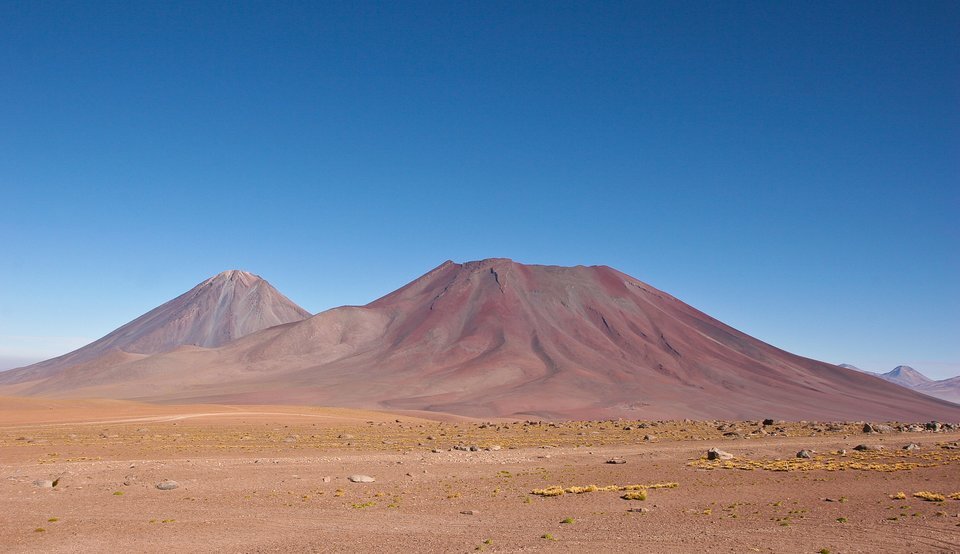
The lowest annual amount of precipitation is recorded in the Atacama Desert in Chile. This area is characterized by a very small amount of precipitation, less than 50 mm per year, and in many regions below 10 and even 1 mm (around the city of Arica). The central part of Atacama is called a true desert, since no precipitation has ever been recorded since the measurements started.
Check how many average annual rainfall totals for the following places. Then order by increasing the amount of rainfall.
- Appalachia - the eastern coast of North America
- Sudety - Central Europe
- Sahara - northern Africa
- Amazon basin - South America, around the equator
- Macdonnell Mountains - Central Australia
Find and select the true sentence.
- The air pressure does not affect the amount of rainfall.
- The highest rainfall is recorded on poles and tropics.
- The amount of rainfall decreases as you move away from the sea.
- In the valleys of the hills there are particularly heavy rains.
Summary
Geographical factors affect the variability of the amount of precipitation in different places around the world,
the amount of precipitation on Earth is influenced by such factors as: atmospheric pressure, distance from water reservoirs, height above the sea level, terrain, sea currents.
Keywords
absolute humidity, sea currents
Glossary
wilgotność bezwzględna – zawartość pary wodnej w 1 mIndeks górny 33 powietrza wyrażona w gramach
prądy morskie - stałe ruchy wody w oceanach wywołane wiatrami, a zmodyfikowane przez ruch obrotowy Ziemi i siłę Coriolisa