It is difficult to precisely describe the structure of the Earth's interior and the processes that cause this. This science is known as geologygeologygeology. Drilling, in particular the deepest drilling, gives us lots of information, but only about the makeup of the upper parts of the Earth's crust. This allows us to extract samples and study them and measure the pressure and temperature that exists beneath the surface of the Earth. A lot of information is also provided by deep mines and natural rocky outcrops. However, due to rapidly increasing pressure and temperature, it is difficult to explore further by using deep drilling or mine shafts. Traditional geological methods are not sufficient to explore the deepest rocks and layers of the Earth. The discipline that applies methods from physics to study the Earth is called geophysicsgeophysicsgeophysics. The majority of data gathered is on the analysis of the movement of seismic wavesseismic wavesseismic waves which come about from natural shocks caused by earthquakes an sometimes, for the purposes of research, explosions carried out, or by the use of machinery that generates powerful vibrations.
Seismic waves, passing through rocks of varying densities or having other physical properties, can slow down, go faster, divert, stop or even disappear. The analysis of these changes allow us to draw conclusions about the structure of the Earth's interior. Based on this research, it is possible to conclude that our planet most likely consists of a number of layers with varying chemical compositions and different physical properties. Temperature and pressure both increase as you go deeper. In the upper layers of the Earth's crust, increasing depth by 33m leads to a temperature increase of 1°C. This is known as the geothermal temperature. The value given here is an average and depends on the geological makeup, the temperature can increase much more rapidly or slowly. Important information about the structure of the Earth is also provided by research into the relative and absolute age of rocks.
R1557zE1yZTvi
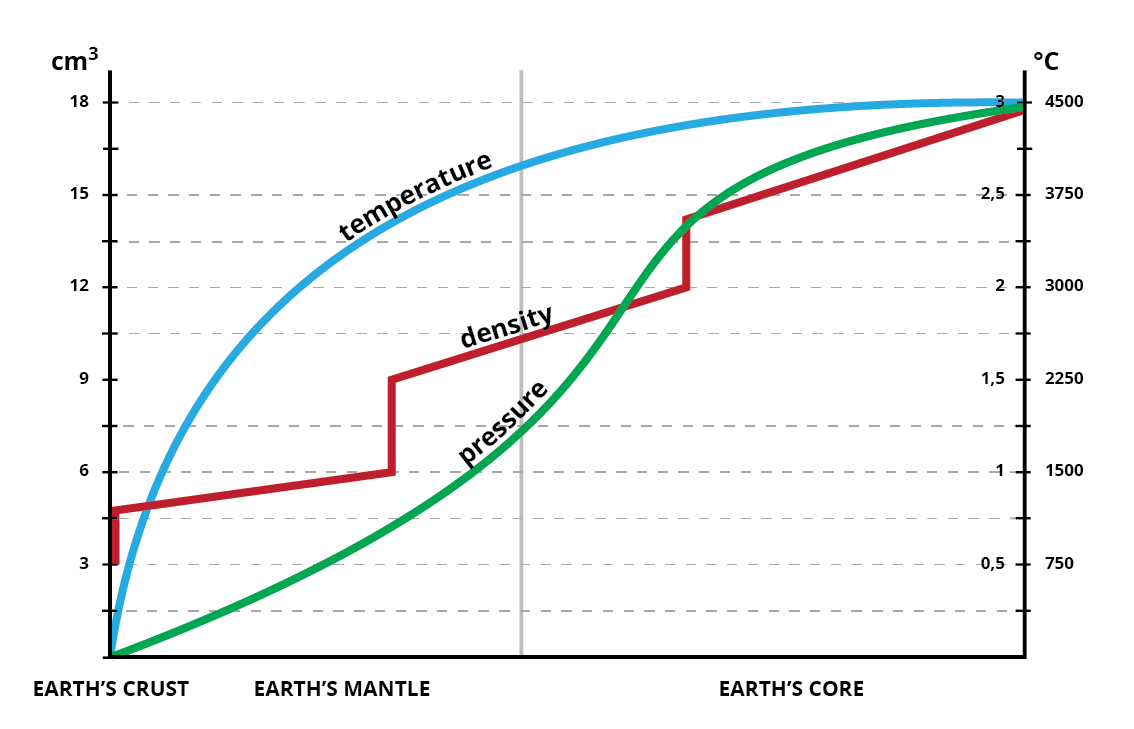
Grafika przedstawia wykres. Na osi Y po lewej stronie opisane zostały centymetry sześcienne, wartości od zera do osiemnastu. Na osi Y po prawej stronie zostały opisane stopnie Celsjusza, wartości od zera do czterech i pół tysiąca. Na osi X przedstawiono podział na płaszcz Ziemi, Earth’s crust, skorupę ziemską, Earth’s mantle oraz jądro Ziemi, Earth’s core. Cały wykres pokazuje zależność między ciśnieniem, pressure, gęstością, density i temperaturą, temperature. Krzywa ciśnienia ma kształt litery es wychodząc poza krzywą gęstości dopiero w ostatnim fragmencie wykresu. Krzywa gęstości ma kształt stopni o nachylonych powierzchniach - każda wzrasta pomiędzy nagłymi skokami. Ostatnia - krzywa temperatury - jest łukiem ponad pozostałymi krzywymi.
Source: GroMar Sp. z o.o., licencja: CC BY 3.0.
R1SU4WDJMsl3e
Exercise 1
Familiarise yourself with the various kinds of research activities and sort them according to the appropriate discipline.
Geology
Geophysics
Możliwe odpowiedzi:
1. Drilling wells and testing samples obtained from them.,
2. Studying the course of seismic waves generated by natural processes.,
3. Doing research on the Earth using methods used in physics,
4. Doing research on natural rock formations.,
5. Doing research into deep mines.,
6. Analysis of man-made seismic waves.
Familiarise yourself with the various kinds of research activities and sort them according to the appropriate discipline.
Geology
Geophysics
Możliwe odpowiedzi:
1. Drilling wells and testing samples obtained from them.,
2. Studying the course of seismic waves generated by natural processes.,
3. Doing research on the Earth using methods used in physics,
4. Doing research on natural rock formations.,
5. Doing research into deep mines.,
6. Analysis of man-made seismic waves.
Familiarise yourself with the various kinds of research activities and sort them according to the appropriate discipline.
Studying the course of seismic waves generated by natural processes., Doing research into deep mines., Drilling wells and testing samples obtained from them., Doing research on natural rock formations., Analysis of man-made seismic waves., Doing research on the Earth using methods used in physics
Geology
Geophysics
R1MZaizB8VwlX
Exercise 2
What does the term "seismic wave" mean? Choose the correct answer.
Możliwe odpowiedzi: 1. They are high waves created in the sea or ocean as a result of earthquakes, eruptions or storms., 2. They are tremors coming from the centre of the Earth, caused by earthquakes, eruptions or caused by special machinery., 3. They are tremors on the surface of the Earth that are caused, for example, by explosive materials or the impact from a small meteorite., 4. They are various kinds of tremors emanating from solid structures, including rocks situated in the Earth's interior.
What does the term "seismic wave" mean? Choose the correct answer.
Możliwe odpowiedzi: 1. They are high waves created in the sea or ocean as a result of earthquakes, eruptions or storms., 2. They are tremors coming from the centre of the Earth, caused by earthquakes, eruptions or caused by special machinery., 3. They are tremors on the surface of the Earth that are caused, for example, by explosive materials or the impact from a small meteorite., 4. They are various kinds of tremors emanating from solid structures, including rocks situated in the Earth's interior.
What does the term "seismic wave" mean? Choose the correct answer.
They are high waves created in the sea or ocean as a result of earthquakes, eruptions or storms.
They are tremors coming from the centre of the Earth, caused by earthquakes, eruptions or caused by special machinery.
They are tremors on the surface of the Earth that are caused, for example, by explosive materials or the impact from a small meteorite.
They are various kinds of tremors emanating from solid structures, including rocks situated in the Earth's interior.
RvE3WXrrSrcj7
Exercise 3
What kinds of information related to the composition of the Earth are supplied to scientists concerned with drilling?
Możliwe odpowiedzi: 1. how to extract and view rock samples, 2. how to study the chemical composition of rock samples, 3. how to trace the course of seismic waves, 4. how to measure the temperature and pressure within the Earth
What kinds of information related to the composition of the Earth are supplied to scientists concerned with drilling?
Możliwe odpowiedzi: 1. how to extract and view rock samples, 2. how to study the chemical composition of rock samples, 3. how to trace the course of seismic waves, 4. how to measure the temperature and pressure within the Earth
What kinds of information related to the composition of the Earth are supplied to scientists concerned with drilling?
how to extract and view rock samples
how to study the chemical composition of rock samples
how to trace the course of seismic waves
how to measure the temperature and pressure within the Earth
Task 1
W dostępnych źródłach poszukaj informacji o falach sejsmicznych, jak się rozchodzą, kiedy się pojawiają?
W dostępnych źródłach poszukaj informacji o falach sejsmicznych, jak się rozchodzą, kiedy się pojawiają?
Look at the illustrations below and note your observations on the registration of seismic waves.
RsgKvE6WOhzWQ
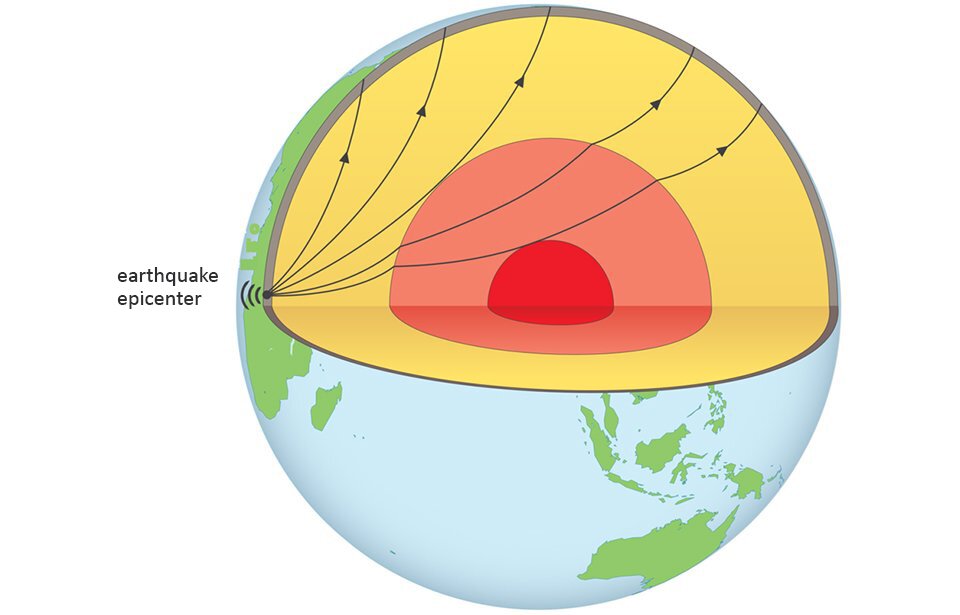
Strong earthquakes generate seismic waves. The readings taken in various locations on the Earth's surface and their analysis allow us to determine what kind of layers make up the core of our planet.
R10nZeRFZd9hL
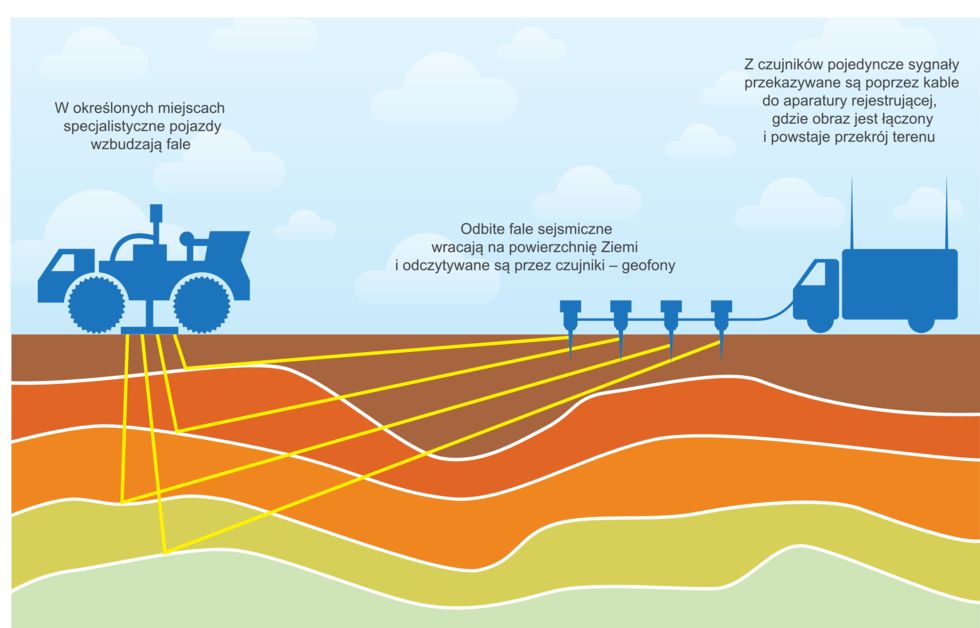
To understand the shallow layers of rock on Earth (up to a number of kilometres), a test is carried out using artificially generated seismic waves.
RjwbOUZnTVadM
Explain why you can record seismic waves at different locations on the surface of the Earth. (Uzupełnij).
Explain why you can record seismic waves at different locations on the surface of the Earth. (Uzupełnij).