Work instead of fight? Main political movements during the Partitions
To name main political movements during the Partitions (socialistsocialist, nationalnational, people’speople’s movements)
To know representatives of the main political movements and their attitudes to Polish independence
To point to differences in beliefs and programs of the main political movements
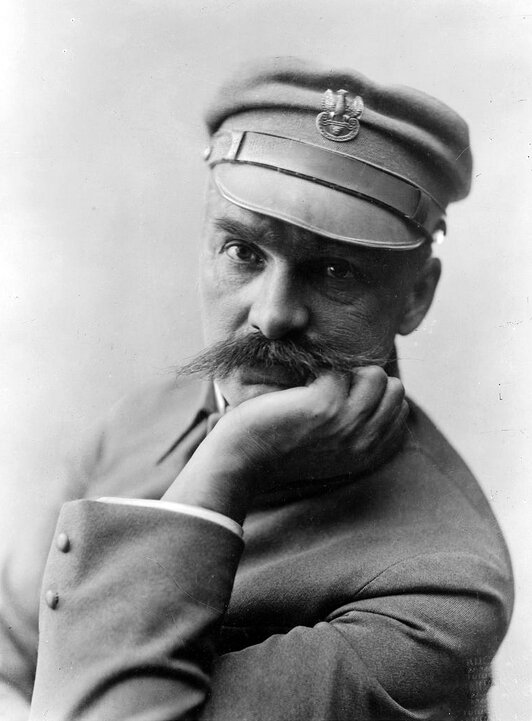
Prior to the outbreak of World War I, many political movements had emerged on Polish lands. The first one, i.e. the socialist political party “Great Proletariat” (Polish: Wielki Proletariat), was established in 1882. In the early 90s of the 19th century, Polish socialists split into two movements – independence (PPS with Józef Piłsudski) and revolutionary (SDKPiL). The Polish national movement was represented by National Democracy (Polish: Narodowa Demokracja), led by Roman Dmowski. It advocated national solidarity. Rural communities were represented by People’s Party (Polish: Stronnictwo Ludowe), established in 1895 in Rzeszów. The party’s members, especially Wincenty Witos, played a prominent role in independent Poland.
I became a pupil of junior high school no. 1 in Vilnius, the alma mater of Mickiewicz and Słowacki. Naturally, the situation here has changed since then. The local youth were managed and taught by tsar teachers, who brought with them all the political ideologies and whose goal was to thwart self-reliance and personal dignity of their pupils. For me, the junior high school times were nothing short of carnage. Although I was a rather talented boy, did not hassle myself with too much work, and was easily promoted to the next grades, the school atmosphere was unbearable for me, I was outraged by the injustice and the policies of the teachers, as well as bored by the lectures themselves. It would take loads of cowhide to describe continuous, humiliating provocations on the part of the teachers, vilifying everything that I had used to respect and love. How strong was the impact of the educational system on my mind is reflected in the fact that even today, as I have gone through prison and Siberia and dealt with various Russian bureaucrats, my kind Vilnius teachers come back to me in in bad dreams.
In such conditions, my hatred towards tsar policies and oppression would grow each year. Helpless rage choked me many times, and the shame that I could not do any harm to the enemy, that I had to silently cope with the treading on my dignity and listen to false and scornful words about Poland, Poles and its history, burnt my cheeks. The gloom and the feeling of being a slave whom they could crush like a bug at any time, deeply hurt my heart. I have always considered my school years as the most unpleasant time of my life.
I called myself a socialist in 1884. And I mean “called”, because it didn’t really mean that I had firm sociliast beliefs. Back then I was in the Vilnius junior high. I was a member of the ”Spójna” group established a few years earlier. I and my mates were attracted by the socialist trend brought to us by our older friends, students from the Saint Petersburg University.
I openly admit that it was just a trend. How else can you call the socialist epidemic which won the minds of the revolutionary and opposition youth? It was so prevalent that none of the more intelligent and energetic friends of mine avoided going through the socialist stage. Some of them became true socialists, others switched to different groups, and some gave up their social aspirations altogether. However, everyone was in fact a socialist for a shorter or longer period of time.
Read a fragment of Józef Piłsudski’s memories and discuss his attitude to the russified school system and its educational methods. Which of the experiences from his school years could have made him engage in political activity? What other reasons does he mention? Mark them in the text.
experience
Józef Piłsudski about junior high school life in Vilnius at the end of the 19th century
I became a pupil of junior high school no. 1 in Vilnius, the alma mater of Mickiewicz and Słowacki. Naturally, the situation here has changed since then. The local youth were managed and taught by tsar teachers, who brought with them all the political ideologies and whose goal was to thwart self-reliance and personal dignity of their pupils. For me, the junior high school times were nothing short of carnage. Although I was a rather talented boy, did not hassle myself with too much work, and was easily promoted to the next grades, the school atmosphere was unbearable for me, I was outraged by the injustice and the policies of the teachers, as well as bored by the lectures themselves. It would take loads of cowhide to describe continuous, humiliating provocations on the part of the teachers, vilifying everything that I had used to respect and love. How strong was the impact of the educational system on my mind is reflected in the fact that even today, as I have gone through prison and Siberia and dealt with various Russian bureaucrats, my kind Vilnius teachers come back to me in in bad dreams.
In such conditions, my hatred towards tsar policies and oppression would grow each year. Helpless rage choked me many times, and the shame that I could not do any harm to the enemy, that I had to silently cope with the treading on my dignity and listen to false and scornful words about Poland, Poles and its history, burnt my cheeks. The gloom and the feeling of being a slave whom they could crush like a bug at any time, deeply hurt my heart. I have always considered my school years as the most unpleasant time of my life.
I called myself a socialist in 1884. And I mean “called”, because it didn’t really mean that I had firm sociliast beliefs. Back then I was in the Vilnius junior high. I was a member of the ”Spójna” group established a few years earlier. I and my mates were attracted by the socialist trend brought to us by our older friends, students from the Saint Petersburg University.
I openly admit that it was just a trend. How else can you call the socialist epidemic which won the minds of the revolutionary and opposition youth? It was so prevalent that none of the more intelligent and energetic friends of mine avoided going through the socialist stage. Some of them became true socialists, others switched to different groups, and some gave up their social aspirations altogether. However, everyone was in fact a socialist for a shorter or longer period of time.
Study the major political activities of Poles in the second half of the 19th century. Analyse the differences in beliefs among them.

Look at the photo of delegates to one of the congresses of the Second International (taken in 1896). Who is the man third from the left?
- Ignacy Mościcki
- Józef Piłsudski
- Aleksander Dębski
Look at the photo of delegates to one of the congresses of the Second International (taken in 1904). Who is the woman standing among them?
- Rosa Luxemburg
- Nadezhda Krupskaya
- Aleksandra Piłsudska
Put the dates and facts in chronological order.
- 1889 – Polish Workers’ Association (Polish: Związek Robotników Polskich, ZRP)
- 1882 – the so-called “flying university” (Polish: Uniwersytet Latający)
- 1881 – Polish People Socialist Society (Polish: Stowarzyszenie Socjalistyczne Lud Polski) in exile
- 1892 – Polish Social Democratic Party of Galicia and Cieszyn Silesia (Polish: Partia Socjaldemokratyczna Galicji i Śląska Cieszyńskiego)
- 1893 – Social Democracy of the Kingdom of Poland (Polish: Socjaldemokracja Królestwa Polskiego, SDKP); from 1903 – Polish People’s Party (Polish: Polskie Stronnictwo Ludowe, PSL)
- 1888 – so-called Second Proletariat (Polish: Polska Partia Socjalno-Rewolucyjna “Proletariat”)
- 1882 – the first socialist party on Polish lands – International Social Revolutionary Party Proletariat (Polish: Międzynarodowa Socjalno-Rewolucyjna Partia “Proletariat”)
- 1897 – National Democratic Party (Polish: Stronnictwo Demokratyczno-Narodowe)
- 1889 – Second International
- 1892 – Polish Social Democratic Party (Polish: Polska Parta Socjaldemokratyczna), established at the Polish socialists’ congress in Paris
- 1887 – Polish League (Polish: Liga Polska) in Switzerland
- 1874 – the first student socialist groups in the Kingdom of Poland
- 1893 – National League (Polish: Liga Narodowa)
Keywords
nationalism, socialism, cooperative movement
Glossary
trójlojalizm - postawa części społeczeństwa po upadku powstania 1863 r., polegająca na wyrzeczeniu się dążeń niepodległościowych za cenę ekonomicznych i kulturalnych ustępstw ze strony zaborców
praca organiczna - hasło pozytywistów polskich, wykreowane po powstaniu styczniowym, wzywające do obrony bytu narodowego nie przez walkę zbrojną, lecz przez modrenizację społeczeństwa, rozwój gospodarki i oświaty
spółdzielczość - ruch społeczno‑gospodarczy, który narodził się w połowie XIX w., organizujący stowarzyszenia prowadzące własne przedsiębiorstwa
Międzynarodówka - organizacja międzynarodowa skupiająca partie polityczne o podobnej orientacji ideologicznej; pierwsze z nich były tworzone w XIX wieku przez organizacje socjalistyczne o zabarwieniu internacjonalistycznym
socjalizm – zbiorcze określenie ideologii i ruchów społecznych powstałych w XIX w., które chciały oprzeć ład społeczny na zasadach wspólnoty, równości i racjonalnego zarządzania gospodarką
ruch narodowy – ruch polityczny powstały pod koniec XIX w. o charakterze nacjonalistycznym. Za pierwszych jego założycieli uważa się Zygmunta Miłkowskiego i Zygmunta Balickiego, a za najważniejszego ideologa Romana Dmowskiego, twórcę Narodowej Demokracji.
nacjonalizm – pogląd głoszący wyższość danego narodu nad innymi
ruch ludowy – ruch społeczny odwołujący się do spraw chłopskich. Na ziemiach polskich zaczął kształtować się pod koniec XIX w. i dążył do zapewnienia chłopom współuczestnictwa w sprawowaniu władzy, emancypacji politycznej oraz ich udziału w życiu politycznym i społecznym.