The Poles on the World War II Fronts
how were the Polish Armed ForcesPolish Armed Forces in the West formed;
what Polish units fought on the fronts of World War II;
where and why was the Anders’ Army formed
about the history of the Polish military units and their commanders;
where were Polish military units formed.
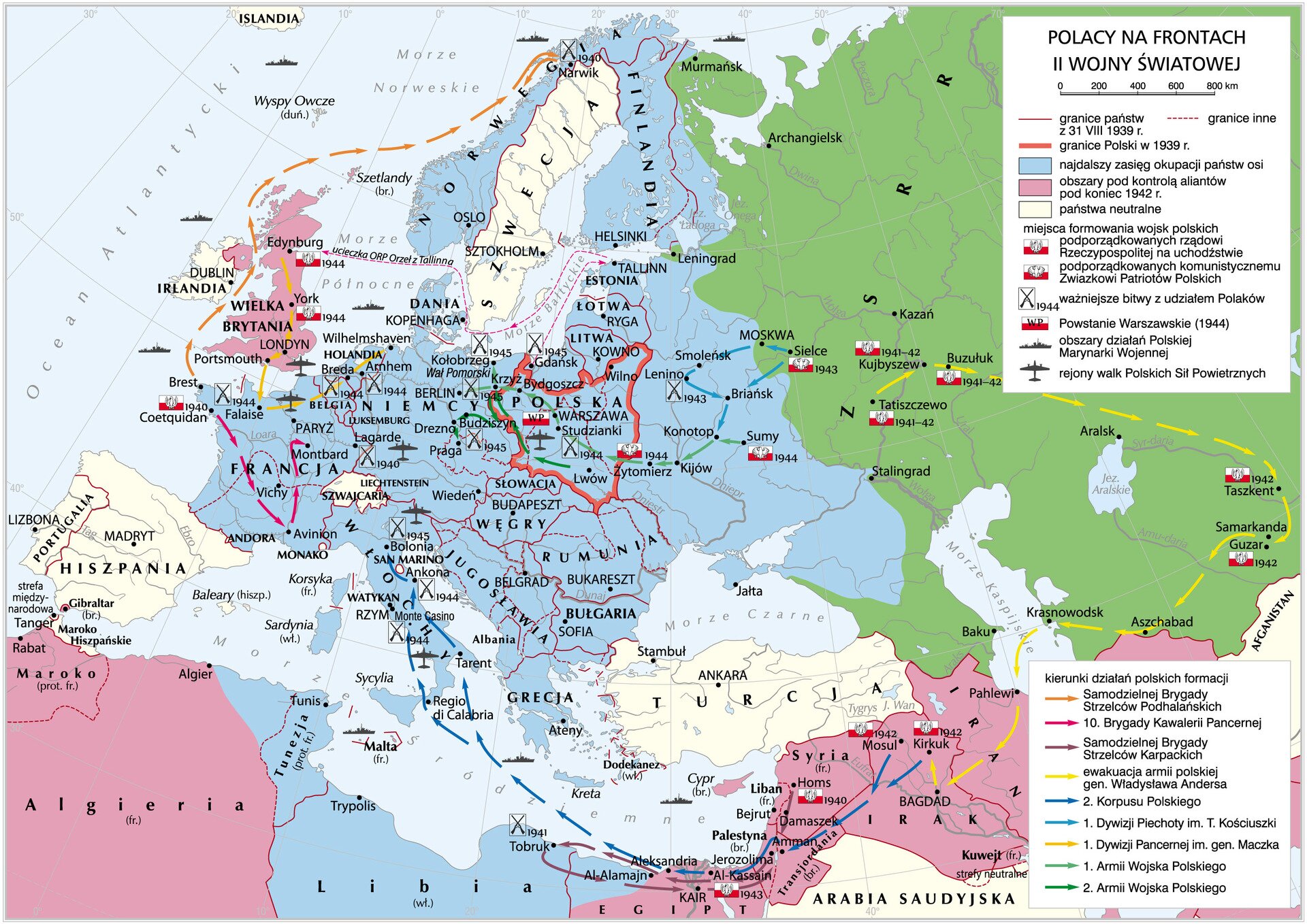
The Polish soldiers took part in battles on the fronts of World War II from the first days until the end of the conflict. After the Polish defeat in the defensive war, part of the Polish divisions managed to reach France, where the Polish government‑in‑exile undertook efforts to recreate the army. They became the basis of the Polish Armed ForcesPolish Armed Forces formed in the West; on the day of the Third Reich’s attack on France, they numbered over 80 thousand soldiers. The Polish soldiers participated in battles all across Europe – on the land and sea, and in the air. From the battles for Norway (the Polish Independent Highland Brigade commanded by gen. Zygmunt Szyszko‑Bohusz), through the defence of France (the 1st Grenadiers’ Division and the 2nd Rifle Division), to the battles in Africa (the Independent Carpathian Rifle Brigade). The Polish air fighters made great contributions to the Allied victory in the Battle of BritainBattle of Britain (1941), where the Polish 302nd and 303rd Fighter Squadrons took down more enemy planes than their British peers. Polish battleships fought on the seas and oceans: at the Norwegian coasts (“Orzeł Grom”), in the Mediterranean (“Kujawiak”, “Krakowiak”), and escorting convoys on the Atlantic and transports into the USSR (“Orkan”, “Garland”).
Polish forces started forming in the East (USSR) as well, after the signing of the Sikorski‑Majski agreementSikorski‑Majski agreement (1941), with gen. Władysław Anders as its commander. As a result of agreements between the nations, as well as those with the civilians, they were evacuated to the Middle East, forming the so‑called Second Corps, which afterwards took part in the Battles of Monte Cassino, Ancona and Bologna (1944‑1945).
After the opening of the Western Front in 1944, the Poles took part in the battles that took place in Europe as well. The 1st Armored Division commanded by General Stanisław Maczek fought in the Battle of Falaise, then participated in the liberation of Belgian and Dutch cities. The Polish parachuters of the 1st Independent Parachute Brigade fought in the Battle of Arnhem (Operation Market Garden), suffering sizable losses.
In 1943, after the evacuation of Anders’ Army, efforts were taken once again to form a Polish army in the USSR. The 1st Tadeusz Kościuszko Infantry Division, commanded by General Zygmunt Berling, fighting alongside the Soviet army, crossed the combat trail from the Battle of Lenino (1943) all the way to the capture of Berlin (1945), now as the 1st Army of the Polish People’s Army.
In the battles with the Germans also took part the 2nd Army of the Polish People's Army, created in autumn of 1944, and commanded by General Karol Świerczewski, who ended his combat trail by participating in the liberation of Czechoslovakia.
Why did the Polish government in exile depend on the reconstruction of Polish units in the West?
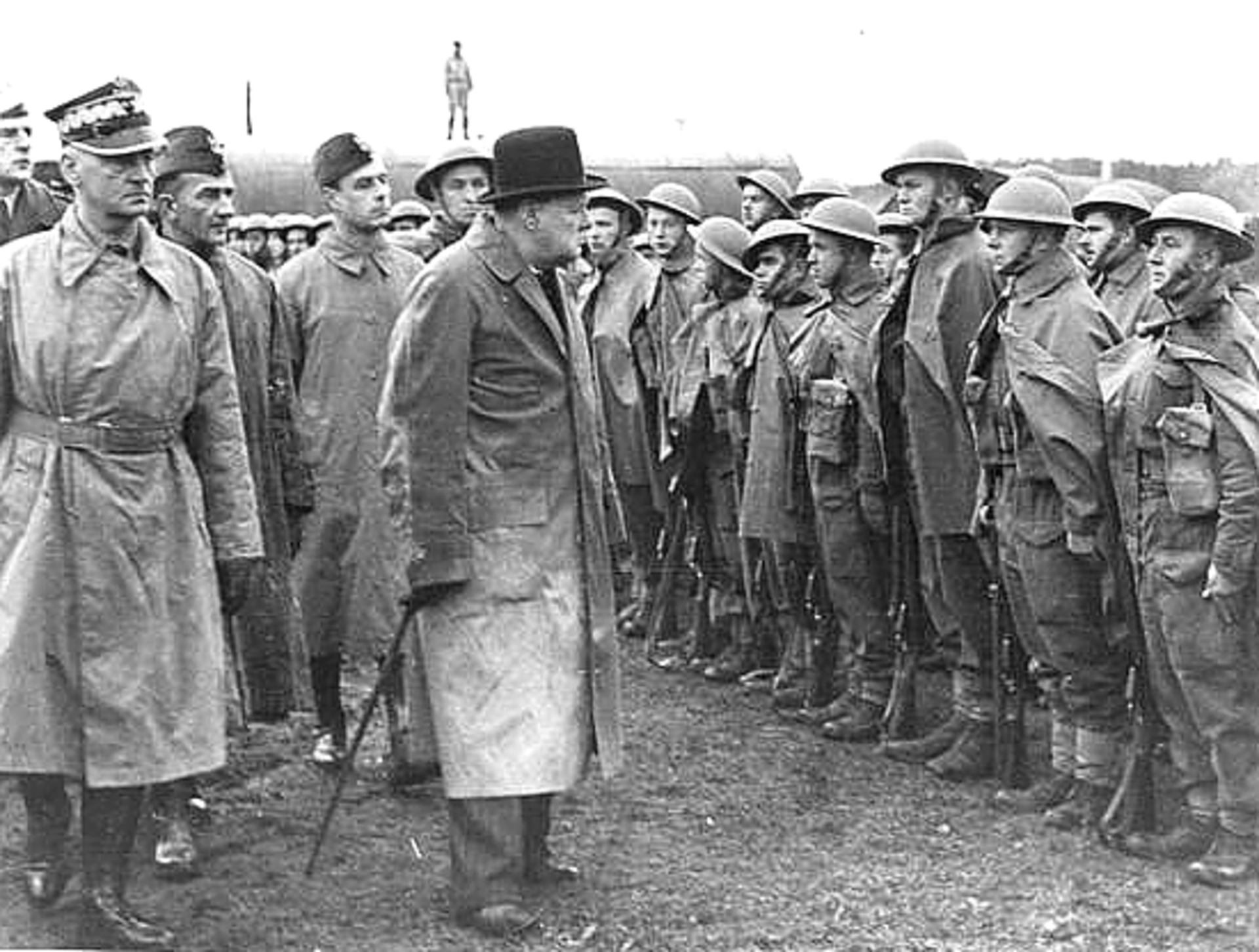
Study the event important for the Polish activities on the World War II fronts.
Recall what office Winston Churchill held in 1940.
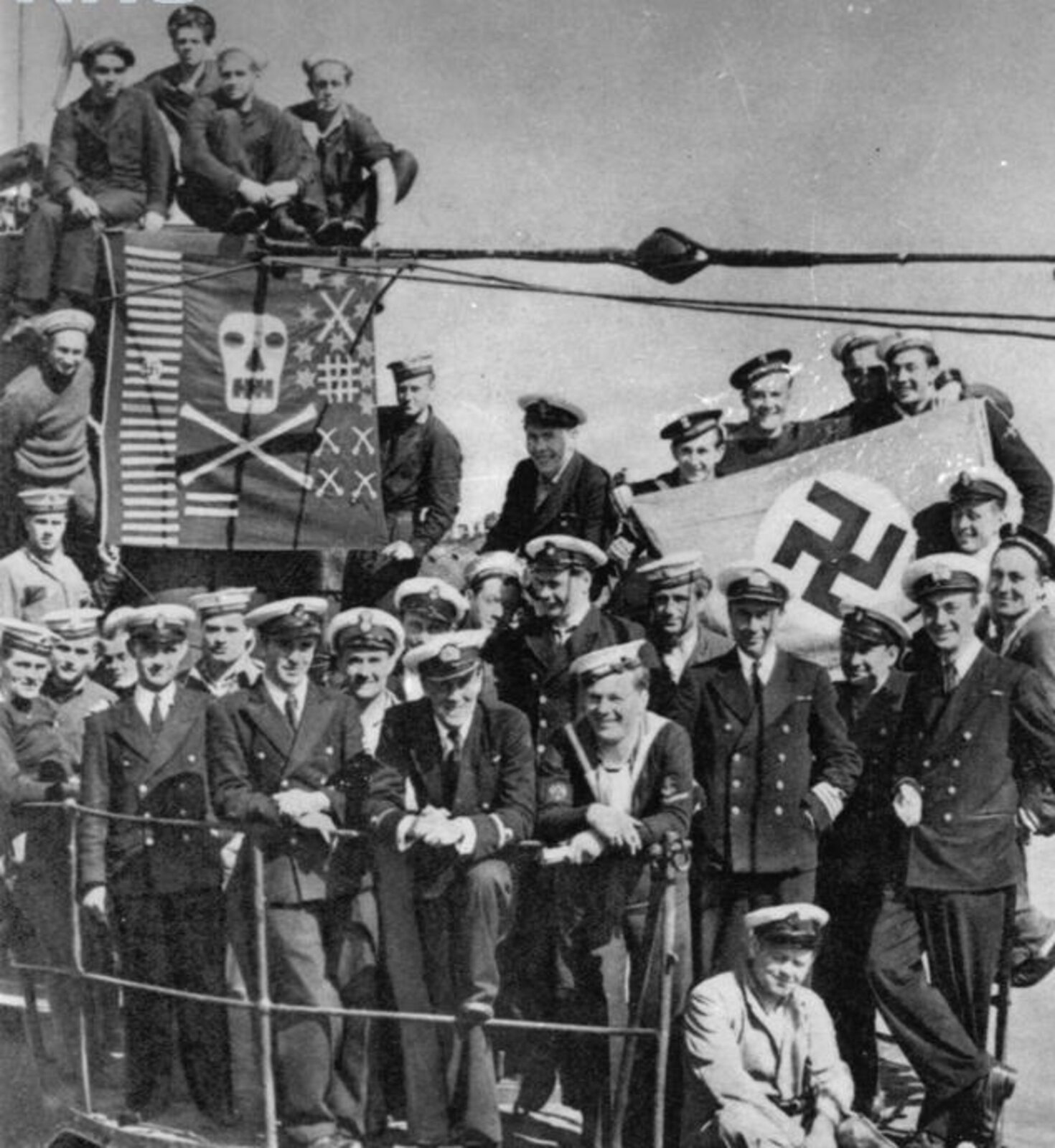
Try to find out why the submarine „Sokół” together with submarine „Dzik” gained the name „terrible twin”.
Match the terms with their definitions.
an air campaign fought between the German and British airforces from July to October 1941, the common name of the Polish Fighting Team that took part in the campaign in Northern Africa in 1943, The states fighting against Germany and the states allied with her during World War II., the arrest and imprisonment of people at a detention site., the agreement of 30 July 1941 restoring the diplomatic relations between Poland and the USSR, the Polish military formations created in the autumn of 1939 in Western Europe in agreement with France and Great Britain
| Allies | |
| Polish Armed Forces (PSZ) | |
| Internment | |
| Skalski’s Circus | |
| Battle of Britain | |
| Sikorski-Majski agreement |
Keywords
Polish Armed Forces, internment, Battle of Britain, Sikorski‑Majski agreement
Glossary
Alianci – państwa walczące przeciwko Niemcom i ich sojusznikom podczas II wojny światowej.
Polskie Siły Zbrojne (PSZ) – polskie formacje wojskowe utworzone jesienią 1939 r. na Zachodzie Europy, na podstawie porozumień z Francją i Wielką Brytanią. Dowodził nimi Naczelny Wódz. Istniały do 1947 r., kiedy to zostały rozwiązane przez Brytyjczyków.
Internowanie – przymusowe aresztowanie i osadzenie osób w miejscu odosobnienia bez możliwości jego opuszczania.
Cyrk Skalskiego – potoczna nazwa Polskiego Zespołu Myśliwskiego biorącego udział w kampanii w Północnej Afryce w 1943 r. Swoją nazwę zawdzięcza dowódcy – Stanisławowi Skalskiemu.
Bitwa o Anglię – kampania lotnicza toczona między lotnictwem niemieckim i brytyjskim od lipca do października 1941 r. Jej celem była obrona Anglii przed atakami niemieckimi i planowanym desantem morskim. Zakończyła się zwycięstwem wojsk alianckich, co uniemożliwiło III Rzeszy desant na Wyspy Brytyjskie.
Układ Sikorski‑Majski – porozumienie z 30 lipca 1941 r. przywracające stosunki dyplomatyczne między Polską i ZSRS. Miał na celu rozpoczęcie współpracy i wspólną walkę w ramach koalicji antyhitlerowskiej.