Understanding the Great War (revision lesson)
to indicate the main direct, indirect, political, and economic causes of the war and the revolution and civil war in Russia;
to characterize what the role of propaganda in World War I was;
to describe the peculiarity of the war activities.
The direct cause of World War I was the assassination of Austrian Archduke Franz Ferdinand of the Habsburg dynasty. The successor to the Austrian throne was killed in Sarajevo on 28 June 1914. This caused an armed conflict between Austria and Serbia. In the months that followed, the war was joined by other states that supported either of the sides.
For the Germans, their lightning war strategy was supposed to be a remedy for the lack of strategic raw materials. Their main objective was, therefore, to crush France, then transport the forces Eastward and defeat Russia. However, the French managed to stop the German offensive in the Battle of the Marne. This battle put a definite end to maneuver warfare in Western Europe. It was replaced by trench warfaretrench warfare. The trenches stretched for hundreds of kilometers along the frontlines. In 1916, the Germans attempted to break the Western front. The Battle of Verdun began at the end of February 1916; in the July of the same year, the French and the British launched their counteroffensive (the Battle of the Somme). None of those battles, taking place simultaneously until the end of 1916, managed to shift the position of the front either way.
On the Eastern front, the Russian offensive was stopped at the turn of August 1914 by Paul von Hindenburg, who claimed victory in the Battle of Tannenberg. At the beginning of September 1914, the Russian military captured Lviv, and, after a few months’ siege, it managed to capture the Przemyśl Fortress in March 1915. In May 1915, the Austrian‑German offensive in the Carpathians was launched. The Russians’ loss at Gorlice forced them to abandon Przemyśl and Lviv. At the beginning of August, the Germans entered Warsaw. By that time, the frontline stabilized around the border set by the Second Partition of Poland. This state of affairs lasted until 1916. Fierce fighting took place in the Balkans as well. In October 1915, the Central Powers attacked Serbia and Montenegro. The situation changed markedly when Bulgaria joined the war on the Central Powers’ side. Serbia’s defeat at the hands of the Bulgarians gave the Germans the desired direct land connection with Bulgaria and Turkey. In the end, the operations in the Balkans failed to provide a resolution to the conflict between the two blocs. Everything changed when the USA joined the war on the Entente’s side.
The miserable social and economic situation in Russia led to the February Revolution; Tsar Nicholas II was deposed. The power in the state was seized by the Provisional Government. Another important center of power was the Petrograd Soviet of Workers' and Soldiers' Deputies, subdued by the Bolsheviks. As a result of the October Revolution, the Bolsheviks, led by Vladimir Lenin, seized power in Russia. They dissolved the Constitutional Assembly and introduced the dictatorship of the proletariat. In the middle of December 1917, Russia signed a treaty with the Central Powers, and, a few days later, began negotiations with Germany, Austria‑Hungary, Turkey and Bulgaria. In 1918, the power in Russia was seized by the Russian Communist Party (Bolshevik) (RCPb). The former Tsarist Russian generals, known as the Whites, took a stand against the Bolsheviks. The civil war would last until 1922.
In 1918, Germany saw the rise of revolutionary attitudes and worker strikes. In July 1918 the Entente managed to, once again, stop the Germans at the Marne. Bulgaria’s resistance was broken as well, and in October, the Ottoman Empire surrendered. Due to the people’s revolt, German Emperor Wilhelm II abdicated on 9 July 1918. On 11 November 1918, the Entente’s representatives signed the armistice with Germany in Compiègne, thus ending the Great War.
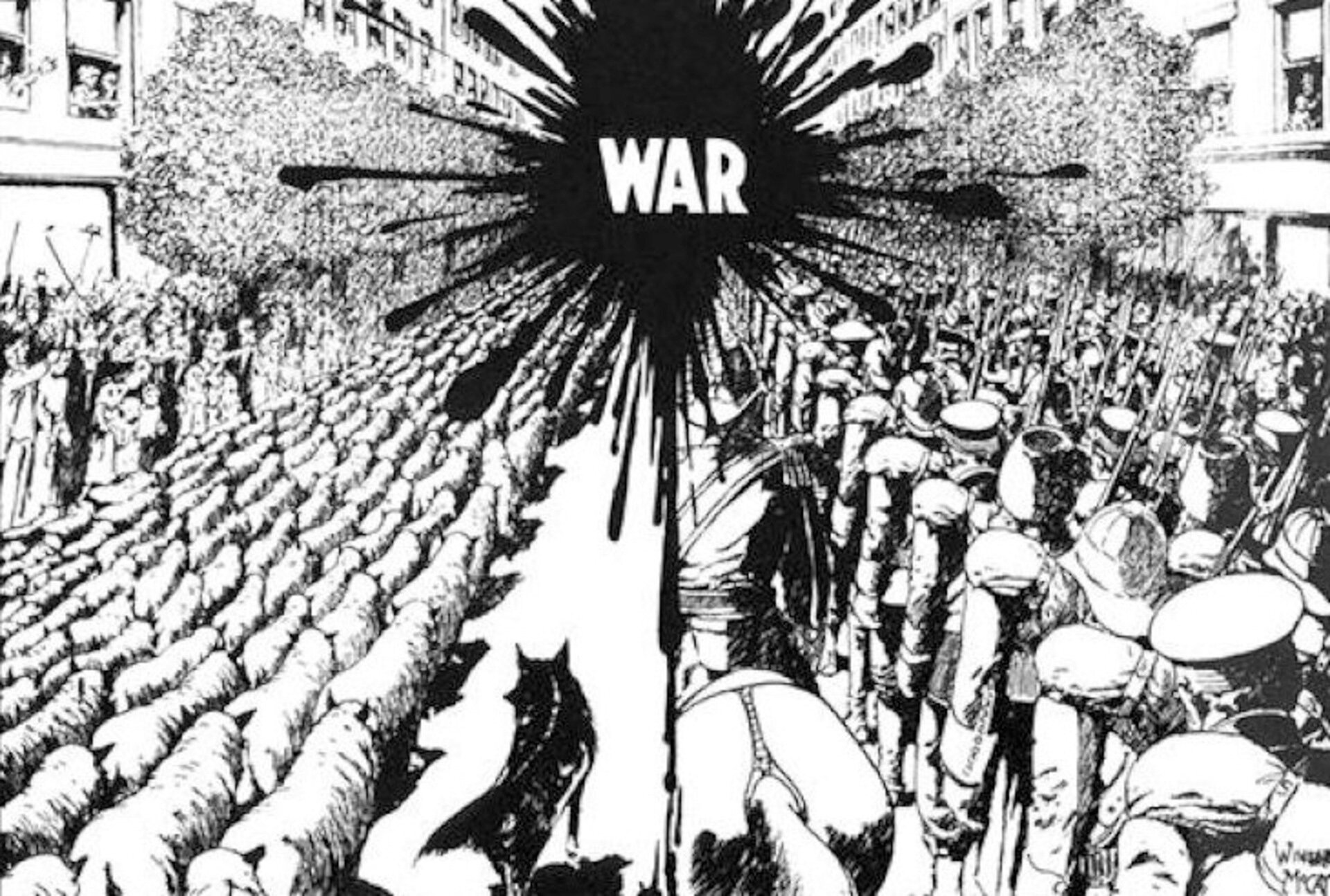
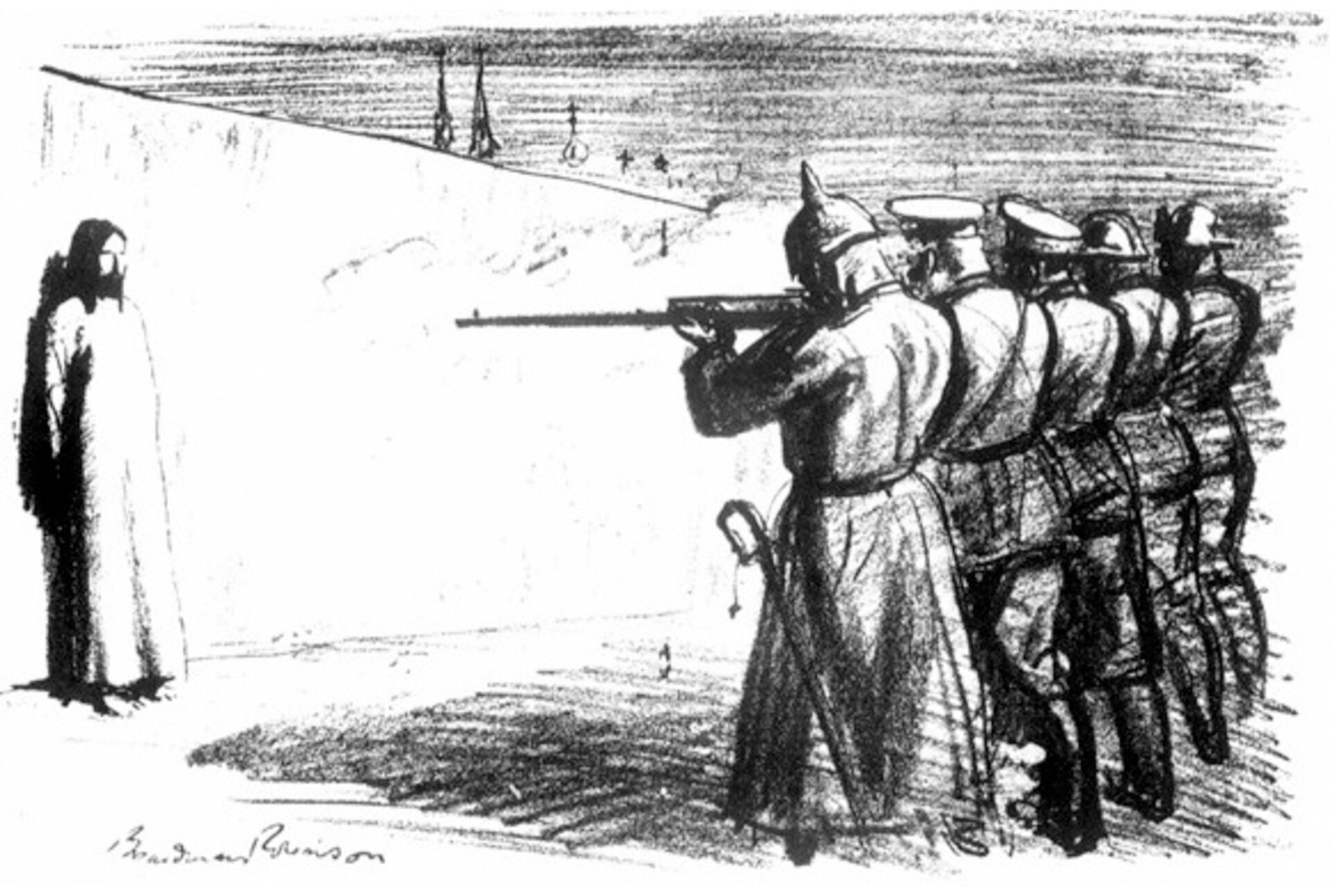
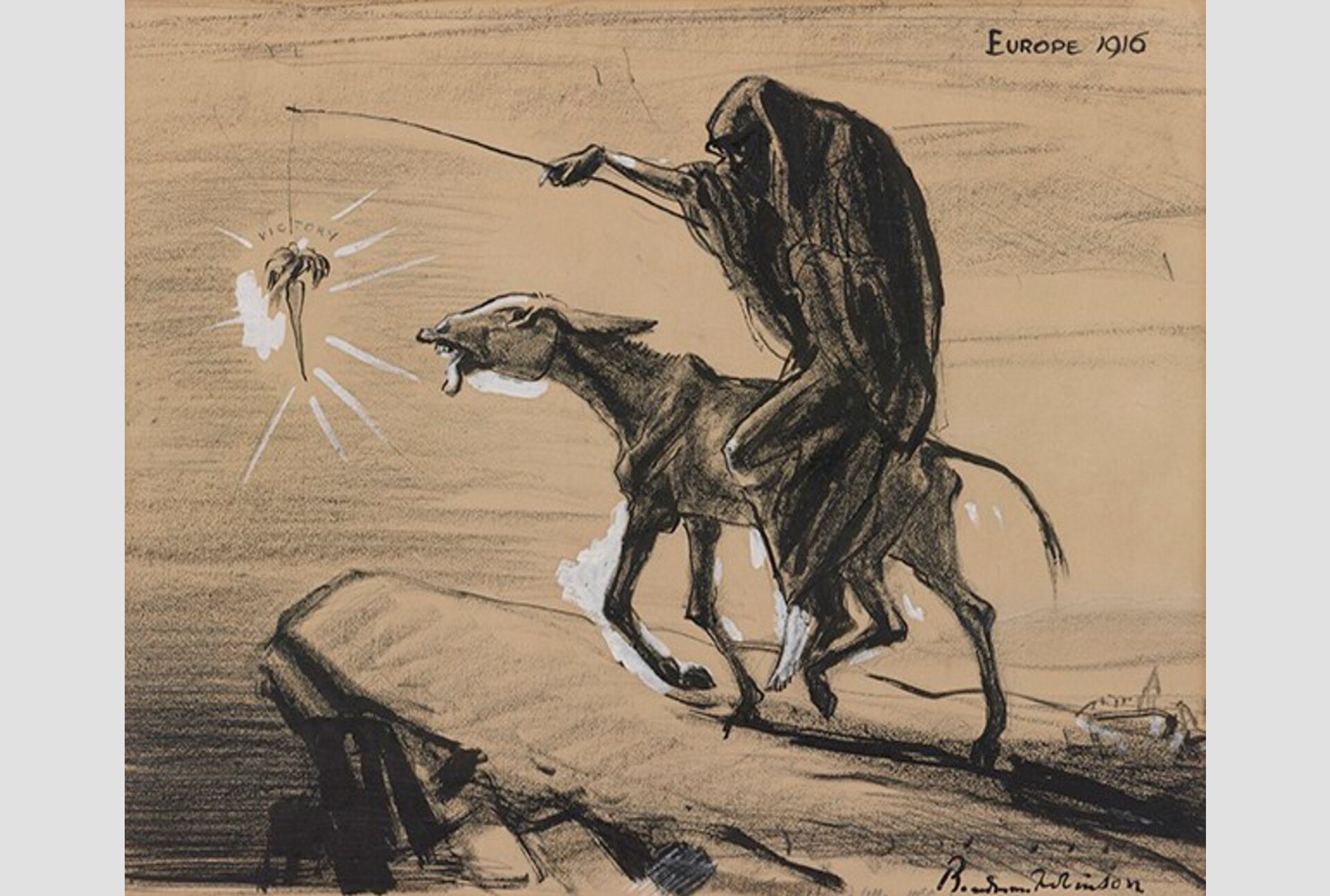
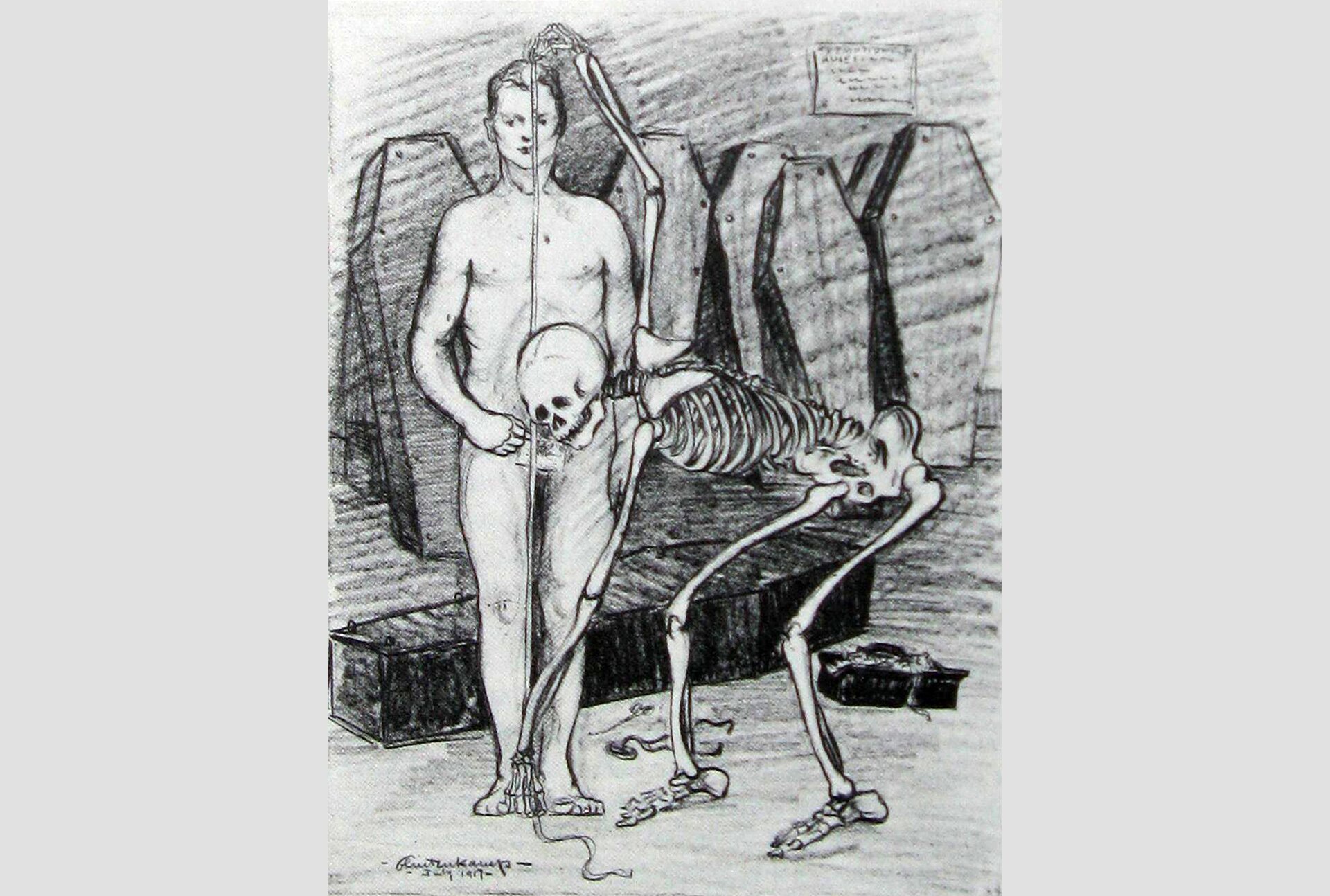
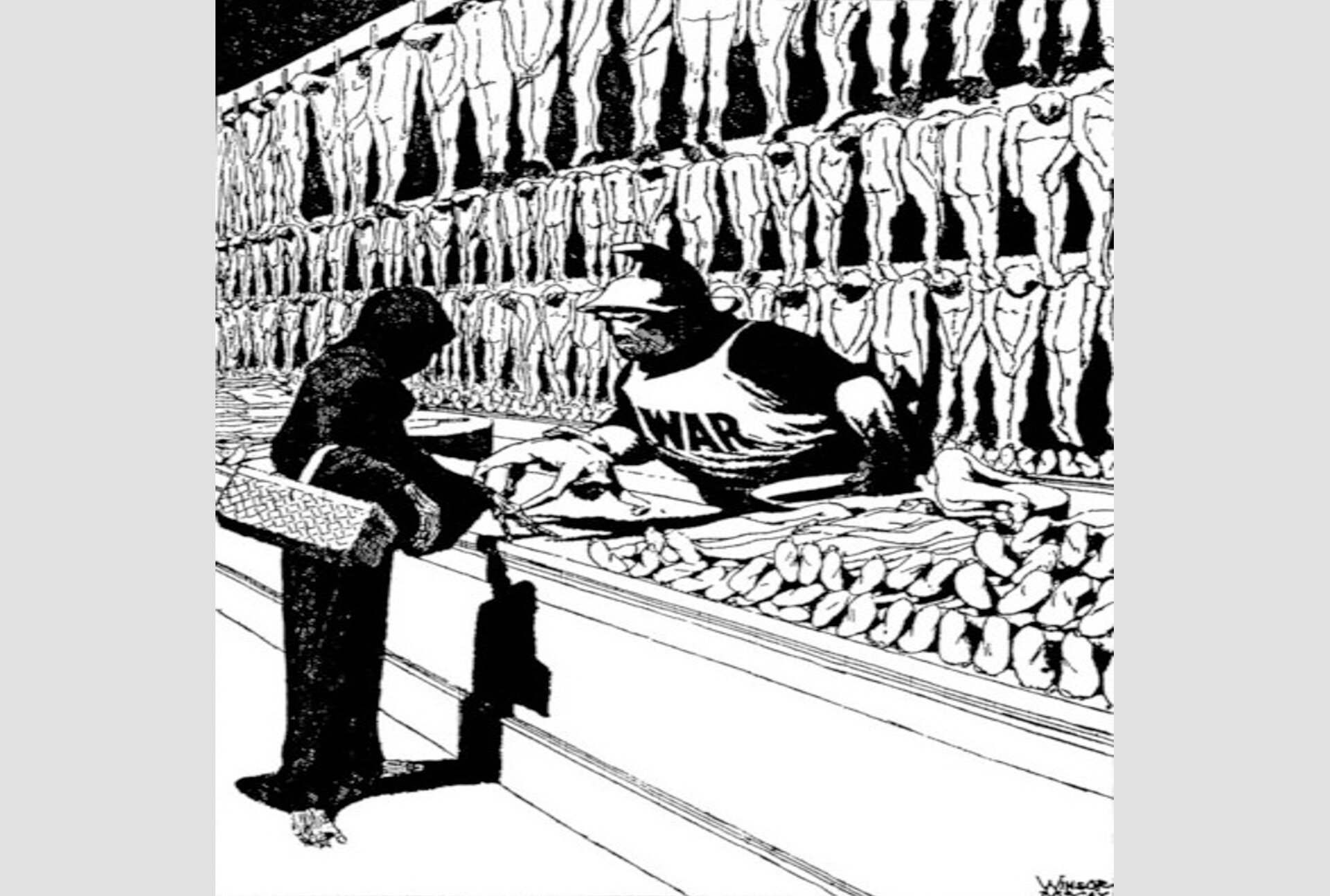
World War I was the first armed conflict where entire nations and societies – not just armies, as it was in previous wars – fought one another. A total of almost 70 million people were called forth to fight on tFamiliarize yourself with drawings and graphics from the period of the First World War. Pay attention to the dates of their creation. What are the phenomena and social problems that they inform about in a symbolic way? List them in points.
he fronts by all of the states taking part in the war. Almost 9 million soldiers died on the battlefields, and ca. 20 million ended up wounded. Conscription and human losses caused a demographic crisis, especially due to the fact that the majority of the people who perished were fairly young. Further millions of people died from starvation and epidemics. In total, Europe lost at least 32 million people between 1914 and 1919. The war caused a shift in the intergender relationships too. During the men’s absence, the women became more active in all spheres of social life, if more out of necessity than by choice. The war augmented the national ambitions and conflicts. In Central and Eastern Europe, the following nations fought for political autonomy or statehood: Poles, Czechs, Slovaks, Ukrainians, the Baltic nations, Croatians and Slovenes. In Western Europe, the Irish question was exacerbated permanently. The war had an emancipating effect on the populations of colonies as well.
Listen to the recording. What was the role of the exaggerated accounts from the front during the war? Why were they being disseminated?
During World War I, propaganda flourished on an unprecedented scale. It was employed the most effectively by Great Britain and the USA, who spread false rumors about the German atrocities to great results. The Germans were certainly not helped by their treatment of the population of occupied Belgium in 1914, nor by their sinking of the “Lusitania” transatlantic steamship in 1915, which in turn made the USA join the war.
Nonetheless, according to historians, the Great War period saw the spread of more deliberate lies than any other period in history. The accusation campaign was so intense that 20 years later it became the model upon which Hitler’s Third Reich based its own propaganda. It was not only the enemy leaders that were rendered repulsive to the particular societies – entire nations were reviled. The Allied propaganda portrayed the Germans as the Huns who invaded the neutral Belgium, shooting civilians, burning down towns and villages, murdering babies and raping nuns. The German propaganda, in turn, exposed the German citizens to the images of the French colonial divisions – the Africans that served in them were portrayed as eager to rape and plunder. However, it never managed to reach the level of the Allied propaganda.
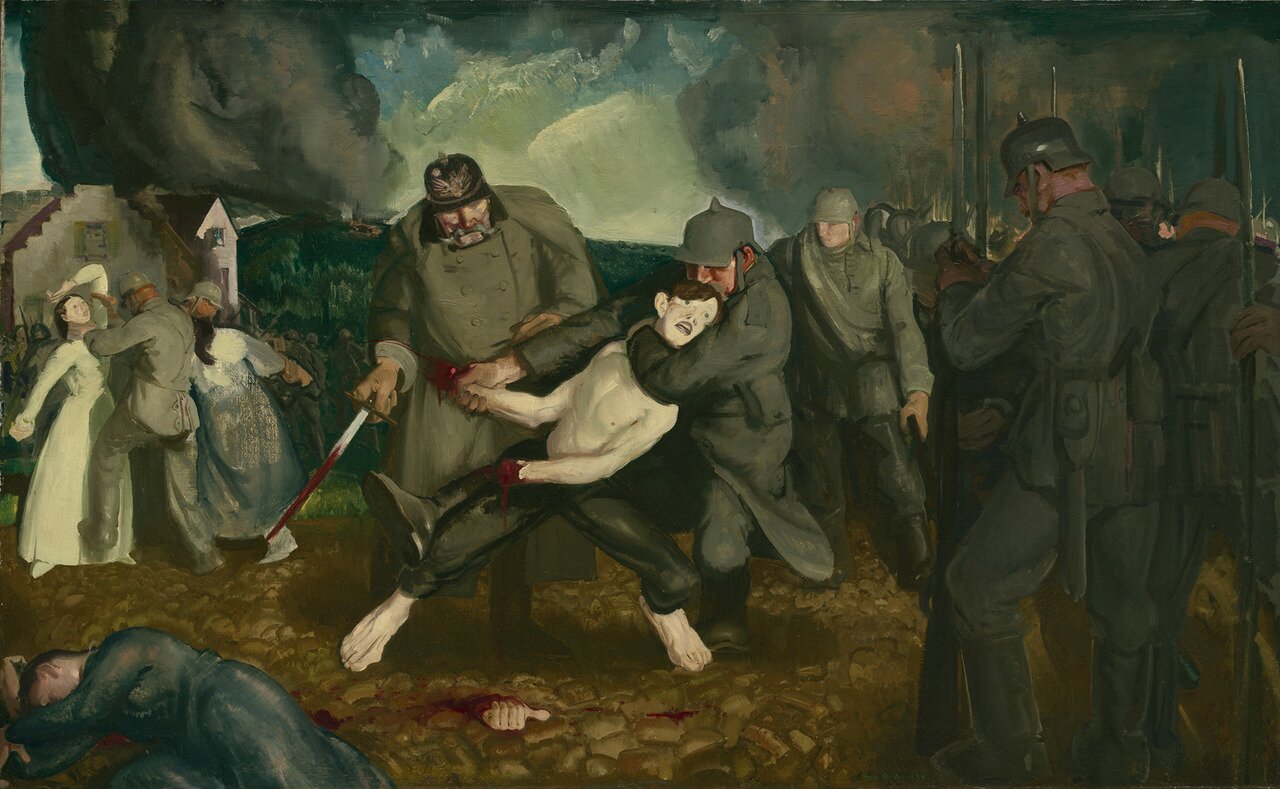
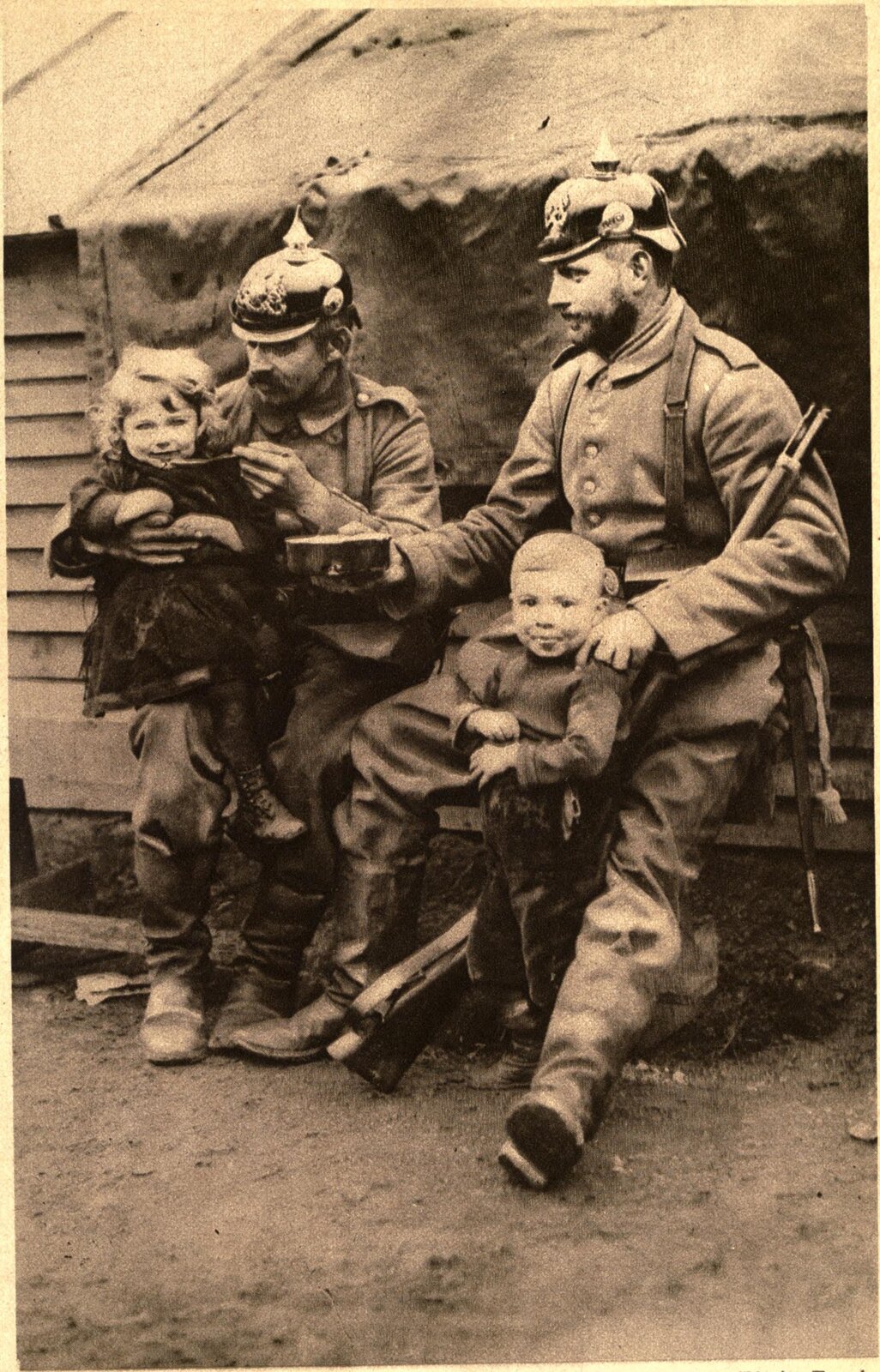
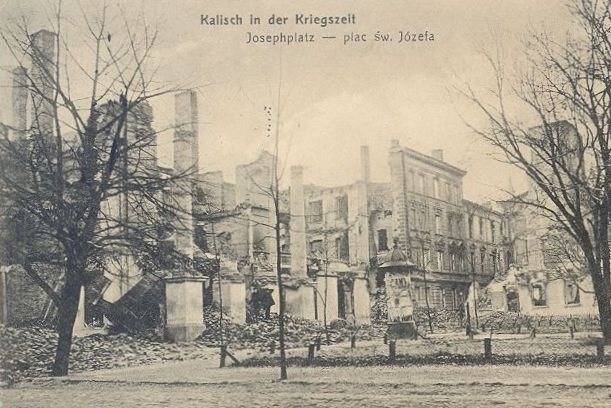
The German units did indeed take hostages and executed them at the slightest manifestations of resistance. They burned down villages and deported entire towns’ populations, and the aghast Belgians fled the soldiers, leaving their homes in panic. The Germans completely destroyed the university town of Leuven, together with its beautiful library, executing many of its inhabitants in the process. This event was what spurred the Allied information offensive. However, unfortunately, the atrocities in Belgium were neither the bloodiest nor exceptional. Not long prior, the same happened to the inhabitants of Kalisz. Its causes remained the same – the soldiers and the commanders dreaded the threat potentially posed by the civilians. This fear had a historical background. The Germans were frightened that uniformless partisans would join the fighting alongside the regular soldiers, as it happened in France in 1871.
Paradoxically, the clumsy Allied World War I propaganda made the British government reluctant to inform the society of the Nazi atrocities during World War II, fearing the disapproval of its own citizens and the USA for spreading allegedly false information. Intially, the signals pertaining to the Holocaust were indeed treated as improbable and exaggerated anti‑German lies, echoing those of the Great War era. Many people were under impression that they were, once again, being manipulated by the government.
[based on: Janina Struk, Holokaust w fotografiach. Interpretacje dowodółw, Warszawa 2007; Wielka Wojna. Jak sto lat temu w Europie zaczęła się rzeź, „Pomocnik Historyczny” 3/2014]
Great Britain | United States | Germany | France | Russia | Austria‑Hungary | Italy |
127 | 298 | 138 | 57 | 77 | 40 | 22 |
Note: in 1900, the industrial potential of Great Britain was 100.
Calculate the industrial potential of military blocks before the outbreak of World War I.
| Entente | Triple Alliance |
|---|---|
From the result of the Triple Alliance, subtract the potential of Italy and add the potential of the United States to the Entente. Which coalition had greater industrial potential after 1917? Explain.
- Both blocks had the same industrial potential
- Entente
- Triple Alliance
Keywords
Provisioning, dispatch, dislocation, subversion, mobilization, government propaganda, scepticism, ultimatum, entanglements
Glossary
„Lusitania” – nazwa parowca transatlantyckiego, który zatonął na Atlantyku 7 maja 1915 roku wskutek storpedowania przez niemiecką łódź podwodną
Aprowizacja – zaoptrywanie ludzi w jakimś trudnym czasie w niezbędne artykuły, najczęściej żywnościowe
Darwinizm społeczny – kierunek w socjologii II połowie XIX wieku; przenosił do badań nad społeczeństwem koncepcję walki o byt i doboru naturalnego autorstwa Ch.R. Darwina i usiłował za jej pomocą wyjaśnić życie społeczne
Depesza – urzędowa lub prasowa wiadomość, przekazana telegraficznie
Dyslokacja – rozmieszczenie lub przemieszczenie wojsk
Dywersja – działania prowadzone na terytorium nieprzyjaciela w celu dezorganizacji jego działań wojennych; inaczej sabotaż.
Międzynarodówka – organizacja międzynarodowa, skupiająca partie z różnych państw. W XIX wieku pierwsze takie organizacje stworzyły w 1864 i 1889 partie socjalistyczne.
Mobilizacja – zwiększenie stopnia gotowości bojowej sił zbrojnych państwa m.in. poprzez powoływaniu do służby rezerwistów
Ofensywa – natarcie
Propaganda rządowa – sterowanie poglądami ludzi w celu pozyskania zwolenników, rozpowszechnianie czegoś przez przedstawianie tego w korzystnym świetle , szerzenie informacji korzystnych dla rządu
Przedpiersie okopu – część okopu, nasyp ziemny chroniący przed pociskami nieprzyjaciela, stanowiący podparcie obsługiwanej broni.
Sceptycyzm – powątpiewanie, niedowierzanie, zdrowa nieufnosć względem informacji, krytycyzm
Torpeda – pocisk podwodny, służący niszczeniu lub uszkadzaniu jednostek pływających przeciwnika; dysponuje najczęściej własnym układem napędowym.
Ultimatum – oświadczenie rządu skierowane do władz innego państwa, zawierające groźbę użycia siły zbrojnej w razie niespełnienia określonych żądań
Wojna pozycyjna – wojna, podczas której obie walczące strony zajmują silnie umocnione pozycje; między walczącymi stronami znajduje się tzw. ziemia niczyja, nad którą żadna ze stron nie ma kontroli.
Woodrow Thomas Wilson (1856- 1924) – amerykański prawnik i historyk; w latach 1913–21 prezydent Stanów Zjednoczonych
Zasieki – zapora z drutu kolczastego
Ziemia niczyja – pas ziemi między okopami walczących stron, poza kontrolą którejkolwiek z nich