When the World War I broke out in Europe, the United States, with the decision of their President Woodrow WilsonWoodrow Thomas WilsonWoodrow Wilson announced their neutrality. The breakthrough happened when Germany introduced the unlimited submarine warfareUnlimited submarine warfareunlimited submarine warfare, lead without regard to the interests of neutral countries, which was announced to their governments. Atlantic trade routes became so dangerous because of German actions that the situation became a threat to American economy. Their policy and the actions against the USA Zimmermann TelegramTelegramTelegram”) caused that on 6th of April 1917, with the support of the Congress and supported by the citizens, President Woodrow Wilson announced that the USA will join the war siding with the Allies. The Americans started fighting by using their navy. Financial and material aid was sent to Europe. Many months later, the American forces began fighting on land. This meant a great reinforcement for the Allied forces.
Task 1
Wysłuchaj nagrań słówek w słowniczku i naucz się ich prawidłowej wymowy.
Wysłuchaj nagrań słówek w słowniczku i naucz się ich prawidłowej wymowy.
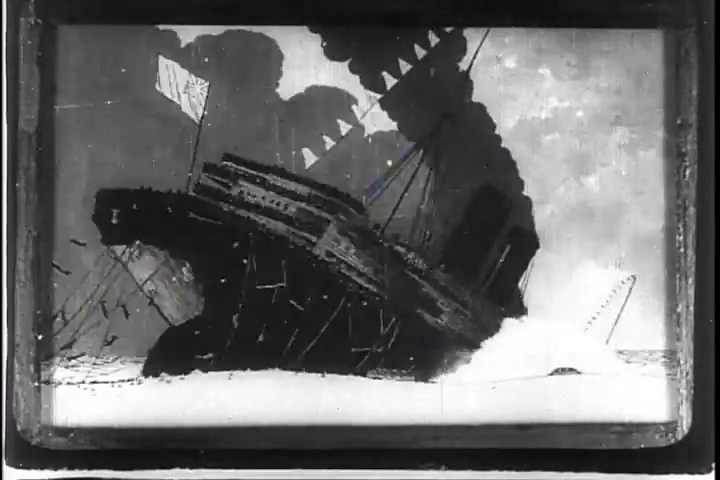
TorpedoingtorpedoTorpedoing of the Transatlantic Ocean Liner „RMS LusitaniaRMS LusitaniaRMS Lusitania”, which sunk on 7th of May 1915 on the Atlantic, was one of the causes that lead to the US joining the war against the Axis. Watch fragments of the animated movie titled “The Sinking of RMS Lusitania” of 1918. Check, which artistic methods were used by the director, Winsor McCay, in order to show the American public his indignation with that fact. Enumerate them and describe them with your own words. Which ones convince you the most? Why?
RvDmadBs3ZX7K
Czarno-biały niemy film animowany. Film przedstawia storpedowanie Statku Transatlantyckiego "RMS Lusitania" przez niemiecką łódź podwodną. Najpierw pokazano wypłynięcie statku z portu w Nowym Jorku. Następnie uderzenie torpedy powodujące dużą eksplozję, a potem pasażerów ratujących się w szalupach i skaczących do wody. Film przerywany jest planszami z tekstem o treści: The Lusitania carrying more than 2000 passengers of whom 200 were Americans, sailed for Liverpool, England, May 1st, 1915. Warnings had been published in the New York newspapers by the German embassy, but they were regarded lightly, and all on board felt safe. Two hours later, while steaming at 18 knots, the Lusitania was struck almost directly under the Captain's bridge by the first of two torpedoes fired by the German Submarine U-39. The babe that clung to his mother's breast cried out to the world - TO AVENGE the most violent cruelty that was ever perpetrated upon an unsuspecting and innocent people. The man who fired the shot was decorated for it by the Kaiser! - AND YET THEY TELL US NOT TO HATE THE HUN.
Czarno-biały niemy film animowany. Film przedstawia storpedowanie Statku Transatlantyckiego "RMS Lusitania" przez niemiecką łódź podwodną. Najpierw pokazano wypłynięcie statku z portu w Nowym Jorku. Następnie uderzenie torpedy powodujące dużą eksplozję, a potem pasażerów ratujących się w szalupach i skaczących do wody. Film przerywany jest planszami z tekstem o treści: The Lusitania carrying more than 2000 passengers of whom 200 were Americans, sailed for Liverpool, England, May 1st, 1915. Warnings had been published in the New York newspapers by the German embassy, but they were regarded lightly, and all on board felt safe. Two hours later, while steaming at 18 knots, the Lusitania was struck almost directly under the Captain's bridge by the first of two torpedoes fired by the German Submarine U-39. The babe that clung to his mother's breast cried out to the world - TO AVENGE the most violent cruelty that was ever perpetrated upon an unsuspecting and innocent people. The man who fired the shot was decorated for it by the Kaiser! - AND YET THEY TELL US NOT TO HATE THE HUN.
Source: Zatopienie Lusitanii, reż. Winsor McCay, 1918, licencja: CC 0.
Source: Zatopienie Lusitanii, reż. Winsor McCay, 1918, licencja: CC 0.
Czarno-biały niemy film animowany. Film przedstawia storpedowanie Statku Transatlantyckiego "RMS Lusitania" przez niemiecką łódź podwodną. Najpierw pokazano wypłynięcie statku z portu w Nowym Jorku. Następnie uderzenie torpedy powodujące dużą eksplozję, a potem pasażerów ratujących się w szalupach i skaczących do wody. Film przerywany jest planszami z tekstem o treści: The Lusitania carrying more than 2000 passengers of whom 200 were Americans, sailed for Liverpool, England, May 1st, 1915. Warnings had been published in the New York newspapers by the German embassy, but they were regarded lightly, and all on board felt safe. Two hours later, while steaming at 18 knots, the Lusitania was struck almost directly under the Captain's bridge by the first of two torpedoes fired by the German Submarine U-39. The babe that clung to his mother's breast cried out to the world - TO AVENGE the most violent cruelty that was ever perpetrated upon an unsuspecting and innocent people. The man who fired the shot was decorated for it by the Kaiser! - AND YET THEY TELL US NOT TO HATE THE HUN.
Task 2
Listen to a fragment of a popular science text and then, characterize the reasons why the US joined the war. Which goals did they want to achieve?
A. ChwalbaSuicide of Europe. The Great War 1914-1918
“The citizens of the United States deemed “Prussian invasion plot” as a dirty trick – a real knife to the back. Zimmermann Telegram significantly contributed to changing the minds of American pacifists into warriors and patriots. “Times” from Detroit wrote: “It looks like this means war for the entire country.” The Telegram woke America from its slumber, changed the course of history – as it was commented pathetically – and killed the American illusion that you can live happily in your own country, away from the events in Europe and of the world. The Americans decided to punish the Germans, then. The above mentioned Telegram and secret negotiations with Japan eventually convinced Wilson that the country must join the war. He wanted to believe that this will bring them closer to the peace on conditions dictated by the US. Besides, the President [...] and other US politicians knew that the victory of the Axis would not be a good thing for the American interest in a long term. Joining the Allies was easier, also because the Imperial Russia didn’t exist anymore, and that country was notorious in the US. Republican and liberal Russia took its place. [...] The sinking of RMS Lusitania and Zimmermann Telegram turned out to be a useful alibi for the US government which made it easier to mobilize the public opinion, influenced the moods in the country and justified joining the war.
Rr7H5M9R7S3Cb1
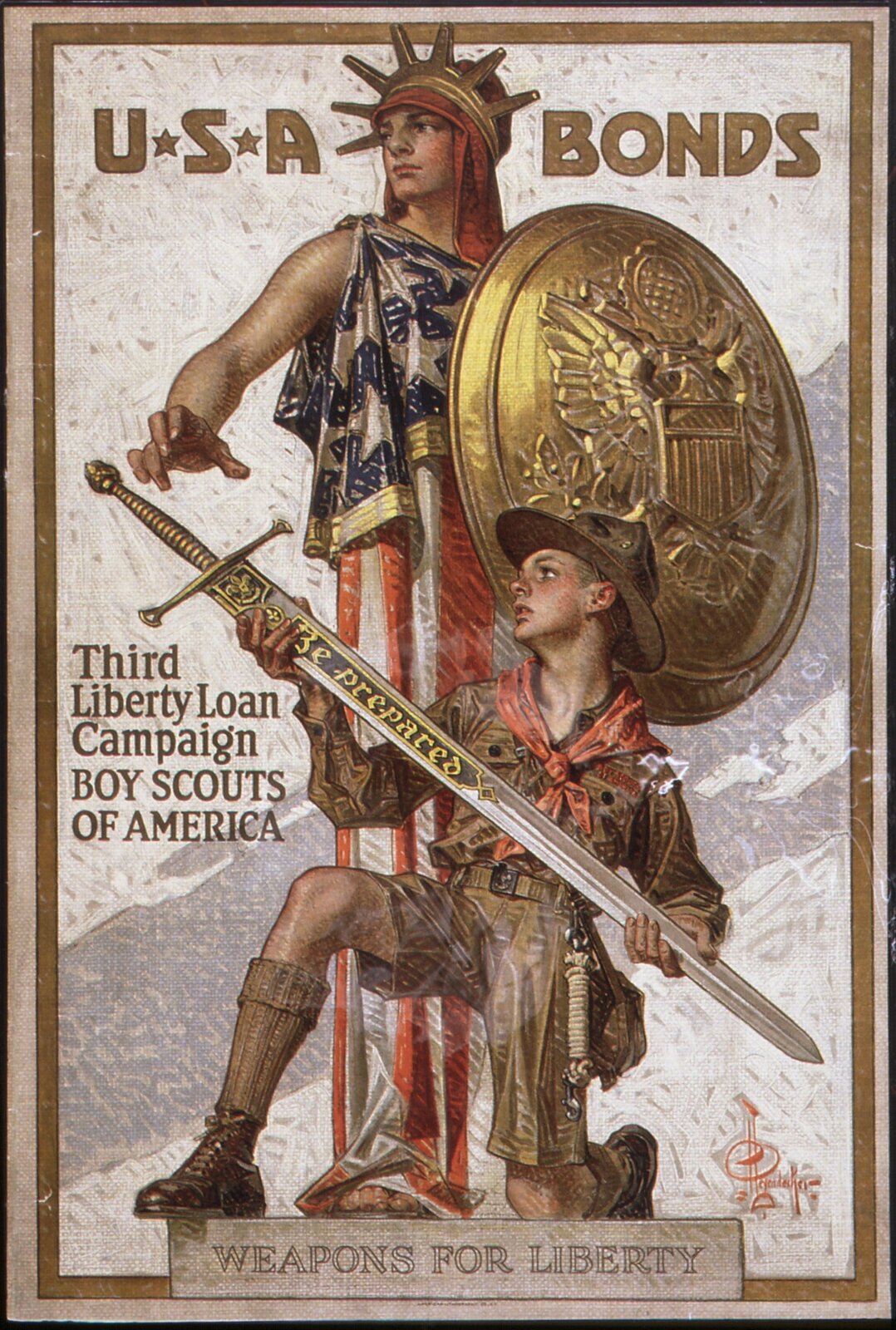
Ilustracja przedstawiająca plakat propagandowy. Widać na nim wysoką postać przypominającą statuę wolności, odzianą w amerykańską flagę i trzymającą złotą tarczę z wizerunkiem orła. Poniżej widać młodego chłopca, skauta w mundurze. Skaut podaje wysokiej postaci miecz. Na plakacie widoczne są napisy. Na górze: USA Bonds. Na środku: Third Liberty Loan Campaign Boy Scouts of America. Na dole: Weapons for liberty.
Boy Scouts of America organization helping the government to sell war bonds.
On 3rd February 1917, the United States of America broke off diplomatic relations with the Reich, and on 2nd of April the Congress started a session dedicated to the topic of war. [...] The US Senate on 4th of April, with 82 votes against 6 decided to declare war against Second Reich, and on 6th of April, the House of Representatives, with 373 votes against 50, accepted the will of the President. The Congress was flooded by colourful, patriotic speeches. The war became popular in America. “USA de facto were pushed into this war” – commented a British politician. In December 1917, the US declared war against the Austro‑Hungarian Empire, but they did not declare war against Bulgaria and Turkey. America, unlike the European Allies, did not have any territorial or economic demands, it declared only the desire to make the world a better place, with greater access to freedom and democracy. This gave Wilson’s speeches a superior moral character in comparison to the Allies.”
chwalba2 Source: A. Chwalba, Suicide of Europe. The Great War 1914-1918, Kraków 2014, s. 286–288.
RsKK0qJXNwFbt
Exercise 1
Match the correct answers. The reasons why the US joined the war Możliwe odpowiedzi: 1. the desire to make the world a better place, with greater access to peace and democracy for other nations, 2. the sinking of RMS Lusitania, 3. Zimmermann Telegram, 4. The Americans wanted to punish the Germans, 5. secret negotiations between Germany and Japan, 6. peace on conditions dictated by the US Goals of the US government Możliwe odpowiedzi: 1. the desire to make the world a better place, with greater access to peace and democracy for other nations, 2. the sinking of RMS Lusitania, 3. Zimmermann Telegram, 4. The Americans wanted to punish the Germans, 5. secret negotiations between Germany and Japan, 6. peace on conditions dictated by the US
Match the correct answers. The reasons why the US joined the war Możliwe odpowiedzi: 1. the desire to make the world a better place, with greater access to peace and democracy for other nations, 2. the sinking of RMS Lusitania, 3. Zimmermann Telegram, 4. The Americans wanted to punish the Germans, 5. secret negotiations between Germany and Japan, 6. peace on conditions dictated by the US Goals of the US government Możliwe odpowiedzi: 1. the desire to make the world a better place, with greater access to peace and democracy for other nations, 2. the sinking of RMS Lusitania, 3. Zimmermann Telegram, 4. The Americans wanted to punish the Germans, 5. secret negotiations between Germany and Japan, 6. peace on conditions dictated by the US
Match the correct answers.
The Americans wanted to punish the Germans, the sinking of RMS Lusitania, the desire to make the world a better place, with greater access to peace and democracy for other nations, Zimmermann Telegram, secret negotiations between Germany and Japan, peace on conditions dictated by the US
The reasons why the US joined the war
Goals of the US government
R39WI5T6Jbqu7
Exercise 2
Select phrases that describe the goals of American politics as declared by Wilson in his speech to the US Congress in January 1918. Our aim and wish is to ensure peaceful processes and - when this stage is finally reached - full openness that excludes the possibility of any secret alliances and agreements. The day of conquest and aggrandizement is gone by; so is also the day of secret covenants entered into in the interest of particular governments and likely at some unlooked-for moment to upset the peace of the world. [...] We entered this war because violations of right had occurred which touched us to the quick and made the life of our own people impossible unless they were corrected and the world secured once for all against their recurrence. The American nation cannot imagine a life without repairing damages, ensuring world’s peace and making sure that what once was will not be repeated. Our aspirations and goals are nothing new or demanding. We want a world that is friendly and safe; we want this world for every nation that loves peace, for every nation that, just like our nation, wants to live their way, have their own authorities, have just and honest relationship with neighbours who also are against using force and egoistic aggression.
Select phrases that describe the goals of American politics as declared by Wilson in his speech to the US Congress in January 1918. Our aim and wish is to ensure peaceful processes and - when this stage is finally reached - full openness that excludes the possibility of any secret alliances and agreements. The day of conquest and aggrandizement is gone by; so is also the day of secret covenants entered into in the interest of particular governments and likely at some unlooked-for moment to upset the peace of the world. [...] We entered this war because violations of right had occurred which touched us to the quick and made the life of our own people impossible unless they were corrected and the world secured once for all against their recurrence. The American nation cannot imagine a life without repairing damages, ensuring world’s peace and making sure that what once was will not be repeated. Our aspirations and goals are nothing new or demanding. We want a world that is friendly and safe; we want this world for every nation that loves peace, for every nation that, just like our nation, wants to live their way, have their own authorities, have just and honest relationship with neighbours who also are against using force and egoistic aggression.
Select phrases that describe the goals of American politics as declared by Wilson in his speech to the US Congress in January 1918.
political goals
Our aim and wish is to ensure peaceful processes and - when this stage is finally reached - full openness that excludes the possibility of any secret alliances and agreements. The day of conquest and aggrandizement is gone by; so is also the day of secret covenants entered into in the interest of particular governments and likely at some unlooked-for moment to upset the peace of the world. [...] We entered this war because violations of right had occurred which touched us to the quick and made the life of our own people impossible unless they were corrected and the world secured once for all against their recurrence. The American nation cannot imagine a life without repairing damages, ensuring world’s peace and making sure that what once was will not be repeated. Our aspirations and goals are nothing new or demanding. We want a world that is friendly and safe; we want this world for every nation that loves peace, for every nation that, just like our nation, wants to live their way, have their own authorities, have just and honest relationship with neighbours who also are against using force and egoistic aggression.
„Lusitania” – nazwa parowca transatlantyckiego, który zatonął na Atlantyku 7 maja 1915 roku wskutek storpedowania przez niemiecką łódź podwodną (U‑boota).
Nieograniczona wojna podwodna – niemiecka strategia wojny podwodnej polegająca na atakowaniu bez ostrzeżenia wszystkich jednostej pływających wokół Wysp Brytyjskich. Zapoczątkowana w 1915 roku, po czasowym zawieszeniu kontynuowana od początku 1917 roku. Stała się jedną z przyczyn przystąpienia USA do I wojny światowej.