Chemistry lab pt 1
what the field of science called chemistry deals with;
who the chemist is and how you can become one;
to which branches of industry chemistry is related;
what the pictograms on the labels used in your environment mean.
what the importance of laboratories in various fields of science and industry is;
to apply the safety rules in a chemical laboratory in practice;
what the purpose of observing the regulations of the school classroom is and to follow these regulations when conducting experiments and chemical empirical test;
to identify laboratory equipment and glass and discuss their use;
Where is the scientific research carried out?
The laboratory is a place where the part of scientific research that requires performing experiments under strictly controlled conditions is carried out.
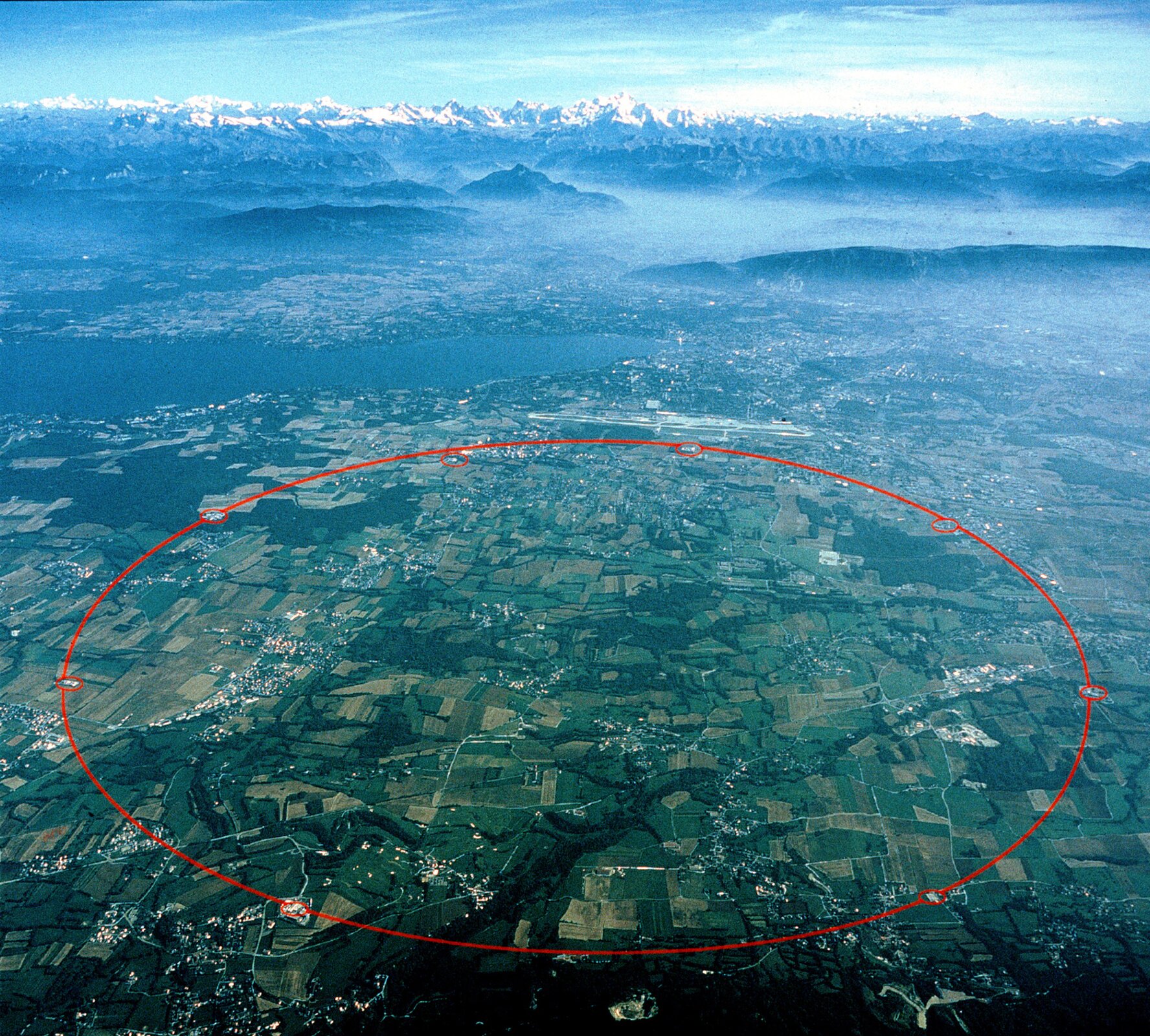
Laboratories can be either small rooms or large research halls or research complexes the size of a large city – such as the research and development facility of the European Organization for Nuclear Research, CERN, located in the suburbs of Geneva, which occupies a significant area. One of its parts: the Large Hadron Collider, is located in a tunnel that is 27 kilometer long. Much smaller, but very interesting chemical, biological and physical laboratories can be visited at the Copernicus Science Centre in Warsaw. There, under the supervision of specialists, you can carry out various unusual experiments on your own.
What is the difference between an empirical test and an experiment?
An experiment is the basic method of scientific cognition. It differs from the empirical test in this that it includes not only the performance of laboratory activities in accordance with the instructions (as it happens in the observation), but assumes independent formulation of hypotheses and their testing.
What are the stages of a scientific experiment? What is a hypothesis and how to test it?
Problem statement (problematic situation “Does...”).
A problem, to be a research problem, must be: precisely stated, researchable, useful.Formulating a hypothesis (“If... then....” or “The more... the less...”)
A hypothesis is a guess: precisely stated, formulated in such a way that it is easy to test, empirically verifiable.Selecting the research method.
Carrying out the empirical test.
The result verifies or falsifies the hypothesis.
Solving the research problem or to rejecting the wrong hypothesis.
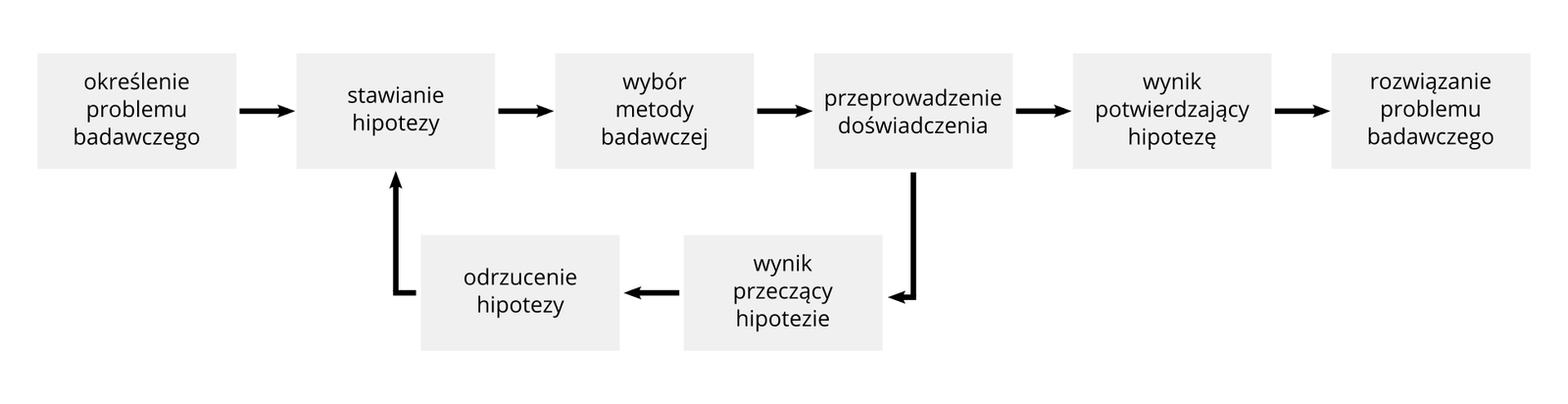
1. determining the research problem
2. putting a hypothesis
3. selection of a research method
4. conducting an experiment
5. the result confirming the hypothesis
6. solution to the research problem
7. rejection of the hypothesis
8. the result contradicts the hypothesis
Think about where blood samples are tested.
If you are a fan of crime series, please pay attention to where and with what methods the samples from crime scenes are examined. Look for information on work in the forensic laboratory in available sources.
How do chemists describe chemical experiments and what equipment they use?
One of the most important elements of chemistry lessons are empirical tests. To make them, you need laboratory glass, sometimes porcelain or metal dishes and laboratory equipment. Knowledge of their names and rules for their use allows for safe experimenting.
The description of the chemical experiment should include:
the title of the empirical test
list of equipment and laboratory glass that is needed to carry out a given empirical test
list of necessary reagents
description of laboratory activities
empirical test design
observations, i.e. findings that we make using our senses: sight (e.g. color change), smell (characteristic smell), hearing (characteristic sound) or touch (the walls of the tube are hot):i.e. what do you see? what do you hear? what can you measure or weigh? Eating and drinking, as well as checking the taste of chemicals is prohibited in the laboratory.
conclusions formulated on the basis of the performed empirical test (what results from this?)
How is laboratory glass connected?
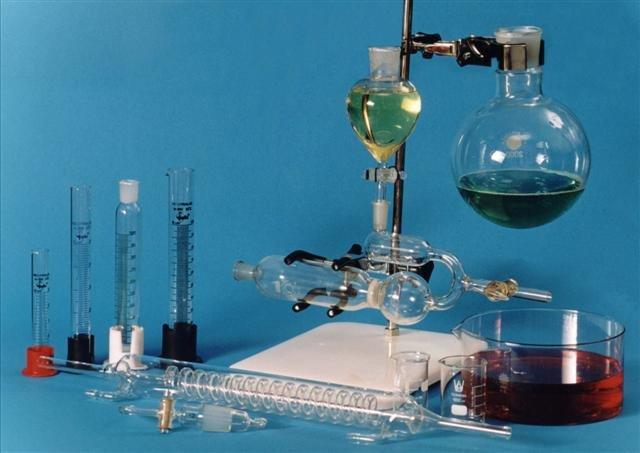
Match the laboratory equipment with it's proper names.
condenser, crystallizer, measuring glass, separating funnel, round-bottomed flask, stand, beaker
Match the type of the laboratory glass with its intended use.
used to support dishes or crucibles during their heating with a flame of a gas burner, heating liquids at atmospheric pressure, preparing solutions, carrying out chemical reactions in liquids, liquid evaporation, sludge drying, sludge digestion, accurate measurement of various volumes of liquids, heating small volumes of liquids and carrying out chemical reactions in small volumes of solutions
| porcelain evaporating dish | |
| tripod | |
| pipette | |
| test tube | |
| conical flask |
Arrange at least six quiz questions related to the abstract and give them to your colleagues.
Summary
In the chemical laboratory, the rules of health and safety regulations (health and safety at work) must be observed.
Special glass, dishes and laboratory equipment should be used for chemical experiments.
When planning the empirical test, you must remember to use reagents reasonably in order to reduce the amount of waste generated.
Chemical experiments should be performed on a laboratory table in accordance with laboratory work techniques, keeping in mind the principles of health and safety and order.
What dishes used at home, for example in the kitchen, can you compare with those used in the laboratory?
What activities performed at home, for example in the kitchen, can you compare with laboratory activities?
Where else do health and safety regulations apply in addition to the chemical laboratory?
Keywords
graduated cylinder, laboratory, test tube, conical flask
Glossary
cylinder miarowy – wysokie, wąskie naczynie ze skalą, używane do pomiaru objętości cieczy
kolba stożkowa – naczynie w kształcie stożka z wąską szyjką i płaskim dnem
kolba – naczynie o zaokrąglonym kształcie: płaskodenne (o długiej szyjce, służące do przechowywania odczynników) lub okrągłodenne (o krótkiej szyjce, służące do ogrzewania cieczy)
laboratorium – pomieszczenie, w którym wykonuje się eksperymenty badawcze
lejek – naczynie w kształcie stożka z rozszerzonym wlotem i zakończone wąską rurką, służące do wlewania cieczy do kolb, butelek itp.
probówka – małe cylindryczne naczynie laboratoryjne, najczęściej szklane, służące do przeprowadzania prostych reakcji chemicznych
statyw z łapą – metalowy pręt na ciężkiej podstawie, służący do mocowania części aparatury
szczypce – narzędzie do chwytania gorących przedmiotów; mogą być wykonane z metalu lub drewna
tygiel – naczynie ognioodporne używane do ogrzewania ciał stałych w wysokich temperaturach
waga – urządzenie do pomiaru masy ciał stałych i cieczy w naczyniach
zlewka – cylindryczne naczynie używane do przechowywania i ogrzewania cieczy