In 70s. of the 19th century an era of relative stability started in Europe. Economic and social changes had a significant impact on the development of democracysocial democracydemocracy in political life. Suffrage was popularised, national Parliaments were granted wider powers as well as civil rights and freedoms were extended. A novelty and one of the most important effects of democratisation was the entry of the masses of workers into a political game. Actual and legal participation in political life become possible thanks to trade unions and political partiespolitical partypolitical parties. In Germany, the development of an organised political movement was stimulated by the publication of „The Communist Manifesto”, published in 1848 by Marx and Engels. Karl Marx was also the initiator and author of the statute of the world's first international workers association, founded in London in 1864 and called „The Internationale”. At the end of the 19th century, the Catholic Church started to compete with the socialist political movement. In his groundbreaking encyclical Rerum Novarum, published in 1891, Pope Leo XIII criticized communism which proclaimed the „class struggle” and liberalism which exploited workers. He also spoke for the christian social politics. This became an impulse for the intensive development of Christian‑democratic associations and parties.
Task 1
Listen to the recording on the universal suffrage in the 19th century and do the following task.
Suffrage in the 19th century The universal suffrage, which now seems obvious, is in fact a recent phenomenon. According to historian Niall Ferguson, in 1850 only three European countries had suffrage laws that gave more than 20 percent of the population the right to vote. These leaders of democracy were France, Switzerland and Greece, recently liberated from Turkish captivity, which lasted for centuries. In all the other countries of the continent, more than four‑fifths of the population could not elect their representatives to parliaments.
RzHE4TzG9CZMR1
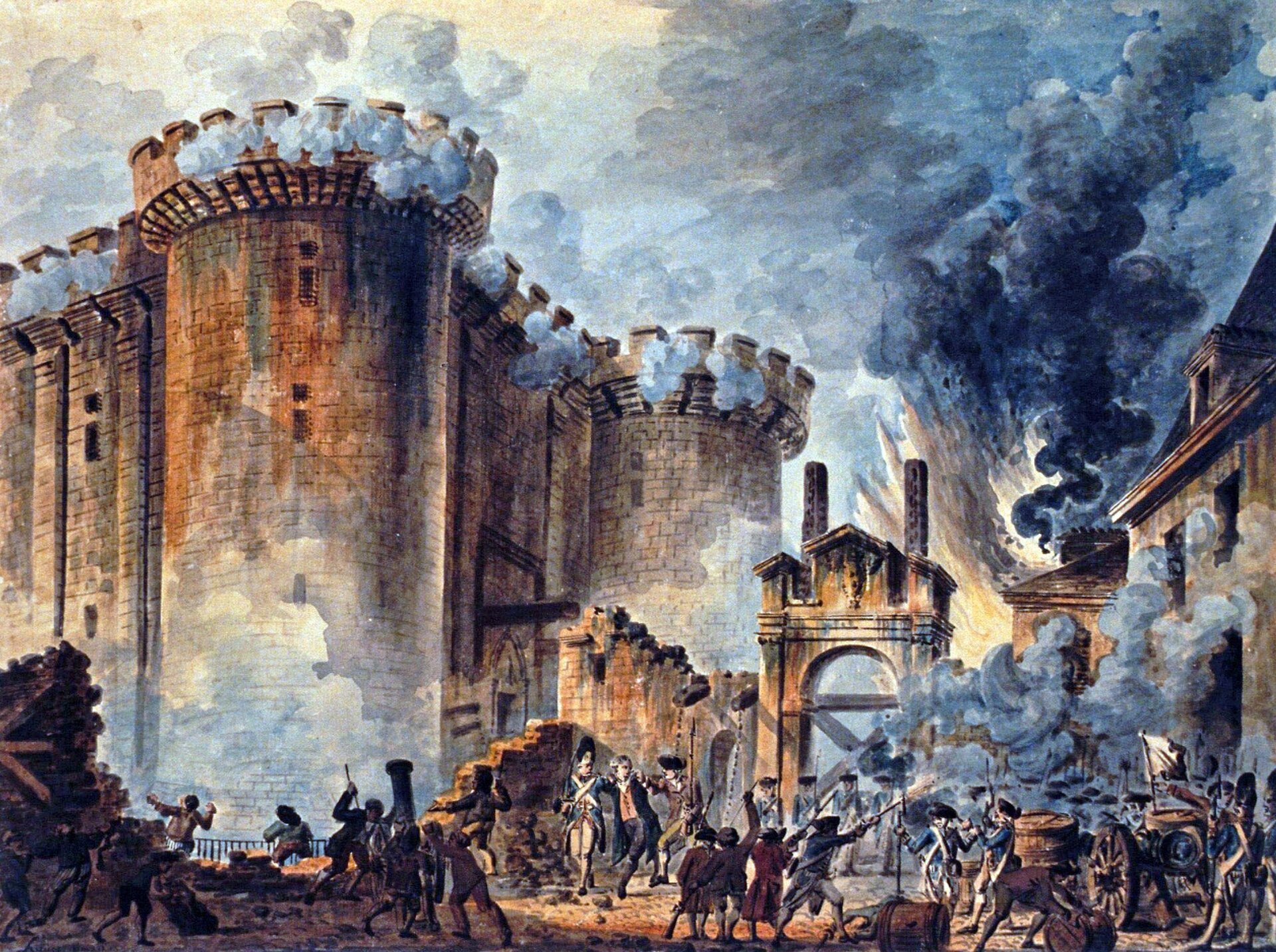
Obraz przedstawiający atak na Bastylię 14 lipca 1789 r. Scena ukazuje ludzi walczących z podniesionymi strzelbami i szablami. Widać sypiące się mury budynku, w tle dużo ognia i dymu.
The assault on Bastille on 14 July 1789.
Source: Jean-Pierre Houël, The Storming of the Bastille, 1789, watercolor, licencja: CC 0.
The French Revolution of 1789 was a powerful impulse to democratic aspirations, but it took a long time for these to be implemented. In the French monarchy of Louis Philippe (1830‑1848), only 0.67% of the population had the right to vote. Spain was much more „democratic” at the time. As a result of reforms in the suffrage rights of 1837, 3.5% of the population could vote. This right was held by those who paid taxes above a certain threshold, i.e. mainly landowners and representatives of the wealthy bourgeoisie. This threshold was called “censo”, hence the term “census suffrage”. Such census elections were then applied throughout Europe – in countries where elections were held at all, of course. At that time, in the UK and the Netherlands, 3‑4% of the population were entitled to vote, and in Belgium - much less - about 1%.
The Spanish did not enjoy their democratic right to vote for too long; as a result of the conservative putsch in 1844, a new suffrage was introduced, limiting the number of people entitled to vote. In the same year, Greece adopted a constitution, which introduced a voting of almost universal character. Anyone who owned any parcel of land could vote, and since a large part of the population were small farmers, the majority of men were given the right to vote.
R1GDvo5Wi5noc
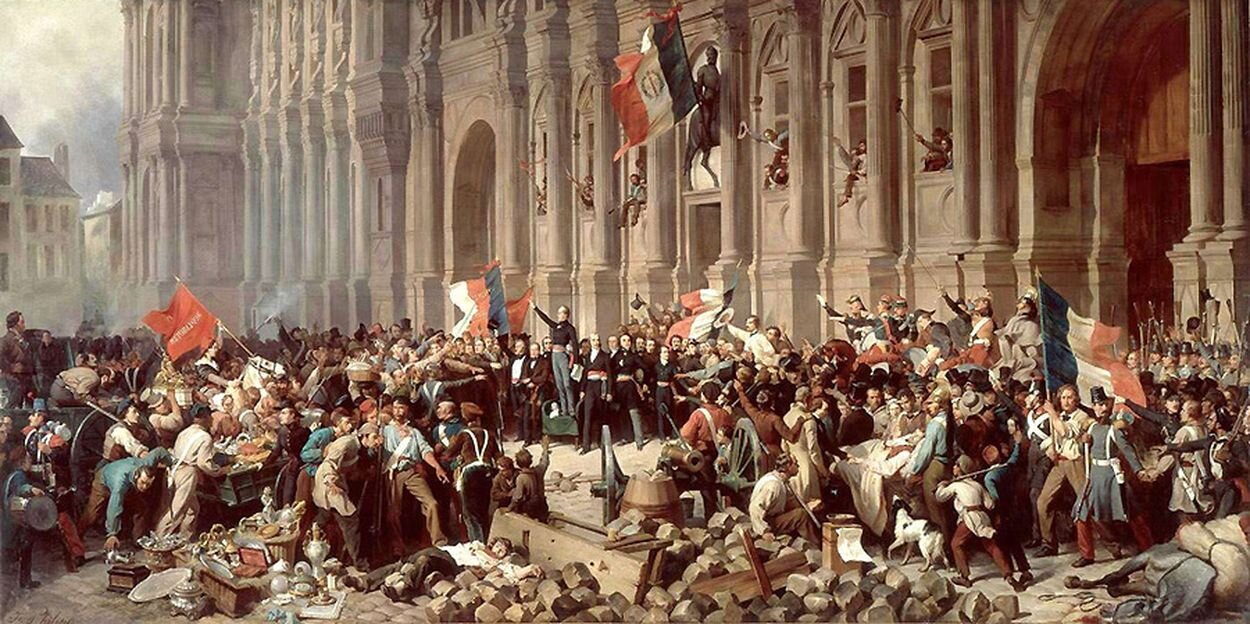
Obraz przedstawiający rewolucję lutową we Francji w 1848 r. Scena ukazuje polityka stojącego na krześle przodzie gmachu gdzie przemawia do pozostałych, niektórzy w dłoniach trzymają flagi. Ludzie w oknach gmachu również trzymają flagi, widać że krzyczą do tłumu. Widać również łupy czyli srebra i inne wartościowe przedmioty, które są transportowane przez ludzi pośród powalonych cegieł i desek.
The February Revolution in France in 1848 - considered the beginning of the Spring of Nations in Europe
Source: Henri Félix Emmanuel Philippoteaux, Lamartine in front of the Town Hall of Paris rejects the red flag on 25 February 1848, oil on canvas, Musée Carnavalet, licencja: CC 0.
In France, the Spring of Nations in 1848 brought a breakthrough. Napoleon III was then elected by the „male” general voting. In the second half of the 19th century, this type of election began to spread in Western Europe. Before the First World War, an universal suffrage was applied in the elections to the parliament of the German Reich in 1871, Belgium in 1893, Norway in 1905, Finland in 1906, Austria in 1907 and Sweden in 1909. But even in France – despite its revolutionary experience - this law only applied to men. Finland was the only exception, where for the first time in Europe, and only there, also women gained the right to vote. Political parties developed in countries that introduced universal suffrage.
chwalba Source: Andrzej Chwalba, The 19-th century, Kraków 2013.
R9zQxXW64rNHD
From the below listed European countries choose the ones which, after 1848, until the outbreak of World War I, had the right to vote under the universal suffrage. 1850 Możliwe odpowiedzi: 1. Norway, 2. France, 3. Sweden, 4. Austria, 5. German Reich, 6. Belgium, 7. Finland (right for men and women) 1871 Możliwe odpowiedzi: 1. Norway, 2. France, 3. Sweden, 4. Austria, 5. German Reich, 6. Belgium, 7. Finland (right for men and women) 1893 Możliwe odpowiedzi: 1. Norway, 2. France, 3. Sweden, 4. Austria, 5. German Reich, 6. Belgium, 7. Finland (right for men and women) 1905 Możliwe odpowiedzi: 1. Norway, 2. France, 3. Sweden, 4. Austria, 5. German Reich, 6. Belgium, 7. Finland (right for men and women) 1906 Możliwe odpowiedzi: 1. Norway, 2. France, 3. Sweden, 4. Austria, 5. German Reich, 6. Belgium, 7. Finland (right for men and women) 1907 Możliwe odpowiedzi: 1. Norway, 2. France, 3. Sweden, 4. Austria, 5. German Reich, 6. Belgium, 7. Finland (right for men and women) 1909 Możliwe odpowiedzi: 1. Norway, 2. France, 3. Sweden, 4. Austria, 5. German Reich, 6. Belgium, 7. Finland (right for men and women)
From the below listed European countries choose the ones which, after 1848, until the outbreak of World War I, had the right to vote under the universal suffrage. 1850 Możliwe odpowiedzi: 1. Norway, 2. France, 3. Sweden, 4. Austria, 5. German Reich, 6. Belgium, 7. Finland (right for men and women) 1871 Możliwe odpowiedzi: 1. Norway, 2. France, 3. Sweden, 4. Austria, 5. German Reich, 6. Belgium, 7. Finland (right for men and women) 1893 Możliwe odpowiedzi: 1. Norway, 2. France, 3. Sweden, 4. Austria, 5. German Reich, 6. Belgium, 7. Finland (right for men and women) 1905 Możliwe odpowiedzi: 1. Norway, 2. France, 3. Sweden, 4. Austria, 5. German Reich, 6. Belgium, 7. Finland (right for men and women) 1906 Możliwe odpowiedzi: 1. Norway, 2. France, 3. Sweden, 4. Austria, 5. German Reich, 6. Belgium, 7. Finland (right for men and women) 1907 Możliwe odpowiedzi: 1. Norway, 2. France, 3. Sweden, 4. Austria, 5. German Reich, 6. Belgium, 7. Finland (right for men and women) 1909 Możliwe odpowiedzi: 1. Norway, 2. France, 3. Sweden, 4. Austria, 5. German Reich, 6. Belgium, 7. Finland (right for men and women)
From the below listed European countries choose the ones which, after 1848, until the outbreak of World War I, had the right to vote under the universal suffrage. Then, put their names in appropriate places on the time line.
Połącz wydarzenia z datami
1893,
1906,
1905,
1907,
1850,
1871,
1909
France
German Reich
Belgium
Norway
Finland (right for men and women)
Austria
Sweden
R11NIEIOWclit
Exercise 1
Decide whether the statement is a cause, an effect or a conductive factor to the democratisation.
1. Pursuing to the change in the status of women
2. Egalitarianisation of the society
3. Legalization of the trade unions
4. Liquidation of property censuses
5. Possibility for masses to influence the state institutions
6. Limitation of the power of monarchs in favour of democratically elected parliaments
7. Development of the market economy
8. Development of the social legislation
9. Permanent and legal pressure on authorities
10. Creation of political parties
11. The entry of the masses of workers into political game
12. Freedom of press
13. Bringing constitution into force
14. Introduction of the universal suffrage law
15. Increase in the standard of living of the lower social strata
Decide whether the statement is a cause, an effect or a conductive factor to the democratisation.
1. Pursuing to the change in the status of women
2. Egalitarianisation of the society
3. Legalization of the trade unions
4. Liquidation of property censuses
5. Possibility for masses to influence the state institutions
6. Limitation of the power of monarchs in favour of democratically elected parliaments
7. Development of the market economy
8. Development of the social legislation
9. Permanent and legal pressure on authorities
10. Creation of political parties
11. The entry of the masses of workers into political game
12. Freedom of press
13. Bringing constitution into force
14. Introduction of the universal suffrage law
15. Increase in the standard of living of the lower social strata
Sort the causes and effects as well as factors conducive to democratisation of the political life. Check correct table cells.
Phenomenon
Cause
Effect
Conducive factor
No wars between the great powers
□
□
□
Pursuing to the change in the status of women
□
□
□
Egalitarianisation of the society
□
□
□
Legalization of the trade unions
□
□
□
Liquidation of property censuses
□
□
□
Possibility for masses to influence the state institutions
□
□
□
Limitation of the power of monarchs in favour of democratically elected parliaments
□
□
□
Development of the market economy
□
□
□
Development of the social legislation
□
□
□
Permanent and legal pressure on authorities
□
□
□
Creation of political parties
□
□
□
The entry of the masses of workers into political game
□
□
□
Freedom of press
□
□
□
Bringing constitution into force
□
□
□
Introduction of the universal suffrage law
□
□
□
Increase in the standard of living of the lower social strata
□
□
□
Exercise 2
Read the text below and do the task.
J. BaszkiewiczThe power
In a democratic system, social pressure on the country has, of course, increased. The 'lower' classes, allowed to exercise political rights, could now express their claims not during rebellions or riots, but through constant and legal pressure on the authorities. The pressure of the wealthy classes increased accordingly. Financiers, industrialists and traders requested the state to support the expansion of domestic production and trade, which had a great impact on the colonial policy of democratic countries. The manufacturers requested the state to give workers the education necessary in an industrial civilisation and to take on the costs of social legislation. The workers, in turn, requested the state to improve working conditions and to actively combat pauperism. The more radical ones requested the state to take action to promote ownership – so that everyone could work at their own property. Radical democrats supported such ideas, mentioning 'the abolition of contract work, the last economic incarnation of captivity'. Small producers urged the state to suppress „privileges and monopolies”, meaning, for example, large department stores ruining small shopkeepers or large packaging and shoe factories destroying tailors and shoemakers. These claims of workers and small bourgeois, however, were in line with the classical theories of democracy, according to which the guarantee of freedom and equality of individuals in the political sphere should be guaranteed by the egalitarianisation of material condition, so that „the rich are less rich and the poor are less poor”. The democratic state was supposed to achieve this objective not by abolishing ownership but, on the contrary, by dispersing it among as many hands as possible.
baszkiewicz Source: J. Baszkiewicz, The power, Wrocław 1999, s. 137–138.
R1UD42cOHHYYm
Match the interest grous and their expectations. Groups: 1. financiers, industrialists and traders, 2. manufacturers, 3. workers, 4. small producers. Expectations: 1. to support the domestic production and trade, 2. to give workers the education necessary in an industrial civilisation and to take on the costs of social legislation, 3. to improve working conditions and actively combat pauperism; to promote ownership, 4. to suppresses "privileges and monopolies”
Match the interest grous and their expectations. Groups: 1. financiers, industrialists and traders, 2. manufacturers, 3. workers, 4. small producers. Expectations: 1. to support the domestic production and trade, 2. to give workers the education necessary in an industrial civilisation and to take on the costs of social legislation, 3. to improve working conditions and actively combat pauperism; to promote ownership, 4. to suppresses "privileges and monopolies”
Complete the table with appropriate fragments about interests of the specified social groups in the democratic system.
financiers, industrialists and traders, manufacturers, workers, small producers
Interest group
Expectations towards state institutions
financiers, industrialists and traders
manufacturers
workers
small producers
R1HxADUqdgsAL
Exercise 3
Przeczytaj tekst i przygotuj do niego pytanie sprawdzające jego znajomość.
Next European countries have gradually introduced social legislation. This was the result of pressure from both organisations of workers organisations and supporters of socialism ideologies, as well as its opponents, who were afraid of the growing importance of mass social democratic parties. Although in Great Britain, the working hours of juveniles and women were reduced already in 1833, most fundamental changes occurred in Germany in the 80s. of the 19th century, under the government of a conservative Chancellor Otton von Bismarck. These were: prohibition of employment of children under the age of 13, protection of postpartum women, compulsory insurance against sickness, accident, old age and disability, as well as public holidays on Sundays. Also in many other European countries, working hours of adults were reduced at the end of the 19th century, child labour was prohibited and factory inspections were launched to monitor the working conditions of workers. None of these countries, however, have caught up with Germany in terms of systemic solutions to the basic problems of the working class.
Przeczytaj tekst i przygotuj do niego pytanie sprawdzające jego znajomość.
Next European countries have gradually introduced social legislation. This was the result of pressure from both organisations of workers organisations and supporters of socialism ideologies, as well as its opponents, who were afraid of the growing importance of mass social democratic parties. Although in Great Britain, the working hours of juveniles and women were reduced already in 1833, most fundamental changes occurred in Germany in the 80s. of the 19th century, under the government of a conservative Chancellor Otton von Bismarck. These were: prohibition of employment of children under the age of 13, protection of postpartum women, compulsory insurance against sickness, accident, old age and disability, as well as public holidays on Sundays. Also in many other European countries, working hours of adults were reduced at the end of the 19th century, child labour was prohibited and factory inspections were launched to monitor the working conditions of workers. None of these countries, however, have caught up with Germany in terms of systemic solutions to the basic problems of the working class.
Complete the missing words.
social, socialism, charitable societies, Otton von Bismarck, factory inspections
Next European countries have gradually introduced ........................................ legislation. This was the result of pressure from both organisations of workers organisations and supporters of ........................................ ideologies, as well as its opponents, who were afraid of the growing importance of mass social democratic parties. Although in Great Britain, the working hours of juveniles and women were reduced already in 1833, most fundamental changes occurred in Germany in the 80s. of the 19th century, under the government of a conservative Chancellor ......................................... These were: prohibition of employment of children under the age of 13, protection of postpartum women, compulsory insurance against sickness, accident, old age and disability, as well as public holidays on Sundays. Also in many other European countries, working hours of adults were reduced at the end of the 19th century, child labour was prohibited and ........................................ were launched to monitor the working conditions of workers. None of these countries, however, have caught up with Germany in terms of systemic solutions to the basic problems of the working class.
RGWblv7gJkbAH
Exercise 4
Match the pairs: English words with Polish definition. proces zmian systemu politycznego poprzez rozszerzenie politycznego uczestnictwa obywateli w działalności danego państwa Możliwe odpowiedzi: 1. election law, 2. democratisation, 3. social democracy, 4. political party organizacja reprezentująca interesy określonego odłamu społeczeństwa, posiadająca program polityczny i dążąca do jego realizacji poprzez zdobycie istotnego udziału we władzy państwowej, poprzez jej kontrolę lub poprzez jej zdominowanie. Możliwe odpowiedzi: 1. election law, 2. democratisation, 3. social democracy, 4. political party prawo do udziału w głosowaniu na kandydatów, ubiegających się o prawo zasiadania w parlamencie lub innych organach przedstawicielskich; zdolność obywatela do tego, aby być wybranym. Możliwe odpowiedzi: 1. election law, 2. democratisation, 3. social democracy, 4. political party ogólna nazwa socjaldemokratycznych partii politycznych; terminem tym określa się także ruch społeczny, początkowo głównie robotniczy; początkowo zmierzał do zastąpienia kapitalizmu socjalizmem, obecnie dąży do zmniejszenia nierówności społecznych i uspołecznienia gospodarki rynkowej Możliwe odpowiedzi: 1. election law, 2. democratisation, 3. social democracy, 4. political party
Match the pairs: English words with Polish definition. proces zmian systemu politycznego poprzez rozszerzenie politycznego uczestnictwa obywateli w działalności danego państwa Możliwe odpowiedzi: 1. election law, 2. democratisation, 3. social democracy, 4. political party organizacja reprezentująca interesy określonego odłamu społeczeństwa, posiadająca program polityczny i dążąca do jego realizacji poprzez zdobycie istotnego udziału we władzy państwowej, poprzez jej kontrolę lub poprzez jej zdominowanie. Możliwe odpowiedzi: 1. election law, 2. democratisation, 3. social democracy, 4. political party prawo do udziału w głosowaniu na kandydatów, ubiegających się o prawo zasiadania w parlamencie lub innych organach przedstawicielskich; zdolność obywatela do tego, aby być wybranym. Możliwe odpowiedzi: 1. election law, 2. democratisation, 3. social democracy, 4. political party ogólna nazwa socjaldemokratycznych partii politycznych; terminem tym określa się także ruch społeczny, początkowo głównie robotniczy; początkowo zmierzał do zastąpienia kapitalizmu socjalizmem, obecnie dąży do zmniejszenia nierówności społecznych i uspołecznienia gospodarki rynkowej Możliwe odpowiedzi: 1. election law, 2. democratisation, 3. social democracy, 4. political party
Match the pairs: English words with Polish definition.
prawo do udziału w głosowaniu na kandydatów, ubiegających się o prawo zasiadania w parlamencie lub innych organach przedstawicielskich; zdolność obywatela do tego, aby być wybranym., proces zmian systemu politycznego poprzez rozszerzenie politycznego uczestnictwa obywateli w działalności danego państwa, - organizacja reprezentująca interesy określonego odłamu społeczeństwa, posiadająca program polityczny i dążąca do jego realizacji poprzez zdobycie istotnego udziału we władzy państwowej, poprzez jej kontrolę lub poprzez jej zdominowanie., ogólna nazwa socjaldemokratycznych partii politycznych; terminem tym określa się także ruch społeczny, początkowo głównie robotniczy; początkowo zmierzał do zastąpienia kapitalizmu socjalizmem, obecnie dąży do zmniejszenia nierówności społecznych i uspołecznienia gospodarki rynkowej
democratisation
political party
election law
social democracy
Keywords
democratisation, political parties, election lawelection lawelection law, social democracy
political party – organizacja reprezentująca interesy określonego odłamu społeczeństwa, posiadająca program polityczny i dążąca do jego realizacji poprzez zdobycie istotnego udziału we władzy państwowej, poprzez jej kontrolę lub poprzez jej zdominowanie.
election law – prawo do udziału w głosowaniu na kandydatów, ubiegających się o prawo zasiadania w parlamencie lub innych organach przedstawicielskich; zdolność obywatela do tego, aby być wybranym.
social democracy – ogólna nazwa socjaldemokratycznych partii politycznych; terminem tym określa się także ruch społeczny, początkowo głównie robotniczy; początkowo zmierzał do zastąpienia kapitalizmu socjalizmem, obecnie dąży do zmniejszenia nierówności społecznych i uspołecznienia gospodarki rynkowej