Przeczytaj
Many people love sports not only because they like to see competition, but also because they admire professional athletes. What motivates them to become their best selves? How much do they train? What are the difficulties they have to deal with? We often ask ourselves such questions and seek answers from those who know the answers. That’s why we appreciate interviews with sportsmen. In this section, you’re going to read a rundown of one such interview.
Wielu ludzi kocha sporty nie tylko dlatego, że lubią oglądać rywalizację, lecz także dlatego, że podziwiają profesjonalnych sportowców. Co ich motywuje do stania się najlepszą wersją samego siebie? Jak dużo trenują? Z jakimi trudnościami muszą sobie radzić? Często zadajemy sobie takie pytania i szukamy odpowiedzi od tych, którzy je zadają. Dlatego doceniamy wywiady ze sportowcami. W tej sekcji przeczytasz streszczenie takiej rozmowy.
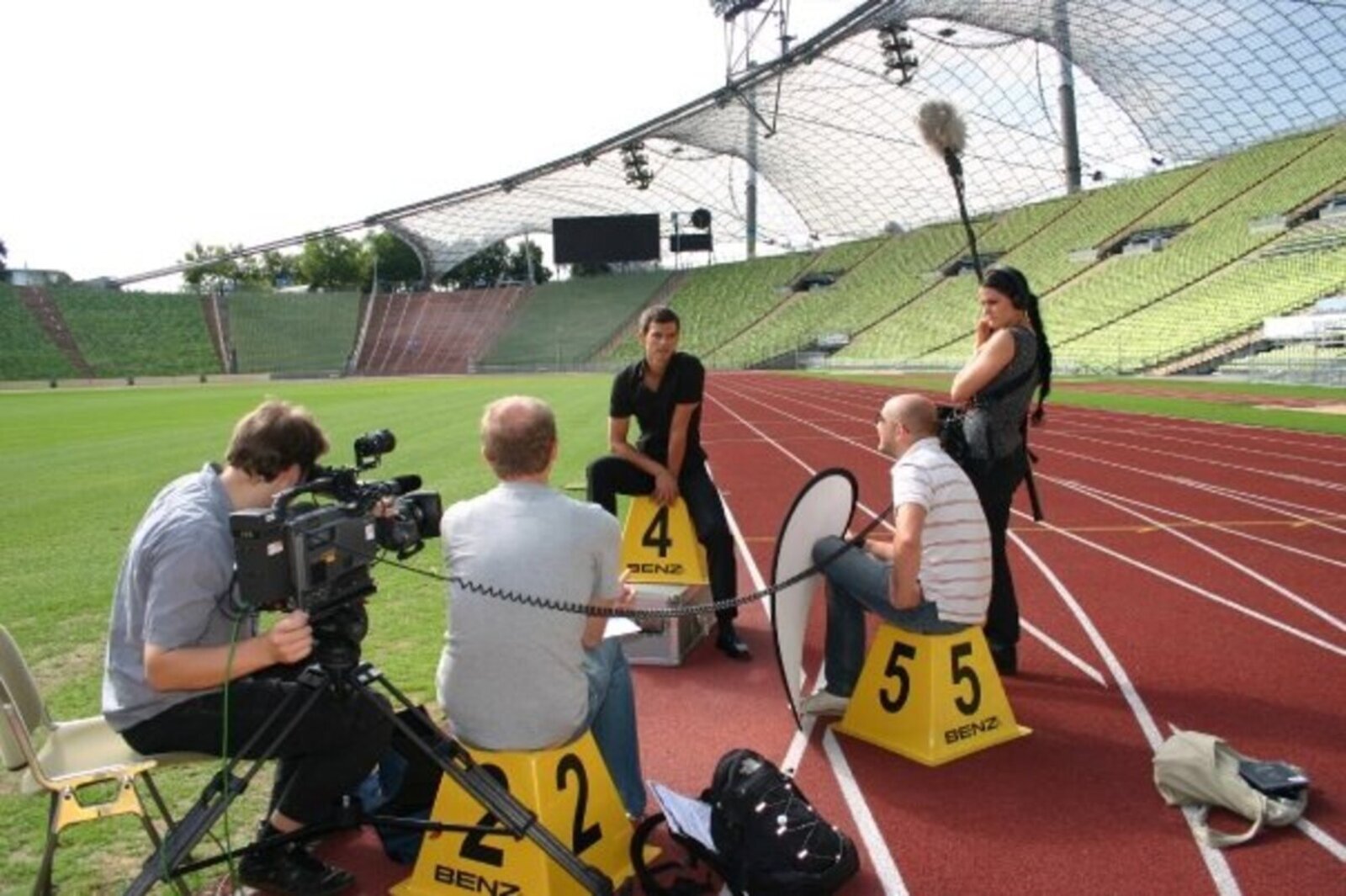
Read the text about an interview with a sprinter and then, do the exercises.
The Life of an AthleteThose of you who follow me surelysurely know that I’m trying to become a sports journalist. I’ve written about it so many times, but up until last week, I had no luck securingsecuring a proper intervieweeproper interviewee. Well, what do you know, I’ve finally made it! I interviewed John Smith, an up‑and‑comingup‑and‑coming Olympic sprinterOlympic sprinter, and I’m so excited to give you a rundowngive you a rundown of what we talked about!
Of course, I had to start by asking about his motivationmotivation. To my great surprise, he said he had never planned to become an athlete. Many sportsmen dream of participating inparticipating in the Olympics from a young age, but not John. He was just a boy who happened to behappened to be genetically giftedgenetically gifted. His father would always say that he was faster and more athleticathletic than other children his age. That’s why he encouraged him to sign up for his school’s track and field teamtrack and field team. John said that his coach had seen the potentialpotential from the very first training. With time he became so good that both his parents and school suggested he should take ontake on professional training.
John was barely a teen when short‑distance runningshort‑distance running overtook his lifeovertook his life. At that point, he understood that being a professional athleteprofessional athlete was his future. He said that it had always been a dream of his father to see his son at the Olympics and it had become John’s dream, too. It’s no wonder then that he felt elatedelated when he finally qualifiedqualified!
Of course, the road to successthe road to success wasn’t easy. I asked John if he had ever felt like giving up. He said that he’d been thinking about it a lot but that the markmark of a true athlete was powering throughpowering through hard times. Surprisingly, the hardest thing for him was the strict dietstrict diet! Before taking on professional short‑distance running, he’d loved eating a true English breakfast. However, he said that he had given it up in favour of a heartyhearty dinner the night before. This way, his body could focus onfocus on running instead of digestingdigesting!
Finally, I asked if he could see himself winning an Olympic medal. His answer warmed my heart. He said that he only wanted to win to make his father proud. Of course, it doesn’t mean that he wouldn’t feel proud of himself, but that wasn’t his main motivation. What’s more, John said that he’d be contentcontent even if he didn’t win anything. That’s because he’s already succeededsucceeded by qualifying in the first place.
I loved interviewing John and believe me when I say that there are more interesting things he told me. In fact, he might be one of the most extraordinary athletes I’ve ever met! If you want to learn about him, keep an eye outkeep an eye out for when I post the full interview!
Źródło: Zuzanna Kościuk, licencja: CC BY-SA 3.0.
a) on a personal blog.
b) in a newspaper.
c) in a diary.
d) in a sports magazine.
2. John is an athlete who has
a) already taken part in the Olympics.
b) only began his journey as a sprinter.
c) won a few Olympic medals.
d) learned he’d take part in the Olympics.
3. When it comes to giving up, John
a) has thought about it.
b) has never considered it.
c) would never do it.
d) has already done it.
4. John suggests that his main motivation
a) has always been his father.
b) is becoming an Olympic medal winner.
c) is becoming the best sprinter in the world.
d) has never revolved around impressing anyone.
5. The author had pleasant feelings when they learned that
a) John wanted to win a medal for his father.
b) John had qualified for the Olympics.
c) their interview would be published in full.
d) they landed an interview with a famous person.
6. Overall, the author is
a) unhappy with what they learned.
b) bored by what the athlete told him.
c) impressed by the athlete.
d) content with not learning much.
2. If you’re interested in this athlete’s career, you’d better 1. focus on, 2. participate in, 3. power through, 4. in favour of, 5. happened to be, 6. the road to success, 7. keep an eye out for an upcoming interview with him.
3. She said that 1. focus on, 2. participate in, 3. power through, 4. in favour of, 5. happened to be, 6. the road to success, 7. keep an eye out had been long and bumpy, but totally worth it.
4. I would love to meet you tonight, but unfortunately I have to 1. focus on, 2. participate in, 3. power through, 4. in favour of, 5. happened to be, 6. the road to success, 7. keep an eye out my training.
5. He had never planned to become an athlete, he just 1. focus on, 2. participate in, 3. power through, 4. in favour of, 5. happened to be, 6. the road to success, 7. keep an eye out in the right place at the right time.
6. They are elated because they are going to 1. focus on, 2. participate in, 3. power through, 4. in favour of, 5. happened to be, 6. the road to success, 7. keep an eye out the upcoming tournament.
7. She said that she had stopped eating unhealthy food 1. focus on, 2. participate in, 3. power through, 4. in favour of, 5. happened to be, 6. the road to success, 7. keep an eye out healthier alternatives.
The interview with John touched upon the subject of motivation. What are the other things that can motivate athletes to become their best? Answer the question in 4‑5 sentences.
Hannah said that she exercisedwas exercisinghad exercisedwould exercise three times a week.
2. Tom said: “I will be having a swimming session tomorrow at 3.”
Tom said that he would havewill havewould be havingwill be having a swimming session the next day at 3.
3. Jane said: “We haven’t won against the enemy team.”
Jane said that they hadn’t wonwouldn’t winhaven’t wondidn’t win against the enemy team.
4. Jack said: “I will see you tomorrow at the training.”
Jack said that he had seenwould seewill seewould be seeing me the next day at the training.
5. Mary said: “I was practising tennis the entire day.”
Mary said that she was practisinghad practisedpractisedhad been practising the entire day.
6. John said: “I saw you yesterday at the gym.”
John said that he sawhad seenwas seeinghad been seeing me the previous day at the gym.
7. Jerry said: “I’m watching the game right now.”
Jerry said that he is watchingwatchedwas watchinghad been watching the game then.
8. My parents said: “We’ve been hiking for hours now.”
My parents said that they have been hikinghad been hikinghave hikedhiked for hours at that point.
Słownik
/ æthetaˈletɪk /
wysportowany/wysportowana
/ bi ɪn ˈfeɪvər ɒv /
być za, być zwolennikiem/zwolenniczką
/ kənˈtent /
tu: zadowolony/zadowolona
/ dai'dʒestɪŋ / / daɪˈdʒest /
trawieniu [trawić]
/ ɪˈleɪtɪd /
uszczęśliwiony/uszczęśliwiona
/ ˈfəʊkəs ɒn /
skupić się na
/ dʒɪˈnetɪkl̩i ˈɡɪftɪd /
genetycznie utalentowany/utalentowana (being good at something due to one’s genes)
/ ɡɪv ju ə ˈrʌndaʊn / / ɡɪv ˈsʌmbədi ə ˈrʌndaʊn /
opowiedzieć ci w skrócie o [opowiedzieć komuś w skrócie]
/ ˈhæpənd tu bi / / ˈhæpən tu bi /
tak się złożyło, że byłem/byłam [tak się składa, że jestem]
/ ˈhɑːti /
obfity/obfita
/ kiːp ən eɪ ˈaʊt / / fə ˈsʌmthetaɪŋ ˈsʌmbədi /
wypatrywać czegoś, kogoś
/ mɑːk /
znak
/ ˌməʊtɪˈveɪʃn̩ /
motywacja
/ əˈlɪmpɪk ˈsprɪntə /
krótkodystansowiec olimpijski (a person who runs, swims, etc. very fast over a short distance in a race)
/ ˌəʊvəˈtʊk hɪz life / / ˌəʊvəˈteɪk wʌnz life /
zawładnęło jego życiem [zawładnąć czyimś życiem]
/ pɑːˈtɪsɪpeɪtɪŋ ɪn / / pɑːˈtɪsɪpeɪt ɪn /
branie udziału w [brać udział w]
/ pəˈtenʃl̩ /
potencjał (having or showing the capacity to develop into something in the future)
/ ˈpaʊərɪŋ thetaruː / / paʊə thetaruː /
ukończenie czegoś pomimo trudności [ukończyć coś pomimo trudności]
/ prəˈfeʃnəl ˈæthetaliːt /
profesjonalny sportowiec
/ ˈprɒpər ˌɪntəvjuːˈiː /
odpowiednia osoba udzielająca wywiadu
/ ˈkwɒlɪfaɪd / / ˈkwɒlɪfaɪ /
zakwalifikować się [kwalifikować się]
/ sɪˈkjʊərɪŋ / / sɪˈkjʊə /
uzyskiwanie [uzyskiwać], zapewnianie [zapewniać]
/ ʃɔ:t ˈdɪstəns ˈrʌnɪŋ /
bieganie krótkodystansowe (short‑distance running is represented by races at distances no more than 400 metres)
/ strɪkt ˈdaɪət /
ścisła dieta
/ səkˈsiːdɪd / / səkˈsiːd /
osiągnął/osiągnęła sukces [osiągnąć sukces]
/ ˈʃʊəli /
z pewnością, na pewno
/ ˈteɪk ɒn /
godzić się na
/ ðə rəʊd tu səkˈses /
droga do sukcesu
/ træk ənd fi:ld tiːm /
drużyna lekkoatletyczna (a team which engages in various competitive athletic events such as running, jumping, and weight throwing performed on a running track and on the adjacent field)
/ ˌʌp ən ˈkʌmɪŋ /
dobrze zapowiadający/zapowiadająca się
Źródło: GroMar Sp. z o.o., licencja: CC BY‑SA 3.0