Russia in 1917
to characterize the political and socio‑economic causes of the outbreak of the February Revolution in Russia in 1917;
to describe the circumstances of the BolshevikBolshevik power takeover in Russia;
to define the differences between facts and theses of the propaganda.
The state's inefficiency as well as the disastrous economic and social situation in Russia led to the outbreak of the February Revolution and overthrowing of tsar Nicholas II. The power in the country was taken over by the Provisional Government. The second very strong centre of power was the Council of Workers' and Soldiers' Delegates, which was gradually subordinated by the BolsheviksBolsheviks. As a result of the so‑called October Revolution, the BolsheviksBolsheviks with Vladimir Lenin took over the power in Russia. In mid‑December 1917, Russia made a truce with the Central Powers and, several days later, engaged in negotiations with Germany, Austria‑Hungary, Turkey and Bulgaria. In January 1918, the BolsheviksBolsheviks dispersed the Constituent Assembly and announced the dictatorship of the proletariat.
Read the proclamation of the Provisional Government and enumerate the structural changes it heralded.
The proclamation of the Provisional Government, march 1917The Provisional Executive Committee of the members of the State Duma has triumphed over the dark forces of the Old Regime to such an extent as to enable it to organize a more stable executive power. With this idea in mind, the Provisional Committee has appointed as ministers of the first Cabinet representing the public, men whose past political and public life assures them the confidence of the country: Prince George E. L'vov [is appointed] Prime Minister and Minister of the Interior […] The Cabinet will be guided in its actions by the following principles:
An immediate general amnesty for all political and religious offences, including terrorist acts, military revolts and agrarian offenses.
Freedom of speech and press, freedom to form labour unions.
The abolition of all social, religious and national restrictions.
Immediate preparation for the calling of a Constituent Assembly, elected by universal and secret vote, which shall determine the form of government and draw up the Constitution for the country. […]
The troops that have taken part in the revolutionary movement shall not be disarmed or removed from Petrograd.
Source: The proclamation of the Provisional Government, march 1917, [w:] Grzegorz Chomicki, Leszek Śliwa, Kraków 2001, s. 130.
Which of the points of the proclamation points to the political weakness of the new government?
- Freedom of speech and press, freedom to form labour unions.
- Immediate preparation for the calling of a Constituent Assembly, elected by universal and secret vote, which shall determine the form of government and draw up the Constitution for the country.
- The abolition of all social, religious and national restrictions.
- An immediate general amnesty for all political and religious offences, including terrorist acts, military revolts and agrarian offenses.
- The troops that have taken part in the revolutionary movement shall not be disarmed or removed from Petrograd.
Match the descriptions with the names of political parties. Insert the following names and their description in the appropriate places in the table
SRs, Mensheviks, breakaway faction of the Russian Social Democratic Labour Party, which strove for creating a disciplined party structure, composed of professional revolutionaries. Its name comes from the Russian word meaning 'majority.', Constitutional Democrats; party that gathered representatives of the nobility and liberal intelligentsia; after the victory of the October Revolution, adversaries of the Bolsheviks
| Name | Description |
|---|---|
| SRs | |
| breakaway faction of the Russian Social Democratic Labour Party, which strove for creating a disciplined party structure, composed of professional revolutionaries. Its name comes from the Russian word meaning 'majority.' | |
| Mensheviks | |
| Constitutional Democrats; party that gathered representatives of the nobility and liberal intelligentsia; after the victory of the October Revolution, adversaries of the Bolsheviks |
Listen to the broadcast and then enumerate the most important myths connected with this event.
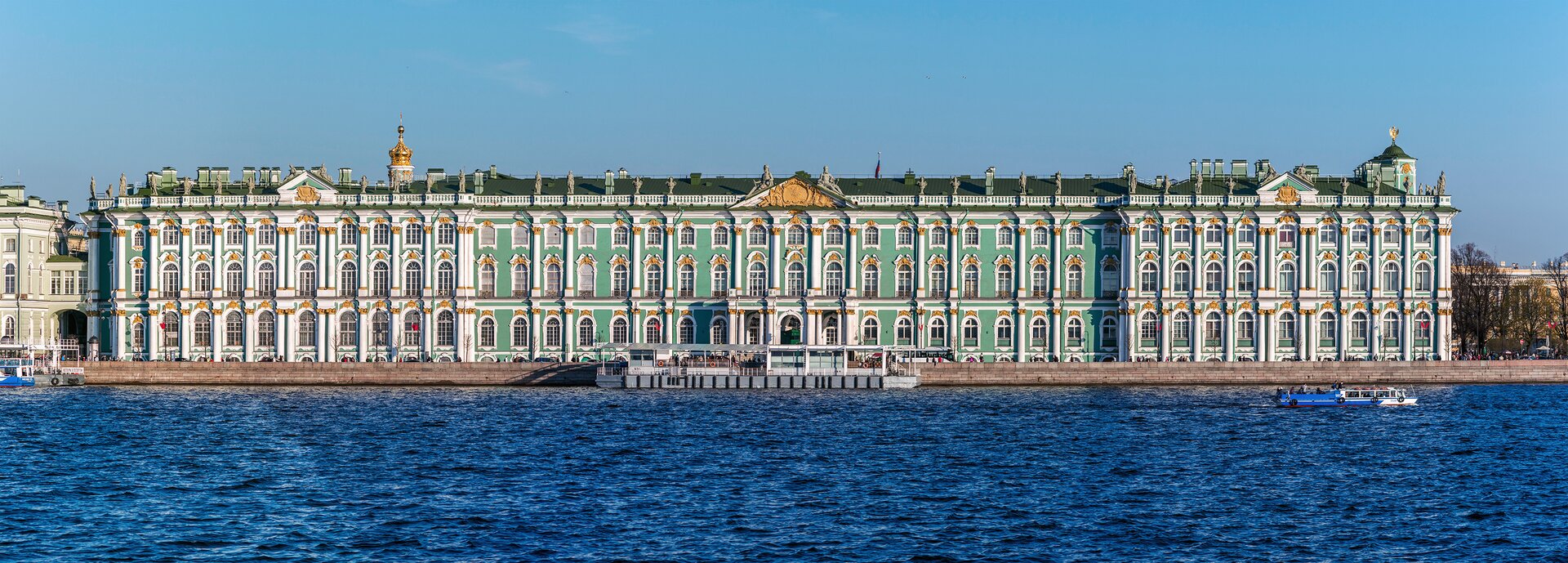
Attack on Winter Palace. Facts and myths.
The October Revolution of 1917 – which we will always associate with the figure of the BolshevikBolshevik leader, Vladimir Lenin - is an event that had a dramatic bearing on the whole 20th century. In BolshevikBolshevik historiography, the assault on Winter Palace, tsar's seat, was presented as its most important symbol, a momentous event. Frames from the film titled October directed by Eisenstein constitute one of the most famous film scenes. In fact, it never took place.
In fact, at that time... the Provisional Government of the newborn Russian Republic resided in the Palace. It took over the power after the abdication of the tsar, who was interned with the rest of his family in Tsarskoye Selo. But it was not the end of propaganda lies. As it turns out, the Winter Palace was not take by storm. The image of a column of charging workers, soldiers and sailors, widespread in our culture as a result of Eisenstein's film, is merely a figment of imagination. In fact, the BolsheviksBolsheviks attacked the Winter Palace only when the defence had ceased. And they did not do it in an impressive style at all.
But let us go back to the beginning of the story. The BolshevikBolshevik coup – a military action aimed at taking over the power - began on 6 November 1917 at night. In Russia, where the Julian calendar was still in force, it was 24 October and it was the name of this month that became the cognomen of the so‑called revolution. As it turned out, the Kerensky Government did not have the support of the army. With modest forces, the BolsheviksBolsheviks – using the backing of the sailors from the Baltic Fleet – easily took over the most important points of the city.
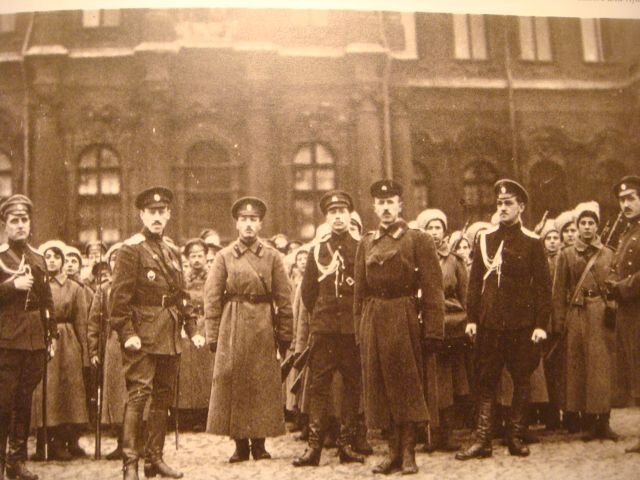
In itself, the overtaking of the Winter Palace, as the last designated target, took a little longer. The BolsheviksBolsheviks were confident that the Palace was defended by substantial forces. In truth, its military crew was composed of a group of young Junkers, who manned several light field cannons, a dozen or so Cossacks, 40 war‑disabled people led by an officer walking on crutches and a bicycle infantry platoon. The most important striking force was a company of female enlistees from the 1st Petrograd Women's Battalion, called the Women's Battalion of Death.
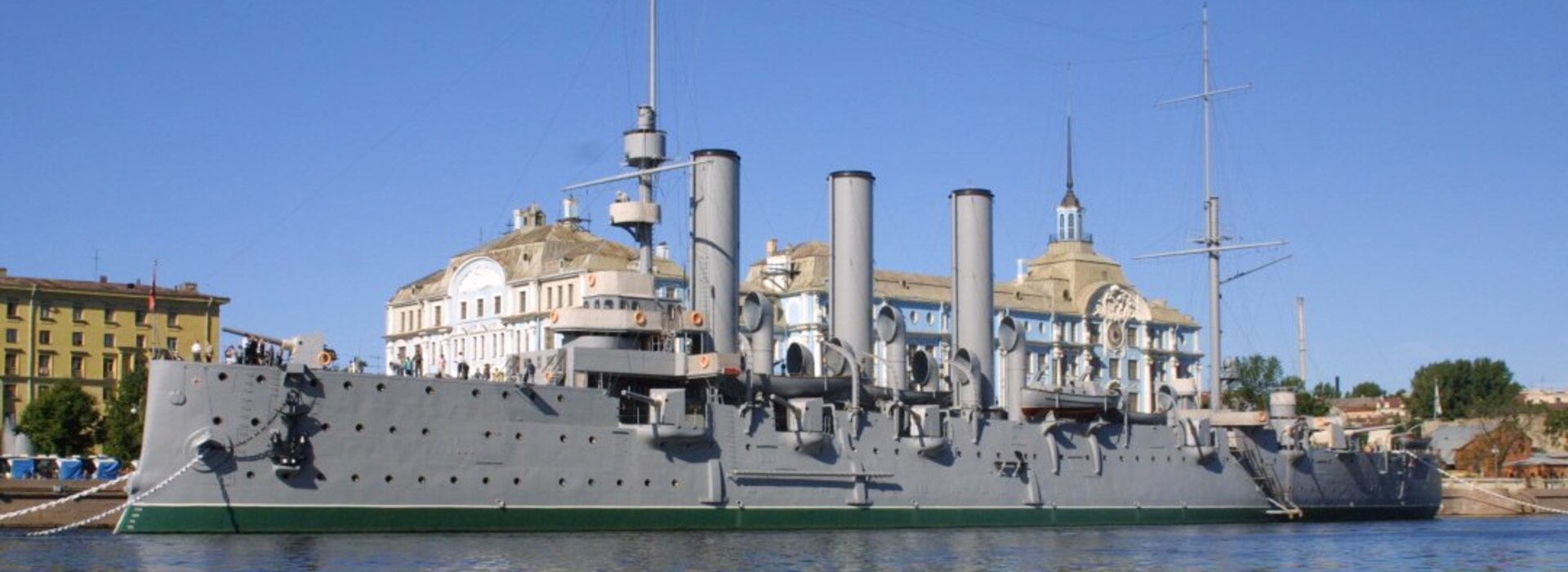
In the afternoon, Kerensky's ministers (Kerensky himself fled in the morning) heard an ultimatum: if they do not surrender, the Palace will be shelled from the guns of the „Aurora” cruiser and the cannons of the Peter and Paul Fortress. The ministers expected the prime minister and his loyal troops will come to their rescue any moment, and they did not react to the ultimatum. So the BolsheviksBolsheviks carried out their threat. „Aurora” fired her guns, but... with blanks. Two hours later, the artillery men from the Peter and Paul Fortress began the real cannonade, which, however, turned out to be extremely ineffective. Out of over 30 shells launched only two reached the Palace.
The BolsheviksBolsheviks were aided by the passing of time and loss of morale of the defenders of the government. What did the taking of the Winter Palace look like then? As the historian Richard Pipes writes, the first to approach the Palace were the Cossacks and the Junkers who manned the cannons. Around midnight, only the Women's Death Battalion and a handful of teenage cadets were still at the defence posts. When the cannonade from the Palace ceased, Red Guards and sailors began to approach carefully. The sailors and soldiers of the Pavlovsky Regiment, who climbed through the open windows from the direction of the Hermitage, were the first to burst in. Others came in through the unbolted gates.
6 people died during the attack and several dozens were injured.
Check how well you learnt today's lesson. Order chronologically the following events.
- Attack on the Winter Palace by Bolshevik forces
- Bolshevik decree on peace and on land
- Truce with the Central Powers
- Unsuccessful Kornilov's putsch
- Getting control over the Petrograd Soviet of Workers' and Soldiers' Deputies by the Bolsheviks
- Lenin's April Theses
- Institution of the Provisional Government
- Abdication of tsar Nicholas II
Read the text and explain what the two decrees that Lenin announced immediately after he took over the power in Russia concerned. Did they meet the social demand?
In early November, the congress of soviets passed, on Lenin's orders, two famous decrees, on peace and on land, that presented Russia with two goals to achieve. In relation to foreign policy, Lenin called the countries that took part in the war to end the hostilities „without annexation or contribution” and to take up peace talks immediately. Since the Entente rejected the proposals included in the decree on peace, in mid‑December 1917, Russia called a truce with the Central Powers and several days later, took up negotiations with Germany, Austria‑Hungary, Turkey and Bulgaria. As far as internal affairs were concerned, the decree on land announced liquidation of all landed property and surrendering the land for use of peasant communities. In Russia, universal suffrage was introduced for both men and women over the age of 20, which was a propaganda activity and soon ceased to have any meaning. The election (relatively honest) that was held then showed that BolsheviksBolsheviks enjoy significantly poorer support than the Socialist Revolutionary PartySocialist Revolutionary Party, at whose back there was the whole countryside. However, Lenin did not care about wielding authority in a democratic way. The Constituent Assembly that emerged as a result of the election (in majority made up of different socialist groupings) survived only for a month – until early January 1918. Following Lenin's orders, soldiers scattered the deputies.
Keywords
February Revolution, Provisional Government, dictatorship
Glossary
Czeka – (WCzK) Wszechrosyjska Komisja Nadzwyczajna do Walki z Kontrrewolucją i Sabotażem.
wojna pozycyjna – wojna, podczas której obie walczące strony zajmują silnie umocnione pozycje; między walczącymi stronami znajduje się tzw. ziemia niczyja, nad którą żadna ze stron nie ma kontroli.
Socjaldemokratyczna Partia Robotnicza Rosji (SDPRR) – założona w 1898 partia polityczna.
Partia Socjalistów‑Rewolucjonistów – in. eserowcy, eserzy. Utworzona w 1902 w wyniku zjednoczenia działających w Rosji i za granicą organizacji narodnickich.
menszewicy – odłam rosyjskiej socjaldemokracji (SDPRR).
bolszewicy – w 1903–12 frakcja SDPRR, następnie samodzielna partia SDPRR(b) W. Lenina.