Shock. Russo-Japanese War and its aftermath
about the directions of the Russian expansion in the Far East;
why the war with Japan broke out
what were the consequences of the war for Russia and Japan.
On the night of 8 to 9 February 1904, the Japanese attacked Russian ships at Port Arthur without any warning or declaring a war. Main Japanese forces attacked Korea and the remaining ones in – ManchuriaManchuria. The conquest of Port Arthur, after a few months' sieges in January 1905, was the key moment. During the war, it turned out that Russia was a colossus on clay legs. Most of its fleet had to sail around the whole continent of Africa and across the Indian Ocean to reach the destination. When they eventually got there after the 8‑month journey, they got completely destroyed in the Battle of TsushimaTsushima (27–28 May 1905). That defeat was shocking not only to Russian public opinion but also to the European superpowers and the United States.
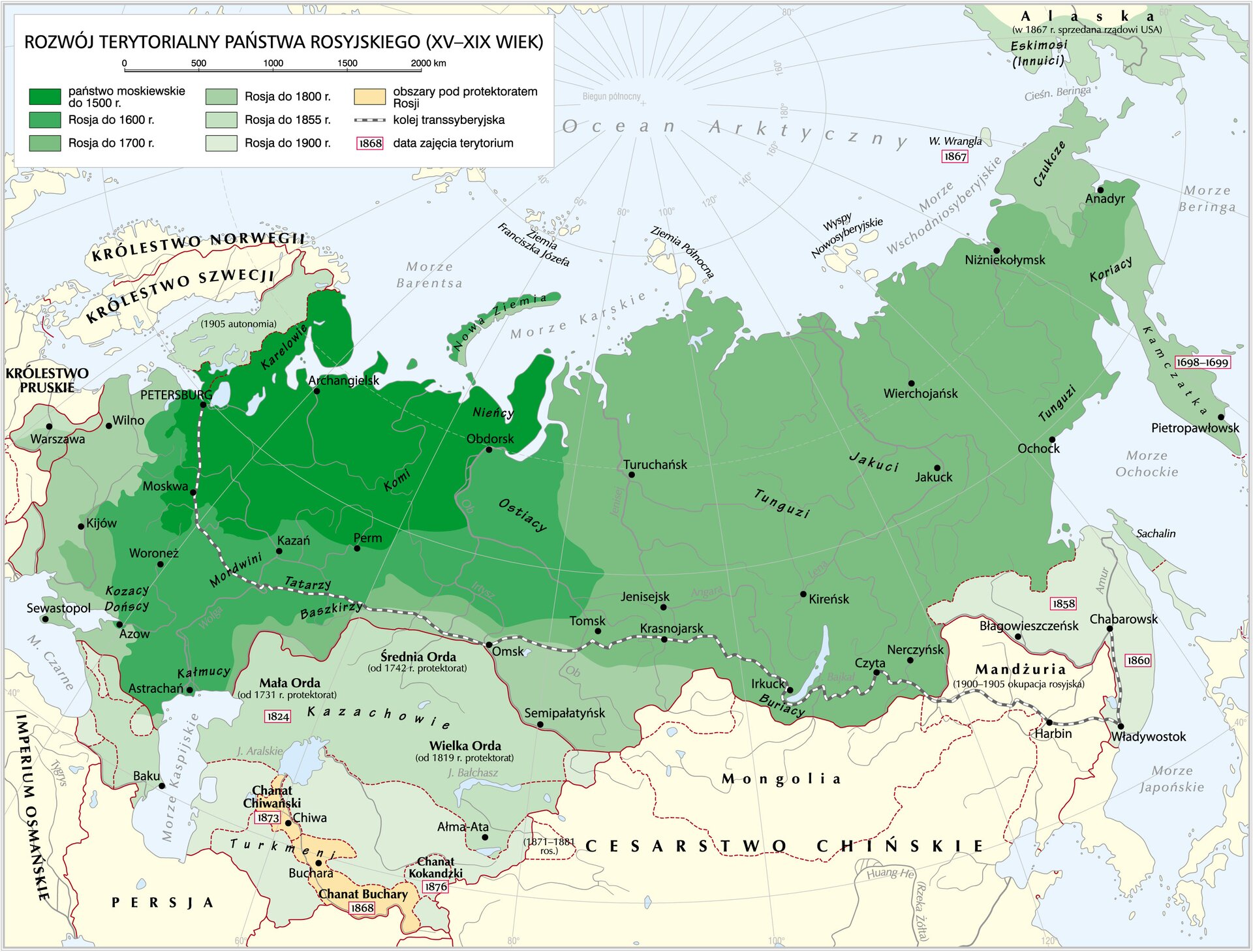
Listen to the recording. Find out what Trans‑Siberian Railway and Russo‑Japanese war have in common. What about tsar Nicolas II and the invention of colour photographs?
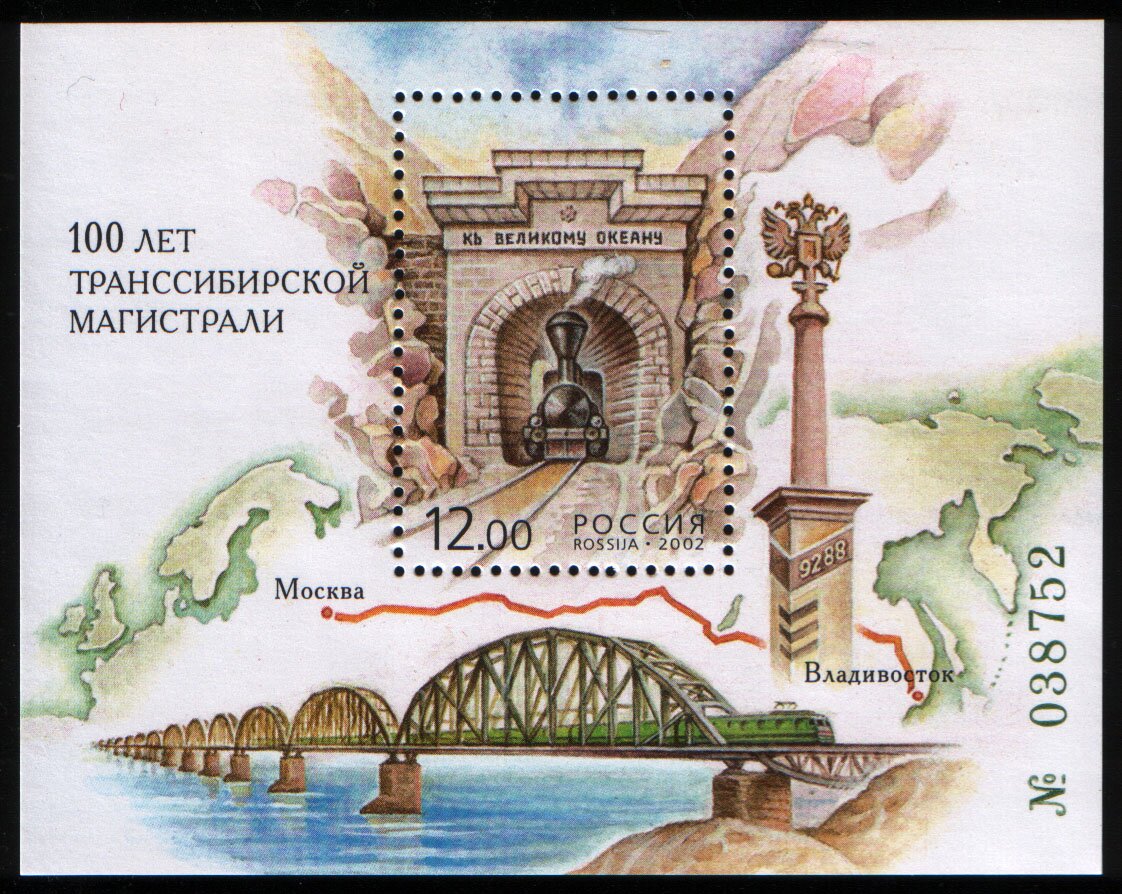
One of the ideas of Tsar Nicolas II to reinforce Russian position in the Far East was to build the Trans‑Siberian Railway, which was supposed to cut through ManchuriaManchuria (the north‑eastern region of China) and reach Vladivostok. The works started in the 90s of the 19th century, and their big scale perfectly reflected the Russian megalomania. Those who were close to the Russian tsar believed that it was his destiny to conquer the whole of Asia. They highlighted that the Russians had both Mongolian and Finnish blood, but the greatness and the strength of the country came not from their Slavic origins, but the Asian ones. Their politics followed the footsteps of that propaganda. In the early 20th century, the Russian army entered ManchuriaManchuria, where they created their own area of influence. Meanwhile, they managed to get permission from China to build a railway up to Port Arthur by the Yellow Sea. The port was situated on Liaodong PeninsulaLiaodong Peninsula, which was leased from China to Russia to be used as a base for the Russian navy.
The presence of Russia in the Far East, especially the stationing of their troops in ManchuriaManchuria met the resistance of European superpowers. Because of these pressures, the Russians started holding conversations with China about retreating their troops, at the same time trying to convince China to grant them the political monopoly. They asked China to promise that after the retreat of the Russian army, China will not grant the concession to other countries... without the consent from Russia. But the tsar did not really want to give ManchuriaManchuria away. The Russians realised how big their military and demographic power was and they were going to confront Japan. The Japanese, on the other hand, were planning to get their hands on their neighbour - Korea, which bothered the tsar and his people. The confrontation was inevitable.

The picture that you can see while listening to the recording is the bridge on Kama river, on the route of the Trans‑Siberian Railway. Note that the picture is in colour, even though it comes from the early 20th century. It was taken by the photographer Sergey Mikhaylovich Prokudin‑Gorsky. He was born in Vladimir Governorate in 1863, the year when January uprising broke out. He died in Paris in 1944, when Warsaw uprising was coming to an end. He was a chemist and one of the pioneers of colour photography. He devoted nearly half of his life to the art of photography and improving it. Around 1905 he decided to make a documentation of the Russian Empire with his photographs. Even tsar Nicolas II supported the idea. That allowed him to get a special compartment with a darkroom and the special permissions to travel and move around Russia freely, staying on good terms with tsar's administration officials.
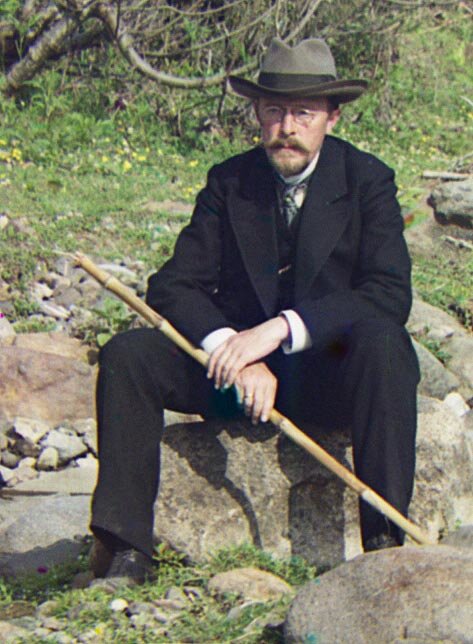
However, he did not set off on his photo tour until the political situation calmed down and the revolutionary riots triggered by the Russian defeat in the war with Japan stopped. During the period from 1909 to 1915, he took hundreds of pictures and fortunately kept most of them. The photographs depict the past world of Tsarist Russia, including things such as Orthodox churches, factories, and ordinary people's houses. He also liked taking portraits of ordinary people. Towards the very end of the WWI, Prokudin‑Gorsky set off on a journey to Norway and England. He never went back to Russia – where, in the meantime, the Bolsheviks came into power. He eventually settled down in Paris, where he lived until the end of his life. His glass negatives were bought from his heirs by the Library of Congress of the United States in 1948.
Read the passage from the memoirs of the Russian Minister of Finance, Sergei Witte, about the circumstances of the occupation of the southern part of Liaodong PeninsulaLiaodong Peninsula in 1898.
Who, according to him, took the lead in the imperial activities? How does he explain the reasons for the Russian imperial politics in the Far East? Indicate corresponding passages in the text.
Wiek XIX w źródłach[Chińscy] dygnitarze, widząc, że przekazanie nam prowincji KwantungKwantung w każdym wypadku jest nieuniknione, albowiem oni dowiedzieli się, że nasze okręty stoją naładowane wojskami i w pełnej bojowej gotowości — zdecydowali się pojechać do cesarzowej i namówić ją, aby zezwoliła na podpisanie zaproponowanego przez Rosję układu tj. umowy o wydzierżawieniu Rosji na 25 lat [półwyspu Liaotungtj. umowy o wydzierżawieniu Rosji na 25 lat [półwyspu Liaotung, z prawem korzystania z portu wyłącznie przez okręty rosyjskie i chińskie]. […] Nie ulega kwestii, że podnietę do takiego aktu tj. przekształcenia [Mandżuriitj. przekształcenia [Mandżurii w rosyjską strefę wpływów, m.in. dzięki przejęciu południowej części Liaodong PeninsulaLiaodong Peninsula i utworzeniu bazy strategicznej w Port ArturPort Artur] dał cesarz Wilhelm II, zagarniając Cindao; być może, że on nie zdawał sobie jasno sprawy, jakie to pociągnie za sobą konsekwencje, ale jest rzeczą niewątpliwą, iż dyplomacja niemiecka i cesarz niemiecki w owym czasie wszelkimi sposobami starali się wtłoczyć nas do awantur na Dalekim Wschodzie; on [cesarz Wilhelm II] dążył do tego, aby odciągnąć wszystkie nasze siły w kierunku Dalekiego Wschodu i uzyskać spokój na granicy zachodniej [Niemiec]; to właśnie w zupełności przezeń zostało osiągnięte, ponieważ zajęcie prowincji KwantungKwantung pociągnęło za sobą […] okrutną wojnę japońską, w której doznaliśmy najbardziej dotkliwej i nadzwyczajnej klęski.
Source: Wiek XIX w źródłach, [w:] Wiek XIX w źródłach. Wybór tekstów źródłowych, oprac. M. Sobańska-Bondaruk, S.B. Lenard, Warszawa 1998, s. 363.
Analyse the data in the table. Compare the pace of the development of the Russian and Japanese army in the late 19th and early 20th century. Then do the exercise.
Year | Russia | Japan |
1880 | 791 | 71 |
1890 | 677 | 84 |
1900 | 1162 | 234 |
1910 | 1285 | 271 |
1914 | 1285 | 271 |
Complete the sentences.
increased, over three times, decreased, by slightly over 30%, by slightly over 10%, over two times
Japanese armed forces increased between 1880 and 1900 .........................................
Meanwhile, Russian military force increased .........................................
Russian military dominance just before the war with Japan significantly .........................................
Put the main events of the Russo-Japanese war in the chronological order.
- Japan attacks Korea and Manchuria.
- Russia gets defeated at Mukden.
- Russia and Japan make peace through the intervention of the United States.
- Japan takes over Korea.
- Russia renounces the lease of the Liaodong Peninsula and gives the southern part of the Sakhalin island back to Japan.
- Russia gets defeated at Tsushima.
- Japan suddenly attacks the ships of the Russian fleet, docked in Port Arthur.
Key words
Russo‑Japanese war, Trans‑Siberian Railway, Manchuria, Kwantung, Liaodong Peninsula, Tsushima, Mukden, Shenyang, photography
Glossary
Kwantung – południowa część półwyspu Liaotung.
Płw. Liaotung – półwysep w północno‑wschodnich Chinach, nad Morzem Żółtym, między Zatoką Liaotuńską na zachodzie a Zatoką Zachodniokoreańską na wschodzie;
Port Artur – w 1898–1905 rosyjska twierdza na Płw. Liaotuńskim
Mandżuria – północno‑wschodni region Chin
Cuszima – grupa 5 skalistych wysp japońskich w Cieśninie Koreańskiej
Mukden (dziś Szenjang) – miasto w północno‑wschodnich Chinach