I will tell you a story...
you will explain the importance of storytelling
you will distinguish the types of stories
you will describe the composition scheme of the storystory
you will write a creative story
Since time immemorial, people have been eager to tell real or fictional stories and listen to them just as eagerly. Before the writing was invented, legends, tales and stories about life were passed on verbally and they had various functions, such as conveying knowledge about the world (information function), shaping the development of individuals and social groups (educational function), and serving fun and relaxation (entertainment function).
In the film, Jason Silva says that stories colonize the brain (They literally colonize the brain). How do you understand this statement? Do you agree with it? Can you give examples of such stories that are literally nested in your brains? Talk about it.
Check in Wielki słownik języka polskiego (find it using search engine) the meaning of the word „opowiadanie”.
Match the definitions with the meanings of the word 'story' used in sentences.
A story is a short literary work with a simple plot and a small number of characters, characterised by a free composition. It has a vivid and dynamic language, it shows the cause and effect of a sequence of events and its happy or unhappy ending., A story is a sequence of events presented by someone in words (e.g. a grandmother's story about her childhood, a child's story about school).
| The story of the uncle shows that life in the countryside was very difficult in the past. | |
| I have read a whole volume of Albert Moravia’s stories. |
Information
Types of stories
Depending on whether you are creating text based on someone’s oral or written statements or using your own observations, we distinguish an imitative story and a creative story.
Imitative story
It consists in describing with one’s own words events (usually in chronological order) presented by someone else (e.g. the protagonist of the novel, eyewitness). A great help in writing an imitative story is the utterance plan created on the basis of the original text.
Creative story
It requires more effort, language skills and fantasy. We can start it with phrases like this: Once upon a time…, I will tell you a story today…, Summer is over…, When I first saw her… The beginning should encourage the recipient to listen carefully to or read our story which we can present from the perspective of an observer or participant in events. The most difficult form is a story with dialogue, i.e. a conversation between the protagonists of the story included in the text.
A story has a specific composition scheme. Arrange the story elements in the right order.
- Climax – the moment before the sudden turn of events, a new situation for the protagonist.
- Denouement – the final stage which brings solution to the problems in the described topics (e.g. through a surprising message).
- Exposition – an initial stage in which the time and place of the described action, its main character(s) and an outline of the conflict should be presented.
- Rising action – the most extensive part of the story, showing the gradual escalation of conflict, its causes and effects.
Complete the mind map by entering your suggestions in the right places.
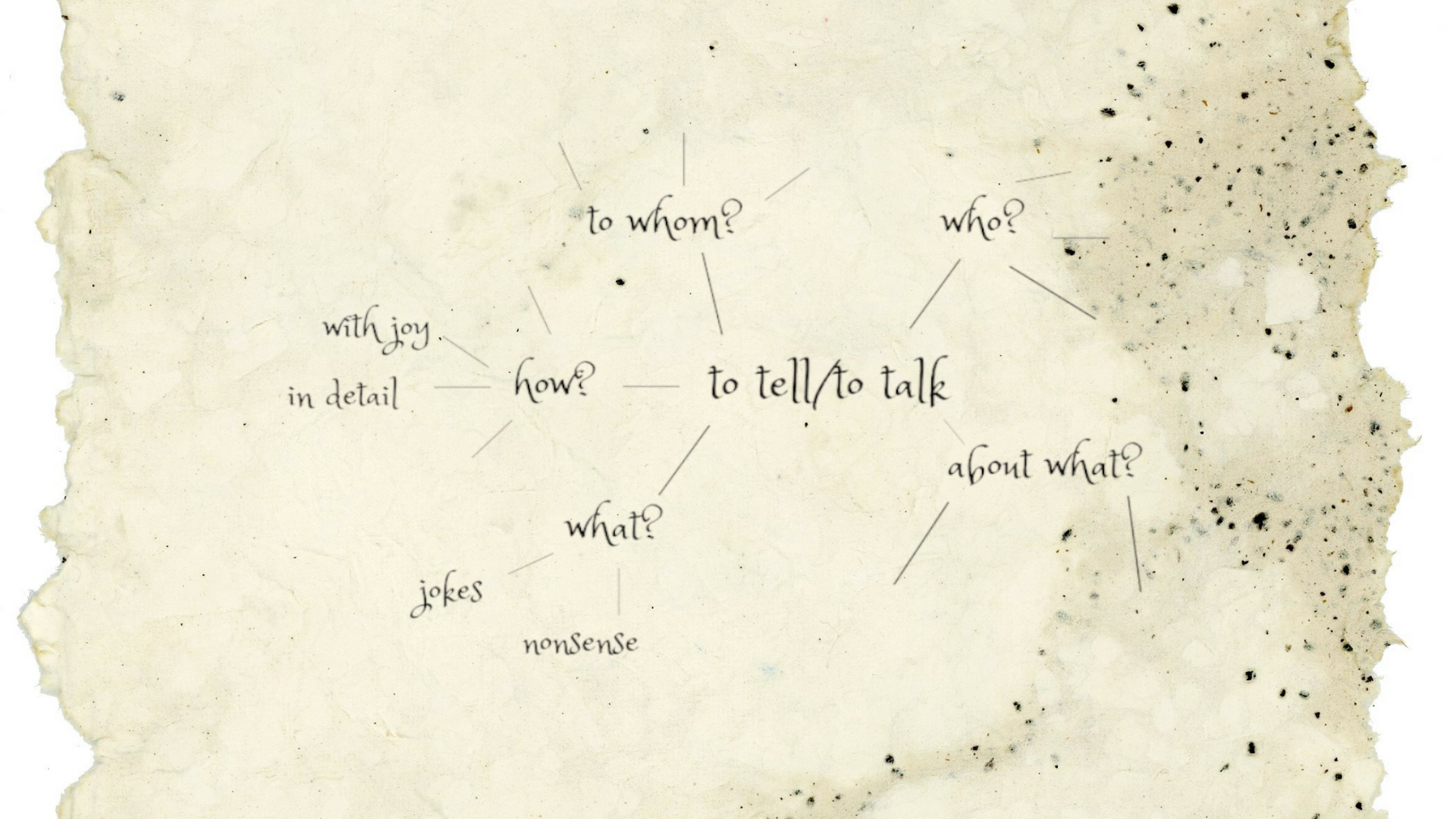
In her blog, Małgorzata Musierowicz, a writer and illustrator of books for children and young people, described the process of creating her stories. Read the following excerpt and present in points, following the chronologychronology, how the author writes her texts.
BlogUważam za wielki dar niebios to, że wolno mi się zajmować zawodowo zjawiskiem, które kocham: książką.
Od dziecka wiedziałam, że do pełni szczęścia potrzebuję tylko niedużej domowej drukarni – i oto ją mam, w postaci komputera. Spędzam rozkoszne i zajmujące chwile, projektując, bawiąc się i pracując, pisząc i rysując z pomocą tego mądrali. Umie on mnóstwo – ale nie wszystko, niestety: wymyślić, napisać i zilustrować powieść muszę osobiście. Znikąd pomocy.
Najpierw trzeba skonstruować akcję, rozpisać ją starannie na sceny, do samego finału, wyobrazić sobie postacie bohaterów, ich wygląd, usposobienie, nawyki i reakcje. (Często ich sobie rysuję, zanim zacznę o nich pisać).
Robię mnóstwo notatek i upycham je w teczce lub rozwieszam wokół stołu, na regałach i półkach. A potem po prostu piszę, co jest procesem długim, żmudnym i męczącym. Wygląda to też nienadzwyczajnie: ot, siedzi sobie potargana kobieta w stroju przypadkowym i gapi się w przestrzeń za oknem, po czym stuka w klawiaturę i gapi się z kolei w monitor. Siedzi, siedzi, siedzi, bolą ją plecy, kark i nogi. Co napisze, to zapisze albo i wyrzuci. Wstanie, pochodzi, wyjdzie do ogrodu, popatrzy na róże, dozna wyrzutu sumienia i dalejże z powrotem do pracy. Siedzi, siedzi, siedzi, pogryza orzeszki lub migdały, co napisze, to zapisze albo i wyrzuci, i tak w kółko. Taka monotonna praca ciągnie się przez całe miesiące, ale przynosi mnóstwo satysfakcji i radości.
Wyobraźcie sobie, pracuję tak już od czterdziestu lat! Nie mówię, że codziennie. Mnóstwo rzeczy ważniejszych, pilniejszych, naglących, dybie na mój czas i uwagę. A doba jest taka krótka!
Mimo wszystko jednak, to i owo udało mi się w życiu napisać i narysować – i właśnie mam zamiar Wam to przedstawić.Source: Małgorzata Musierowicz, Blog [online], 2015, dostępny w internecie: www.musierowicz.com.pl.
Read a fragment of Sławomir Mrożek’s story “W szufladzie” and summarise the story in one sentence.
W szufladzieDzisiaj rano, kiedy wysunąłem środkową szufladę biurka, żeby znaleźć okulary – zobaczyłem, że żyją w niej mali ludzie. Między futerałem na okulary a kopertą ze zdjęciami stała nieduża, ale miła i młoda para. On – wielkości połowy mojej dłoni, uśmiechnięty, o jasnych oczach, ona – jak mój palec serdeczny, zgrabna i złota. Włosy spięte na karku, przypominające błyszczący wiórek, muskały jej plecy. Wpatrywali się w siebie, a kiedy otworzyłem szufladę – spłoszonym, jednoczesnym ruchem obrócili głowy w moją stronę, przy czym musieli patrzeć od razu do góry. Byłem wobec nich wielki jak Bóg i ciężki. Uśmiechnąłem się, a mój uśmiech musiał być dla nich tym, czym zmiana pogody na niebie. Zresztą nie okazywali trwogi. Wziąwszy się za ręce, zbliżyli się o kilka centymetrów do mojej klatki piersiowej, odzianej w granatowy wełniany sweter, o którą wspierała się wysunięta szuflada. Pod ich stopami szeleścił tygodnik ilustrowany, którym wysłane jest jej dno. Nachyliłem się, czując, że każde moje poruszenie może być dla nich trzęsieniem ziemi. Nie mogłem spostrzec wyrazu ich oczu, bo były zbyt małe: jak ciemne ziarenka. Wyjaśnili mi swobodnie, że mają kłopoty. Jej matka nie chce się zgodzić na małżeństwo. Wyglądało to na prośbę o pomoc.
Source: Sławomir Mrożek, W szufladzie, [w:] tegoż, Wybór opowiadań, Kraków 1974.
Work in pairs or in groups. Write a continuation of the story W szufladzie (up to 200 words), bearing in mind the development of actionaction, climaxclimax and denouementdenouement.
Read the advice for a beginner writer and a list of the most common mistakes. Arrange them in order from the most important to the least important. Justify your choice.
Advice for a beginner writer
Remember to write about only one eventevent.
Write in the first person singular.
Always write in the past tense.
Interweave descriptive elements with dialogues.
Use clear and vivid language.
Arouse interest at the beginning of the story.
Do not forget about the surprising ending.
Use a lot of verbs.
Do not make language mistakes.
The most common mistakes in the stories
lack of chronology of events: they do not create a cause‑and‑effect sequence,
mixing present tense with past and future tenses,
writing about many different events,
an uninteresting beginning,
a predictable ending of the story,
insipid and trite language,
insipid (predominance of nouns and adjectives) and inconsistent style inadequate to the form of expression.
Keywords
story, chronology, action, events
Glossary
opowiadanie
chronologia
akcja
wydarzenia
fabuła
ekspozycja
zawiązanie akcji
punkt kulminacyjny
rozwiązanie akcji
nagły zwrot akcji