R13jSB4kOWwTP

The Polish Underground State. The communist underground.

Home Army soldiers during Operation Tempest in Lublin, July 1944
Source: Centralne Archiwum Wojskowe, Wikimedia Commons, licencja: CC 0.

Link to the lesson

You will learn
  • why the Polish Underground State was unique on the global scale;

  • the shape of the military and political covert activity in the country;

  • the shape of the communist resistance in the country;

  • what Home Army and Gray Ranks were;

  • what the “Trial of the Sixteen” was and about its meaning”;

  • how the process of takeover of power by the communists in liberated Poland started.

R1LA5TsurKhwG
Nagranie abstraktu

Before the end of the 1939 Defensive War, the first covertCovert Activitiescovert resistance groups were already operating on the Polish land. The largest of them was created as early as on 27 September 1939 by General Michał Tokarzewski‑Karaszewicz Service for Poland's VictoryService for Poland's VictoryService for Poland's Victory. This was the start of forming of the secret structures of the state – Polish Underground StatePolish Underground StatePolish Underground State on occupied Polish land. However, the Service for Poland's Victory did not meet with the approval of Prime Minister Sikorski, who called into life the Union of Armed StruggleUnion of Armed Struggle (ZWZ)the Union of Armed Struggle (1939), headed by General Kazimierz Sosnkowski, which in February 1942 was transformed into Home ArmyHome Army (AK)Home Army. Its first commander was general Stefan Grot‑Rowecki, and its reach covered the entire area of the occupied state.

Apart from military covert activities, political covertCovert Activitiescovert groups created by parties went underground were developing in the country equally actively. The Civil work of the Polish Underground StatePolish Underground StatePolish Underground State was directed by established in 1940 Government Delegation for PolandGovernment Delegation for PolandGovernment Delegation for Poland, the main task of which was to maintain the continuity of the state institutions and to ensure normal functioning of the state. One of its branches was the Directorate of Civil Resistance, which was responsible for the protection and self‑organisation of the society for resistance purposes, and the Directorate of CovertCovert ActivitiesCovert Resistance, which was supposed to conduct the ongoing struggle, undertaking sabotage and diversion activities.

Also the Polish communists, gathered around the Polish Workers' Party (1942) and created in the USSR Union of Polish PatriotsUnion of Polish Patriots (ZPP)Union of Polish Patriots (1943) tried to undertake covertCovert Activitiescovert operations. Their intensity increased in particular after repeated breaking off the relations with the Polish government‑in‑exile in London. As a refusal of the right of the government‑in‑exileGovernment‑in‑exilegovernment‑in‑exile and its representatives in the occupied state to represent all Poles, the State National CouncilState National Council (KRN)State National Council (1944) was established on Stalin’s initiative, and then the Polish Committee of National LiberationPolish Committee of National Liberation (PKWN)Polish Committee of National Liberation – its executive body. They soon became the foundation of future, Provisional Government of National Unity (1945), which was controlled by the communists and took over the power in the already liberated country.

1
Task 1

Get acquainted with the major events in the activity of the Polish Underground State and organize your knowledge. Which of the events were the most important and why?
RWiR2O6L8NlIl
The Polish Underground State 0.9.1939 The establishment of the Service for Poland's Victory Its commander was Genral Michał Tokarzewski-Karaszewicz., 0.12.1939 Calling into life of the Union of Armed Struggle (ZWZ) The head of the ZWZ as the Commander in Chief was General “Józef Godziemba” Kazimierz Sosnkowski, 0.2.1940 The establishment of the Political Consultative Committee (PKP) It was created in the result of the representatives of PPS-WRN, SL, SN and SP.In the photo, a PKP member, Kazimierz Pużak "Bazyli" (PPS-WRN codename "Koło")., 5.1.1942 The establishment of the Polish Workers' Party Picture showing Marceli Nowotko - the first leader of the PPR., 0.2.1942 The transformation of ZWZ into Home Army Home Army soldiers during Operation Tempest in Lublin, July 1944, 0.0.1943 Transformation of the PKP into the Home Political Representation, and then the Council of National Unity Picture showing the Programme of the Fighting Poland written by the Home Political Representation and the Council of National Unity., 0.11.1943 The so-called big declaration “ “What we are fighting for” The programme declaration of the Central Committee of the Polish Worker’s Party, 0.0.1943 - 0.0.1944 The establishment of the State National Council (KRN) the ruins of the tenament at 22 Twarda street, where the KRN was established at the night from 31 December 1943 to 1 January 1944, 0.7.1944 The establishment of the PKWN The seating of the Polish Committee of National Liberation. On the picture, left to right: the commander of the 1st Polish Army - General Zygmunt Berling, a member of PKWN - Andrzej Witos; the Chairman of the PKWN - Edward Osóbka-Morawski, the Chairman of the State National Council - Bolesław Bierut, the commander-in-chief of the Polish Army - General Michał Rola-Żymierski, the head of the Ministry of Arts and Culture in the Polish Committee of National Liberation - Wincenty Rzymowski and the Chief of General Staff of the Polish Army - Marian Spychalski. Lublin, 1944., 22.7.1944 The PKWN manifesto Picture of a citizen reading the PKWN manifesto, 0.1.1945 The dissolution of the Home Army Warsaw Uprising: The soldiers of Radosław Group after several hours spent in sewers on the way from Krasińscy Square to Warecka Street in Śródmieście (the city central district) in the morning on 2.09.1944, the first on the left in the helmet: Tadeusz Rajszczak "Maszynka" of Battalion "Miotła", 0.6.1945 The so-called Trial of the Sixteen The accused in Trial of the Sixteen – Moscow, June 1945
Source: Dąbrowiecki, Jerzy Tomaszewski, Polish Army, domena publiczna.
Task 2
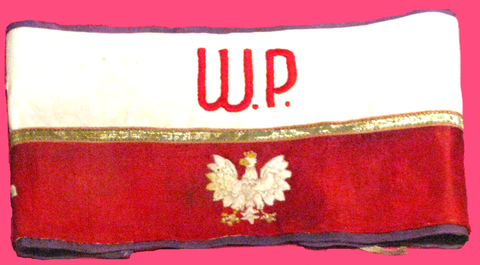
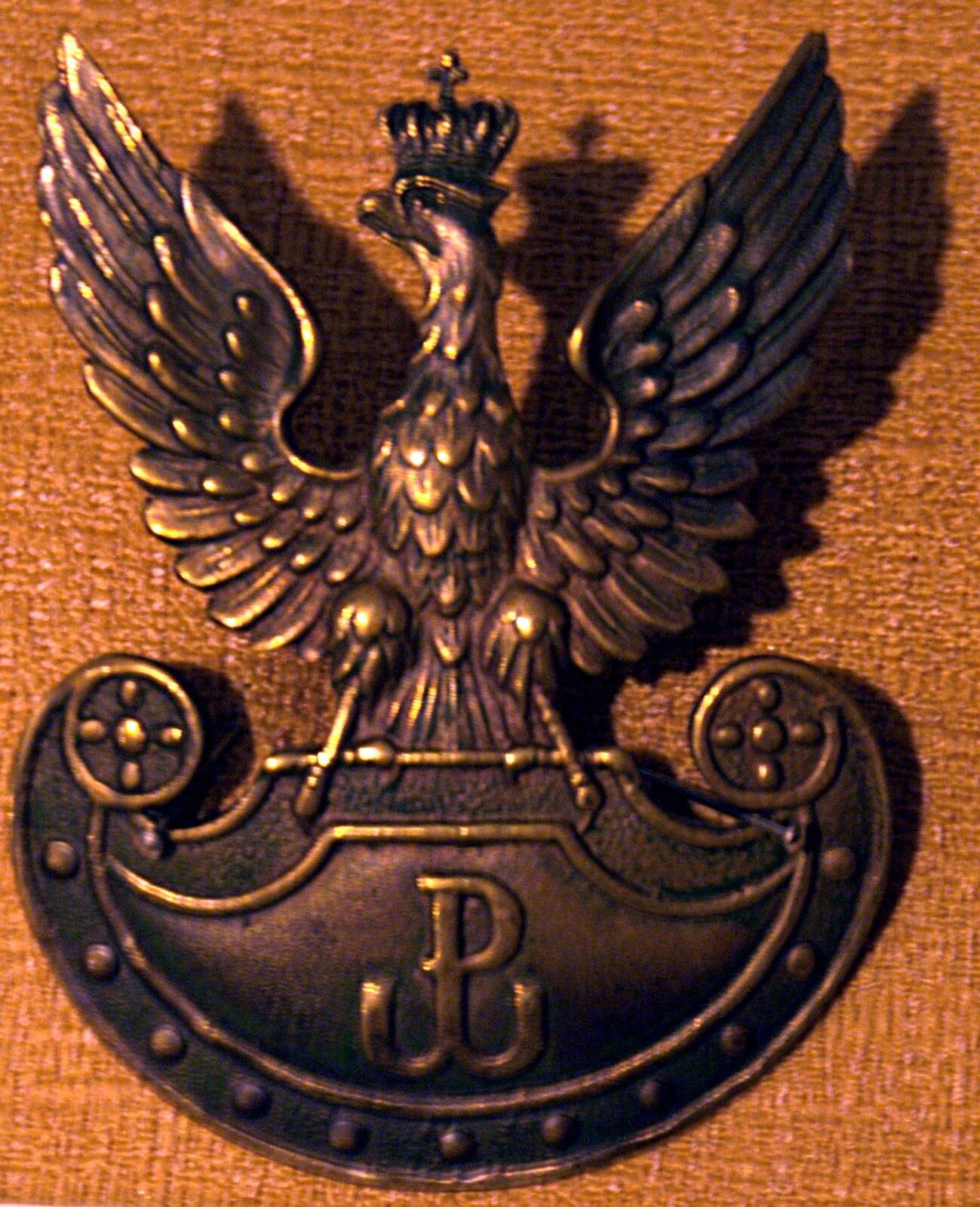
Jakie symbole posiadała Armia Krajowa?
RprQxJWKYDq2P1
Exercise 1
Match terms to definitions. Underground education Możliwe odpowiedzi: 1. secret activities of the political organisations in opposition to the authorities (usually the occupant). They are directly linked with the activities of the resistance., 2. covert activities usually of the youth against the German occupant. They included, i.a.: painting of patriotic slogans and symbols, distribution of leaflets, ridiculing the occupant or sending warnings., 3. the name of illegal classes and lectures organised outside schools in the period of the partition of Poland or during occupation. Most often conducted at private houses., 4. the covert cryptonym of scouts belonging to the Polish Scouting Association during World War II. They co-operated with the Home Army and the government-in-exile., 5. armed organisation of the Polish Workers Party during World War II. It existed in years 1942-1944, and its first commander was Bolesław Mołojec. Gray Ranks Możliwe odpowiedzi: 1. secret activities of the political organisations in opposition to the authorities (usually the occupant). They are directly linked with the activities of the resistance., 2. covert activities usually of the youth against the German occupant. They included, i.a.: painting of patriotic slogans and symbols, distribution of leaflets, ridiculing the occupant or sending warnings., 3. the name of illegal classes and lectures organised outside schools in the period of the partition of Poland or during occupation. Most often conducted at private houses., 4. the covert cryptonym of scouts belonging to the Polish Scouting Association during World War II. They co-operated with the Home Army and the government-in-exile., 5. armed organisation of the Polish Workers Party during World War II. It existed in years 1942-1944, and its first commander was Bolesław Mołojec. Covert Activities Możliwe odpowiedzi: 1. secret activities of the political organisations in opposition to the authorities (usually the occupant). They are directly linked with the activities of the resistance., 2. covert activities usually of the youth against the German occupant. They included, i.a.: painting of patriotic slogans and symbols, distribution of leaflets, ridiculing the occupant or sending warnings., 3. the name of illegal classes and lectures organised outside schools in the period of the partition of Poland or during occupation. Most often conducted at private houses., 4. the covert cryptonym of scouts belonging to the Polish Scouting Association during World War II. They co-operated with the Home Army and the government-in-exile., 5. armed organisation of the Polish Workers Party during World War II. It existed in years 1942-1944, and its first commander was Bolesław Mołojec. People’s Guard Możliwe odpowiedzi: 1. secret activities of the political organisations in opposition to the authorities (usually the occupant). They are directly linked with the activities of the resistance., 2. covert activities usually of the youth against the German occupant. They included, i.a.: painting of patriotic slogans and symbols, distribution of leaflets, ridiculing the occupant or sending warnings., 3. the name of illegal classes and lectures organised outside schools in the period of the partition of Poland or during occupation. Most often conducted at private houses., 4. the covert cryptonym of scouts belonging to the Polish Scouting Association during World War II. They co-operated with the Home Army and the government-in-exile., 5. armed organisation of the Polish Workers Party during World War II. It existed in years 1942-1944, and its first commander was Bolesław Mołojec. Minor Sabotage Możliwe odpowiedzi: 1. secret activities of the political organisations in opposition to the authorities (usually the occupant). They are directly linked with the activities of the resistance., 2. covert activities usually of the youth against the German occupant. They included, i.a.: painting of patriotic slogans and symbols, distribution of leaflets, ridiculing the occupant or sending warnings., 3. the name of illegal classes and lectures organised outside schools in the period of the partition of Poland or during occupation. Most often conducted at private houses., 4. the covert cryptonym of scouts belonging to the Polish Scouting Association during World War II. They co-operated with the Home Army and the government-in-exile., 5. armed organisation of the Polish Workers Party during World War II. It existed in years 1942-1944, and its first commander was Bolesław Mołojec.
Task 3
Wyjaśnij symbolikę godła polskiego. Biały orzeł ze złotą koroną na czerownym tle.
R63hJccA5JDPR
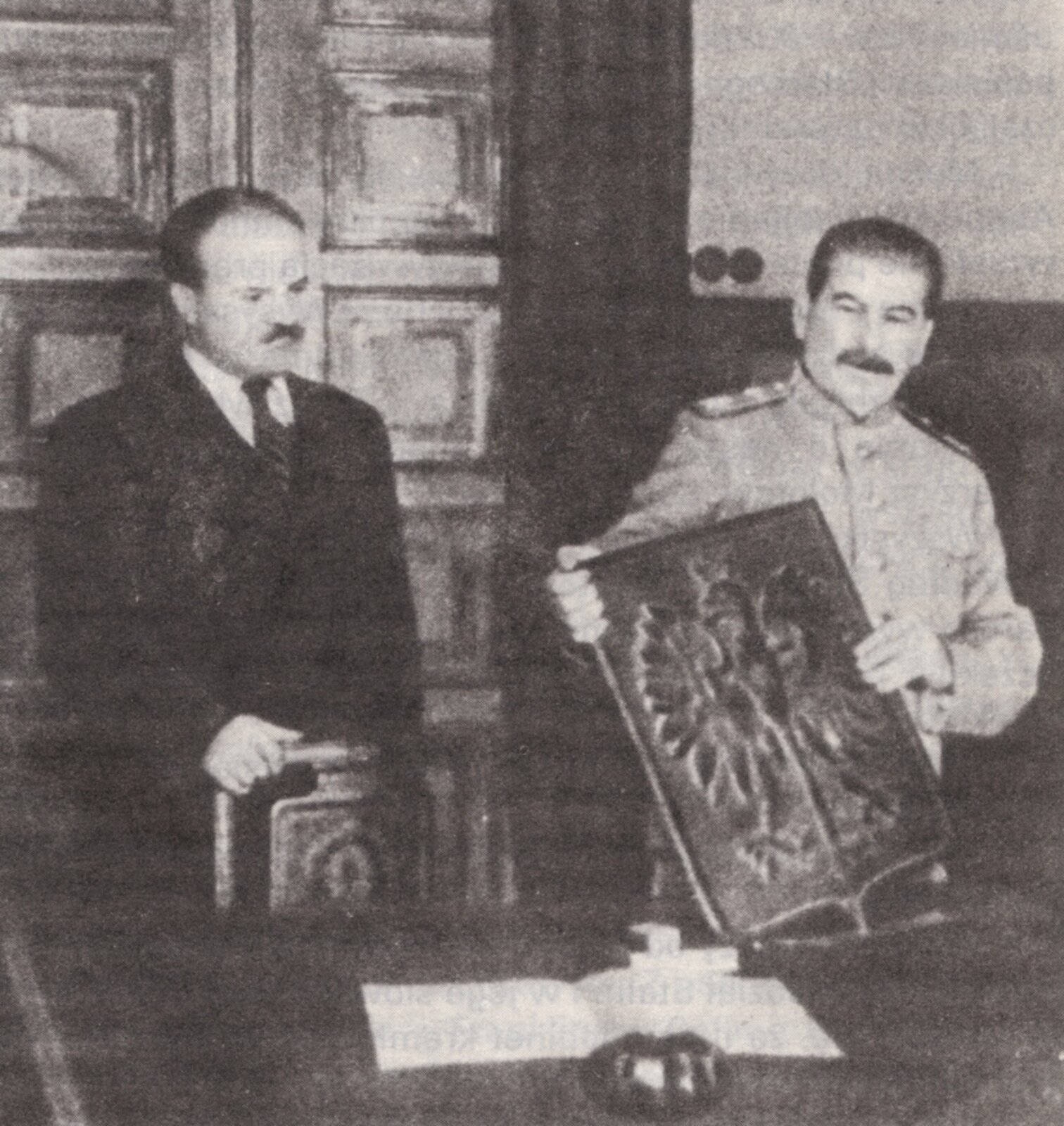
Photo published in the USSR by the TASS agency on November 15, 1944 and by "Głos Ludu" newspaper in Lublin
Source: TASS, domena publiczna.

Keywords

underground state, Home Army, covert activities, underground education, government‑in‑exile

Glossary

Polish Underground State
R1dT9oTRP3gRN
Nagranie dźwiękowe słówka.

Polskie Państwo Podziemne – istniejące w czasie II wojny światowej tajne struktury państwa polskiego na terenach okupowanych przez III Rzeszę i ZSRR. Istniało od 27 września 1939 do 1 lipca 1945 roku.

Government‑in‑exile
Government‑in‑exile
R1CoIRcwggq5H
Nagranie dźwiękowe słówka.

Rząd na uchodźstwie – polski rząd w latach 1939‑1990 będący jedyną legalną, w świetle polskiego prawa, kontynuacją władz Rzeczypospolitej Polskiej po wybuchu II wojny światowej. Jego siedzibą był najpierw Paryż, następnie Angers, a od 1940 r. Londyn. Zakończył swoją działalność po wyborze Lecha Wałęsy na prezydenta Polski.

Covert Activities
Covert Activities
R16yi8YaYohZV
Nagranie dźwiękowe słówka.

Konspiracja – tajna działalność prowadzona przez organizacje polityczne skierowana przeciw władzy, najczęściej okupanta kraju. Ma bezpośredni związek z działaniami ruchu oporu.

Service for Poland's Victory
R1B35ayjcCeUV
Nagranie dźwiękowe słówka.

Służba Zwycięstwu Polski – polska organizacja konspiracyjna powołana we wrześniu 1939 r., której celem była walka o wyzwolenie Polski w przedwojennych granicach. Jej dowódcą był gen. Michał Tokarzewski‑Karaszewicz.

Union of Armed Struggle (ZWZ)
RxiNlbr0Lf7zH
Nagranie dźwiękowe słówka.

Związek Walki Zbrojnej (ZWZ) – inaczej Siły Zbrojne w Kraju, organizacja konspiracyjna o charakterze zbrojnym istniejąca od listopada 1939 do litego 1942 r., przekształcona następnie w Amię Krajową. Komendantem Głównym został płk. Stefan Grot‑Rowecki.

Home Army (AK)
Home Army (AK)
RERcXeDvB6iwq
Nagranie dźwiękowe słówka.

Armia Krajowa (AK) – Siły Zbrojne w Kraju; tajne siły zbrojne Polskiego Państwa Podziemnego w czasie II wojny światowej działające na okupowanych ziemiach Rzeczypospolitej Polskiej. Były podporządkowane Naczelnemu Wodzowi. Pierwszym dowódcą został gen. Stefan Grot‑Rowecki. Działała od 14 lutego 1942 do 19 stycznia 1945 r. i liczyła nawet do 390 tys. żołnierzy.

Gray Ranks
Gray Ranks
R1dS1IqpcQj0M
Nagranie dźwiękowe słówka.

Szare Szeregi – konspiracyjny kryptonim harcerzy zrzeszonych w Związku Harcerstwa Polskiego w okresie II wojny światowej. W swoich działaniach współpracowali z Armią Krajową oraz władzami rządu na uchodźctwie.

Government Delegation for Poland
R18tRlFzOgMHp
Nagranie dźwiękowe słówka.

Delegatura Rządu na Kraj – naczelny organ tajnych władz w okupowanym kraju utworzony w 1940 r. Kierowała pracą cywilną Polskiego Państwa Podziemnego, a jej głównym zadaniem było utrzymanie ciągłości instytucji państwowych.

Minor sabotage
Minor sabotage
R1CSSZKxYr88e
Nagranie dźwiękowe słówka.

Mały Sabotaż – akcje konspiracyjne przeprowadzane najczęściej przez młodzież w przeciwko okupantowi niemieckiemu. Należały do nich, m.in.: wypisywanie patriotycznych haseł i znaków, rozrzucanie ulotek, ośmieszanie okupanta czy wysyłanie ostrzeżeń.

Underground education
R9KoimH1paFM5
Nagranie dźwiękowe słówka.

Tajne komplety – określenie nielegalnych zajęć i wykładów organizowanych poza szkołami w okresie zaborów lub okupacji. Najczęściej odbywało się w prywatnych domach.

Trial of the Sixteen
R1X4FvOChsyr6
Nagranie dźwiękowe słówka.

Proces szesnastu – pokazowy proces polityczny szesnastu przywódców Polskiego Państwa Podziemnego, porwanych przez Rosjan i oskarżonych o kolaborację z Niemcami. Miał miejsce w Moskwie w czerwcu 1945 r.

People’s Guard
People’s Guard
RyeES5hnNmBPz
Nagranie dźwiękowe słówka.

Gwardia Ludowa – zbrojna organizacja Polskiej Partii Robotniczej w czasie II wojny światowej. Istniała w latach 1942‑1944, a jej pierwszym dowódcą był Bolesław Mołojec.

Union of Polish Patriots (ZPP)
R1OBIS6BGVqcz
Nagranie dźwiękowe słówka.

Związek Patriotów Polskich (ZPP) – organizacja polityczna utworzona w ZSRR przez polskich komunistów w 1943 r. Prowadziła działalność propagandową na rzecz sowieckiej Rosji. Był w pełni podporządkowany Stalinowi i stanowił narzędzie jego polityki.

State National Council (KRN)
RpEZrtnisJ2gr
Nagranie dźwiękowe słówka.

Krajowa Rada Narodowa (KRN) – utworzony 1 stycznia 1944 r. przez polskich komunistów samozwańczy parlament, określający się jako „faktyczna reprezentacja polityczna narodu polskiego”. Miała być alternatywą dla Rządu RP na uchodźstwie. Na jego czele stanął Bolesław Bierut. Istniał do stycznia 1947 r.

Polish Committee of National Liberation (PKWN)
Rq7SWVBkmV7pa
Nagranie dźwiękowe słówka.

Polski Komitet Wyzwolenia Narodowego (PKWN) – marionetkowy i tymczasowy organ władzy wykonawczej Rzeczypospolitej Polski utworzony w 1944 r. utworzony i zdominowany przez komunistów. Działał pod ścisłą kontrolą Stalina.