Australia - natural environment, features of the economy, population
how to interpret the contents of general geographic and thematic maps;
how to make a description of chosen features of a natural environment based on the contents of a thematic map;
that features of the natural environment influence farming methods in a given region.
to determine the geographical location and surface area of Australia;
to characterise the features of Australia's natural environment;
to identify the causes of its low population density and uneven population distribution;
to identify the relationships between the distribution of the main economic sectors and the elements of Australia's natural environment.
The features of Australia's natural environment
Australia is a land which is flat and not very varied in terms of topography. The area's average height above sea level is merely 292 metres. Three large topographic forms are clearly visible on a hipsometric map.
The hot and dry types of tropical climate predominate in Australia, occuring inland and on its West Coast. A hot variety of a subequatorial climate prevails in the North, with relatively high precipitation. In turn, the South coast has a humid subtropical climate, also with fairly high precipitation.
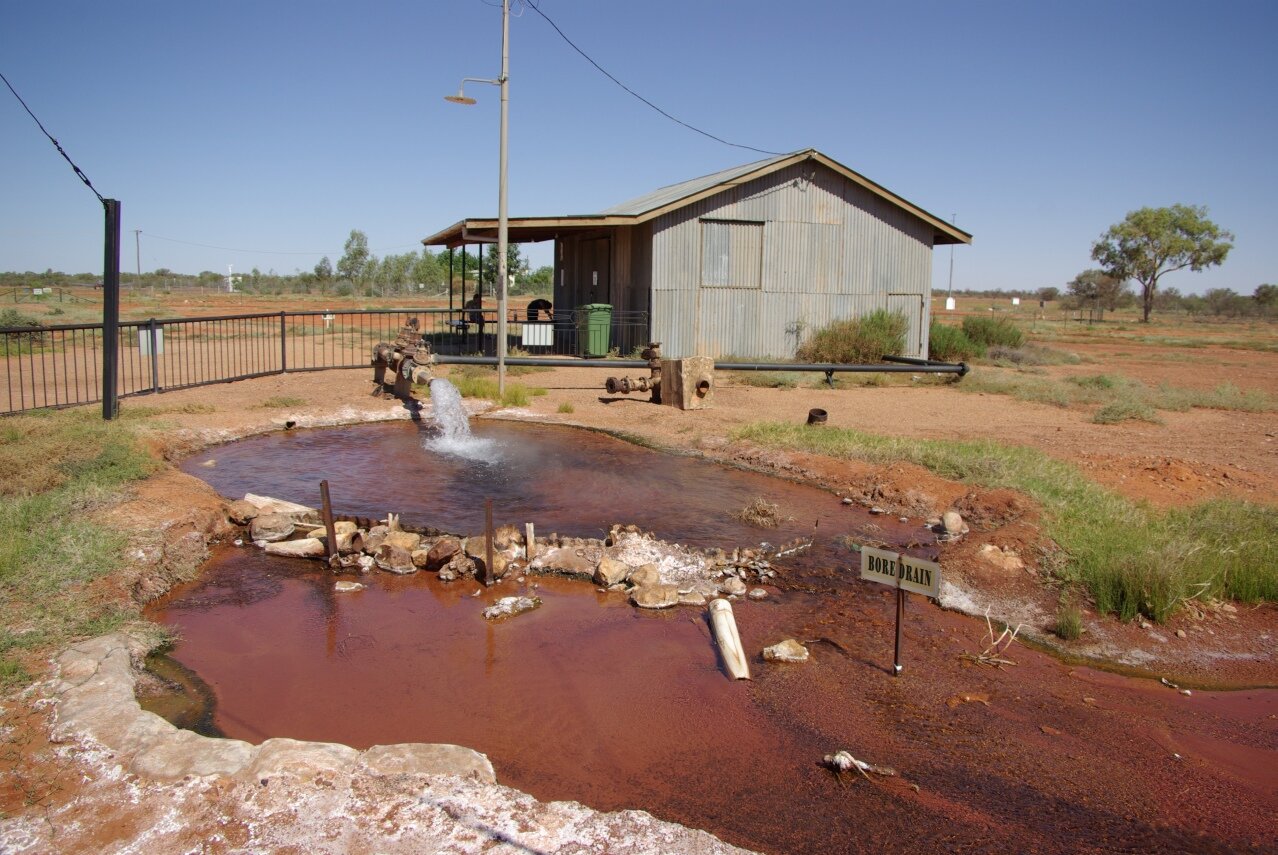
Australia's climate influences the other elements of its natural environment, and their mutual interactions determine the formation of the landscapes characteristic of this land. The hot and dry tropical climate which is prevalent over the greatest part of Australia's area shapes the water network on this continent. Australia is the poorest land in terms of surface water in the world – endorheic basins occupy as much as 44% of the surface in the central part of Australia, where the dry valleys of intermittent rivers, which are filled with water by sporadic heavy rainfall, occur. Intermittent rivers and streams are called creeks. Salt lakes and salt pans found at the bottom of basins are an important element of Australia's water network. The largest of them is Lake Eyre, locate in a depression 12 metres below sea level in the middle of the land. Its area varies depending on the amount of rainfall. One of Australia's large permanent rivers is Murray, which has its source in the Australian Alps. Along with its largest tributary – the river Darling – it creates the most important river system in the land. However, Australia has significant freshwater bodies of water located in artesian basins. Their surface occupies around 1/3 of the continent. The largest of them is the Great Artesian Basin which is found in the central part of the Australian central lowlands.
Read the information in the chart below.
The location of natural plant formations is determined by the amount of rainfall and its yearly range. Deserts and semideserts occur in the central part of the continent. Scrub is a plant community typical of these regions, and consists of dense thickets of dry eucalyptus or acacia shrubs.
Population
Before the arrival of Europeans, Australia was inhabited by a native population – AboriginesAborigines. They led a hunter‑gatherer lifestyle. They used very simple tools and types of weapons. They didn't even know what a bow was, but they did, however, invent the boomerang – an instrument used to hunt birds. A boomerang which is thrown correctly will turn in an arc and return to the hunter if it misses its target. Aborigines currently represent a small population group, numbering around 400 thousand. Today, some of them still live in the poorly populated, undeveloped inland, and some are attempting to adapt to the new social conditions.
Contemporary Australian society formed as a result of immigration from Great Britain – descendants of immigrants now constitute over 80% of the country's population. The distribution of the population between the continent's coasts and its inland areas in Australia is highly disproportionate. All of Australia's larger cities, with the exception of the capital – Canberra (390 thousand inhabitants), were founded on the coast. Many of them are large ocean ports. The urban population makes up as much as 89.4% of the general population. The largest cities are: Sydney (4.8 million), Melbourne (4.2 million), Brisbane (2.2 million) ), Perth (1.8 million) and Adelaide (1.3 million). The rural population is made up of farmers living on huge farms, which means that rural buildings are very spread out. Village settlements were not created in Australia, as they were on other continents. In 2015, Australia had a population of 23.9 million inhabitants, and the average population density for 1 kmIndeks górny 22 was just 3 people.
Using information from various sources, elaborate on the issues related to population.
The economy of the Australian Union
Australia's history of settlement influenced the speed of its economic development, and features of the natural environment determined which economic sectors could develop and where.
Australia is a continent which is very poor in water. Despite this, as much as 53.4% of its area is used agriculturally. The largest area – 47.1% of the country's area – is taken up by meadows and pastures, which are, however, covered in sparse and dry semidesert and savannah vegetation.
Artesian basins function as the main water storage for agriculture. The field of Australian agriculture which is of the most importance is animal husbandry – of sheep and cattle. Sheep grazing areas are found in the region of the Great Artesian Basin and in the Murray‑Darling river basin. As much as 3/4 of the entire sheep population is made up of Merinos.
This breed provides excellent quality thin wool and is well adapted to the conditions in the semi‑dry central terrains. Australia has been in 1st place for years in terms of sheep population and the production of high quality wool. It is currently 2nd in the world (behind China) in terms of sheep population (75.5 million sheep) and the export of wool (18.6% of world export). The extensive cattle breeding which occurs in the North of the country and in the central part of the Great Dividing Range is of great importance. In turn, intensive cattle breeding is developing around large cities, mainly for milk production.
Australian agriculture is highly dependent on natural environment conditions. Factors which intensify agricultural production are:
an increase in areas which are artificially watered;
increasing use of chemical fertilizers;
increasing mechanisation, in both plant production and animal husbandry (for example, machines for shearing sheep);
the usage of airports both for the transport of agricultural produce and for agrotechnical treatments.
Cereals dominate crops, however the yield from one hectare is not very high, for example, wheat produces 17.6 dt/ha (in Poland 44.3 dt/ha). A large cultivated area makes it possible to obtain large surpluses of agricultural products. Australia is a leading exporter of agricultural products: wool, meat, wheat or sugar from sugar canes.
Australia is a continent which is rich in various mineral resources. Until the end of the 19th century, an economy developed based on the transport of raw materials, mainly to Great Britain. As a result of the changes brought about by the two great wars in the 20th century, as well as the fall of the British Empire, Australia becan to develop branches of the processing industry, becoming one of the richest countries in the world. Its current employment structure is characteristic of countries with a high level of economic development.
Elaborate on the issues related to Australia's economy.
Using the knowledge you have acquired during the lesson, complete the exercises below.
Match the extreme points of Australia to their co-ordinates and names.
|
West
|
153°37′E
|
The South-East Cape
|
|
North
|
10°42′S
|
Cape Byron
|
|
East
|
43°38′S
|
Cape Steep
|
|
South
|
113°08′E
|
Cape York
|
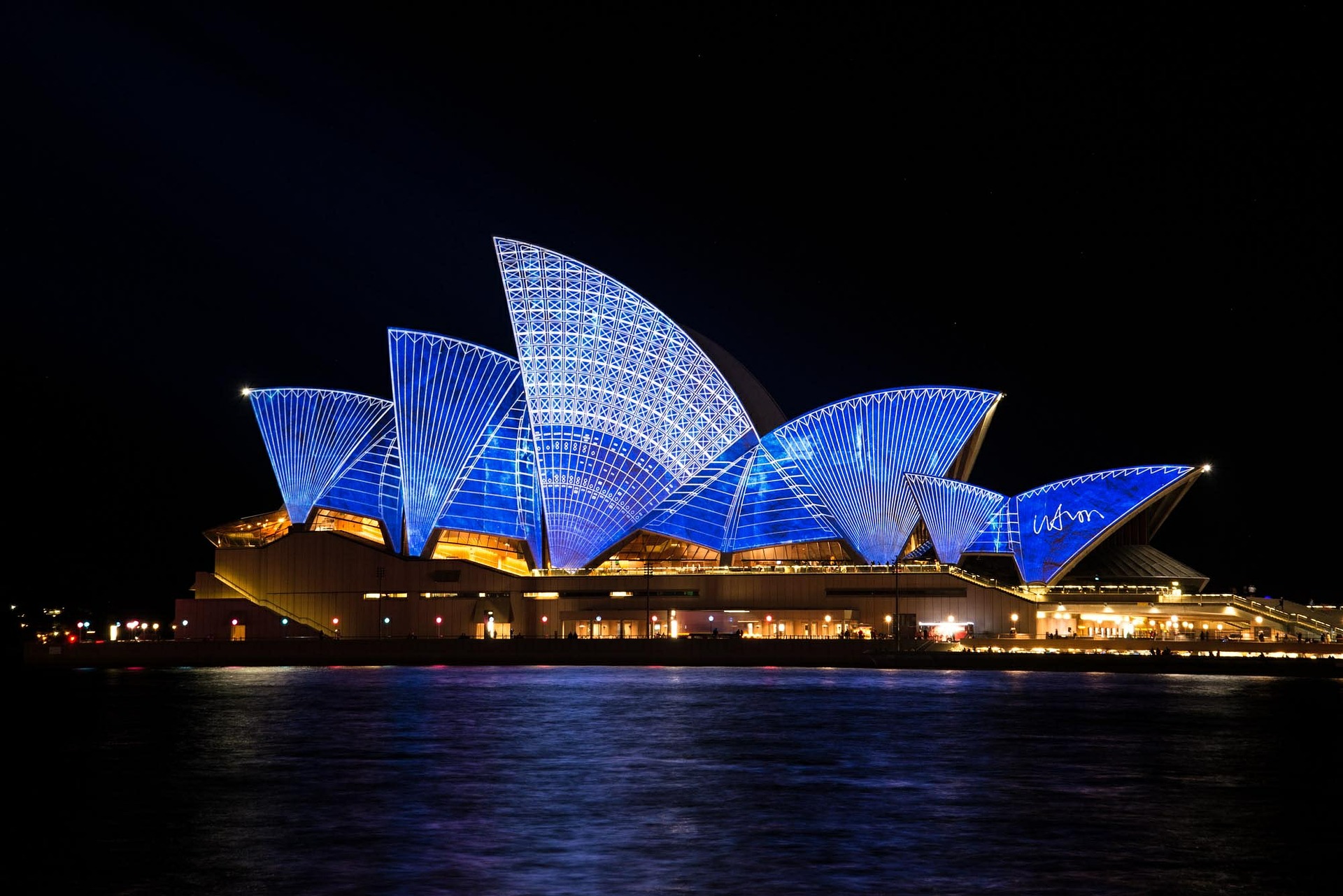
The photograph shows one of Australia's cities. Choose the correct name.
- Perth
- Canberra
- Sydney
- Melbourne
Enter the correct answers into the text.
1st, Murray-Darling, Great Artesian Basin, 2nd, merinos, wool, China, 75.5 million sheep
Sheep grazing areas are found in the region of the ........................................ and in the ........................................ river basin. As much as 3/4 of the entire sheep population is made up of ......................................... This breed provides excellent quality thin ........................................ and is well adapted to semi-dry terrains. Australia has been in ........................................ place for years in terms of sheep population and the production of high quality wool. It is currently in ........................................ place in the world behind ........................................ in terms of sheep population .........................................
What influences the fact that in Australia, the hottest month is January and the coolest is July, which is the opposite to in Poland?
- the continent's geographical location
- the evaporation of hot springs in the Great Artesian Basin
- the hole in the o-zone layer
Keywords
Australia, Australia's economy, Australia's natural environment
Glossary
Aborygeni – rdzenni mieszkańcy Australii. Przybyli do Australii około 40–65 tys. lat temu prawdopodobnie z południowo‑wschodniej Azji, przez pomost wyspowy dzisiejszej Indonezji i wyspę Nową Gwineę. Prowadzili koczowniczy tryb życia.
merynosy – rasa owiec bardzo cenionych ze względu na runo.
wody artezyjskie – wody podziemne występujące pod ciśnieniem hydrostatycznym, zdolne do samoczynnego wypływu na powierzchnię ze studni.
studnie artezyjskie – studnia, powstająca przez wywiercenie otworu do wód artezyjskich – głęboko położonych warstw wodonośnych, w których woda znajduje się pod ciśnieniem hydrostatycznym.