Przeczytaj
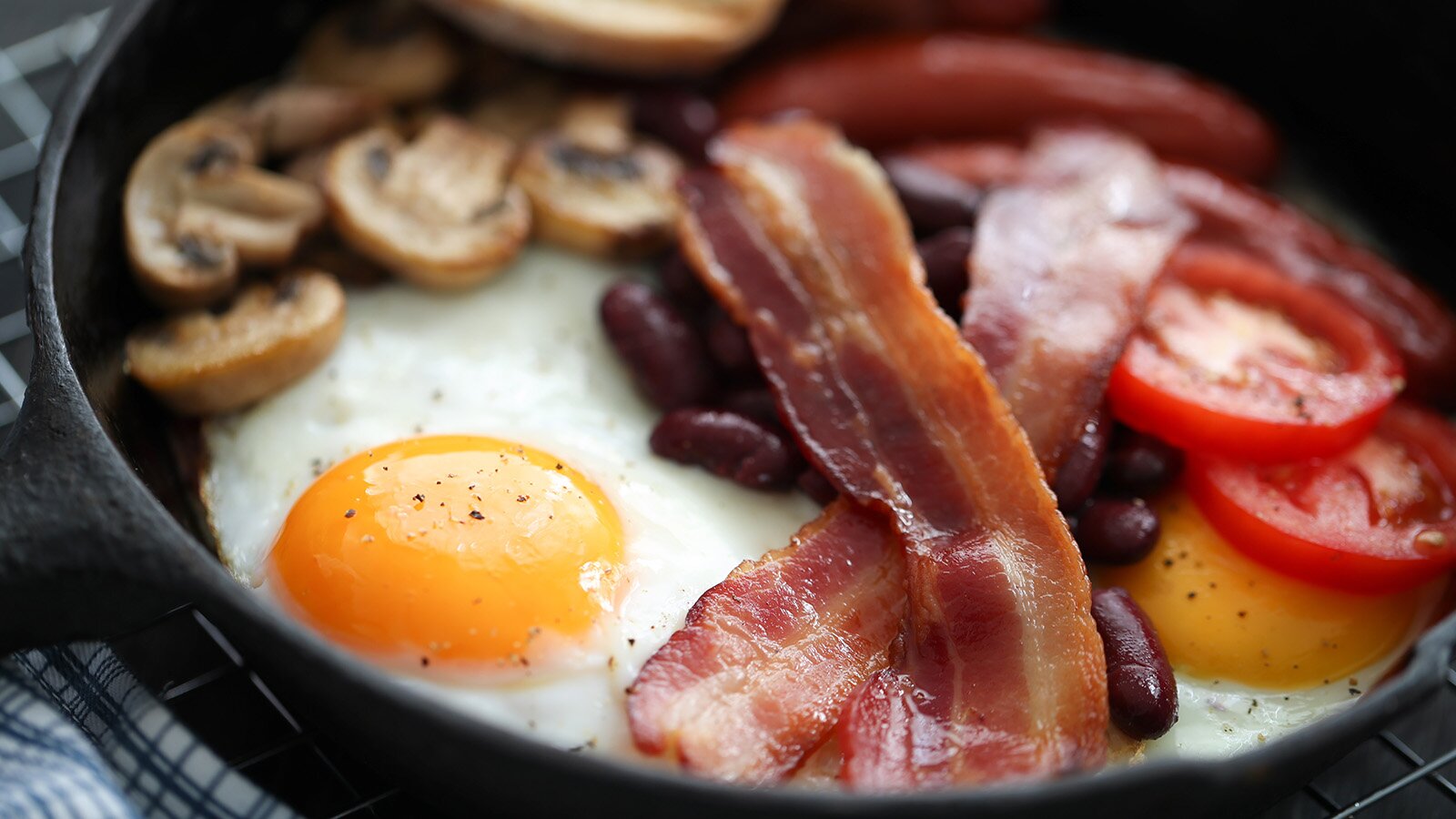
The picture below shows the so‑called full English breakfast. What does it consist of? Do the English eat it every day, or do they have something else on a weekday morning? Read the text to find out.
Poniższe zdjęcie przedstawia tzw. full English breakfast. Z czego się ono składa? Czy Anglicy spożywają je na co dzień, czy może w powszedni dzień jedzą coś innego? Przeczytaj tekst, aby znaleźć odpowiedzi na te pytania.
Match the words with the correct translations.
Read the text written by an Englishman and learn more about the full English breakfast. Would you like to try it?
The Full English Breakfast or the Continental Breakfast?If you were to travel around the world and ask people what the British eat for breakfast, the vast majorityvast majority would answer: the full English breakfast. The “English breakfast” has long been perceivedperceived as our national dishdish, closely followed by fish and chipsfish and chips. So, is this true or just a myth? What do we, the BritsBrits, really eat for breakfast? Why would we eat such a meal and when would we eat it?
As an Englishman who grew up in Britain, has eaten thousands of breakfasts in my home country, but also has travelled and lived abroad for a number of years, I feel that I have a bit of first‑hand knowledgefirst‑hand knowledge to unravelunravel the mystery of what the Brits eat. Let me first define the “full English breakfast,” or as it is often referredreferred to, the “fry‑upfry‑up.”
There is a fierce debatefierce debate about which items should be found in a traditional full English breakfast today. Many argue that it should consist ofconsist of bacon, eggs, sausage, baked beansbaked beans, fried tomatoes, fried mushrooms and fried bread. The English breakfast is typically accompanied byaccompanied by a cup of tea.
The one ingredientingredient that is highly debatedhighly debated is black pudding - a sausage made from a high blood contentcontent. Should the traditional full English breakfast include it? Some argue that it is a mustit is a must while others, including myself, feel that this is a later element that has been added to the plate. This addition was something I had never seen on a breakfast plate in my early days when growing up in England. Many people claim that this is a Scottish influenceinfluence, which has now become very popular due todue to it qualifying as a “super food.” Apparently, because black pudding consists of a large amountamount of animal blood, it is high in ironiron.
Now that we know what constitutesconstitutes the “full English breakfast,” I should perhaps concedeconcede that as an Englishman, on many occasions, I have sat down at the breakfast table and greatly enjoyed the plate with the ingredients mentioned above. Did I eat it every day? No, and nor did the majority of my fellow countrymenfellow countrymen and women. I feel that it is only fair to say that in modern Britain, today, there are many different variationsvariations of breakfast being consumed. The traditional English breakfast, nowadays, is more likely to consist of a bowl of cereal, a slice of toast, orange juice, and a cup of coffee, often eaten on the fly.on the fly. In England, many individuals, particularly children, will consume a bowl of cereal before they go off to school. In fact, one could say that today’s English breakfast resembles the so‑called „continental breakfastcontinental breakfast.” The term was coinedcoined in the mid‑nineteenth century in the United Kingdom. The British referred to the countries of mainlandmainland Europe as „the continent.” The “continental breakfast” usually consists of such food as pastriespastries, fruit, toast, tea or coffee. What about you? What do you usually have for breakfast?
Źródło: Dorota Giżyńska, licencja: CC BY-SA 3.0.
2. The author of the text hasn’t eaten a lot of full English breakfasts. TRUE FALSE
3. People agree that a full English breakfast always consists of the same ingredients. TRUE FALSE
4. The author didn’t eat black pudding as a child. TRUE FALSE
5. Most English people had a full English breakfast regularly in the past. TRUE FALSE
6. The continental breakfast isn’t similar to the full English breakfast. TRUE FALSE
Finish the sentences so that they are true for you.
For breakfast, I usually have…
I would/wouldn’t like to try a full English breakfast because…
At the weekends, my breakfast consists of…
I think my breakfast is healthier/less healthy than the English breakfast because…
Your dad has heard about the full English breakfast and has asked you to explain what the Brits eat for breakfast. Summarise the information (between 80–100 words) using the words/expressions below.
fierce debate | ingredient | highly debated | consist of | content
variations a fry‑up | cereal | on the fly
Słownik
/ əˈkʌmpənid baɪ /
podawany/podawana z
/ əˈmaʊnt /
ilość, liczba
/ beɪkt biːnz /
fasola w sosie pomidorowym podawana na ciepło
/ blæk ˈpʊdɪŋ /
kaszanka
/ brɪts / / brɪt /
Brytyjczycy [Brytyjczyk/Brytyjka]
/ ˈsɪərɪəl /
płatki śniadaniowe
/ kɔɪnd /
wymyślony/wymyślona
/ kənˈsiːd /
przyznawać się
/ kənˈsɪst ɒv /
składać się z
/ ˈkɒnstɪtjuːts / / ˈkɒnstɪtjuːt /
stanowi [stanowić], składa się na [składać się na]
/ kənˈtent /
zawartość
/ ˌkɒntɪˈnentl̩ ˈbrekfəst /
śniadanie kontynentalne
/ ˈkrwɑːsɒŋz / /ˈkrwɑːsɒŋ /
rogaliki francuskie [rogalik francuski]
/ dɪʃ /
danie
/ djuː tuː /
ze względu na
/ ˈfænsi /
drogi/droga, luksusowy/luksusowa
/ feləʊ ˈkʌntrimən / / feləʊ ˈkʌntrimən /
rodacy [rodak/rodaczka]
/ fɪəs dɪˈbeɪt /
zagorzała debata
/ fɜːst ˈhænd ˈnɒlɪdʒ /
praktyczna wiedza
/ fɪʃ ənd tʃɪps /
ryba z frytkami (tradycyjne danie w Wielkiej Brytanii)
/ ˈfraɪ ʌp /
smażone jedzenie
/ ˈhaɪli dɪˈbeɪtɪd /
bardzo sporny/sporna
/ ˈɪnflʊəns /
wpływ
/ ɪnˈɡriːdɪənt /
składnik
/ ˈaɪən /
żelazo
/ ˈɪt ɪz ə mʌst / / bi ə mʌst /
to jest konieczność [coś, co trzeba koniecznie zrobić, mieć]
/ ˈmeɪnlænd /
kontynent
/ ˈɒn ðə flaɪ /
w biegu
/ ˈpænkeɪks / / ˈpænkeɪk /
naleśniki [naleśnik]
/ ˈpeɪstrɪz / / ˈpeɪstri /
ciastka [ciastko], słodkie pieczywo
/ pəˈsiːvd / / pəˈsiːv /
postrzegany/postrzegana [postrzegać]
/ rɪˈfɜːd tuː / / rɪˈfɜː tuː /
nazywane [nazywany/nazywana] [nazywać]
/ rɪˈzembl̩z / / rɪˈzembl̩ /
przypomina [przypominać]
/ ʌnˈrævəl /
rozwiązywać (np. tajemnicę, zagadkę)
/ ˌveərɪˈeɪʃn̩z / / ˌveərɪˈeɪʃn̩ /
odmiany [odmiana]
/ vɑːst məˈdʒɒrɪti /
zdecydowana większość
Źródło: GroMar Sp. z o.o., licencja: CC BY‑SA 3.0