Przeczytaj
Injuries happen more often than we think. Can you help someone in need? Whether you do or not, it’s always a good idea to refresh your memory. In this section, you’ll read a text about first aid.
Urazy zdarzają się częściej niż myślimy. Czy potrafisz pomóc komuś w potrzebie? Niezależnie od tego, czy odpowiesz tak, czy nie, zawsze dobrze jest odświeżyć sobie pamięć. W tej sekcji przeczytasz tekst o pierwszej pomocy.
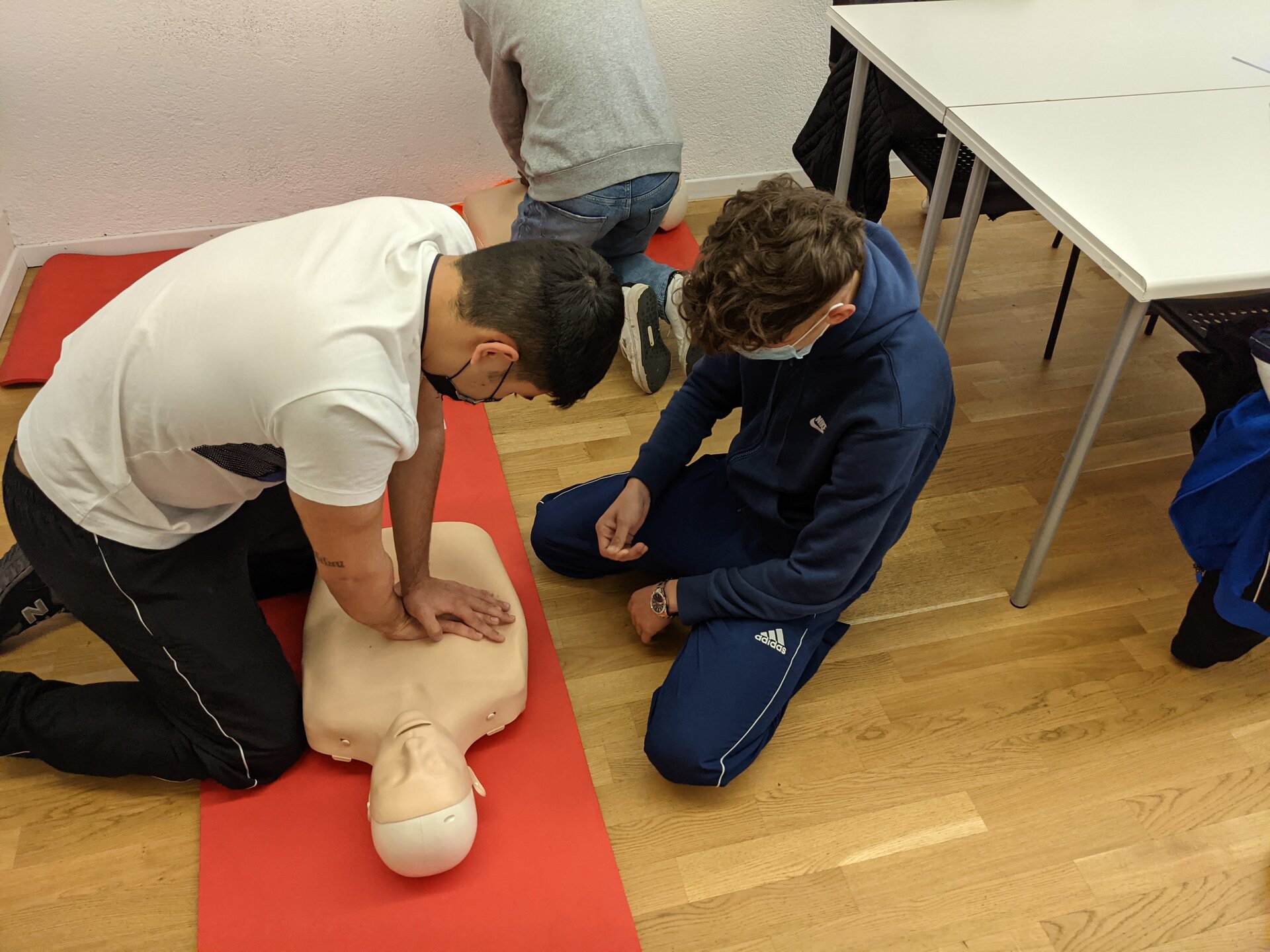
Read the text about administering first aid and do the exercises below.
First AidFirst aid covers any immediate medical assistanceimmediate medical assistance to those suffering from minor to life‑threatening injurieslife‑threatening injuries. It can be administered byadministered by professionals as well as people without any previous training. Whether one’s treating a bleeding cut or performing CPRperforming CPR, they’re providing first aid.
Injuries, no matter if mild or serious, can happen to anyone at any time and place. That’s why you should know the basics of providing help. In a case of an injury, follow the steps below (outlined by Red Cross):
Assess the situationAssess the situation quickly but calmly. First, make sure you are safe before providing help. Then, find out what happened and form an initial impressionform an initial impression of the injured. Remember, you should not attempt to help anyone without using personal protective equipment (PPE)personal protective equipment (PPE), such as disposable glovesdisposable gloves first!
If the injured appears unresponsiveappears unresponsive, check them for breathing and life‑threatening conditionslife‑threatening conditions. You can do it by performing the shout‑tap‑shout method (shouting “are you ok?” followed by a tap on the shoulder and another shout). If the person: doesn’t respond; responds but is not fully awake; isn’t breathing or has any other life‑threatening condition, call 1‑1-2 or ask a bystanderask a bystander to call 1‑1-2 for you. Then, provide first aid to the best of your abilityto the best of your ability. If the person has problems breathing, you should perform CPR as fast as possible.
If the injured person is responsiveresponsive (responds to stimulationresponds to stimulation, is fully awake or doesn’t seem to have a life‑threatening injury), ask them to consent to administer first aidconsent to administer first aid. Then, interview them about symptoms they’re experiencing, allergies, medications they take as well as medical conditionsmedical conditions they may have. Decide whether what you hear agrees with what you see. Do not move the person if you suspect a head or neck injury. Also, do not force the injured person to move any part of their body that causes discomfort or pain. Call 1‑1-2 and stay calm while you wait for EMSEMS or first respondersfirst responders to arrive at the scenearrive at the scene.
Remember, while any person is capable ofcapable of administering first aid even without basic training or the right equipment, it’s always a good idea to undergo first aid trainingundergo first aid training. It includes not only information on how to offer basic careoffer basic care, but also how and when to use contents of the first aid kitsfirst aid kits.
Źródło: Zuzanna Kościuk, licencja: CC BY-SA 3.0.
a) is a medical action performed by professionals.
b) can be received from untrained people.
c) relies mostly on helping people recover.
d) aims to make the medical condition worse.
2. You should know how to administer first aid because
a) accidents occur in everyday life.
b) first aid training is mandatory.
c) you’re expected to always put the injured person first.
d) first responders require help from the bystanders to work.
3. The first thing you should do before administering first aid is
a) asking the injured person whether they need help.
b) calling 1-1-2 and waiting for EMS to arrive.
c) judging the scene and deciding on the course of action.
d) assessing the injuries of the person and performing CPR.
4. Unresponsive people
a) can be moved at will.
b) always require CPR.
c) ought to be checked for breathing by you.
d) always suffer from a life-threatening injury.
5. Responsive people
a) should give their consent to first aid.
b) shouldn’t be touched under any circumstances.
c) need to call 1-1-2 to ask for help.
d) can give their medical history only to EMS.
6. You should call 1-1-2
a) before attempting to administer first aid.
b) only after you’ve assessed the situation requires it.
c) as soon as you get to the scene of the accident.
d) after checking for injuries and performing CPR.
7. Something that can aid you greatly in administering first aid is
a) an unresponsive person.
b) the first aid kit.
c) the Red Cross.
d) what you have on hand.
Answer the questions below in 4–5 sentences each.
In your opinion, what are the things you should do before administering first aid?
You should call 1‑1-2 in specific situations. What are they? Provide two examples.
Słownik
/ ədˈmɪnɪstəd baɪ /
udzielany/udzielana przez
/ əˈpɪəz ˌʌnrɪˈspɒnsɪv / / əˈpɪər ˌʌnrɪˈspɒnsɪv /
wydaje się nieprzytomny/nieprzytomna [wydawać się nieprzytomnym/nieprzytomną]
/ əˈraɪv ət ðə siːn /
przybyć na miejsce zdarzenia
/ ɑːsk ə ˈbaɪstændə /
poprosić świadka wydarzenia
/ əˈses ðə ˌsɪtʃʊˈeɪʃn̩ /
ocenić sytuację
/ ˈkeɪpəbl̩ əv ˈsʌmthetaɪŋ /
zdolny/zdolna do czegoś, będący/będąca w stanie coś zrobić
/ kənˈsent tu ədˈmɪnɪstə ˈfɜ:st eɪd /
wyrazić zgodę na udzielenie pierwszej pomocy
/ dɪˈspəʊzəbl̩ ɡlʌvz /
jednorazowe rękawiczki [jednorazowa rękawiczka]
/ ˌiː em ˈes / / ɪˈmɜːdʒənsi ˈmedɪkl̩ ˈsɜːvɪsɪz /
pogotowie ratunkowe
/ ˈfɜ:st eɪd kɪts / / ˈfɜ:st eɪd kɪt /
apteczki pierwszej pomocy [apteczka pierwszej pomocy]
/ ˈfɜ:st rəˈspɑːndərz / / ˈfɜ:st rəˈspɑːndə /
członkowie służby przeszkoleni do pierwszego kontaktu w czasie wypadków [członek/członkini służb przeszkolony/przeszkolona do pierwszego kontaktu w czasie wypadków]
/ ˈfɔːm ən ɪˈnɪʃl̩ ɪmˈpreʃn̩ /
kształtować pierwsze wrażenie
/ ɪˈmiːdɪət ˈmedɪkl̩ əˈsɪstəns /
natychmiastowa pomoc medyczna
/ laɪf ˈthetaretn̩ɪŋ kənˈdɪʃn̩z / / laɪf ˈthetaretn̩ɪŋ kənˈdɪʃn̩ /
stany zagrożenia życia [stan zagrożenia życia]
/ laɪf ˈthetaretn̩ɪŋ ˈɪndʒərɪz / / laɪf ˈthetaretn̩ɪŋ ˈɪndʒəri /
urazy zagrażające życiu [uraz zagrażający życiu]
/ ˈmedɪkl̩ kənˈdɪʃn̩z / / ˈmedɪkl̩ kənˈdɪʃn̩ /
schorzenia [schorzenie]
/ ˈmaɪnər ˈɪndʒərɪz / / ˈmaɪnər ˈɪndʒəri /
niewielkie uszkodzenia ciała [niewielkie uszkodzenie ciała]
/ ˈɒfə ˌbeɪsɪk keə /
oferować podstawową opiekę (medyczną)
/ pəˈfɔːmɪŋ ˌsiː piː ˈɑː / / pəˈfɔːm ˌsiː piː ˈɑː /
robienie sztucznego oddychania [robić sztuczne oddychanie]
/ ˈpɜːsənl̩ prəˈtektɪv ɪˈkwɪpmənt / / ˌpiː piː ˈiː /
sprzęt ochrony osobistej (np. rękawiczki jednorazowe lub maseczki)
/ rɪˈspɒndz tu ˌstɪmjʊˈleɪʃn̩ / / rɪˈspɒnd tu ˌstɪmjʊˈleɪʃn̩ /
reaguje na stymulację [reagować na stymulację]
/ rɪˈspɒnsɪv /
tu: przytomny/przytomna
/ tu ðə best əv jər əˈbɪləti / / tu ðə best əv wʌnz əˈbɪləti /
najlepiej jak potrafisz [najlepiej jak się potrafi]
/ ˌʌndəˈɡəʊ ˈfɜ:st eɪd ˈtreɪnɪŋ /
przechodzić kurs z pierwszej pomocy
Źródło: GroMar Sp. z o.o., licencja: CC BY‑SA 3.0