Birth of the Industrial Revolution
places of the most important industrial centres of 19th century Europe;
the most important manifestations of the industrial revolutionindustrial revolution;
the groundbreaking inventionsinventions of the era of industrial revolutionindustrial revolution.
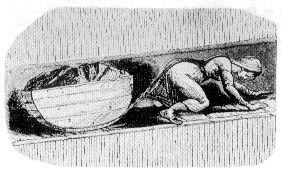
In the second half of the 18th century, the United Kingdom, as the first country in the world, entered the path of intensive modernisationmodernisation and industrialisationindustrialisation of the economy. The extent and scale of the changes that took place between 1750 and 1850 have made this process known as the industrial revolutionindustrial revolution. Coal mining, the basic raw material of the industrial revolutionindustrial revolution, was based on the physical labour of people, including women and children, for most of the 19th century. Of particular importance for the British economy were technical innovations, which already in the 18th century revolutionised the process of fabric manufacturing. Metallurgy was another area that underwent revolutionary changes. Also in this area, all inventionsinventions of English engineers were immediately applied in practice, and the steam enginesteam engine changed the way of iron production. The next milestone was the use of a steam enginesteam engine to carry heavy loads. The shipsships were the first to be equipped with steam enginessteam engines, and with the best effects. In 1814, a British, George Stephenson built a steam locomotive for one of the mines. A few years later, he opened the first locomotive factory for public transport.
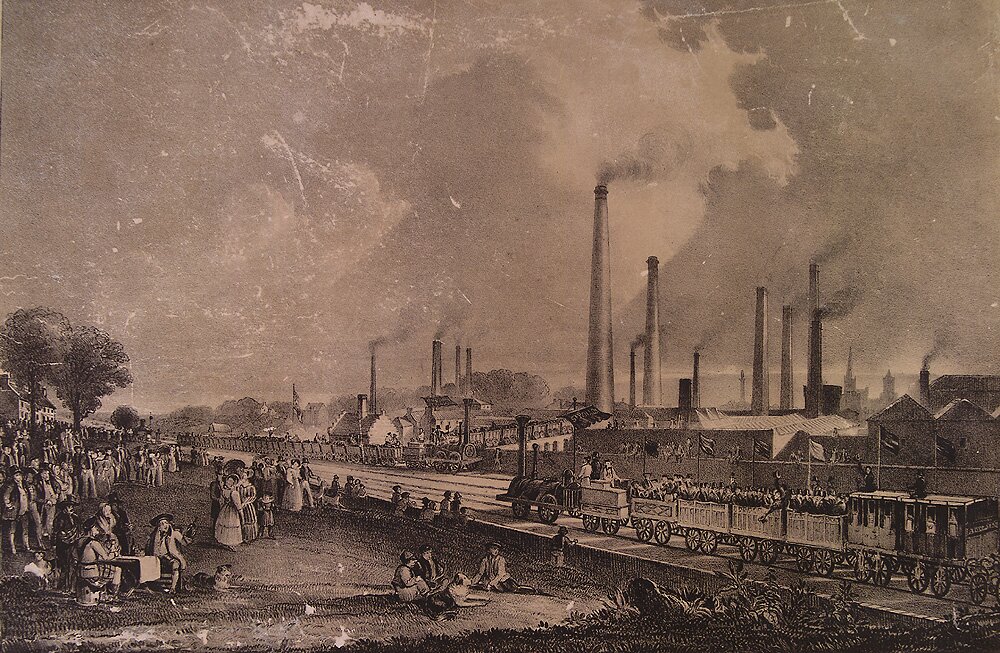
Copying of British technologies was common on the European continent. By 1830, the whole of Western Europe and part of Central Europe had already entered the path of intensive industrialisation. The most economically advanced countries were Belgium, the Netherlands and France, as well as some areas of Germany and Italy. Central and Eastern Europe lagged behind, as the process of industrialisation was delayed there by strong feudal remains and the predominance of the agricultural economy.
The painting by Edgar Degas depicts a raw material that became one of the symbols of Britain's economic power in the 19th century, alongside coal and iron. What is it?
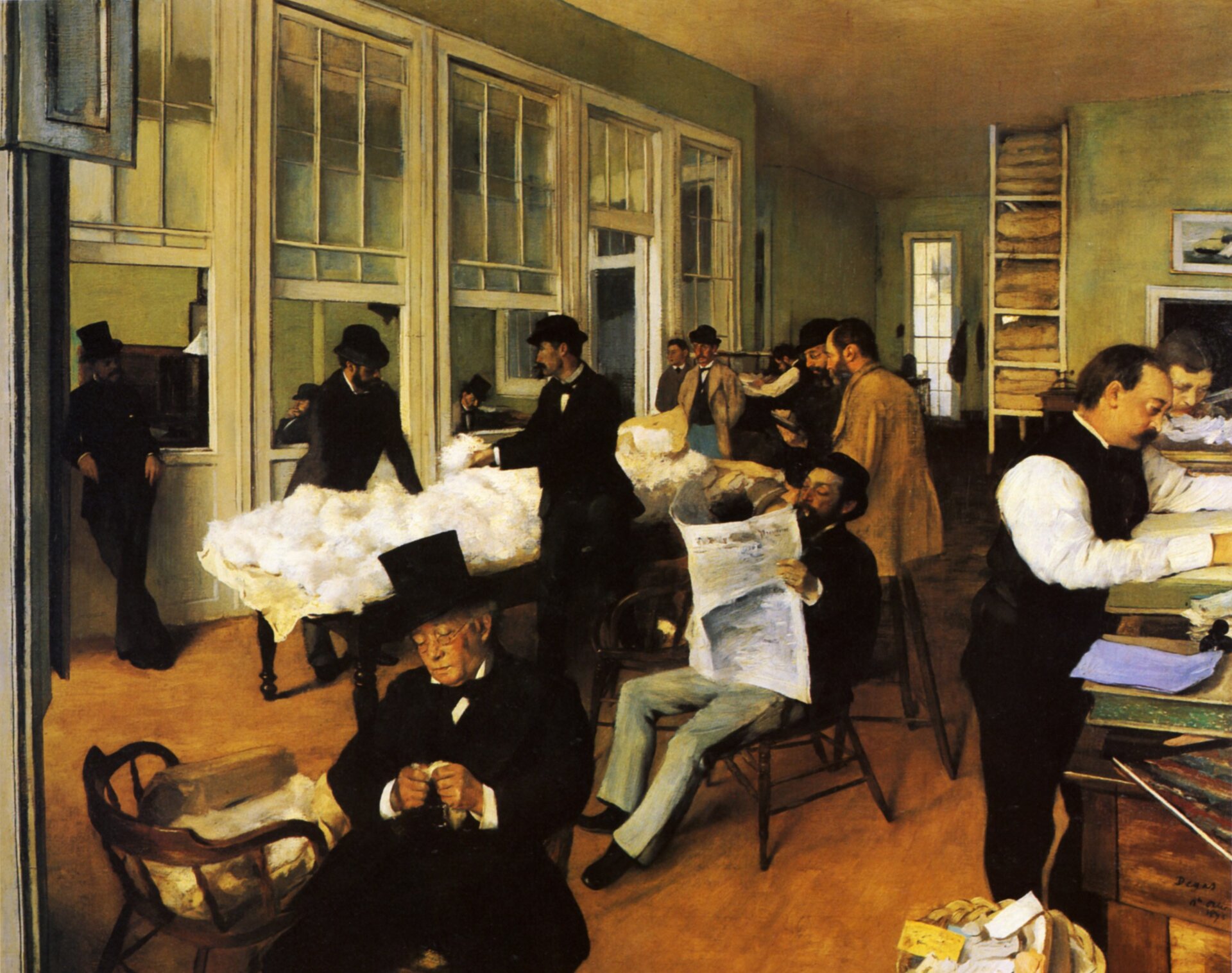
Mark the correct answer.
- cotton
- candyfloss
- wool
- cotton wool
Niall Ferguson, Cywilizacja. Zachód i reszta świata, Cracow 2013
What is in N. Ferguson’s opinion a false picture of the beginnings of industrialisation?
textile, cotton, Industrial
The .................... Revolution is often depicted in a false way, as if a wide range of technological innovations had simultaneously transformed many economic activities. That was not the case. The first stage of industrialisation was definitely focused on .................... products. The archetypal factory was a spinning mill and a .................... weaving mill.
Niall Ferguson, Cywilizacja. Zachód i reszta świata, Cracow 2013
Read the text and note the most important inventionsinventions that sped up the development of weaving and spinning in the UK.
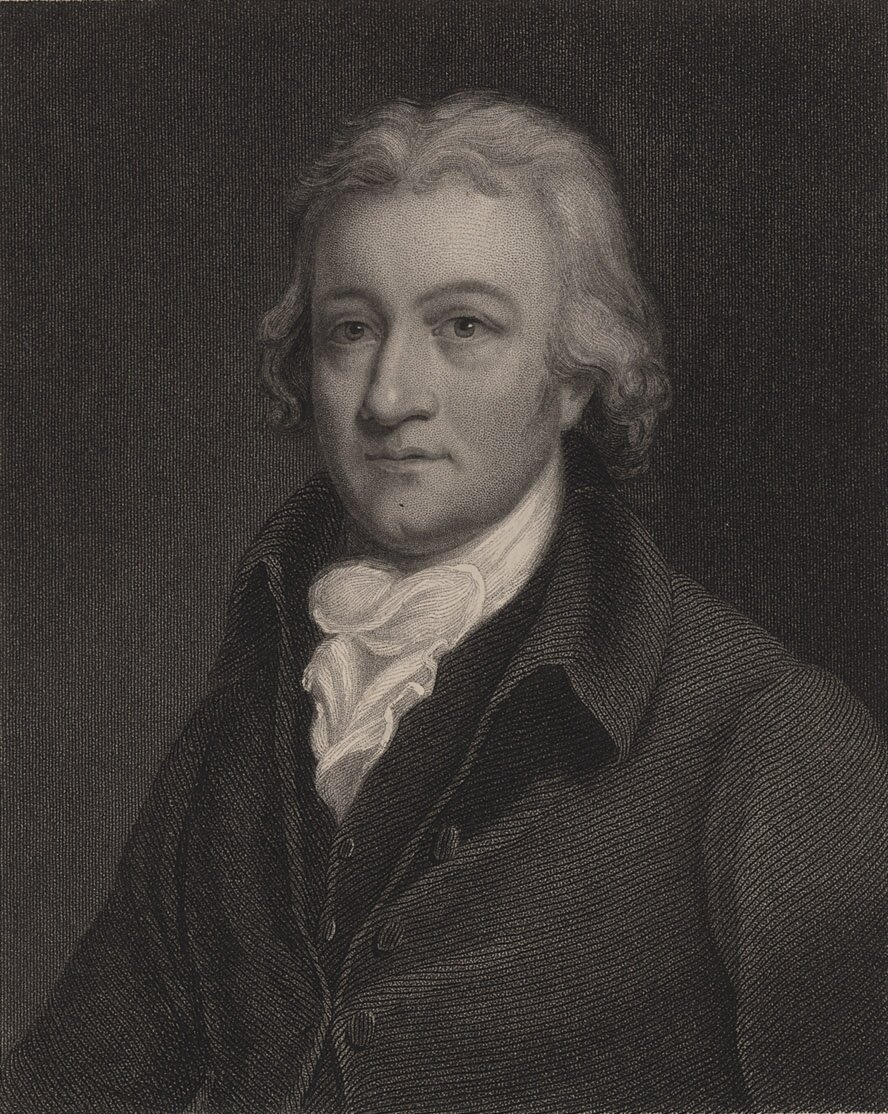
Of particular importance for the British economy were technical innovations, which already in the 18th century revolutionised the process of fabric manufacturing. The milestones were the inventionsinventions radically improving the process of materials weaving: John Kay's shuttle (1733) and Edmund Cartwright's mechanised loom (1784).
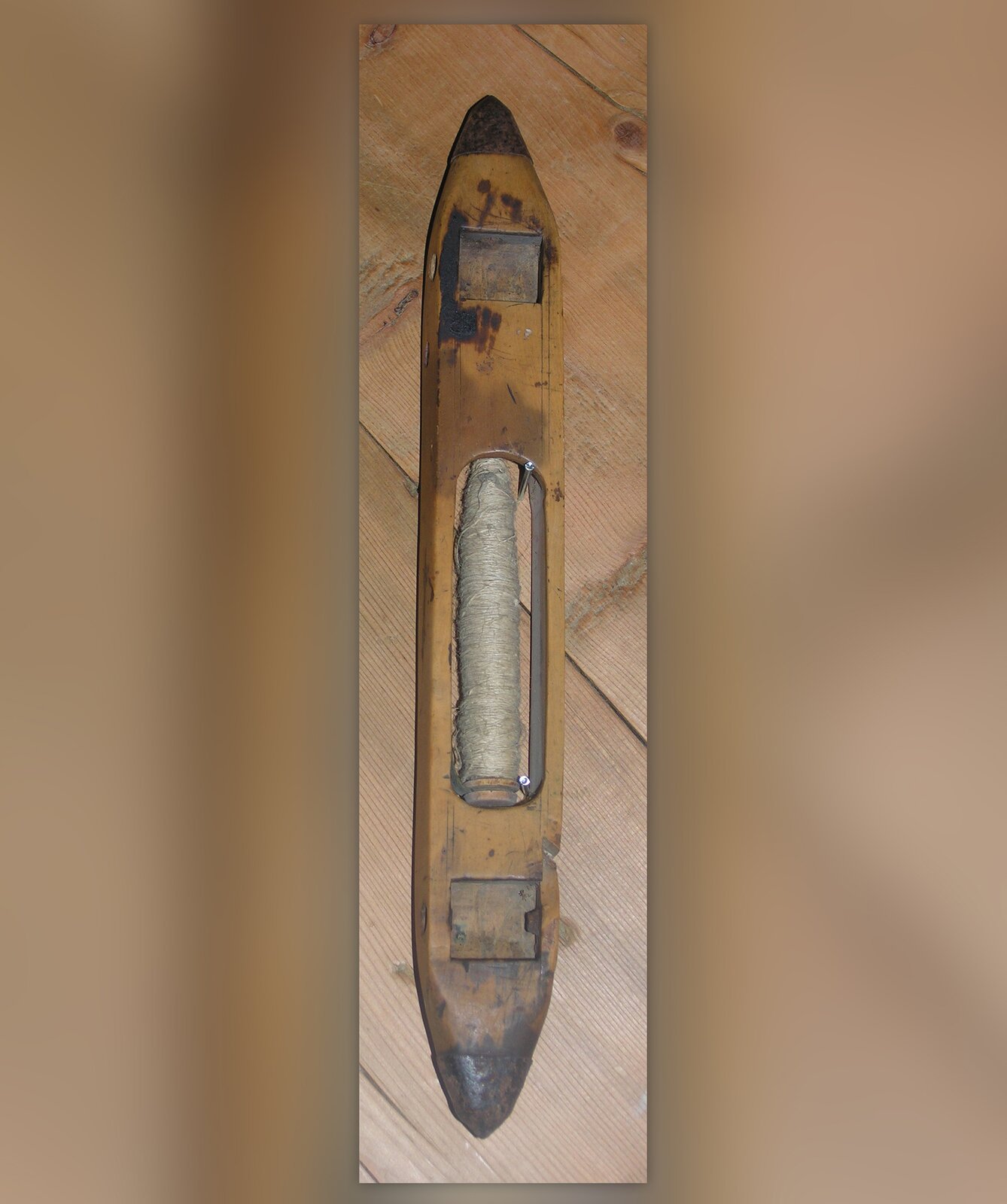
The first device allowed to speed up the process of interlacing thread and warp thread in home workshops, as well as to produce fabrics with a larger width. Previously, two weavers were needed to work on one loom, and after applying the shuttle, only one person was needed, which translated into an immediate increase in productivity. The inventioninvention of the mechanised looms practically closed the stage of home‑made production of fabrics and initiated the flourishing of spinning factories. Cartwright’s loom, hated by workers at the end of the 18th century, changed the weaving industry forever and for a long time was one of the basic machines in the industrial landscape.
Speeding up the weaving process naturally increased the demand for yarns, which in turn resulted in breakthrough designs in the spinning industry. The first of them was a spinning frame – constructed in 1765 by James Hargreaves, a mechanical crank‑driven workshop (called by the designer „spinning Jenny”). This inventioninvention made the spinning wheel that had been used for centuries a thing of the past. This multi‑spool device, which could be operated by only one worker, allowed to spin as much as one hundred and twenty times more wool. As far back as 1769, a professional hairdresser, Richard Arkwright, perfected his spinning frame with a mechanical drive that was independent of human strength. This machine could be water and steam driven. 10 years later, Samuel Crompton made further improvements to this construction. His spinning machine (called by him „spinning mule”), with mechanical thread forming, combined the advantages of Hargraves' first spinning workshop with those of Arkwright's perfected machine. It has successfully solved the problem of a permanent supply of raw material to textile factories and because of it, it rapidly spread in the United Kingdom in the 19th century.
The most important device of the industrial revolutionindustrial revolution was the steam enginesteam engine. Listen to the radio program and find out how it was constructed and produced on a massive scale.
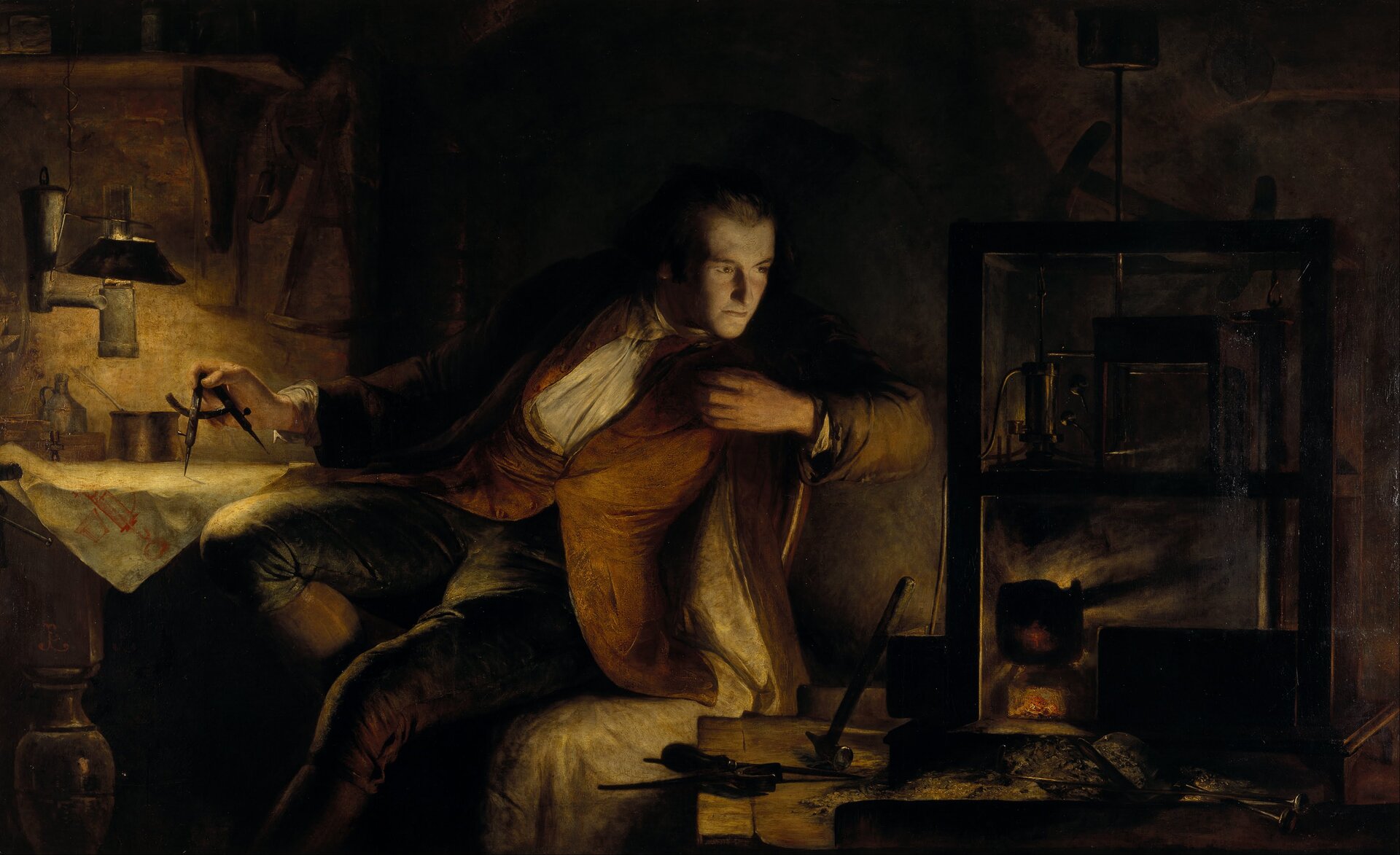
At the beginning of the 18th century, a smith, Thomas Newcomen developed the first steam enginesteam engine, which came into common use. The machine, also known as the atmospheric steam engine, had been widely used since 1712 to drive pumps, pumping water from British mines. In 1763, Scottish engineer James Watt, an employee of Glasgow University, was asked to repair a spoiled Newcomen atmospheric steam enginesteam engine - a 17 metre high machine. He not only repaired it, but... developed a new, improved version of it. During the renovation process, he noticed that the engine was highly inefficient. Each subsequent piston stroke required first heating and then cooling down the water vapour in order to obtain its condensation. At the same time, the cylinder was constantly cooling down. Watt invented how to improve the operation of the device by adding a separate condensation chamber. This solution allowed the main cylinder to be constantly warm, which significantly increased the efficiency of the steam enginesteam engine. He patented his inventioninvention in 1769. His universal steam engine was much smaller and much more efficient. It was able to generate maximum of 15 horsepower, enormous at that time.

The inventioninvention of William Murdoch, patented by Watt in 1781, was also of great importance. The idea was to change the sliding movement of the piston of the steam enginesteam engine to a rotary movement. This step was absolutely crucial for the steam engine to be used for powering vehicles. The simplest solution to achieve the desired effect at the time, seemed to be the use of a crank; however, the patent for it belonged to James Pickard. In this situation, Watt used an innovative planetary gearing.
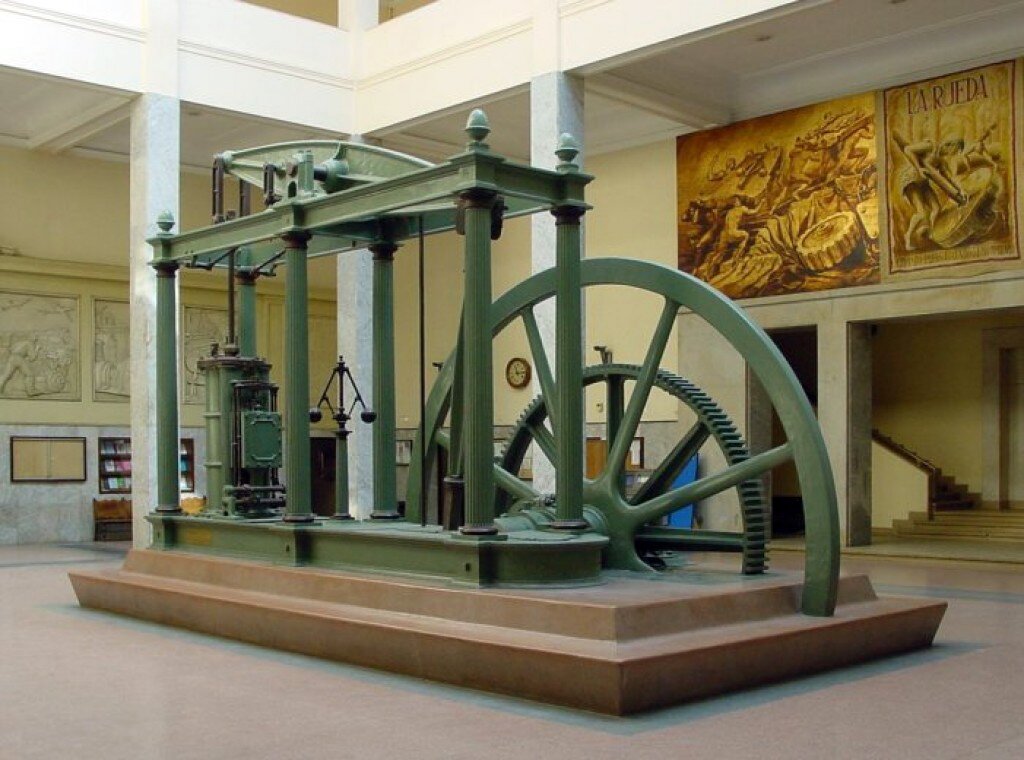
Soon, James Watt and his friend Matthew Boulton from Birmingham initiated a technological revolution in the British industry, supplying it with a steam enginesteam engine for mass production. In 1780, Boulton financed the construction of a steam plant in Soho, near Birmingham. Their production brought both wealth and respect to the society of that time. For the machine, initially intended for pumping out water in mines, other uses were soon found: as a source of drive‑in steelworks, mills and textile industry. The traditional source of energy, the water wheel, was therefore gradually eliminated. Since then, it has been possible to produce cheaper and more. The success of Watt and Bulton has inspired many others, and the search for technical improvements and the collection of patents has become fashionable.
Think about which projects were of most interest to industrialists in Europe. Which branches of production were the most profitable in the first half of the 19th century? How do you think the prestige of industrialists has increased?
Keywords
the Industrial Revolution, the United Kingdom, steam engine, industrialisation
Glossary
modernisation – procesy społeczne związane z powstawaniem i rozwojem społeczeństw przemysłowych
industrialisation – rozwój gospodarczy kraju polegający na zwiększeniu udziału przemysłu w gospodarce narodowej
maszyna parowa – rodzaj silnika parowego. Zasada działania, w uproszczeniu, polega na tym, że podgrzana woda zamienia się w parę, która obraca tłok w cylindrze.
statek parowy – statek napędzany maszyną parową.
rewolucja przemyslowa - pod tym pojęciem rozumiemy ogół zmian technologicznych i gospodarczo‑społecznych, które zostały zapoczątkowane w XVIII wieku w Wielkiej Brytanii.
wynalazek – innowacyjne rozwiązanie jakiegos problemu technicznego. Wynalazek najczęściej przybiera postać nowego urządzenia lub jego części.